Tank Drinking Water Storage Compliance: NSF 61 / ANSI 372 / Lead-Free / California AB1953
Storing drinking water for human consumption is a regulated activity in every US jurisdiction. The Safe Drinking Water Act (SDWA, 42 USC 300f et seq.) authorizes the EPA to set National Primary Drinking Water Regulations (NPDWR) for public water systems; the Reduction of Lead in Drinking Water Act (RLDWA, public law 111-380, effective January 4, 2014) reduced the allowable weighted-average lead content of any wetted surface in a potable system to 0.25 percent; California Assembly Bill 1953 (signed 2006, effective January 1, 2010) was the original state-level statute that drove the federal change. Compliance translates into three certifications that every potable tank, fitting, gasket, valve, and pump must carry: NSF/ANSI 61 (health effects of materials in contact with drinking water), NSF/ANSI 372 (lead-free certification of the same materials), and an applicable state-level certification or registration where required (California, Vermont, Maryland, Louisiana). This pillar walks the certifications, the chemistry behind them, the field documentation requirements, and the common compliance traps.
The reference codes used in this guide are the federal Safe Drinking Water Act (42 USC 300f et seq.); 40 CFR Part 141 (NPDWR); 40 CFR Part 143 (National Secondary Drinking Water Regulations); the Reduction of Lead in Drinking Water Act (Public Law 111-380, 2011, amending SDWA Section 1417); NSF/ANSI/CAN 61-2024 (Drinking Water System Components — Health Effects); NSF/ANSI 372-2020 (Drinking Water System Components — Lead Content); California Health and Safety Code Section 116875 (the AB 1953 statutory text); California Code of Regulations Title 17 Section 7575 (lead-free certification); EPA's Lead and Copper Rule (40 CFR 141 Subpart I) and the Lead and Copper Rule Revisions (LCRR, 40 CFR 141.80 et seq., effective October 16, 2024); and the International Plumbing Code (IPC) Section 605.2 (requiring NSF 61 and 372 listings for any potable component).
The Three-Layer Compliance Stack
Every potable component must satisfy three independent layers:
- NSF/ANSI/CAN 61 — Health Effects: validates that no harmful chemical leaches from the material into drinking water above the regulated extraction limits for inorganics, VOCs, SVOCs, regulated metals, and known migration products.
- NSF/ANSI 372 — Lead Content: validates that the weighted-average lead content of every wetted surface is below 0.25 percent (the federal lead-free threshold).
- State-level certification (where applicable): California (DTSC registration plus AB 1953), Vermont (Act 193), Maryland (10.13.06), Louisiana (LAC 51.XII.336).
All three layers must be satisfied. NSF 61 alone does NOT certify lead content (older NSF 61 listings before the 2012 lead-free harmonization may not satisfy modern lead-free requirements). NSF 372 alone does NOT certify health effects beyond lead. State certifications generally require both NSF 61 AND NSF 372 plus state-specific paperwork.
Layer 1 — NSF/ANSI/CAN 61 in Plain Language
NSF 61 is a health-effects evaluation. The certifying lab takes a representative sample of the component (a tank, a fitting, a gasket), exposes it to a standardized water under controlled conditions for a defined dwell time, then analyzes the water for any chemical that leached from the component. The pass criteria: no chemical exceeds 10 percent of its EPA Maximum Contaminant Level (MCL) for regulated substances, and no chemical exceeds the NSF Single Product Allowable Concentration (SPAC) for unregulated substances.
What is tested
| Category | Examples | Federal Limit Source |
|---|---|---|
| Regulated inorganics | Antimony, arsenic, barium, cadmium, chromium, copper, lead, mercury, nickel, selenium, thallium | 40 CFR 141.62 |
| Regulated VOCs | Benzene, vinyl chloride, trichloroethylene, tetrachloroethylene, 1,1-dichloroethylene | 40 CFR 141.61(a) |
| Regulated SVOCs | Atrazine, alachlor, simazine, di(2-ethylhexyl)phthalate, di(2-ethylhexyl)adipate | 40 CFR 141.61(c) |
| Polymer / plasticizer leachates | Bisphenol A (BPA), phthalates, residual styrene, residual acrylonitrile | NSF SPAC table |
| Disinfection byproducts (DBP) | Total trihalomethanes, haloacetic acids, bromate, chlorite | 40 CFR 141.64 |
| Sensory parameters | Taste and odor threshold | NSF 61 Section 3.4 |
NSF 61 product categories
NSF 61 evaluates products by category, with category-specific exposure conditions:
- Section 4 — Pipes and related products: tested with chlorinated and non-chlorinated standardized waters at 23 C, 14-day exposure.
- Section 5 — Barrier materials (linings, coatings): tested at multiple temperatures and water chemistries.
- Section 6 — Joining and sealing materials (gaskets, sealants): the wetted-surface gaskets that often catch end-users by surprise.
- Section 7 — Mechanical devices used in treatment / transmission / distribution (valves, fittings, meters): includes brass, bronze, and other alloy components.
- Section 8 — Mechanical plumbing devices (faucets, residential valves): generally end-use; less common on tank service.
- Section 9 — Process media (filtration, ion exchange): media-specific.
- Section 10 — Storage tanks: specific dwell-time requirements simulating storage hold-up.
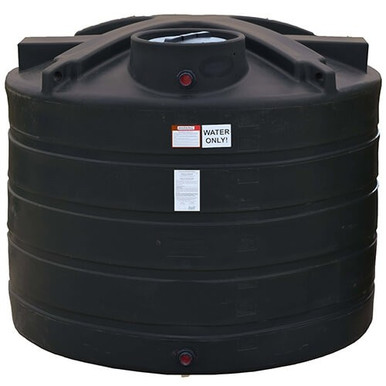
For potable storage tanks specifically, both Section 5 (the resin and any inner-surface coating) and Section 10 (the assembled tank) apply. A polyethylene rotomolded tank built from NSF 61 listed resin is not automatically NSF 61 listed as a tank — the listed resin is necessary but not sufficient. The complete tank, including any colorant masterbatch, fitting interfaces, lid gasket, and bulkhead gaskets, must be evaluated as an assembly.
Layer 2 — NSF/ANSI 372 (the Lead-Free Standard)
NSF 372 is a single-purpose certification: it validates that the weighted-average lead content of every wetted surface is at or below 0.25 percent. This was the federal regulatory threshold codified in the Reduction of Lead in Drinking Water Act (Public Law 111-380), effective January 4, 2014. Before that, the legal threshold was 8 percent — a level acceptable only because the assumption was that lead-bearing brass would not contribute meaningful lead to the water column. The science of lead exposure proved otherwise; AB 1953 in California led the federal change.
NSF 372 calculation methodology:
weighted lead content = sum (lead percent in component i × wetted surface area of component i) / total wetted surface area
The "weighted average" approach allows brass valve internals (typically 1.5-3.0 percent lead) to be averaged with copper fittings (essentially zero lead) and polymer surfaces (zero lead) to arrive at a sub-0.25 percent overall. But every individual component must contribute to the average; you cannot bury non-lead-free brass behind a thin polymer veneer to "hide" it from the calculation.
What components require NSF 372
- Tanks, tank fittings, bulkheads
- Pipe and pipe fittings
- Valves (ball, butterfly, check, gate, globe)
- Pumps (any wetted surface — impeller, casing, shaft seal)
- Backflow preventers
- Faucets and end-use fixtures
- Water meters
Exemptions per SDWA Section 1417(a)(4)
- Pipes, fittings, and fixtures used exclusively for non-potable services (irrigation only, fire suppression only, manufacturing only)
- Toilets, bidets, urinals, fill valves, flushometer valves, tub fillers, shower valves, service saddles, water distribution main gate valves 2 inch and larger
- Pre-existing materials installed before January 4, 2014 (grandfathered in place but must be replaced with lead-free at next replacement)
The exemptions are narrow. A "fire-suppression-only" tank that is also tied to a potable water source (cross-connected) loses the exemption. Always treat a multi-purpose tank as fully potable.
Layer 3 — California AB 1953 and State-Level Lead Laws
California Assembly Bill 1953 (Health & Safety Code 116875)
California pioneered the 0.25 percent lead-content limit when AB 1953 was signed in 2006. The statute (codified at California Health and Safety Code Section 116875) makes it unlawful "to introduce into commerce, for use in California, any pipe, pipe or plumbing fitting, or fixture intended to convey or dispense water for human consumption through drinking or cooking that is not lead free." California Department of Toxic Substances Control (DTSC) and California Department of Public Health (CDPH) administer compliance.
Practical implication: any plumbing component sold for potable use in California must be marked or accompanied by a lead-free certification. Tank fitting kits, valve assemblies, and bulkhead packages must include the NSF 372 (or equivalent) listing in the documentation.
Vermont Act 193 (Lead Plumbing Reduction Act)
Vermont's statute (10 V.S.A. Section 6651-6655) parallels California's. Effective July 1, 2008. Same 0.25 percent weighted-average lead threshold.
Maryland Code 10.13.06
Maryland's Department of Health regulation, effective January 2012. Same 0.25 percent threshold; aligned with the federal RLDWA.
Louisiana Administrative Code 51.XII.336
Louisiana's potable plumbing rules; aligned with NSF 61 / 372.
OneSource Catalog: NSF 61 + NSF 372 Listed Tanks
OneSource lists potable-rated tanks specifically certified for drinking water service. Representative listings include:
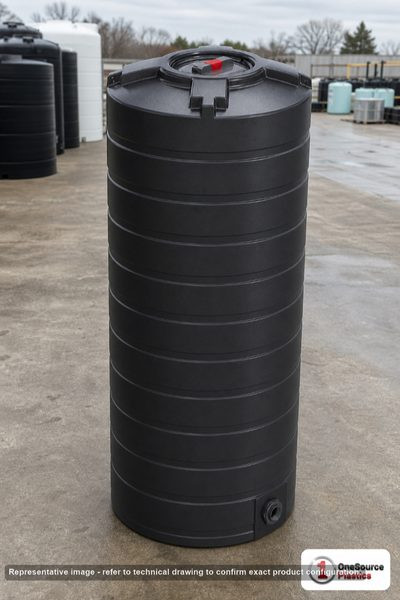
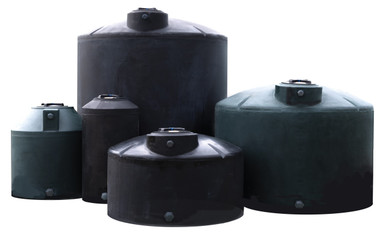
- Norwesco vertical NSF 61 storage tanks: 200 to 12,000 gallon range. White or natural-translucent shell with FDA / NSF 61 polyethylene resin. Standard fittings: NSF 61 listed PVC bulkheads with EPDM (NSF 61) gaskets.
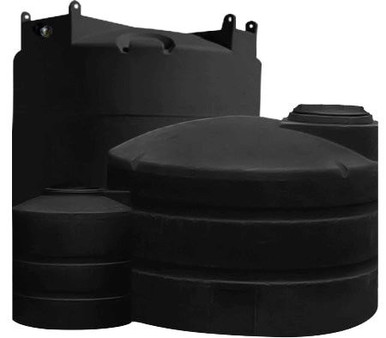
- Snyder Industries potable storage tanks: ranging from small loaf tanks under counter to 15,500 gallon outdoor verticals. Specify the "potable" or "NSF 61" series; not all Snyder tanks are NSF 61 listed.
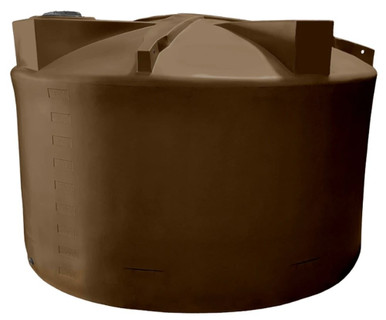
- Bushman emergency water storage tanks: 5,000 to 12,500 gallon NSF 61 listed for residential and emergency-water service.
- Chem-Tainer drinking-water rated cone-bottom tanks: for water-haul and rural distribution applications.
For fittings: Snyder MPN 34100053 (4-inch PP threaded bulkhead with EPDM gasket) is NSF 61 listed; Snyder MPN 34200179 (1-inch PVC socket-by-thread) is NSF 61 listed when ordered with the NSF 61 EPDM gasket and listed hardware. Always verify the complete kit, not just the bulkhead body.
Construction Details for NSF 61 Compliant Installation
Inlet (drinking-water fill)
- Air gap or backflow preventer per IPC 608 — minimum 1 inch air gap above the tank overflow rim, or RPZ backflow preventer.
- Inlet pipe NSF 61 listed (PVC, CPVC, copper, PEX-listed), Schedule 40 or higher.
- Inlet fitting NSF 61 + NSF 372 listed.
- Inlet does not introduce uncertified components into the water column.
Outlet (suction or gravity feed)
- NSF 61 listed bulkhead body, gasket, and washers.
- Manual ball valve immediately downstream of the bulkhead, NSF 61 + NSF 372 listed (the lead-free brass distinction matters here).
- Pump (if used) NSF 61 listed for the entire wetted-surface stack including impeller, shaft seal, and casing.
Vent
- Atmospheric vent with insect screen and weather hood.
- Screen material non-leaching (stainless or NSF 61 listed mesh).
- Vent terminus protected from contamination ingress.
Overflow
- Overflow line NSF 61 listed pipe.
- Overflow termination with air gap to grade or surface drainage.
- Overflow does not loop back into the supply.
Drain (cleanout)
- NSF 61 listed valve and bulkhead.
- Drain cap to prevent contamination during normal operation.
Manway / lid
- NSF 61 listed gasket and lid material.
- Lockable design preferred for security and tampering prevention.
- Vent integrated or separate — but NSF 61 in either case.
Common NSF 61 / NSF 372 Compliance Traps
Trap 1 — NSF 61 listed tank with non-NSF 61 fittings
The tank is listed; the bulkhead is not. The water column contacts both. The system is non-compliant. Always verify every wetted component including bulkhead, gasket, washer, valve, and any retrofit hardware.
Trap 2 — Lead-bearing brass on the discharge valve
A NSF 61 / NSF 372 listed tank with a non-lead-free brass ball valve at the discharge is non-compliant. The 0.25 percent weighted-average calculation includes the valve internals. Specify "lead-free" valves with NSF 372 listing.
Trap 3 — EPDM gasket NSF 61 confused with general-service EPDM
EPDM is a chemical family, not a single formulation. NSF 61 listed EPDM is a specific compound certified for potable contact. Generic EPDM gaskets purchased at a hardware store are not NSF 61 listed. Specify gaskets by part number with NSF 61 documentation.
Trap 4 — Reusing a tank after non-potable service
A tank that has held fertilizer, chemistry, or wastewater can never be returned to potable service. Plasticizer absorption, residual chemistry, and biofilm cannot be reliably removed. Procure dedicated potable tanks for potable service.
Trap 5 — Submersible pump without NSF 61 listing
The pump impeller, casing, and shaft seal are wetted surfaces. Specify NSF 61 listed potable-water pumps; do not substitute a sump pump or general-service centrifugal.
Trap 6 — Cross-connection from non-potable source
Connecting a potable tank to an irrigation or fire-suppression system without an air gap or RPZ backflow preventer creates a cross-connection that contaminates the potable supply on any pressure reversal. IPC 608 governs.
Trap 7 — California / Vermont / Maryland documentation gap
The tank, fittings, and valves are NSF 61 / NSF 372 listed but the project file lacks the state-specific paperwork. California DTSC inspectors expect a per-component record; missing paperwork can stall a building permit even when the components are compliant.
Trap 8 — Lead and Copper Rule Revisions (LCRR) effective 2024 not addressed
EPA published the LCRR October 2021, effective October 16, 2024. New requirements include lead service line inventory, mandatory lead testing in schools, and stricter action levels. Any potable storage tied to a public water system must have an LCRR-compliant operations plan. 40 CFR 141.80 et seq. governs.
Documentation Package for Potable Tank Installation
Every potable tank installation should generate a documentation package containing:
- Tank manufacturer NSF 61 listing certificate (the official NSF.org listing page screenshot is acceptable; the NSF "blue mark" alone is insufficient for jurisdictional review).
- Tank manufacturer NSF 372 listing certificate.
- Bulkhead and gasket NSF 61 / 372 listing certificates.
- Valve NSF 61 / 372 listing certificate (lead-free brass or stainless).
- Pump NSF 61 listing certificate (if applicable).
- Backflow preventer test certificate (where a RPZ is installed).
- State-specific certification (California DTSC, Vermont, Maryland, Louisiana as applicable).
- Hydrostatic test record at installation.
- Disinfection record per AWWA C652 (chlorination procedure for potable storage tank commissioning).
AHJ inspectors universally request this package at building-permit final and at annual inspection on public water systems.
Disinfection at Commissioning (AWWA C652)
A new potable storage tank must be disinfected before placing in service. AWWA Standard C652 governs. Three methods:
- Method 1 (chlorination by full filling): fill with chlorinated water at 25 mg/L free chlorine, hold 24 hours, then drain and refill with potable water.
- Method 2 (chlorination by spray): spray interior surfaces with 200 mg/L chlorine solution, hold 30 minutes, then rinse.
- Method 3 (chlorination by partial fill): fill 5 percent of capacity with 200 mg/L chlorine solution, swab interior, hold 6 hours, then drain.
After disinfection, draw two consecutive bacteriological samples 24 hours apart per AWWA C652 Section 6 — both must be free of total coliform before placing in service. Document the procedure and the sample results in the operations file.
Maintenance for Continued NSF 61 Compliance
- Annual inspection: visual interior inspection (where safe to enter) for biofilm, sediment, scale.
- Annual cleaning: drain, scrub, sanitize per AWWA C652 if interior shows growth or accumulation.
- 5-year recommissioning: full re-disinfection per AWWA C652 even with no observed contamination.
- Replace gaskets and seals at any work activity: NSF 61 gaskets do not last forever; replace whenever a fitting is disassembled.
- Lead and Copper Rule sampling: public water systems on the LCRR require routine sampling per the system's monitoring plan.
Internal Resources
- Tank Plumbing System Design Walkthrough
- Tank Fitting and Bulkhead Sizing Guide
- Tank Cleaning & Maintenance Schedule
- Tank Failure Mode Analysis
- Tank Decommissioning and Disposal
- Residential Water Storage & Rainwater Harvesting
- Chemical Compatibility Database
- Freight Cost Estimator
Source Citations
- Safe Drinking Water Act — 42 USC 300f et seq.
- 40 CFR Part 141 — National Primary Drinking Water Regulations
- 40 CFR Part 143 — National Secondary Drinking Water Regulations
- 40 CFR 141.80 et seq. — Lead and Copper Rule and Lead and Copper Rule Revisions (LCRR, effective October 16, 2024)
- Reduction of Lead in Drinking Water Act — Public Law 111-380 (2011)
- SDWA Section 1417 — Prohibition on Use of Lead Pipes, Solder, and Flux
- NSF/ANSI/CAN 61-2024 — Drinking Water System Components — Health Effects
- NSF/ANSI 372-2020 — Drinking Water System Components — Lead Content
- California Health and Safety Code Section 116875 (Assembly Bill 1953, signed 2006)
- California Code of Regulations Title 17 Section 7575
- Vermont Act 193 — codified at 10 V.S.A. Section 6651-6655
- Maryland COMAR 10.13.06
- Louisiana Administrative Code 51.XII.336
- International Plumbing Code (IPC) Section 605.2 and 608
- AWWA Standard C652 — Disinfection of Water-Storage Facilities
- EPA Maximum Contaminant Levels — 40 CFR 141.61 (organic), 141.62 (inorganic), 141.64 (DBPs)
Recommended Tanks for This Guide
Live pricing, updated automatically · estimate freight to your ZIP.