Tank Vent Selection: Mushroom Cap vs Flame Arrester vs Pressure-Vacuum Relief Valve by Service Chemistry, with NFPA 30 and API 2000 Framework
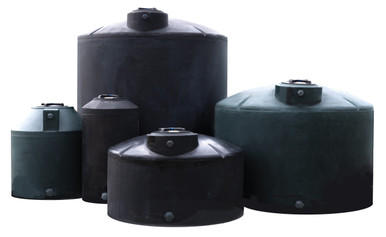
The vent on top of an atmospheric storage tank is not a passive opening. It is the engineered safety device that prevents tank collapse on drain-down, prevents tank rupture on fill, and on flammable service prevents external fire propagation back into the vapor headspace. The choice of vent hardware on a polyethylene tank ranges from a simple mushroom cap that shields the opening from rain and debris up to a UL-listed flame arrester combined with a pressure-vacuum relief valve. The right selection is dictated by the service chemistry, the regulatory framework that applies, and the operational fill and drain rate envelope. This article walks the decision framework for each vent type, the chemistry classes that drive the selection, and the sizing math that ensures the vent does not become the limiting factor in the tank's pressure envelope.
References cited: NFPA 30 Flammable and Combustible Liquids Code (the framework that governs flammable liquid storage); API Standard 2000 Venting Atmospheric and Low-Pressure Storage Tanks (the sizing methodology for normal and emergency vent capacity); ASTM D1998 (polyethylene tank pressure rating boundaries); manufacturer cut sheets for Norwesco, Snyder, Enduraplas, Chem-Tainer, and Bushman vent hardware specifications; and the consolidated industry guidance on vent hardware compatibility with polyethylene flange geometry. The numerical thresholds below are drawn from these sources; the field implications come from the vent-specification choices that operators routinely default into without an engineering review.
1. The Three Failures a Tank Vent Has to Prevent
The tank vent is the pressure-control element on the polyethylene tank's atmospheric envelope, and a polyethylene tank's atmospheric envelope is narrow. Polyethylene rotomolded tanks are typically rated for plus or minus 0.5 inch water column on the static envelope and may tolerate a few inches of transient. Outside that envelope, the consequences are immediate.
Failure mode 1: Vacuum collapse on drain-down. When liquid is pumped out of a sealed tank faster than air can enter through the vent, internal pressure drops below atmospheric. The polyethylene wall, which is engineered as a pressurized membrane, deflects inward. At sustained vacuum of approximately minus 1 inch water column, visible deflection appears at the dome. At minus 3 to minus 5 inches water column, the dome implodes into a permanent buckle. The implosion is irreversible; the tank is scrap. Vacuum collapse is caused by undersized vents on tanks with high-rate drain or by vents that are blocked by ice, debris, condensed product, or a closed isolation valve that someone forgot.
Failure mode 2: Pressure rupture on fill. When liquid is pumped into a sealed tank faster than vapor can leave through the vent, internal pressure rises above atmospheric. At plus 1 to 2 inches water column, the dome bulges visibly. At plus 5 to 10 inches water column, the dome cracks at the highest stress concentration (typically the manway flange or the vent fitting itself). Pressure rupture is caused by undersized vents, blocked vents, or fill rates that exceed the design envelope.
Failure mode 3: External fire propagation back through the vent. On flammable liquid service, the vent discharges flammable vapor at atmospheric pressure during fill cycles and during diurnal thermal breathing. If an external ignition source contacts that vapor stream and a flame travels back through the vent into the headspace, the result is an internal explosion that ruptures the tank and ignites the contents. Flame propagation back through a vent is the failure mode that flame arresters exist to prevent.
The vent hardware has to address all three failure modes simultaneously. The level of hardware sophistication scales with the service chemistry: water service can use a simple mushroom cap because failure modes 1 and 2 are the only concerns and a generous vent area handles them, whereas Class I flammable service requires a flame arrester plus a pressure-vacuum relief valve plus emergency vent capacity sized per API 2000.
2. Mushroom Cap Vent: When It Is the Right Choice
The mushroom cap is the simplest vent: a domed cover over a vertical pipe stub on the tank dome, sized to provide adequate flow area while keeping rain, leaves, and insects out. The mushroom cap does not provide flame arresting, does not provide pressure-vacuum relief, and does not seal against vapor emission. It is an open vent with a weather shield.
Mushroom cap vents are the right choice for:
- Potable water tanks where vapor emission is non-existent and the only design concern is fill/drain pressure balance plus debris exclusion. Bushman water reserves, Norwesco potable water tanks, and Enduraplas water-only configurations commonly ship with mushroom-cap vents.
- Non-volatile chemistry: dilute brine, fertilizer mineral solutions (UAN, ammonium thiosulfate, calcium chloride), industrial process water at non-elevated temperatures, dilute polymer solutions. The vapor emission rate is below regulatory threshold and there is no flammability concern.
- Non-toxic, non-corrosive chemistry where vapor emission has no environmental or operator-exposure consequence.
The mushroom-cap vent on a polyethylene tank is sized by the diameter of the vent stub. Common stub sizes by tank capacity:
- Up to 1,000 gallons: 2-inch nominal vent stub. Flow capacity approximately 800 SCFM at 0.5 inch water column differential. Adequate for fill/drain rates up to 80 GPM on water service.
- 1,000 to 5,000 gallons: 3-inch or 4-inch nominal vent stub. Flow capacity 1,500-3,000 SCFM at 0.5 inch water column. Adequate for fill/drain rates up to 200 GPM.
- 5,000 to 15,000 gallons: 4-inch or 6-inch nominal vent stub. Flow capacity 3,000-7,000 SCFM. Adequate for fill/drain rates up to 500 GPM.
- Above 15,000 gallons: dual 4-inch or single 6-inch nominal vent stub plus emergency vent provision per API 2000. Engineering review required.
Vents on the Norwesco N-40635 3,000 gallon water tank and the N-41500 1,000 gallon water tank are mushroom-cap configurations from the manufacturer; the vent capacity is matched to the typical fill/drain rate envelope on water service. The Bushman BM-WW-1500-GL-NAT water reserve uses an equivalent mushroom-cap configuration.
3. Pressure-Vacuum Relief Valve: When Vapor Containment Matters
The pressure-vacuum relief valve (PVRV) seals the vent stub during normal operation and opens at a pre-set pressure differential, typically plus 1 ounce per square inch and minus 0.5 ounce per square inch. The PVRV provides three improvements over the mushroom cap:
- Vapor containment during quiescent operation. The vent is sealed except during pressure events, which dramatically reduces vapor loss to atmosphere. For chemistry with vapor pressure that drives diurnal breathing, this matters operationally and environmentally.
- Spec-defined pressure envelope. The cracking pressure on both sides is defined by the PVRV setting, which converts the vent from a passive flow path into a calibrated control element. The tank's design pressure envelope is then known and documented.
- Fill and drain rate decoupling. The PVRV opens fully at the cracking pressure and provides design flow capacity, then closes when pressure equilibrates. The result is that the tank operates at near-atmospheric pressure during stable conditions, which extends service life on chemistries where headspace concentration affects degradation rate.
PVRV-fitted tanks are the right choice for:
- Volatile organic chemistry below the flammability threshold: methanol, ethanol, isopropanol at concentrations or temperatures that do not make them Class I flammable. The PVRV reduces emission and may bring the installation under reporting threshold for state air permits.
- Concentrated mineral acids and bases where vapor emission is operator-exposure or corrosion concern: hydrochloric acid (vapor is corrosive), sodium hypochlorite (chlorine off-gas), aqueous ammonia (ammonia off-gas).
- Chemistry where headspace inerting is desired: certain fine-chemical or pharmaceutical processes use a positive-pressure inert gas pad that the PVRV maintains.
PVRV sizing follows API 2000: the vent capacity at the cracking pressure must match or exceed the maximum normal pressure or vacuum generation rate from the operating envelope. For polyethylene tanks, the cracking pressure should be set at or below 50 percent of the tank's pressure rating to provide margin against transient overshoot. PVRV hardware on polyethylene tanks bolts to a 4-inch ANSI flange or a 6-inch ANSI flange depending on tank size; ensure the flange pattern matches the tank's vent provision before specifying.
Snyder Industries Captor double-wall tanks like the SII-5490000N42 1,550 gallon and the SII-5990102N42 1,000 gallon are commonly specified with PVRV configurations for aggressive chemistry service; the integrated annular containment plus PVRV plus XLPE primary wall is the standard pattern for hypochlorite, brine, and concentrated acid service.
4. Flame Arrester: When Flammable Service Demands Engineered Protection
The flame arrester is a passive device that allows vapor to flow through it but quenches any flame that attempts to propagate back through it. The arrester element is a stack of metal mesh, crimped ribbon, or sintered metal disks engineered with passages narrow enough that the heat-transfer rate from a propagating flame to the arrester body cools the flame below the ignition temperature in transit. The flame is extinguished within the arrester; the device is reusable and returns to flow service after the external fire is suppressed.
Flame arresters are required by NFPA 30 on tanks storing Class I flammable liquids (flash point below 100 degrees F) and are commonly specified on Class II combustible liquids (flash point 100-140 degrees F) where the operating temperature can approach the flash point. The technical distinction:
- End-of-line flame arrester: mounted at the vent terminus, prevents external fire from entering the vent. The standard configuration for atmospheric storage.
- In-line flame arrester: mounted in a vapor-recovery piping run, prevents flame propagation along the piping. Specified when vent vapors are routed to a thermal oxidizer or vapor-recovery unit.
- Detonation flame arrester: rated to stop a stable detonation, not just a deflagration. Required on long vapor headers where flame acceleration to detonation is possible.
Flame arrester selection on polyethylene tanks is rare because polyethylene is generally not specified for Class I flammable service. The flammability ranges that polyethylene can handle are limited by the polymer's response to high vapor pressure and by the heat distortion temperature. Polyethylene tanks for diesel, biodiesel, and waste oil service (typically Class II or Class III) commonly use a PVRV or a combined PVRV-and-flame-arrester unit. The Snyder SII-5740102N95703 275 gallon waste oil tank is one of the polyethylene products in this service envelope; the standard vent configuration includes a PVRV with optional flame arrester depending on local AHJ requirements.
For Class I flammable service, the materials of construction transition out of polyethylene. Carbon steel and stainless steel atmospheric tanks are the standard product, and the vent configuration moves to a combined PVRV plus end-of-line flame arrester plus emergency vent capacity sized per API 2000 emergency case. Polyethylene's role in flammable service is generally limited to secondary containment, drain pans, and dilute-chemistry secondary applications.
5. Vent Sizing per API 2000 for Normal and Emergency Cases
API Standard 2000 distinguishes normal vent capacity (sized for routine fill, drain, and thermal breathing) from emergency vent capacity (sized for external fire exposure that vaporizes inventory through the heated wall). Polyethylene tanks have specific considerations for both cases.
Normal vent capacity per API 2000. The required normal vent capacity is the larger of:
- Maximum liquid filling rate plus thermal in-breathing rate, with thermal in-breathing typically 1 SCFH per square foot of total tank wall area for most service classes.
- Maximum liquid drain rate plus thermal out-breathing rate, with thermal out-breathing typically 0.5 to 1 SCFH per square foot of total tank wall area for non-volatile and volatile service respectively.
For a 5,000 gallon vertical (96-inch diameter, 144-inch height, 405 square feet of wall area), thermal breathing is approximately 200-400 SCFH. Maximum fill rate at 200 GPM converts to approximately 1,600 SCFH of vapor displacement. Total normal vent capacity required: approximately 2,000 SCFH or 33 SCFM at the design pressure differential. A 4-inch mushroom cap or a 4-inch PVRV at standard cracking pressure handles this comfortably.
Emergency vent capacity per API 2000. The emergency case is external fire exposure that heats the wetted surface and vaporizes inventory through the heated wall. The required capacity is computed from the wetted surface area and the assumed heat absorption rate (21,000 BTU/hr per square foot for tanks under 200 sq ft wetted area, with capacity factors for larger tanks). For a 5,000 gallon vertical at 50 percent fill, wetted area is approximately 200 square feet and emergency vent capacity is approximately 60,000 SCFH. This is 30x the normal vent capacity and cannot be handled by the normal vent alone. The emergency vent is a separate large-area opening (typically a manway with a frangible cover or a rupture disc) sized to limit pressure during fire exposure.
Polyethylene tanks have a complication: external fire that delivers 21,000 BTU/hr per square foot will exceed the polymer's heat distortion temperature (approximately 175 degrees F) and the tank wall will fail before the emergency vent capacity becomes the limiting factor. Polyethylene tanks for service where external fire is a credible scenario should have additional protection: spray-cooling water (NFPA 13 type), berming and drainage to remove flammable inventory if the tank fails, or relocation behind a fire wall. The emergency vent provision is necessary documentation but is not the primary protection.
6. Vent Selection Decision Tree
The decision tree that converts service chemistry into a vent specification:
Question 1: Is the chemistry flammable per NFPA 30 Class I? Yes: stop, polyethylene tank is not the right product, switch to steel with combined PVRV + flame arrester. No: proceed.
Question 2: Is the chemistry combustible per NFPA 30 Class II or III, or does it generate flammable vapor at operating temperature? Yes: PVRV plus end-of-line flame arrester. No: proceed.
Question 3: Does the chemistry generate vapor that has emission, exposure, or corrosion impact? Yes: PVRV. Common cases: hypochlorite (chlorine off-gas), aqueous ammonia (ammonia off-gas), HCl (HCl off-gas), VOC-bearing solutions. No: proceed.
Question 4: Is the chemistry non-volatile, non-corrosive, and non-toxic? Yes: mushroom cap is sufficient. Common cases: water, dilute brine, fertilizer minerals, dilute polymer solutions, food-grade ingredients in stable form.
Question 5: Does the operating envelope include high fill rate (over 50 percent of tank diameter per minute) or vacuum drain? Yes: increase vent size or add a second vent regardless of chemistry-driven selection. No: standard vent size from manufacturer cut sheet is adequate.
Question 6: Does the operating environment expose the tank to ice, debris, animal nesting, or other vent-blocking hazards? Yes: add a guard screen or insect screen, increase vent inspection cadence to monthly, and add a low-pressure alarm to detect partial blockage before it becomes catastrophic. No: standard inspection cadence.
7. Common Vent Failure Modes and Field Indicators
Vent failures that have caused polyethylene tank rupture or collapse:
Insect nesting in mushroom-cap vents. Mud daubers, paper wasps, and certain beetles will build nests inside the vent stub during quiescent periods. The nest blocks the vent. The failure shows up at the next high-rate fill or drain. Mitigation: insect screen on the underside of the mushroom cap, monthly inspection during nesting season.
Ice plug in cold-climate installations. Vapor condensation in cold weather forms ice on the vent screen or inside the vent stub, gradually reducing flow area. The failure shows up after a winter cold snap when the next high-rate operation exceeds the reduced vent capacity. Mitigation: heated vent (small electric heater coil at the vent stub), oversized vent area to provide margin against partial icing, reduced fill/drain rate during freezing weather.
Polymerized product blocking the vent. Certain chemistries (acrylic monomers, some fertilizer formulations, certain biocide additives) polymerize in vapor phase and deposit on the cooler surfaces, including the inside of the vent. Over months, the deposit reduces flow area to zero. Mitigation: chemistry-specific vent selection, periodic mechanical cleaning, vent geometry that does not have cool spots (avoid long horizontal runs).
Closed isolation valve. Some installations include an isolation valve on the vent line for maintenance. If the valve is left closed after maintenance, the vent is ineffective. Mitigation: lockout/tagout procedure that flags the closed valve, visible position indicator, fill operation that requires the valve to be open before pump-start.
Mushroom cap dislodged. The mushroom cap on top of a vent stub can be dislodged by wind, by ice loading, by impact from maintenance traffic, or by corroded fasteners. With the cap missing, debris enters the vent and may block it; rain enters the tank and contaminates inventory. Mitigation: inspection cadence, secure-fastener pattern, weather-shielded enclosure on tanks in high-traffic or high-wind areas.
8. Vent Hardware Sizing by Tank and Service Examples
Practical sizing examples from the five-brand catalog:
- Norwesco 1,000 gallon water tank, fill rate 50 GPM: 2-inch mushroom cap with insect screen. Reference: N-41500.
- Norwesco 3,000 gallon water tank, fill rate 100 GPM: 3-inch mushroom cap with insect screen. Reference: N-40635.
- Norwesco 5,000 gallon vertical, water service, fill rate 150 GPM: 4-inch mushroom cap. Reference: N-40164.
- Norwesco 10,000 gallon vertical, water service, fill rate 250 GPM: 6-inch mushroom cap or dual 4-inch mushroom caps. Reference: N-43128.
- Norwesco 1,500 gallon vertical, hypochlorite or aqueous ammonia, fill rate 75 GPM: 4-inch PVRV at plus 1 oz / minus 0.5 oz cracking pressure. Reference: N-40146.
- Snyder Captor 1,550 gallon double-wall, hypochlorite or aggressive chemistry, fill rate 75 GPM: integrated PVRV plus secondary annulus vent. Reference: SII-5490000N42.
- Enduraplas 2,500 gallon industrial vertical, fertilizer service, fill rate 100 GPM: 4-inch mushroom cap or 4-inch PVRV depending on emission permit. Reference: EP-THV02500FG.
- Chem-Tainer 500 gallon HDPE, general industrial, fill rate 25 GPM: 2-inch mushroom cap. Reference: TC6446IA.
- Snyder waste oil 275 gallon double-wall, used motor oil service: integrated PVRV with optional flame arrester per local AHJ. Reference: SII-5740102N95703.
9. Inspection Cadence and Documentation for Vent Hardware
Vent hardware is one of the highest-priority inspection points on the tank because the consequence of vent failure is tank failure. The recommended cadence:
- Monthly visual: mushroom cap intact and seated, screen clear of debris, no visible nesting, no ice, no polymer deposit, vent stub upright (not bent), no leaks at the flange.
- Quarterly functional: with the tank at quiescent state, gently apply a small positive or negative pressure (a hand-held bellows or a small fan) and verify flow through the vent. Any PVRV crackings should be measured against spec.
- Annually: remove the vent cap or PVRV and inspect the bore for deposit, corrosion, or wear. Replace gaskets if disturbed. Restore and verify operation.
- After any external event that might have affected the vent: wind storm, ice storm, vehicle impact, fire response in the vicinity, vegetation overgrowth, animal activity. Re-inspect immediately.
Documentation for each inspection includes date, inspector, findings by element (cap, screen, stub, valve if PVRV, fasteners), corrective actions taken, and disposition. The records have value for insurance underwriting and for the as-installed performance baseline against which subsequent inspections compare.
OneSource Plastics ships polyethylene tanks with manufacturer-default vent hardware for the standard service envelope. Upgrade vents (PVRV, flame arrester, custom-cracking-pressure assemblies) are available for chemistry-specific applications. List pricing on standard SKUs is published on each PDP; LTL freight is quoted to your ZIP via the freight estimator or by phone at 866-418-1777.
For complementary reading, see our API 2000 vent sizing article for the deeper sizing math and our methane off-gassing tank headspace article for the related discussion on biogenic vapor management.
Recommended Tanks for This Guide
Live pricing, updated automatically · estimate freight to your ZIP.