130 Gallon Vertical Liquid Storage Tank - Natural White (32" x 46"): Complete Buyer's Guide
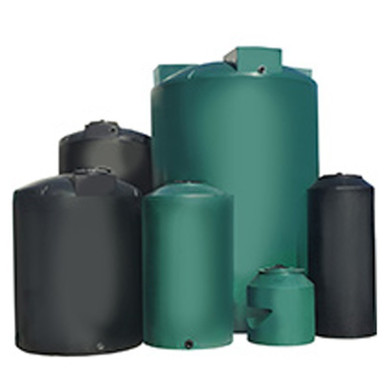
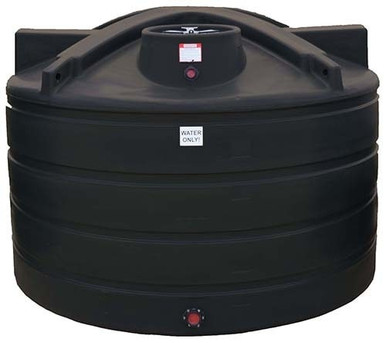
A 130-gallon vertical poly tank built around a 1.5 specific-gravity rating, which is what lets it carry the heavier agricultural chemistry — liquid fertilizer blends, suspension products, crop-protection concentrates — that thinner water-grade tanks cannot. Rotomolded by Norwesco from a single charge of virgin linear polyethylene, with the 1.25-inch outlet plumbed and pressure-checked at the factory.
Specifications at a Glance
Every figure below is pulled straight from the live product record for this exact tank — the same data on the product page, so what you read here and what you buy never disagree.
Standards & Materials
- ASTM D1998 — Standard Specification for Polyethylene Upright Storage Tanks. Governs wall-thickness and hydrostatic design for vertical rotomolded poly tanks of this class.
- FDA 21 CFR 177.1520 — Olefin polymers. The food-contact regulation the FDA-grade resin in this tank is compounded to meet.
- Specific gravity rating 1.5 — the tank is engineered for liquids up to 1.5× the density of water (water is about 8.34 lb/gal). Confirm your fluid’s SG before storage.
Product Overview
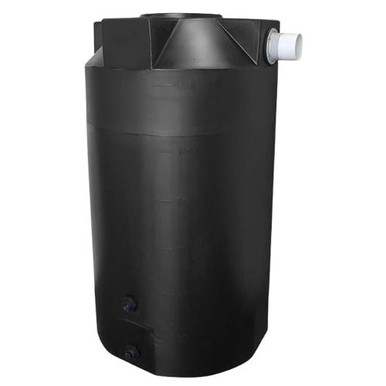
At 130 gallons this tank lands in the range a lot of operators reach for first: enough volume to batch a meaningful amount of product without committing to the footprint or freight of a thousand-gallon vessel. The dimensions tell the story — 46 inches tall on a 32-inch diameter, so it occupies roughly 5.6 square feet and clears a standard doorway lying down. That makes it as comfortable in a chemical shed or spray-shop corner as it is bolted to a nurse trailer.
The number that actually matters for a liquid tank is the specific-gravity rating, and this one carries 1.5. In plain terms that means the wall is molded thick enough to hold a liquid weighing up to 12.5 pounds per gallon — covering essentially the full catalog of ag chemicals, liquid fertilizers, and water-treatment solutions you would put in a tank this size. Run something lighter, like water at 8.34 pounds per gallon, and you are simply operating well inside the design envelope. The single-piece rotomolding process is what makes that rating trustworthy: there is no seam, no weld bead, and no glued joint anywhere in the vessel, so there is no fabricated junction to creep, crack, or weep under a sustained chemical head.
Empty, the tank weighs 45 pounds — one person can walk it into position. Fill it with a 1.5-SG product and you are putting roughly 1,671 pounds on the pad, which is the figure your foundation has to be sized for. The translucent natural-white wall lets you read the liquid level from across the room without breaking the lid seal, and it bounces off enough sunlight to keep the contents a few degrees cooler than a dark tank would in the same yard. Service temperature tops out at 120°F, with the UV package compounded into the resin rather than sprayed on, so it does not wear off the surface over a few seasons outdoors.
It ships with a 1.25-inch NPT outlet bulkhead already installed and leak-tested; there is no factory inlet, which is deliberate — you drill and fit your fill connection at the height your plumbing actually wants it. The 8-inch lid is sized for a fill line, a vent, and a hand or a dip-stick for inspection. Norwesco backs the vessel with a 3-year warranty against material and workmanship defects, and the polyethylene is FDA-compliant for food-grade contact even though most of these tanks spend their lives on the chemical side of the yard.
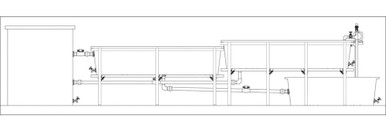
Technical Drawing
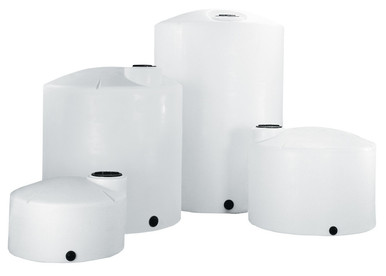
Official Norwesco technical drawing — 130 Gallon Vertical Liquid Storage Tank - Natural White (32" x 46")
Key Features and Specifications
- 130-gallon capacity — sized for agricultural chemical and fertilizer storage
- Constructed from virgin linear polyethylene (HDPE) with 1.5 specific gravity rating — handles liquids up to 12.5 lbs/gal
- 46" tall x 32" diameter — compact vertical footprint
- 45 lbs empty, approximately 1,671 lbs when full at rated specific gravity
- 1.25" NPT outlet fitting — factory installed and leak-tested
- 8" lid opening for fill, venting, and interior access
- FDA approved for potable water and food-grade liquid contact
- 3 Year Warranty from Norwesco against manufacturing defects
- Translucent white walls allow visual level monitoring without opening the tank and reflect sunlight to keep contents cooler
- Rated for continuous service up to 120 F / 48 C
- Seamless one-piece rotational molding — no seams, no welds, no leak points
- Manufactured by Norwesco — a leading name in rotomolded polyethylene tanks
- Place on a firm, level surface free of rocks or sharp objects that could damage the tank bottom. Ensure adequate ventilation if stored chemicals produce vapors
- Ships via LTL freight on a pallet — residential delivery with lift gate available
Installation and Setup Guide
With a tank this size the install is genuinely a one-afternoon job, but the half-hour you spend on the pad is what determines whether you get fifteen years out of it or fight wall stress from year three on. The vessel is forgiving; an unlevel base is not.
Site Preparation
You only need to support a 32-inch circle, so the pad does not have to be elaborate — but it has to be flat and continuous under the entire base. A 4-inch compacted-gravel pad or a small concrete slab both work; what you cannot do is set it on patchy ground, on a couple of pavers, or across a gap between two surfaces. Polyethylene under a 1,671-pound load will slowly conform to whatever it is sitting on, and any high spot or void becomes a point load that thins the floor over thousands of fill-and-draw cycles. Rake the area clear of gravel chips, bolt heads, and concrete spall before you set it down, and grade so rain sheets away from the base rather than pooling under it.
Placement and Connections
Plumb the 1.25-inch outlet for the shortest practical run to your transfer pump or applicator — on a small-bore line every extra elbow and foot of pipe shows up as real friction loss when you are drawing chemical. Critically, never thread rigid metal or solid PVC straight into a poly bulkhead and call it done. The tank breathes with temperature and flexes as it fills and empties, and a rigid connection has nowhere to give, so it works the fitting loose or splits the boss. Put a short flexible section — braided hose or a union with a swing — in the first foot off every fitting and let that absorb the movement. Match your fitting and valve material to the chemical, not just to the tank; the polyethylene tolerates the product but a cheap brass valve may not.
Venting
An 8-inch lid sealed tight makes the tank airtight, and an airtight closed tank is a tank waiting to deform. Draw 130 gallons out through the bottom with no air path in and the wall pulls inward under vacuum; pump product in fast with no path out and pressure builds against the dome. The fix is one screened or chemical-rated vent in the lid sized to your fastest fill or draw rate. If the chemistry off-gasses — many fertilizer and treatment products do — step up to a pressure/vacuum relief vent matched to that vapor rather than an open screen, so you keep the breathing without venting fumes across the whole shed.
Maintenance and Long-Term Care
A poly chemical tank asks very little of you, but "little" is not "nothing," and the failures that do happen are almost always things a five-minute walk-around would have caught a month earlier. Build the look into your existing chemical-handling routine.
Quarterly Inspection Checklist
- Wall and dome: Walk the full circumference looking for any bulge, soft spot, or change in the way light passes through the translucent wall. A localized bulge near the floor almost always means the pad has moved or you have put a product heavier than 1.5 SG in it — both are correctable before they become a rupture.
- Outlet and fittings: Check the 1.25-inch bulkhead and any installed inlet for weeping or crystallized chemical residue, which is the first visible sign of a slow seep. Snug threaded connections by hand only; polyethylene takes a set under load and over-torquing with a wrench crushes the threads instead of sealing them.
- Foundation: Confirm the gravel or slab is still dead level and the tank has not crept toward a low edge. Look for washout or settling on the rain-shed side.
- Vent: Make sure the vent is open and the screen is not blanked off by dust, dried product, or wasp nests. A plugged vent is the single most common cause of a collapsed or ballooned poly tank.
Cleaning and Chemical Changeover
Because this is a chemical-service tank, do not treat cleaning as a casual rinse. Before you switch from one product to another, follow the outgoing chemical's manufacturer guidance for neutralizing and flushing — some residues react badly with the next load, and an incompatible mix inside a sealed tank is a hazard, not just a contamination problem. Triple-rinse, capture the rinsate as the label requires, and confirm the polyethylene is rated for the incoming chemistry before you fill. The 8-inch lid gives you enough reach to wand the floor and verify it is clear of settled solids, which matter on a flat-bottom vertical because they accumulate around the outlet.
UV and Weather
The resin's UV stabilizers are doing real work, but they are a budget, not a force field. If this tank lives in full open sun — a fenceline, a yard with no shade — glance at the sun-facing wall once a year for chalking or a dulling of the surface. Both are cosmetic long before they are structural, but they are your cue to plan a shade panel or a relocation if the tank is in a punishing UV climate. A cheap roof or even a north-side placement adds years at the chalky end of the tank's life.
Alternatives and Comparisons
One-thirty isn't the only way to land in this volume class, and the right pick depends on how you'll move the product and where it has to sit. A couple of comparisons worth running before you commit:
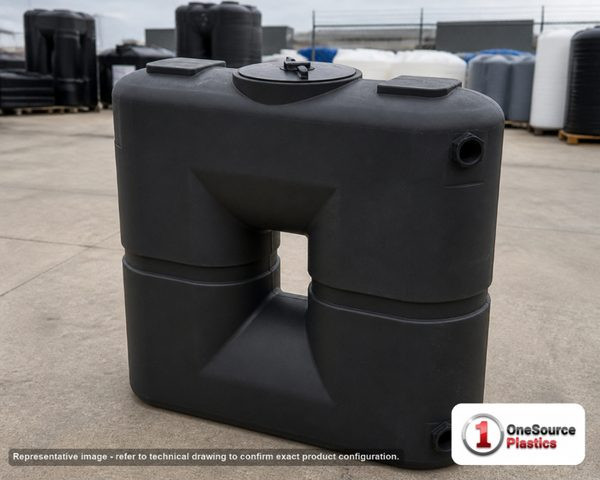
Vertical against a low-profile or doorway shape: this vertical wins on drainage and on floor space — the standing liquid column keeps positive pressure on the outlet right down to the last few gallons, which a flat horizontal tank can't match. The trade is height; if you're squeezing it under a bench, a shelf, or a low-eave shed, a doorway-style tank of similar volume buys you headroom at the cost of complete gravity draining.
One 130 against two smaller tanks: if you run two different chemistries, splitting into a pair of smaller vessels avoids the cross-contamination and changeover-flushing penalty entirely. If it's one product, the single 130 is cheaper per gallon and simpler to plumb.
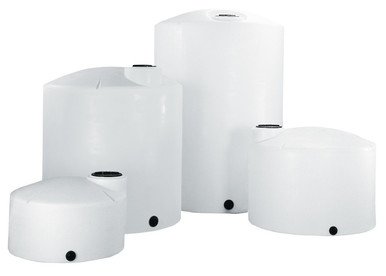
Other 130-Gallon Options

Frequently Asked Questions
How long will the 130 Gallon Vertical Liquid Storage Tank - Natural White (32" x 46") last?
Plan on fifteen to twenty years of service from a 130-gallon tank that's installed level and kept within its 1.5-SG and 120°F ratings. The lifespan-killers aren't age — they're a bad foundation, a chemical the polyethylene was never rated for, and a UV climate with no shade. Stay inside the design envelope and the seamless rotomolded wall simply doesn't have the weld seams or glued joints that fail on fabricated tanks.
What chemicals can I store in this tank?
The 1.5 specific-gravity rating is the gate: this tank handles agricultural chemicals, liquid fertilizers, herbicides, pesticides, and water-treatment and industrial solutions up to 12.5 pounds per gallon. It is not for gasoline, diesel, solvents, or anything flammable — polyethylene shrugs off most acids and bases but is attacked by certain hydrocarbons and strong oxidizers. Always confirm the specific chemical against a compatibility chart before the first fill, and reconfirm before any changeover.
What kind of foundation does a 130-gallon tank need?
Size the pad for the full load: about 1,671 pounds with a 1.5-SG product, spread over a 32-inch circle. A 4-inch compacted-gravel bed or a small concrete slab both carry that easily — the non-negotiable is that the surface is flat and unbroken under the entire base and free of rock chips or hardware. An uneven base is the number-one cause of premature wall failure on tanks this size.
Does this tank come with a warranty?
Yes — Norwesco's 3-year warranty covers defects in materials and workmanship: factory cracks, pinholes, fitting flaws, and material failures present from the start. It does not cover storing a product heavier than the 1.5-SG rating, setting it on a bad foundation, chemical attack from an incompatible liquid, or impact damage. Keep your receipt and a couple of photos of the finished install on file in case you ever need to file.
Can I install this tank underground?
No. This is an above-ground vertical and it is not engineered for burial — surrounding soil exerts inward pressure the flat cylindrical wall can't resist, so burying it would collapse the tank and void the warranty. For below-grade storage you want a purpose-built underground cistern with the ribbed, reinforced wall designed to take soil load.
Buying Considerations
Three checks before you order. First, walk the spot with a tape: 46 inches of height and a 32-inch diameter, plus room around it to reach the outlet and the lid — tight corners look fine on paper and fight you at install. Second, pull the SG of the exact product you're storing and confirm it's at or under 1.5; running heavier than the rating is the fastest way to void the warranty and bulge the wall. Third, sort the unload: at 45 pounds empty this one's easy to handle off the truck, but it still arrives on an LTL pallet, so request a liftgate if you don't have a dock or a forklift on site.
Related Products You May Need
Questions? Call (866) 418-1777 — our team knows these products inside and out and can help you select the right tank for your application.
Recommended Tanks for This Guide
Live pricing, updated automatically · estimate freight to your ZIP.