
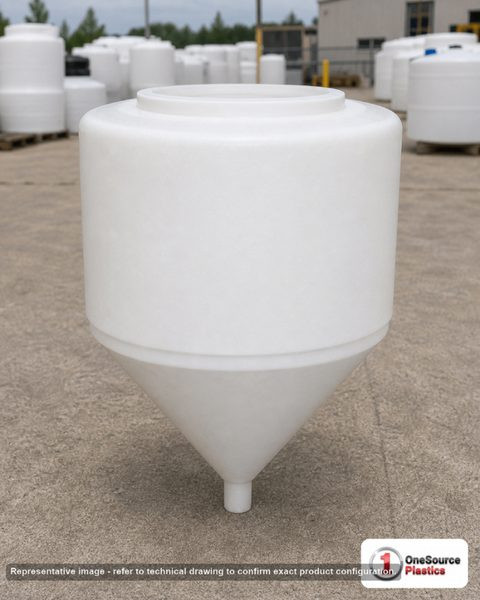
2500 Gallon 15 Degree Cone Bottom Tank: Complete Buyer's Guide
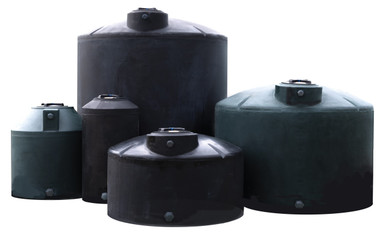
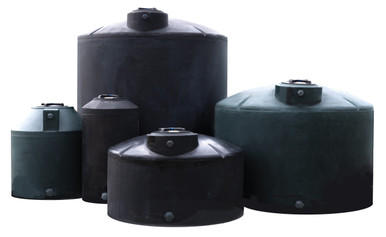
2,500-gallon white cone bottom tank built for full-drain mixing and batch processing. Manufactured by Norwesco from virgin linear polyethylene (HDPE) rated to handle liquids up to 12.5 pounds per gallon. FDA approved for contact with potable water, ensuring safe storage for drinking water and food-grade liquids.
Specifications at a Glance
Every figure below is pulled straight from the live product record for this exact tank — the same data on the product page, so what you read here and what you buy never disagree.
Standards & Materials
- ASTM D1998 — Standard Specification for Polyethylene Upright Storage Tanks. Governs wall-thickness and hydrostatic design for vertical rotomolded poly tanks of this class.
- FDA 21 CFR 177.1520 — Olefin polymers. The food-contact regulation the FDA-grade resin in this tank is compounded to meet.
- Specific gravity rating 1.5 — the tank is engineered for liquids up to 1.5× the density of water (water is about 8.34 lb/gal). Confirm your fluid’s SG before storage.
Product Overview
The 2,500 Gallon 15 Degree Cone Bottom Tank is a full-drain process vessel for operations that cannot tolerate a leftover heel of liquid sitting on a flat floor between cycles. Chemical blenders, water-treatment plants, and large agricultural mix yards reach for this geometry when emptying the tank completely is part of the recipe, not an afterthought. The 15-degree slope is the shallowest cone Norwesco molds, which keeps the overall stack height workable while still letting the tank drain itself by gravity.
Norwesco rotationally molds the body in one piece from virgin linear polyethylene, so there are no seams, weld lines, or bonded joints to fail along the cone. The resin is rated to 1.5 specific gravity, covering liquids up to 12.5 pounds per gallon across the agricultural-chemical and fertilizer range, with UV inhibitors compounded into the wall and a 120 F / 48 C continuous service ceiling. The translucent natural-white wall lets you read the level and inspect for stress without opening the lid.
The vessel stands 108 inches tall and 91 inches in diameter and tips the scale at about 31,676 pounds when full at 1.5 SG — load that transfers entirely through the stand into the foundation. A factory-installed 3-inch NPT outlet sits at the cone tip for complete gravity drainage, and the 16-inch lid opens for filling, cleaning, and mounting instrumentation. Norwesco backs the tank with a 3-year warranty against manufacturing defects, and we inspect every unit again before it ships.
Technical Drawing
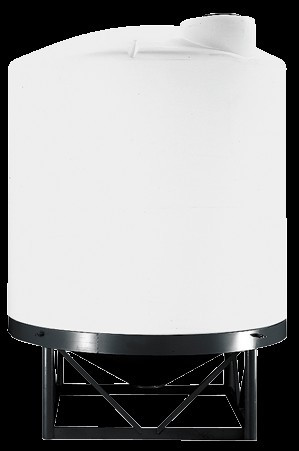
Official Norwesco technical drawing — 2500 Gallon 15 Degree Cone Bottom Tank
Key Features and Specifications
- 2,500-gallon capacity — sized for full-drain mixing and batch processing
- Constructed from virgin linear polyethylene (HDPE) with 1.5 specific gravity rating — handles liquids up to 12.5 lbs/gal
- 108" tall x 91" diameter — compact vertical footprint
- 401 lbs empty, approximately 31,676 lbs when full at rated specific gravity
- 3" NPT outlet fitting — factory installed and leak-tested
- 16" lid opening for fill, venting, and interior access
- FDA approved for potable water and food-grade liquid contact
- 3 Year Warranty from Norwesco against manufacturing defects
- Translucent white walls allow visual level monitoring without opening the tank and reflect sunlight to keep contents cooler
- Rated for continuous service up to 120 F / 48 C
- Seamless one-piece rotational molding — no seams, no welds, no leak points
- Manufactured by Norwesco — a leading name in rotomolded polyethylene tanks
- Must be installed on the manufacturer-supplied or compatible stand rated for the full loaded weight. Never rest a cone bottom tank directly on its apex
- Ships via LTL freight — allow 2-3 weeks for delivery. Lift gate and residential delivery available at additional cost
Installation and Setup Guide
A 15-degree cone is the shallowest drain angle Norwesco offers, and that shallow slope is the whole reason this 2,500-gallon tank exists: it gives you self-emptying geometry without the towering stand height a 45- or 60-degree cone demands. The catch is that everything rides on the steel structure beneath it. The tank itself is sound out of the mold; the way it fails in the field is almost always a stand problem.
Building the Stand and Pad
This tank stands 108 inches tall before it ever meets a stand, and at 91 inches across it covers roughly 45 square feet of cone and skirt. Loaded to its 1.5 specific-gravity rating it pushes about 31,676 pounds straight down through the legs of whatever supports it. Pour a reinforced slab a structural engineer has sized for that point-load pattern, not a generic 4-inch pad rated for distributed weight. The legs concentrate force into four or six small footprints, which is a completely different loading case than a flat-bottom tank spreading its weight over the entire floor.
Seating the Cone
The cone must sit fully cradled in the stand's conical seat with continuous contact around the circumference. Air gaps between the polyethylene and the steel create unsupported spans, and at 31,000-plus pounds an unsupported span is where a stress crack starts. Shim and level the stand legs first, confirm the seat ring is true, then lower the tank so the cone beds evenly. Never let the apex carry load directly against a hard point.
Outlet and Vent Plumbing
The factory 3-inch NPT outlet sits at the bottom of the cone where every last gallon drains to. Run schedule 80 PVC or stainless from it, support the pipe independently within the first foot so its weight never hangs on the bulkhead, and add a full-port valve you can isolate for batching. Because this is a closed chemical vessel, fit a pressure/vacuum relief vent in the 16-inch lid sized for your fastest fill and draw rates. A cone tank empties quickly once the valve opens, and a vent that cannot pull air fast enough will dimple the upper wall on the way down.
Maintenance and Long-Term Care
A cone-bottom tank in chemical service lives a harder life than a static water reservoir, and the maintenance reflects that. You are inspecting a structure under sustained load that also sees the chemistry of whatever you batch through it.
Stand and Seat Inspection
- Leg and weld check: Quarterly, get under the tank and look at the stand. Surface rust is cosmetic; flaking scale at a weld, a bowed leg, or a footing that has settled out of plane is a structural warning. Correct it before the next fill.
- Cone-to-seat contact: Confirm the cone is still bedded all the way around. A tank that has worked loose during fill/drain cycling will show a witness line or a fresh gap at the seat.
- Outlet fitting: The lowest point of any cone tank is also where sediment and the harshest concentration settle. Inspect the 3-inch bulkhead and valve for weeping every quarter, and snug the threaded joint by hand if it has crept.
Flushing Between Batches
The advantage of the cone is also its maintenance routine: open the valve, let it drain to zero, and flush. Because nothing pools on a flat floor, a thorough rinse genuinely clears the vessel. When you change chemistries, follow the incoming chemical manufacturer's decontamination procedure and verify compatibility before the first new batch. This tank carries no food or drinking-water role in cone service, so cleaning is about cross-contamination control, not sanitation.
Resin and Stress Watch
The translucent natural-white wall is a diagnostic tool. Backlight it and you can read the level and spot stress whitening at the cone-to-sidewall transition, which is the highest-stress zone on the part. Any milky banding there means the load path is wrong. The UV package molded into the resin holds up outdoors, but inspect the sun-facing side yearly for chalking if the tank lives in open sun.
Alternatives and Comparisons
At 2,500 gallons the 15-degree cone sits in a useful middle ground: enough volume for serious batch work, but a low enough cone that you are not building a mezzanine to reach the lid. Whether it is the right tool comes down to how aggressively you need the vessel to self-drain.
Why 15 degrees instead of a steeper cone: A 15-degree slope drains thin, free-flowing liquids cleanly while keeping overall height manageable, which matters in buildings with limited ceiling. If you batch heavy slurries or settling solids, a 30- or 45-degree cone clears them better but adds several feet of stand height and cost. If you never need a complete drain at all, a flat-bottom vertical of the same volume is cheaper and shorter, with the trade-off that you leave a heel of liquid behind every cycle.
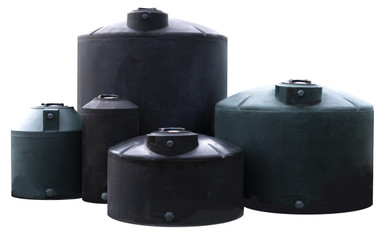
Other 2500-Gallon Options

Frequently Asked Questions
How long will the 2500 Gallon 15 Degree Cone Bottom Tank last?
With proper stand support and use within its 1.5 specific-gravity and 120 F limits, expect 15 to 20 years from this tank. Cone-bottom vessels often outlast that estimate in clean batch service because they self-drain and never sit with a stagnant heel attacking the floor. The variables that shorten life are a marginal stand, repeated thermal shock, and chemistries pushed outside the polyethylene's compatibility window.
What chemicals can I store in this tank?
It handles the same broad range of agricultural and industrial chemistries any 1.5-SG Norwesco tank is rated for: liquid fertilizers, most acids and bases, surfactants, and water-treatment solutions within that density. Verify every product against a polyethylene compatibility chart first. It is not for fuels, solvents, or flammables. In cone-bottom batching duty this is a chemical-process vessel, not a potable-water tank.
What kind of foundation does a 2500-gallon tank need?
The full 2,500-gallon load reaches roughly 31,676 pounds at 1.5 SG, and all of it transfers through the stand legs into the slab. You need an engineered reinforced-concrete foundation sized for concentrated point loads, not a distributed-weight pad. Get a structural professional to specify it; the cone geometry changes the loading case entirely.
Does this tank come with a warranty?
Norwesco backs it with a 3-year warranty against manufacturing defects in materials and workmanship. That covers molded-in faults such as pinholes, cracks, and fitting defects present from the factory. It does not cover an undersized or failed stand, exceeding the rated specific gravity, chemical attack from an incompatible product, or impact damage. Photograph the stand installation and keep your paperwork.
Can I install this tank underground?
No. Cone-bottom tanks are engineered to hang in an above-ground stand, not to resist soil pressure. Burying one would collapse the cone and void the warranty. If you need below-grade storage, look at our underground cistern and septic lines, which are ribbed and reinforced specifically for burial loads.
Buying Considerations
Three things decide whether this 2,500-gallon cone tank works on your site. First, total installed height: 108 inches of tank plus the stand can easily exceed nine feet to the lid, so confirm your ceiling and your fill access before you order. Second, the stand itself, which is the load-bearing component and must be rated for the full 31,676-pound wet weight at 1.5 SG; do not improvise a frame. Third, freight and rigging, because this tank ships oversized on a dedicated truck and needs a forklift or crane to set onto its stand. Listed at $2,535.83 before freight, with delivery quoted to your ZIP.
Related Products You May Need
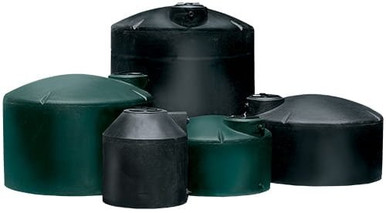
Questions? Call (866) 418-1777 — our team knows these products inside and out and can help you select the right tank for your application.
Recommended Tanks for This Guide
Live pricing, updated automatically · estimate freight to your ZIP.