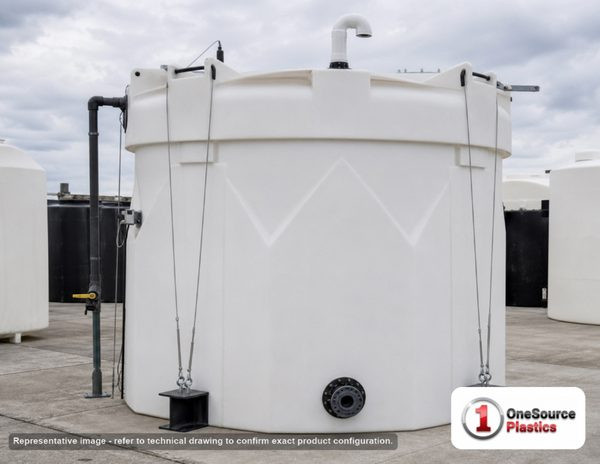
750 Gallon Doorway Water Tank: Complete Buyer's Guide
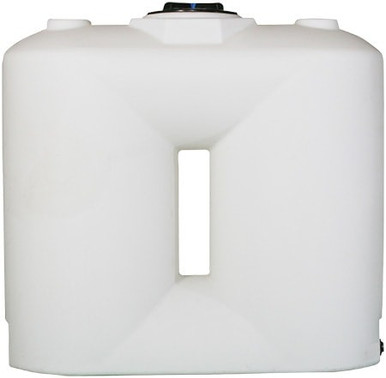
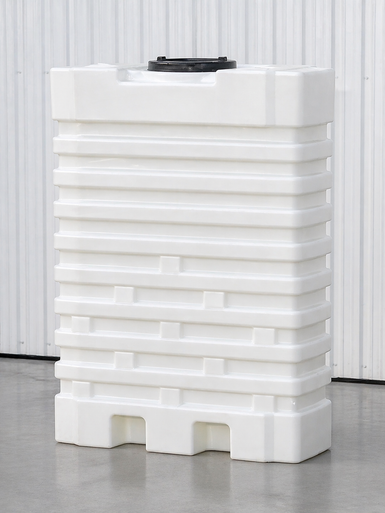
The 750-gallon doorway water tank is built to solve a specific problem: getting substantial water storage into a space you can only reach through a standard doorway. At 82 inches long but just 35 inches wide and 85 inches tall, it slips through a normal door opening, then holds 750 gallons of potable water once inside — FDA-compliant, with a 2-inch siphon outlet for clean draw-down.
Specifications at a Glance
Every figure below is pulled straight from the live product record for this exact tank — the same data on the product page, so what you read here and what you buy never disagree.
Standards & Materials
- ASTM D1998 — Standard Specification for Polyethylene Upright Storage Tanks. Governs wall-thickness and hydrostatic design for vertical rotomolded poly tanks of this class.
- FDA 21 CFR 177.1520 — Olefin polymers. The food-contact regulation the FDA-grade resin in this tank is compounded to meet.
- Specific gravity rating 1.5 — the tank is engineered for liquids up to 1.5× the density of water (water is about 8.34 lb/gal). Confirm your fluid’s SG before storage.
Product Overview
Most large tanks assume you can set them outdoors or roll them through a wide bay. The doorway tank is for everyone who can't — a basement, an interior utility room, a finished outbuilding, a retrofit into an existing structure. Its defining dimension is the 35-inch width: narrow enough to clear a standard 36-inch door frame, so you can move 750 gallons of water capacity into a room that would never accept a conventional six-foot-wide cylinder.
To pack that capacity into a doorway-friendly width, the tank trades the cylinder for an elongated form — 82 inches long and 85 inches tall on a 35-inch footprint. Norwesco rotomolds it as a single seamless piece of virgin linear polyethylene with FDA-compliant resin for potable and food-grade contact, so the water inside stays safe to drink and the seamless wall offers no joint to leak or crevice to harbor biofilm. The wall is rated to a 1.5 specific gravity, well beyond water's needs, giving it ample structural margin.
The translucent white wall lets you read the water level at a glance — useful for an indoor tank you check by eye rather than instrument — and reflects light to keep contents cooler. Empty, the tank weighs 319 pounds; filled with water it carries roughly 9,702 pounds, a load the floor it sits on must be rated to support, which is a real consideration for an indoor or upper-level installation.
The outlet is a 2-inch NPT fitting with a 2-inch siphon tube, factory-installed and leak-tested. The siphon draws from low in the tank for a more complete pull-down — valuable when you want to use the full 750 gallons. The 16-inch lid serves fill, vent, and inspection. Maximum service temperature is 120°F. Norwesco's 3-year warranty applies, and the tank ships LTL freight — allow a couple of weeks, with liftgate available.
Technical Drawing
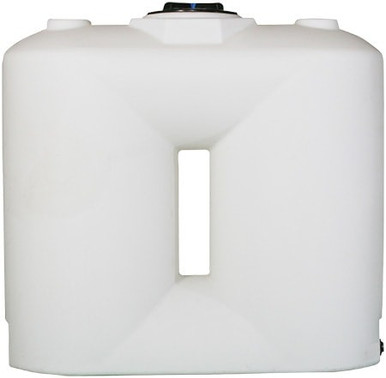
Official Norwesco technical drawing — 750 Gallon Doorway Water Tank
Key Features and Specifications
- 750-gallon capacity — sized for tight-access indoor liquid storage
- Constructed from virgin linear polyethylene (HDPE) with 1.5 specific gravity rating — handles liquids up to 12.5 lbs/gal
- 82" long x 35" wide x 85" tall
- 319 lbs empty, approximately 9,702 lbs when full at rated specific gravity
- 2" fitting with 2" siphon NPT outlet fitting — factory installed and leak-tested
- 16" lid opening for fill, venting, and interior access
- FDA approved for potable water and food-grade liquid contact
- 3 Year Warranty from Norwesco against manufacturing defects
- Translucent white walls allow visual level monitoring without opening the tank and reflect sunlight to keep contents cooler
- Rated for continuous service up to 120 F / 48 C
- Seamless one-piece rotational molding — no seams, no welds, no leak points
- Manufactured by Norwesco — a leading name in rotomolded polyethylene tanks
- Place on a firm, level surface free of rocks or sharp objects that could damage the tank bottom. Ensure adequate ventilation if stored chemicals produce vapors
- Ships via LTL freight — allow 2-3 weeks for delivery. Lift gate and residential delivery available at additional cost
Installation and Setup Guide
The doorway tank's whole purpose is interior placement, so the install has two unusual priorities: actually getting it through the opening, and confirming the floor can carry the load. The water plumbing is the easy part.
Getting It In and Floor Loading
Before delivery, measure your access path end to end — door width, hallway turns, and any height restriction — against the 35-inch width and 85-inch height. The tank clears a standard door on its narrow dimension, but tip it or turn a tight corner and the 82-inch length comes into play, so plan the route. Then verify the floor: a full tank weighs roughly 9,702 pounds concentrated on the 82-by-35-inch footprint. On a slab-on-grade that's no issue; on a wood-framed or upper floor, confirm with a professional that the structure carries it — this is the most overlooked step in an indoor tank install.
Placement and Connections
Set the tank on a flat, level surface free of debris. Connect your fill line and plumb the 2-inch siphon outlet, keeping the run clean so the siphon doesn't trap air and break its low draw. Use a flexible coupling at the outlet to absorb thermal movement. For an indoor tank, route the connections and an overflow so any leak or overflow drains safely rather than into the room.
Venting
Fit a screened vent in the 16-inch lid sized to your fill and draw rate so the tank breathes — no vacuum on draw, no pressure on fill. Indoors, the screen keeps debris and insects out of the potable water; if the room is closed, ensure the vent path reaches adequate air so the tank can breathe freely.
Maintenance and Long-Term Care
An indoor potable water tank is easy to maintain — it's protected from weather and UV — but the water still needs periodic attention to stay fresh and safe, and the indoor setting makes leak prevention a priority.
Quarterly Inspection Checklist
- Water clarity: Check the level and clarity through the translucent wall and the 16-inch lid. Indoor storage and the white wall keep light low, so cloudiness or sediment usually points to stale water needing a refresh.
- Fittings and floor: Inspect the 2-inch siphon outlet and fill connection for any weeping — a small indoor leak does outsized damage. Check that the floor under the tank shows no sign of stress or moisture.
- Vent screen: Confirm the vent is clear and the screen intact.
- Level base: Verify the tank still sits level and hasn't shifted.
Cleaning and Sanitizing
Sanitize a potable water tank at least annually, more often if water sits a long time. Drain, scrub the interior through the 16-inch lid, then disinfect with a chlorine solution — about a quarter cup of unscented household bleach per 15 gallons used — let it stand a couple of hours, drain, and flush with fresh water until no chlorine odor remains. The siphon outlet helps you pull the tank down completely for cleaning.
Indoor Considerations
Because it lives inside, this tank is spared UV entirely, so chalking isn't a concern. Instead, watch ambient temperature — keep it within the 120°F service limit — and in unheated spaces guard against freezing, since a full tank in a hard freeze can be damaged and would flood the room if it failed. Good drainage planning around the tank protects the space.
Alternatives and Comparisons
The doorway format is a deliberate trade, so compare on access and placement:
Doorway tank versus a standard vertical cylinder: if your storage location is only reachable through a normal door, the doorway tank is often the only option that fits — a six-foot-wide cylinder simply won't pass. If you can place a tank outdoors or through a wide opening, a standard vertical is cheaper per gallon and drains under a taller column. The doorway tank's premium buys you access, not capacity.
Sizing within the doorway line: these tanks come in a range of capacities all sharing the narrow profile; the 750 is near the top end. If your space or floor loading is limited, a smaller doorway tank fits and weighs less while still passing the same door.
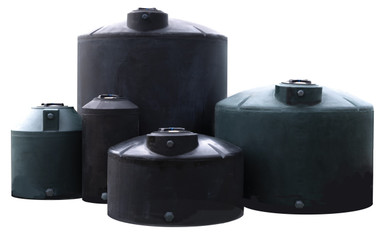
Other 750-Gallon Options
Frequently Asked Questions
How long will the 750 Gallon Doorway Water Tank last?
Fifteen to twenty years is realistic, and indoor placement helps — spared UV and weather, a doorway tank's main wear factors are largely removed. With a level base, a sound floor, and routine sanitizing, the seamless rotomolded wall comfortably reaches the upper end of that range.
What chemicals can I store in this tank?
This is a potable water tank: FDA compliant for drinking water and food-grade liquids, and rated to a 1.5 specific gravity, so it comfortably handles water and benign aqueous solutions. While the high SG rating gives structural margin, doorway tanks are intended for water and water-based storage — for aggressive chemicals confirm compatibility carefully, and never use it for fuels, solvents, or flammables, especially indoors.
What kind of foundation does a 750-gallon tank need?
A full tank weighs roughly 9,702 pounds on the 82-by-35-inch footprint. On a concrete slab that's fine; on a wood-framed or upper floor, have a professional confirm the structure carries the concentrated load before installing. A flat, level surface free of debris is the requirement — and floor loading is the special concern for an indoor tank.
Does this tank come with a warranty?
Yes — Norwesco's 3-year warranty covers defects in materials and workmanship. It excludes uneven or improper installation, freezing damage, and impact damage. For an indoor tank, keep documentation of a level install on a floor rated for the load.
Can I install this tank underground?
No — this is an above-ground tank, and the doorway design is specifically for interior placement, not burial. Soil pressure would deform the wall. For below-grade water storage, use a purpose-built underground cistern designed for soil load.
Buying Considerations
Two checks unique to a doorway tank, plus the usual. First, measure your entire access route — door width, turns, height — against the 35-inch width, 82-inch length, and 85-inch height to be sure it actually reaches the room. Second, confirm the floor carries roughly 9,702 pounds full, especially on framed or upper levels. Then verify a level base and plan for freeze protection if the space is unheated. The 2-inch siphon outlet gives you complete draw-down. It ships LTL on a pallet — allow a couple of weeks and request a liftgate, since you'll be moving it indoors by hand or cart from the truck.
Related Products You May Need
Questions? Call (866) 418-1777 — our team knows these products inside and out and can help you select the right tank for your application.
Recommended Tanks for This Guide
Live pricing, updated automatically · estimate freight to your ZIP.