Industrial Wash-Bay Drainage Tank Sizing: Vehicle Wash, Equipment Cleaning, and Floor Drain Holding
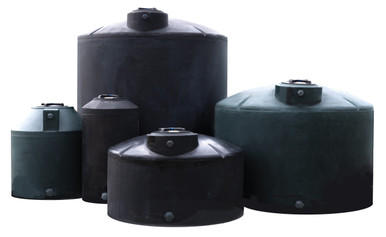
Wash-bay drainage is the unglamorous middle tier of industrial water management. Above it sits process water and stormwater compliance. Below it sits sanitary sewer. Wash-bay drainage falls in between - regulated under federal pretreatment 40 CFR 403 and state-equivalent codes, but typically self-managed by the fleet operator rather than designed by an engineering firm. The result: a lot of fleet operators undersize the holding tank, get cited by their POTW for slug-load discharge, or oversize the tank and waste capital. This guide is the operational sizing math for the three common wash-bay tank applications: vehicle wash, equipment cleaning, and floor-drain hold.
SKU references throughout pull from real Norwesco, Snyder Industries, and Chem-Tainer product catalogs in the 2026-03-26 OneSource Plastics master catalog snapshot. BC list pricing is shown before LTL freight; freight is quoted to ZIP through the Freight Cost Estimator or by phone at 866-418-1777.
Three Wash-Bay Sizing Use Cases
Wash-bay drainage tanks split into three operational profiles, each with different sizing math:
- Vehicle wash holding - holds wash water from fleet vehicle washing (truck wash, equipment wash, rail-car wash) before discharge to a treatment system or sanitary sewer.
- Equipment cleaning holding - holds wastewater from cleaning industrial equipment (parts washers, oil-and-grit interceptors, machinery rinse) where the discharge has higher contaminant load and may require oil-water separation.
- Floor-drain holding - catches general floor-drain runoff from a manufacturing or maintenance facility, mixed wastewater from multiple sources, before treatment or discharge.
The sizing approach for all three is the same general framework: peak flow rate times retention time, with pretreatment compliance overlaid.
Federal and State Regulatory Framework
40 CFR 403 - National Pretreatment Standards
The Federal General Pretreatment Regulations under 40 CFR Part 403 prohibit discharges that interfere with POTW (publicly-owned treatment works) operations or pass through untreated. The categorical pretreatment standards under 40 CFR 413 (electroplating), 40 CFR 433 (metal finishing), 40 CFR 437 (centralized waste treatment), and 40 CFR 442 (transportation equipment cleaning) cover specific industries. Fleet operators handling general vehicle wash typically fall outside the categorical standards but are still subject to the General Pretreatment Regulations and to local POTW pretreatment requirements.
40 CFR 442 - Transportation Equipment Cleaning
If your operation cleans tanker trucks (chemical cargo, food-grade cargo, petroleum cargo), rail tank cars, or transportation vessels, you fall under 40 CFR 442. The standards prescribe BAT (best available technology economically achievable) limits for oil and grease, BOD, COD, TSS, and specific organics. Holding-tank capacity for these operations needs to handle the full daily peak load with adequate retention for solids settling.
Local POTW limits
Each POTW publishes local discharge limits for parameters not covered federally - typically pH (6.0-9.0 most common), oil and grease, total suspended solids, COD, BOD, and metals. Slug-load prohibitions are common: discharge cannot exceed a specific gallons-per-minute or specific concentration spike rate. Holding tanks act as the buffer between operational discharge and slug-load compliance.
Vehicle Wash Holding: The Sizing Math
The water volume per vehicle wash varies by vehicle type and wash equipment.
| Vehicle | Manual wash gallons | Pressure-wash gallons | Auto wash bay gallons |
|---|---|---|---|
| Light truck / pickup | 40-80 | 25-50 | 35-60 |
| Box van / step van | 75-150 | 50-100 | 60-120 |
| Class 8 tractor (no trailer) | 100-200 | 75-150 | 100-180 |
| Class 8 tractor + 53' trailer | 200-400 | 150-250 | 200-320 |
| Bus (transit / school) | 150-300 | 100-200 | 150-250 |
| Off-road equipment (loader, dozer) | 300-600 | 200-400 | N/A |
| Aircraft (commercial regional) | N/A | 800-1500 | N/A |
Sizing rule: holding tank volume equals peak daily wash volume times retention time factor. Retention factor depends on the discharge mechanism:
- Continuous discharge to sanitary sewer at metered rate - retention factor 1.0x (the tank holds one peak day; metered discharge over 24 hours).
- Discharge to oil-water separator then sewer - retention factor 1.5x (account for separator residence time and oil-skim cycles).
- Discharge to pump truck for offsite disposal - retention factor 2.0-3.0x (account for pump truck scheduling and missed pickups).
- Discharge to onsite treatment then surface water - retention factor 2.5-4.0x (treatment system needs steady feed; tank buffers the operational variability).
Worked example: small fleet wash bay
15-vehicle fleet of Class 8 tractors with 53-foot trailers, washed weekly at the fleet maintenance facility. Each wash uses 250 gallons (pressure-wash). Weekly volume is 15 vehicles times 250 gallons equals 3,750 gallons, but the wash is concentrated in two days (Tuesday/Wednesday). Peak two-day volume is the same 3,750 gallons. Continuous discharge to sanitary sewer at metered rate (75 gpm allowed by POTW) means the tank empties in 50 minutes. Daily peak volume is approximately 1,875 gallons (half the weekly load on a peak day). Tank size: 1,875 gallons times 1.0x retention = 1,875 gallons.
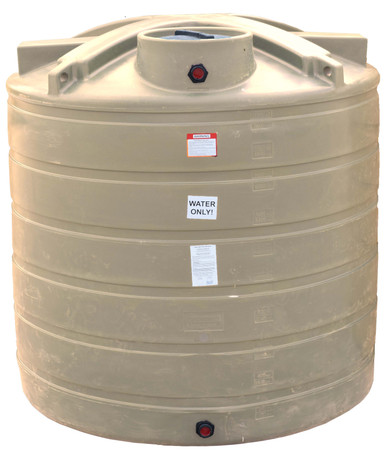
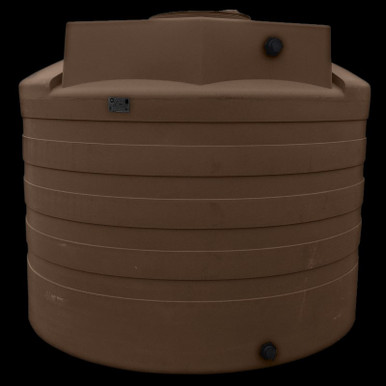
Standard sizing: round up to the next standard size. The Norwesco 2,500-gallon vertical (multiple SKUs in the 99-inch diameter family) at $1,500-$2,200 list provides 33% headroom. Pick a vertical (N-44968 family) or, if doorway access is constrained, a doorway tank (slimline). For the 1,500-gallon tier, Norwesco N-41392 (1500 Gallon Hauling Water Storage Tank, $3,047.57 list) is overkill for stationary use - look at the standalone vertical line in the 1500-gallon range.
Worked example: large fleet wash bay
200-vehicle municipal transit bus fleet, washed nightly. Each wash uses 200 gallons (auto wash bay). Daily volume is 200 buses times 200 gallons equals 40,000 gallons. POTW limit is 100 gpm metered discharge. Tank empties in 6.7 hours. With 24-hour discharge cycle and 16 hours of wash operations, the tank needs to hold the full daily volume of 40,000 gallons. Two parallel 20,000-gallon vertical tanks (or four 10,000-gallon tanks) with manifolded inlets and metered outlet to sewer.
Equipment Cleaning Holding
Equipment cleaning waste differs from vehicle wash in three ways: higher oil-and-grease load, higher TSS (total suspended solids), and more concentrated organics. Sizing also factors in oil-water separation residence time.
Typical equipment-cleaning waste characteristics
- Oil and grease - 200 to 5,000 mg/L typical. Most POTWs limit O&G to 100 mg/L. Pretreatment via oil-water separator is required.
- BOD - 500 to 5,000 mg/L. Most POTWs limit BOD to 300 mg/L for typical industrial discharge.
- TSS - 500 to 8,000 mg/L. Settling basin or filter pretreatment required.
- pH - 5.5 to 11 depending on cleaning chemistry. POTW typical limits 6.0 to 9.0; pH adjustment required for acidic or alkaline cleaning waste.
Holding tank sizing for equipment cleaning
Sizing equation: peak daily volume times 2.5x retention factor (accounts for separator residence + pH equalization + filter cycle). For a fleet maintenance shop washing parts daily with 500 gallons of wash water per shift, the holding tank should be 500 times 2.5 equals 1,250 gallons minimum. Standard Norwesco 1,500-gallon vertical or 1,500-gallon vertical SKU is the right tier. For larger operations with 2,000+ gallons per day of cleaning waste, step up to 5,000-gallon vertical or 7,500-gallon vertical.
Floor-Drain Holding
Floor-drain catchment sizing is the most error-prone of the three because flow rate is unpredictable. A 5,000 sq ft maintenance shop with a slow drip leak from a hydraulic line plus weekly pressure-wash plus monthly equipment-rebuild rinse creates highly variable flow rates over the year.
Floor-drain sizing approach: storm-based design
Treat floor-drain catchment as if it were stormwater runoff from the facility footprint. Per IPC (International Plumbing Code) Chapter 11, floor drain capacity is rated in gallons per minute. A typical 4-inch floor drain handles 110 gpm, a 6-inch handles 220 gpm. The maximum credible discharge (e.g., a fire-suppression sprinkler activation, an equipment rupture, a hose left running) sets the peak flow.
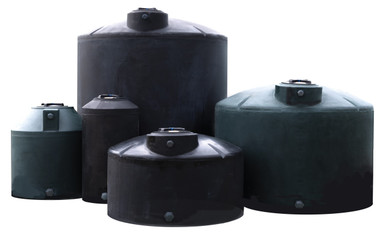
For most fleet maintenance facilities the design flow is the larger of (a) 1.5x the daily routine wash water volume or (b) one fire-suppression activation duration (typically 30 minutes at 250 gpm = 7,500 gallons). The 7,500-gallon design is rarely under-spec'd. Norwesco vertical tanks in the 5,000-7,500 gallon range cover this. The Norwesco 7500 vertical at the BC list price (varies by current SKU; reference the catalog) plus standard cone-bottom for full drainage is a typical configuration.
Material Selection: Polyethylene vs Stainless vs Concrete
Wash-bay holding tanks are most commonly polyethylene for capacities under 10,000 gallons. The reasons:
- Chemistry compatibility - HDLPE handles the typical wash-water chemistry (pH 5-11, oil-and-grease present, surfactants present) for 30+ year service.
- Cost - polyethylene costs roughly half the per-gallon installed cost of stainless and one-third the cost of in-ground concrete.
- Lead time - polyethylene tanks ship within 2-4 weeks. Stainless and concrete are 6-12+ weeks.
- Disposability - if regulations change or the operation closes, polyethylene tanks have higher residual value and easier removal than concrete.
For volumes above 10,000 gallons, concrete (in-ground) becomes competitive. For high-temperature wash-water service (above 130 degF / 54 degC sustained), stainless or fiberglass take over.
Sizing Reference Table by Fleet Size
| Fleet | Service profile | Daily peak gal | Tank size | Suggested SKU tier |
|---|---|---|---|---|
| 5 light trucks | Weekly manual wash | 300 | 500-1,000 gal | Norwesco 500 / 1000-gal vertical |
| 15 Class 8 tractors | Weekly pressure wash | 1,875 | 2,500 gal | Norwesco 2500 vertical |
| 50 Class 8 tractors+trailers | Weekly auto wash bay | 10,000 | 10,000-15,000 gal | Norwesco 10,000 vertical |
| 200 transit buses | Daily auto wash bay | 40,000 | 40,000-50,000 gal | Multiple 10K + 15K verticals manifolded |
| Equipment maintenance shop | 5K sqft, daily ops | 500-2000 | 3,000-5,000 gal | Norwesco 3000 / 5000 vertical |
| Industrial parts wash | 2K sqft, batch ops | 500-1000 | 1,500-2,500 gal | Norwesco 1500 / 2500 vertical |
Pretreatment Sequencing
For most wash-bay applications, the sequencing is:
- Floor drain or wash-rack drain - collects raw discharge.
- Catch basin / grit chamber - settles heavy solids (sand, gravel, metal chips). Cleaned monthly to quarterly.
- Oil-water separator (OWS) or coalescing plate separator - removes free oil. Designed per API 421 or coalescing-plate manufacturer specs.
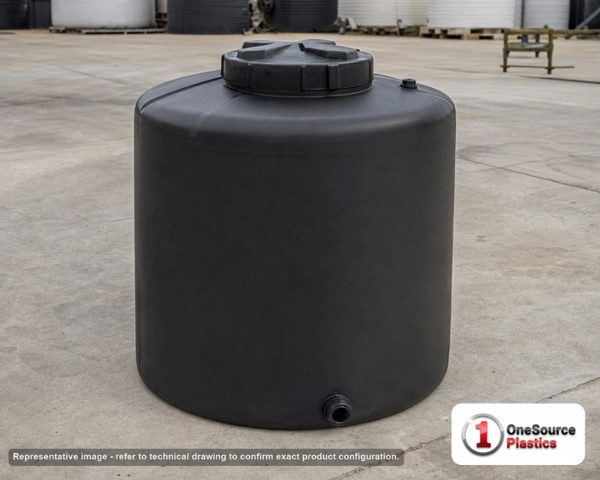
- Polyethylene holding tank - buffers flow rate, allows additional settling, provides pH equalization, supplies steady feed to discharge or treatment.
- pH adjustment / chemical treatment - if needed for POTW compliance.
- Discharge to sanitary sewer at metered rate, OR discharge to onsite treatment for surface water release, OR pump-truck haul for offsite disposal.
The polyethylene holding tank in step 4 is the focus of this guide. Sizing it correctly enables the sequencing to work; sizing it wrong compresses the buffer and creates compliance risk.
Common Sizing Mistakes
Mistake 1: Sizing on average flow instead of peak
A facility with average daily flow of 500 gallons but peak daily flow of 3,000 gallons (from a Tuesday-Wednesday wash schedule) needs a 3,000+ gallon tank, not a 500-gallon tank. Always size on peak daily, never on average daily.
Mistake 2: Ignoring fire suppression activation
For facilities with sprinkler systems, a single sprinkler activation discharges 25-50 gpm sustained for the duration of the alarm. A 30-minute alarm is 750-1,500 gallons. The wash-bay holding tank should be sized to capture this discharge without overflow.
Mistake 3: Forgetting POTW slug-load limits
Even with the right tank capacity, draining the tank too fast triggers slug-load violations. The discharge pump or metered valve has to throttle below the POTW gpm limit. Specify a metered discharge valve, not a wide-open drain.
Mistake 4: Mixing chemistries that increase pretreatment burden
If your wash bay handles vehicles with hazmat residue (chemical cargo, fuel residue), the wastewater becomes harder to treat than general wash water. Don't combine that drainage with floor-drain general waste. Segregate the streams and treat separately.
Internal Resources
- Industrial Pretreatment 40 CFR 403 Compliance Guide
- Water Storage Tanks
- Holding Tanks Category
- Freight Cost Estimator
Order Process
Send the fleet size, vehicle type, wash schedule, POTW gpm limit, and wash-water chemistry profile to [email protected] or call 866-418-1777. We'll size the tank from the operational profile, recommend a single-tank or multi-tank configuration, suggest oil-water separator sizing, and quote the package plus LTL freight to ZIP.
Source Citations
- 40 CFR 403 - General Pretreatment Regulations
- 40 CFR 442 - Transportation Equipment Cleaning Effluent Guidelines
- 40 CFR 433 - Metal Finishing Effluent Guidelines
- 40 CFR 437 - Centralized Waste Treatment Effluent Guidelines
- API 421 - Design and Operation of Oil-Water Separators
- International Plumbing Code Chapter 11 - Storm Drainage
- OneSource Plastics master catalog data, 2026-03-26 snapshot
- EPA NPDES Pretreatment Program guidance documents
Recommended Tanks for This Guide
Live pricing, updated automatically · estimate freight to your ZIP.