1700 Gallon Vertical Liquid Storage Tank: Complete Buyer's Guide
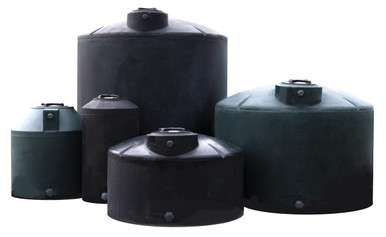
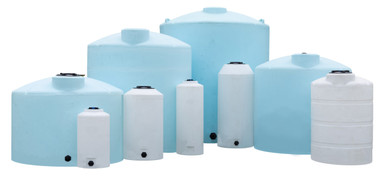
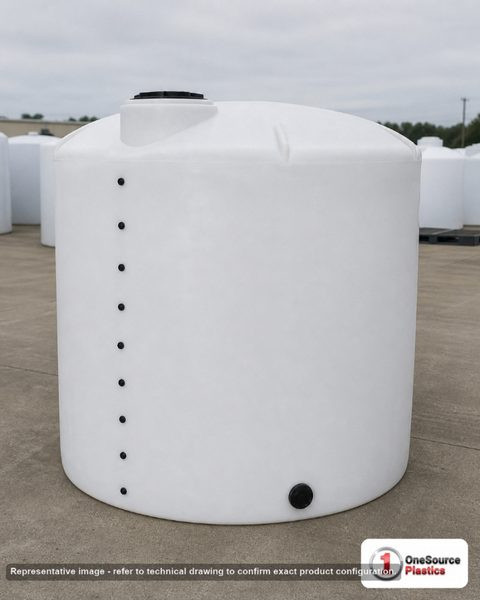
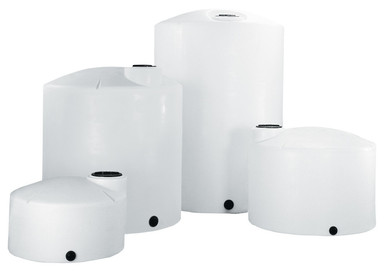
A 1,700-gallon white poly tank with an unusually squat stance — 87 inches across but only 74 inches tall — making it one of the more stable vertical formats Norwesco builds in this volume class. Rotationally molded from virgin linear polyethylene and rated to 1.5 specific gravity, it is engineered for liquid fertilizers, ag chemicals, and industrial solutions up to 12.5 pounds per gallon.
Specifications at a Glance
Every figure below is pulled straight from the live product record for this exact tank — the same data on the product page, so what you read here and what you buy never disagree.
Standards & Materials
- ASTM D1998 — Standard Specification for Polyethylene Upright Storage Tanks. Governs wall-thickness and hydrostatic design for vertical rotomolded poly tanks of this class.
- FDA 21 CFR 177.1520 — Olefin polymers. The food-contact regulation the FDA-grade resin in this tank is compounded to meet.
- Specific gravity rating 1.5 — the tank is engineered for liquids up to 1.5× the density of water (water is about 8.34 lb/gal). Confirm your fluid’s SG before storage.
Product Overview
The 1700 Gallon Vertical Liquid Storage Tank occupies a useful middle ground: large enough to anchor a season of bulk fertilizer or a steady chemical feed, yet short enough to fill and inspect without a tall platform or extension ladder. At 74 inches of overall height, the lid sits roughly chest-to-shoulder level for most operators, which matters more than buyers expect when you are checking levels or pulling a sample several times a week.
Its geometry is the headline. The 87-inch diameter against a 74-inch height gives the tank a low center of gravity — a real advantage on agricultural sites where wind load and the occasional bump from equipment are facts of life. That same wide base spreads the loaded weight over 41.3 square feet of ground, so the pad pressure stays manageable even when the tank holds a heavy 1.5-SG solution. Walls are translucent natural white, letting you read the liquid line from outside and reflecting enough sunlight to keep contents from cooking on a July afternoon.
Empty, the shell weighs 244 pounds — a two-person lift into position before any plumbing goes on. Filled with a liquid at the rated 1.5 specific gravity, the tank and contents come to roughly 21,511 pounds, the equivalent of three loaded pickups concentrated on that footprint. Plan the foundation around that number, not around the water weight. The factory installs a 2-inch outlet with a siphon tube near the base, and the 16-inch lid gives you a hand-and-arm-sized opening for cleaning, sensor mounts, or a fill line. There is no inlet fitting from the factory; most operators top-fill through the lid or add a bulkhead at the height their transfer pump prefers.
Norwesco molds this tank as a single seamless piece, so there is no seam, weld bead, or glued joint anywhere in the wall to become a future leak path. UV inhibitors are blended into the resin rather than sprayed on, and the company stands behind the tank with a 3-year warranty against manufacturing defects. Every unit is checked at the plant and again on our floor before it ships.
Technical Drawing
Official Norwesco technical drawing — 1700 Gallon Vertical Liquid Storage Tank
Key Features and Specifications
- 1,700-gallon capacity — sized for agricultural chemical and fertilizer storage
- Constructed from virgin linear polyethylene (HDPE) with 1.5 specific gravity rating — handles liquids up to 12.5 lbs/gal
- 74" tall x 87" diameter — compact vertical footprint
- 244 lbs empty, approximately 21,511 lbs when full at rated specific gravity
- 2" fitting with 2" siphon NPT outlet fitting — factory installed and leak-tested
- 16" lid opening for fill, venting, and interior access
- FDA approved for potable water and food-grade liquid contact
- 3 Year Warranty from Norwesco against manufacturing defects
- Translucent white walls allow visual level monitoring without opening the tank and reflect sunlight to keep contents cooler
- Rated for continuous service up to 120 F / 48 C
- Seamless one-piece rotational molding — no seams, no welds, no leak points
- Manufactured by Norwesco — a leading name in rotomolded polyethylene tanks
- Install on a level, compacted surface. Ensure adequate clearance above for lid access and around the perimeter for plumbing connections and visual inspection
- Ships via LTL freight — allow 2-3 weeks for delivery. Lift gate and residential delivery available at additional cost
Installation and Setup Guide
With a 1700-gallon tank, installation is less about heroic engineering and more about getting the basics exactly right. The wide, low body is forgiving compared to a tall narrow column, but a full load still concentrates over ten tons on a single footprint — and polyethylene transmits every flaw in the surface beneath it straight into the wall.
Site Preparation
Pour or build a base sized for the full 87-inch diameter with a few inches of margin all around; a tank that overhangs its pad develops a stress ring exactly where the wall meets unsupported air. A 4-inch compacted crusher-run pad or a broom-finished concrete slab both work well here. Whatever you choose, screed it flat — within a quarter inch across the full width — and rake out every rock and root first. Because this tank is short and broad, even a small high spot under one edge tips the whole column and loads one side of the base unevenly.
Placement and Connections
Set the tank so the factory 2-inch siphon outlet faces your transfer pump and keep that run short; on chemical service every elbow you add is another joint to monitor. Thread schedule-80 PVC or stainless into the bulkhead — hand-snug, then a final nudge with a strap wrench, never a pipe wrench that can crush the poly boss. Give the connection a short flex coupling before any rigid pipe so seasonal expansion and contraction is absorbed by the hose, not by the fitting. Leave two feet of walk-around clearance for sampling and inspection.
Venting
Match the vent to the draw rate of your pump. When a transfer pump pulls liquid out faster than a pinhole vent can admit air, the tank goes into vacuum and the broad upper wall is the first thing to dimple inward. A lid vent sized to your maximum outflow prevents that; on fertilizer or chemical duty, fit a combination pressure-vacuum vent rated for the vapor so fumes are managed rather than breathed across the yard.
Maintenance and Long-Term Care
This is a low-effort tank to own, but the few checks it does need are the ones that prevent the failures nobody wants. Build a quarterly walk-around into your routine and the tank will outlast most of the pumps and plumbing around it.
Quarterly Inspection Checklist
- Wall and base: Sight down the side for any outward bulge or a flat spot where it meets the pad. On a wide tank like this, bulging usually means the liquid is heavier than the 1.5-SG rating or a section of the base has settled.
- Outlet fitting: Check the 2-inch bulkhead for weeping at the gasket and snug it by hand if needed — poly relaxes around a fitting over months under static head.
- Foundation: Confirm the pad is still level and that water is draining away from, not pooling under, the tank edge.
- Vent: Clear the lid vent screen of dust, chemical crust, or wasp nests; a plugged vent is the single most common cause of a collapsed wall.
Cleaning
Before changing the stored chemical, drain fully through the siphon outlet, then flush the interior with a neutralizing rinse appropriate to the previous product and follow the chemical maker's decontamination guidance. The 16-inch lid is wide enough to direct a wand inside but tight for shoulders, so plan to clean from outside with a spray head rather than entering. Capture and dispose of rinse water per the product's safety data sheet — never let chemical rinse run onto open ground.
UV and Weather Protection
The resin's UV package is built to handle years of open-sky exposure, but the south face takes the hardest dose. Once a year, run a hand over the sun-side wall and look for chalky residue or a lightening of color; both are early signs the surface is weathering. In high-desert or Gulf-coast sun, a simple shade panel on the south side measurably slows that aging.
Alternatives and Comparisons
Within the 1700-gallon class, the real decision is geometry, not volume. This squat 87-inch-wide model trades headroom for stability, which suits open ag yards and windy sites. If your footprint is the constraint instead — a narrow chemical bay or a spot against a wall — a taller, smaller-diameter 1700 stacks the same volume into a tighter circle at the cost of a higher fill point. Buyers who need to drain the last gallon for batch accuracy should look at a cone-bottom design rather than any flat-bottom vertical; a flat bottom always leaves a shallow heel above the outlet. And if the liquid is light — plain water or a dilute solution — a water-grade tank costs less because it does not carry the heavier-duty 1.5-SG wall this chemical tank is built around.
Frequently Asked Questions
How long will the 1700 Gallon Vertical Liquid Storage Tank last?
Fifteen to twenty years is a realistic working life for this tank when it sits on a proper pad, stays within its 1.5 specific-gravity rating, and stores chemistry it is compatible with. The seamless rotomolded shell has no joints to fatigue, and the in-resin UV package resists the sun that ages lesser plastics. What shortens that life is almost always preventable: an overloaded wall from a too-heavy liquid, a vent that plugged and pulled a vacuum, or a chemical the polyethylene was never rated to hold.
What chemicals can I store in this tank?
At a 1.5 specific-gravity rating, this tank covers the bulk of liquid fertilizers, herbicides, pesticides, and many industrial acids and bases that fall at or under 12.5 pounds per gallon. Polyethylene shrugs off most of those, but it is not universal — strong oxidizers and many solvents attack it, and gasoline, diesel, and other flammables are off the table entirely. Confirm your specific product against a polyethylene compatibility chart before the first fill, and verify both its weight and any heat it carries.
What kind of foundation does a 1700-gallon tank need?
Build for roughly 21,511 pounds spread across the 87-inch base. A 4-inch compacted gravel pad or a level concrete slab, sized to fully support the diameter, handles that load. The make-or-break detail is flatness: this short, wide tank is intolerant of a high spot under one edge, so screed the surface flat within a quarter inch and clear it of any rock that could press a point load into the bottom.
Does this tank come with a warranty?
Yes — Norwesco backs it for three years against defects in materials and workmanship: molding flaws, pinholes, and factory fitting defects. The coverage does not extend to a tank loaded past its 1.5-SG rating, attacked by an incompatible chemical, set on a bad foundation, or damaged by impact. Keep your invoice and a few photos of the finished installation; they make any future claim straightforward.
Can I install this tank underground?
No. This is an above-ground vertical tank, and its flat-walled shell is not engineered to resist the inward soil and groundwater pressure that burial imposes — putting it underground would collapse it and void the warranty. For below-grade needs, our underground cisterns use ribbed, reinforced walls designed specifically to carry those loads.
Buying Considerations
Three checks before you order this 1700-gallon tank. First, confirm the squat 74-by-87-inch shape actually fits where you intend it — it needs more ground width than a typical vertical but less overhead, which is exactly backward from what many sites are set up for. Second, weigh your liquid: at or under 1.5 specific gravity you are inside the rating; above it, you need a heavier tank, not this one. Third, line up the freight — a unit this size moves by LTL on a pallet and wants a forklift or loader at the curb. Call us and we will sort the delivery details for your address.
Related Products You May Need
Questions? Call (866) 418-1777 — our team knows these products inside and out and can help you select the right tank for your application.
Recommended Tanks for This Guide
Live pricing, updated automatically · estimate freight to your ZIP.