Confined-Space Rescue Plan Documentation for Polyethylene Tank Entry Operations: OSHA 1910.146 Compliance, Retrieval Architecture, IDLH Atmosphere Engineering, and the Rescue-Capability Assessment That Determines Whether Entry Is Permitted
OSHA 29 CFR 1910.146 (Permit-Required Confined Spaces) requires that any entry into a permit-required confined space have a documented rescue plan, available rescue capability, and a rescue performance assessment that has been verified before the entry is permitted. A polyethylene tank with an entry diameter of 18-24 inches, a vertical depth of 8-12 feet, an interior atmosphere that can become IDLH (immediately dangerous to life or health) within minutes if conditions change, and a stand or pad that complicates external rescue access is one of the harder permit-required confined-space configurations in industrial operations. The rescue plan is not paperwork; it is the operational architecture that determines whether an entrant who experiences a medical event, an atmospheric event, or an entanglement event makes it out alive.
This article walks the regulatory framework, the four rescue-capability levels OSHA recognizes, the retrieval-system engineering for tank geometry, the IDLH atmosphere classification by service chemistry, the rescue-team capability assessment methodology, and the documentation discipline that converts a rescue plan into a defensible operational record. References cited: 29 CFR 1910.146 (the controlling OSHA regulation), 1910.146 Appendix F (rescue and emergency services evaluation), NIOSH Publication 80-106 (criteria for confined-space entry), NFPA 350 (confined space safety guide), and ANSI Z117.1 (safety requirements for entering confined spaces).
1. The 1910.146 Permit-Required Classification for Polyethylene Tanks
OSHA 1910.146(b) defines a permit-required confined space (PRCS) as a confined space that meets the basic confined-space definition (large enough for entry, limited or restricted means of entry/exit, not designed for continuous occupancy) and contains or has the potential to contain at least one of: hazardous atmosphere, engulfment material, internal configuration that could trap or asphyxiate, or any other recognized serious safety or health hazard.
Most polyethylene chemical-storage tanks meet the PRCS criteria on multiple counts:
- Hazardous atmosphere: residual chemistry vapors, oxygen-deficient atmosphere from displacement during fill or from chemical-decomposition products, or oxygen-enriched atmosphere from oxidant decomposition. Sodium hypochlorite tanks generate oxygen offgas; sulfuric acid tanks generate hydrogen on iron contact; sodium hydroxide tanks can have significant residual moisture-saturated nitrogen if purged. Atmosphere is the primary PRCS trigger.
- Engulfment material: any tank that held bulk granular material (PE pellets, fertilizer prills, dry chemical) is at risk of engulfment if residual material is present at entry. Liquid-only-service tanks are lower risk for engulfment but residual liquid plus loose sludge can present an engulfment hazard.
- Internal configuration: the tapered cone-bottom or sloped-bottom geometry, internal baffles in some chemical-mixing tanks, and the limited entry diameter all qualify under 1910.146 as configurations that could trap an entrant.
- Other recognized hazards: elevated temperature from solar heating of the polyethylene shell, mechanical hazards from internal mixers or level sensors, electrical hazards from in-tank instrumentation.
The PRCS classification is the default; the burden is on the operator to demonstrate that a specific tank does not meet PRCS criteria, not on OSHA to demonstrate that it does. In practice, virtually every chemical-service polyethylene tank is PRCS.
2. The Four Rescue-Capability Levels Under 1910.146(k)
1910.146(k) requires the employer to evaluate available rescue capability and document the assessment. OSHA recognizes four levels:
Level 1: External rescue only (no entry rescue). The employer relies on external retrieval — typically a tripod and winch with full-body harness on the entrant — without anyone entering the space. Acceptable only when the geometry permits straight-line vertical extraction without the entrant requiring re-positioning, when the entrant is not unconscious or uncooperative, and when the tank entry diameter accommodates a harnessed body. For most polyethylene tank manways at 18-24 inches diameter and a body in any non-perfect position, external rescue alone is inadequate.
Level 2: On-site rescue team (employer-provided entry rescue). The employer trains and equips a dedicated rescue team to perform entry rescue. Team has to demonstrate capability annually with practice rescues at simulated permit spaces, including PRCS that resemble the actual workplace spaces. This is the standard for facilities with multiple PRCS or high-risk PRCS.
Level 3: Off-site rescue team (third-party entry rescue). The employer contracts with a fire department, industrial-rescue service, or specialty contractor to provide entry rescue. Response time to the actual tank location has to be evaluated against IDLH onset time; if the chemistry can become IDLH faster than the team can arrive, Level 3 is inadequate. Common at facilities with infrequent entries that cannot justify Level 2 staffing.
Level 4: No rescue capability available. Entry is not permitted under 1910.146; the work has to be performed without entry, or rescue capability has to be raised to Level 1, 2, or 3 before entry can occur.
The capability evaluation is per-tank, not per-facility. A facility may have Level 2 capability for vertical tanks with manway entry but Level 3 (or no capability) for cone-bottom tanks where the tapered geometry makes entry rescue substantially more complex.
3. Retrieval System Engineering for Tank Geometry
The retrieval system is the mechanical apparatus that lifts an unconscious or non-self-rescue entrant out of the tank. Standard configuration:
- Tripod over the manway: aluminum or steel tripod, 6-7 feet height to the head sheave, rated for personnel retrieval (commonly 310 lb working load with 4:1 design factor).
- Winch with self-retracting capability: mounted on the tripod leg, sized for the maximum lift load (entrant body weight plus harness plus any tools or contamination), commonly 350-500 lb working load.
- Full-body harness on the entrant: ANSI Z359.11 compliant, with confined-space attachment points (typically dorsal D-ring for most retrieval, sometimes shoulder D-rings for tight-fit horizontal extraction).
- Retrieval line of sufficient length: tank depth plus 5 feet for working slack, plus continuous attachment to the entrant from manway to lowest possible position.
The geometry-specific failures that occur:
Cone-bottom tank with center-cone retrieval line: a vertical pull from the manway tripod through a body that has settled into the cone applies side-load to the cone wall and may not extract the body. Retrieval from a cone-bottom tank generally requires entry rescue, not external retrieval. Reference Norwesco N-43852 1,000 gallon 45-degree cone as an example geometry where Level 1 external retrieval is not adequate.
Sloped-bottom tank with off-center body position: if the entrant is at the upslope wall with the manway over the outlet side, the retrieval line pulls at an angle that may snag fittings or wedge the entrant against the wall. Level 1 external retrieval can work but requires line discipline and careful positioning.
Tank with internal stiffening ribs or baffles: retrieval line catches on internal features. Level 1 external is inadequate; Level 2 entry rescue with line management is required.
Double-wall Captor with annular space access from outside the tank: Snyder Captor designs with annular containment require inspection of both shells. Annular space entry is particularly difficult because the geometry is even more restrictive than the inner shell. Reference SII-5490000N42 Captor 1,550 gallon as an example where annular-space rescue planning has to be separately developed.
Vertical tank manway above 12 feet of depth: the lift distance approaches the maximum self-retracting winch capability. For tanks like Norwesco N-43128 10,000 gallon, the lift distance can approach 14-16 feet from manway to floor, which exceeds standard retrieval-line lengths and requires extended-length retrieval or supplemental fall arrest.
4. IDLH Atmosphere Classification by Service Chemistry
The IDLH (Immediately Dangerous to Life or Health) classification per 1910.146(b) means an atmosphere that poses an immediate threat to life, would cause irreversible adverse health effects, or would impair the individual's ability to escape. NIOSH publishes IDLH values for common chemicals; the 1910.146 entry threshold is anything above 50 percent of the IDLH or below 19.5 percent oxygen.
The chemistry-by-chemistry residual-atmosphere assessment for common 5-brand tank service:
- Sodium hypochlorite tanks (NaOCl 12.5%): chlorine vapor IDLH 10 ppm; oxygen-enriched atmosphere from offgas. Pre-entry purge with continuous fresh-air ventilation is required. Atmospheric monitoring throughout entry: chlorine, oxygen.
- Sulfuric acid tanks (H2SO4): sulfur dioxide and sulfur trioxide vapor possible from carbon-residue oxidation; hydrogen possible from iron contamination. Oxygen-deficient atmosphere likely. Atmospheric monitoring: SO2, hydrogen, oxygen, lower explosive limit (LEL).
- Sodium hydroxide tanks (NaOH 50%): low-vapor-pressure liquid; primary hazard is residual liquid causing skin or respiratory damage on contact; oxygen-deficient atmosphere if purged with nitrogen. Atmospheric monitoring: oxygen, ammonia (if anyone confused storage), pH of any liquid contact.
- Hydrochloric acid tanks (HCl 32%): hydrogen chloride vapor; very high vapor pressure; IDLH 50 ppm. Atmosphere is corrosive even at sub-IDLH concentrations. Atmospheric monitoring: HCl, oxygen.
- Diesel and gasoline tanks (hydrocarbon fuels): hydrocarbon vapor at LEL concentrations possible; oxygen-displaced atmosphere. Atmospheric monitoring: LEL, oxygen, benzene if gasoline service.
- Water-only tanks (potable, fire-water): generally lower-risk atmosphere but biofilm decomposition can generate hydrogen sulfide in stagnant conditions; oxygen-deficient atmosphere possible from biological consumption. Atmospheric monitoring: H2S, oxygen, methane.
- Diesel exhaust fluid (DEF) tanks: ammonia from urea decomposition; ammonia IDLH 300 ppm. Atmospheric monitoring: ammonia, oxygen.
- Waste-oil tanks (Snyder double-wall): hydrocarbon vapor; benzene from gasoline cross-contamination; H2S from sulfur reduction. Atmospheric monitoring: LEL, benzene, H2S, oxygen. Reference SII-5740102N95703 275 gallon waste-oil tank.
Continuous atmospheric monitoring during entry is required by 1910.146(d)(5)(ii). The monitoring instrument has to be capable of detecting the worst-case contaminant, calibrated within manufacturer schedule, and operated by trained personnel. Single-gas O2 meters are inadequate for any chemistry-service tank; multi-gas instruments with chemistry-specific sensors are the operational standard.
5. Rescue Team Capability Assessment Under 1910.146 Appendix F
Appendix F to 1910.146 (non-mandatory but referenced in enforcement) provides the detailed evaluation of rescue and emergency services. The employer evaluates each candidate rescue service against the actual confined-space conditions:
- Capability: Can the rescue service perform the rescue type required (high-angle, IDLH atmosphere, hazardous-material) for the actual space configuration?
- Equipment: Does the service have the equipment matched to the space (correct retrieval line length, breathing-air supply, communication, hazardous-material PPE)?
- Training: Has the team trained on PRCS resembling the actual space (vertical tank, cone bottom, IDLH chemistry)? Annually documented?
- Response time: Can the service reach the actual entry point within the time required to interrupt the developing emergency? IDLH atmosphere can incapacitate within 30 seconds; response time has to be matched.
- Communication: Is direct radio or cellular communication established? Does the service know the address, the building, the tank ID?
The evaluation has to be documented; OSHA expects the document to be available on request. A facility relying on local fire department rescue should have the evaluation on file with: department response-time data, training records on PRCS rescue, equipment inventory matched to facility tanks, and a recent practice or familiarization visit to the actual tank locations.
The recurring inadequacy: a facility with off-site rescue dependence and no recent practice rescue at the actual tank. The fire department has trained on confined-space rescue in general but has not seen the specific cone-bottom geometry with the manway 12 feet above grade and the upslope wall at the far side of the tank. In an actual emergency, the team arrives, evaluates the geometry, and develops a plan on-site. The evaluation-and-plan time pushes total rescue time past IDLH onset. The retrospective accident reports document this pattern repeatedly.
6. Pre-Entry Atmospheric Verification and Engineering Controls
1910.146(d)(5) requires pre-entry atmospheric verification and ongoing monitoring during entry. The pre-entry sequence:
- Lockout/tagout of fill, drain, and chemistry transfer paths: isolate the tank from any source that could change the atmosphere.
- Initial atmospheric test from outside the manway: test for oxygen, LEL, and chemistry-specific contaminants. Test from the manway plane and from a sample tube extended 18 inches into the tank.
- Forced-air ventilation: if the initial test shows IDLH or out-of-range readings, ventilate with fresh air at minimum 5 air-changes-per-hour for the tank volume. Continue ventilation throughout entry.
- Re-test after ventilation: verify atmosphere is within range.
- Continuous monitoring during entry: the entrant or attendant carries the monitor; the data is logged.
For chemistry-service tanks the engineering control is forced ventilation with measured supply rate and verification that the supply is fresh air, not contaminated workplace air. Common failure: the ventilation blower draws from inside a building where another process has elevated concentrations of the same chemistry; the blower is then concentrating contaminant rather than diluting.
7. Attendant and Authorized Entrant Training Requirements
1910.146(g)(1) establishes training requirements for authorized entrants and attendants. The training has to cover space-specific hazards, atmospheric monitoring, communication, retrieval system use, and the specific rescue plan for that space.
- Authorized entrant training: typically 8-16 hours initial, with annual refresher. Covers PRCS regulation, atmospheric monitoring, PPE, emergency response, communication.
- Attendant training: the attendant is positioned outside the space throughout entry; cannot enter the space; monitors the entrant via continuous communication; activates rescue if the entrant becomes unable to self-rescue. Training covers the rescue activation protocol, atmospheric monitoring backup, and the specific procedure for the space.
- Entry supervisor training: authorizes the entry; verifies pre-entry conditions; signs the permit; can revoke authorization mid-entry. Training covers permit administration plus all entrant and attendant content.
Permit-required confined-space entry without trained personnel is a 1910.146 willful violation. The training records become part of the rescue-plan documentation package.
8. Documentation Package for Rescue Plan Acceptance
The rescue plan is a standalone document that accompanies the entry permit. Standard contents:
- Tank ID, location, dimensions, manway diameter, depth, geometry (vertical, cone-bottom, sloped, double-wall).
- Service chemistry, expected residual atmosphere, IDLH thresholds, monitoring requirements.
- Rescue capability level (1-4) selected for this space; justification for selection.
- Retrieval system specification: tripod model, winch model, retrieval line length, harness model.
- If Level 2 (on-site team): team roster, last training date, last practice-rescue date for this space type.
- If Level 3 (off-site team): contracting agency, contact protocol, expected response time, last familiarization visit.
- Pre-entry checklist: lockout points, atmospheric test plan, ventilation specification, communication test.
- Emergency response sequence: who is contacted, in what order, with what information.
- Authorized entrant, attendant, and entry supervisor names; their training records or training-record references.
- Plan author signature, plan reviewer signature, plan effective date and expiration date.
The rescue plan is updated when the tank service changes, when the rescue capability changes (team turnover, equipment replacement), or annually as a baseline review. A rescue plan more than 12 months old is treated as out-of-date for OSHA enforcement purposes.
9. Five-Brand Tank Geometry Considerations for Rescue Planning
The tank geometry directly drives the rescue-capability requirement. Brand-by-brand:
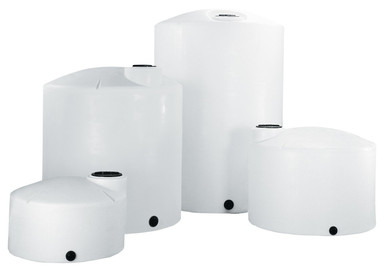
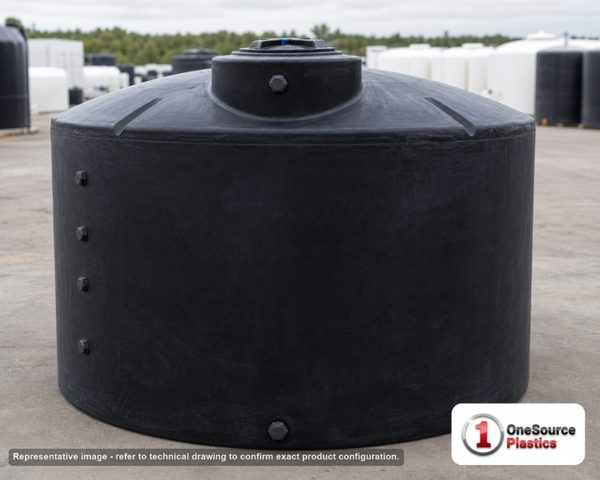
- Norwesco vertical liquid storage: manway typically 18-22 inches; depth 8-12 feet; flat-bottom with no internal features. Level 1 external retrieval is adequate for a conscious self-rescue entrant; Level 2 entry rescue is the practical baseline for unconscious-entrant rescue. Reference N-40146 1,500 gallon, N-40164 5,000 gallon.
- Norwesco cone-bottom: elevated tank on a stand; manway typically at the top of the cone or on the side; rescue access complicated by the elevated position and cone geometry. Level 2 entry rescue is the practical baseline. Reference N-43852 1,000 gallon 45-degree cone, N-42064 15 gallon 57-degree inductor.
- Snyder Captor double-wall: inner-shell entry through manway is similar to a Norwesco vertical; annular-space entry is its own specialized rescue plan with very tight geometry. Rare to enter the annular space; usually inspected by camera. Reference SII-5990102N42 1,000 gallon, SII-5490000N42 1,550 gallon.
- Snyder waste-oil double-wall: shorter depth; Level 1 external retrieval often workable. Reference SII-5740102N95703 275 gallon.
- Enduraplas industrial vertical: larger diameter; deeper geometry; Level 2 entry rescue is the practical baseline. Reference EP-THV02500FG 2,500 gallon.
- Chem-Tainer HDPE vertical: compact geometry; Level 1 external retrieval is generally workable for conscious entrants. Reference TC6446IA 500 gallon.
- Bushman water: water-service primary application; lower atmospheric risk; Level 1 external retrieval typically adequate. Reference BM-WW-1500-GL-NAT 1,500 gallon.
OneSource Plastics ships polyethylene tanks across all 5 brands paired with manufacturer cut sheets and entry-geometry documentation. The rescue plan is a customer responsibility under 1910.146; we do not provide rescue services. List pricing by SKU is published on each product page; LTL freight to your ZIP is quoted separately via the freight estimator or by phone at 866-418-1777. For complementary reading on tank inspection access design see our ladder + manway OSHA 1910.23 + confined space article and cleaning protocols by service for the chemistries that drive the IDLH atmosphere assessment.
Recommended Tanks for This Guide
Live pricing, updated automatically · estimate freight to your ZIP.