Stocked Spare-Parts Inventory Engineering for Polyethylene Tank Fleet Operations: Gasket and Bolt Stock Levels, Fitting Replacement Library, Vent and Lid Hardware, Critical-Path Identification, and the Cost of an Avoidable Outage Event
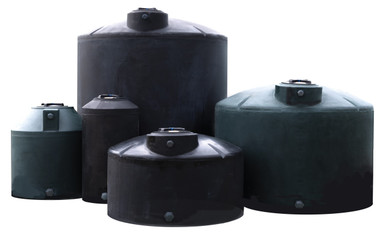
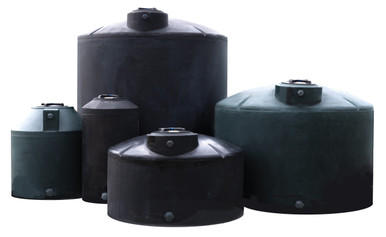
The polyethylene tank fleet operating across an industrial site, an agricultural cooperative, a municipal water utility, or a chemical-processing yard generates a continuous low-level flow of routine maintenance events. A gasket on a manway needs replacement at the next opportunity; a bolt on a fitting flange has corroded and requires removal; a vent screen has plugged with insect debris; a sight-glass valve handle has broken from operator handling; a lid latch has cracked from UV exposure. These events are individually trivial but collectively define whether the fleet runs reliably or whether routine wear progressively reduces capacity until something fails at an inopportune moment. The discipline of stocked spare-parts inventory engineering is the practice of pre-positioning the parts that the fleet will inevitably consume so that the maintenance event is short, the tank returns to service quickly, and the avoidable outage is avoided. This article walks the parts catalog, the stock-level mathematics, the critical-path identification framework, and the procurement implications.
The discussion is grounded in field experience across the 5-brand polyethylene tank catalog (Norwesco, Snyder, Chem-Tainer, Enduraplas, Bushman) and the supporting fittings ecosystem (Banjo, Hayward, polyethylene-compatible bolting). List pricing on each tank product page; LTL freight quoted to your ZIP via the freight estimator or by phone at 866-418-1777.
1. The Parts Catalog Framework for a Polyethylene Tank Fleet
Before stock levels can be set the parts catalog must be defined. The catalog spans the full set of consumables and replaceables that a polyethylene tank installation generates over service life:
- Manway gaskets and lid gaskets. Every manway and every bolted lid uses a gasket between the tank flange and the cover. The gasket material varies with chemistry: EPDM for water and dilute acids, FKM (Viton) for hydrocarbons and oxidizers, PTFE for severe chemistry. Gasket dimensions are tank-specific (16-inch, 20-inch, 24-inch typical for tank manways; smaller for fitting flanges). Each gasket is a wear part that should be replaced at every manway opening rather than reused.
- Bolts, washers, and nuts. Bolted fitting flanges and manway covers use stainless or carbon-steel bolting. Stainless bolting (304 or 316) is preferred for chemistry exposure and outdoor service; carbon-steel bolting is acceptable for benign service but corrodes over time. Bolt diameters and lengths are tank-specific (typically 1/2 inch, 5/8 inch, or 3/4 inch diameter; 2 inch to 4 inch length). Bolt counts per assembly range from 8 to 24 depending on fitting size.
- Tank fittings and bulkhead replacements. Tank fittings (bulkhead fittings, threaded inserts, flanged connections) wear, crack, or fatigue from operational stress. Replacement fittings are tank-specific to the original-installation hole size and the tank wall thickness. Common sizes include 2-inch, 3-inch, and 4-inch bulkhead fittings; larger sizes for specific tank designs.
- Vent assemblies and screens. Tank vents and the screens inside them plug with debris (insect parts, dust, dried product residue) and must be cleaned or replaced periodically. Replacement vent screens, vent caps, and complete vent assemblies should be in stock for each vent size used in the fleet.
- Lid hardware. Tank lids use latches, hinges, and cam-locks that wear or break from operator handling. Replacement lid hardware (latches, hinges, cam-lock arms, lock screws) extends the lid service life beyond the inevitable operator-induced damage.
- Sight gauges and level-indicator hardware. Tank sight gauges (clear-tube indicators on lower-pressure tanks) and the support hardware (top and bottom seals, retention clips, isolation valves) are wear parts that fail from chemistry exposure, UV degradation, or mechanical impact. Replacement sight-gauge tubes, seals, and isolation valves should be stocked for each gauge type used.
- Reference 5000 gallon tank for parts-catalog scoping. Reference N-40164 5000 gallon Norwesco vertical as a representative tank where the parts-catalog framework applies. A typical 5000 gallon tank in service has 2 manways, 4 to 8 fittings, 1 vent, and 1 lid that together generate the parts-consumption profile.
The parts catalog is the foundation for the stock-level calculation. Sites that have not built the catalog cannot set rational stock levels; sites with a documented catalog can apply quantitative methods to inventory engineering.
2. Stock-Level Mathematics for Routine Consumption
The stock level for each part follows from the consumption rate, the lead time to replenish, and the cost of a stockout. The mathematical framework is well-established in industrial inventory management:
- The consumption-rate calculation. The consumption rate is the average number of parts used per unit time across the fleet. Consumption is calculated from historical maintenance records: count the parts used last year, divide by 12 for monthly rate. New fleets without history use vendor-recommended replacement intervals applied to the fleet population.
- The lead-time variable. Lead time is the duration from placing a replenishment order to receiving the part. Lead time varies by part: stocked items at the local distributor have 1 to 3 day lead time; manufacturer special-order items have 4 to 8 week lead time; specialty items may require 12 weeks or more.
- The min-max calculation. The minimum stock level (reorder point) is consumption rate times lead time plus a safety stock that accommodates demand variation and supply variation. The maximum stock level is the reorder quantity plus the minimum. The reorder quantity is set to balance ordering cost against carrying cost, typically 1 to 3 months of consumption per order for routine items.
- The safety-stock framework. Safety stock is set to cover the variability in demand and lead time during the lead-time period. A standard formula uses the standard deviation of demand during lead time multiplied by a service-level factor (typically 1.65 for 95 percent service or 2.33 for 99 percent service). Sites without statistical history use rule-of-thumb safety stocks of 25 to 50 percent of the reorder point.
- The stockout-cost factor. The cost of a stockout is the operational impact when the part is needed but not available. For routine items the cost is delay until the part arrives plus the operator labor wasted during the wait. For critical items the cost can be a tank out of service for weeks, lost production, customer impact, or regulatory non-compliance. The stockout cost should drive higher safety stock for critical items.
- Reference 1000 gallon tank for stock-level scoping. Reference N-40152 1000 gallon Norwesco vertical as a smaller-scale tank where the same stock-level mathematics applies. Even a single tank installation should maintain a minimal parts kit covering the manway gasket, the fitting gasket set, and basic bolting; the kit prevents simple parts shortages from extending an otherwise short maintenance event.
The stock-level mathematics produces specific quantities for each catalog item. The quantities are reviewed periodically (annually for stable fleets, quarterly for growing fleets) and adjusted as consumption patterns evolve.
3. Critical-Path Identification Framework
Not all parts are equal. Some parts gate the return-to-service of a tank and must be available immediately; other parts are convenience items that can wait days or weeks. The critical-path identification framework separates the categories:
- The hard-stop critical parts. A hard-stop critical part is one whose absence prevents the tank from returning to service after a maintenance event. The manway gasket is hard-stop critical: a tank cannot be re-pressurized or re-filled without a serviceable gasket. The fitting bolting is hard-stop critical: a bolted fitting cannot be re-installed without bolts. The lid hardware is hard-stop critical for lidded tanks where the lid is part of the operating envelope.
- The chemistry-impact critical parts. Some parts are critical not because they prevent return-to-service but because their absence creates a chemistry-handling problem. A vent screen is chemistry-impact critical: a tank without a vent screen develops insect ingress that contaminates the contents. A sight-gauge isolation valve is critical because its failure exposes operators to a leak path during normal service.
- The convenience parts. Convenience parts are useful but not gating. A spare lid latch can be ordered after a broken latch is observed; the tank continues to operate with a temporary tie or a quick-fix until the part arrives. The convenience parts can be stocked at lower levels (or not stocked at all) without significant operational impact.
- The fleet-rare parts. Some parts are rare across the fleet because they apply only to a small subset of tanks. A specialty fitting on a single specialty tank may not justify continuous stock if the lead time is acceptable and the failure mode is gradual rather than sudden. Fleet-rare parts are evaluated case-by-case.
- The redundancy-protected parts. Some parts are protected by redundant systems: a tank with two level sensors does not require an immediate replacement when one fails because the second sensor maintains operability. The redundancy reduces the criticality and the required stock level.
- The safety-impact parts. Parts whose absence creates safety risk (fall-protection lids, safety relief valves, emergency vents) are unconditionally critical regardless of operational impact. The stock level for safety-impact parts is set with no compromises; the cost of a safety event is too high to optimize against.
The critical-path framework focuses inventory investment on parts where the investment produces operational and safety value. Parts that fail the criticality test can be removed from continuous stock, freeing capital for higher-priority items.
4. The Manway Gasket Sub-Catalog
Manway gaskets deserve their own treatment because they are the highest-frequency consumable in most fleet operations:
- The 16-inch manway gasket family. 16-inch manways are standard on smaller polyethylene tanks (under 2000 gallons typical). The gasket bolt circle and inside diameter follow the manufacturer specification. EPDM and FKM are the common materials; the chemistry compatibility chart determines the selection.
- The 20-inch manway gasket family. 20-inch manways appear on mid-volume tanks (2000 to 5000 gallon range). The gasket dimensions follow the same brand-specific patterns as the 16-inch family but at the larger size.
- The 24-inch manway gasket family. 24-inch manways are typical on larger industrial tanks (5000 gallon and up). The 24-inch gasket is the most common large-tank size in the fleet.
- The brand-specific bolt pattern variations. Norwesco, Snyder, Chem-Tainer, Enduraplas, and Bushman each use slightly different manway designs with different bolt patterns and gasket dimensions. Cross-brand gasket interchange is rarely possible; stock for each brand and size separately.
- The replacement-frequency benchmark. A typical fleet replaces manway gaskets at the rate of approximately one per tank per year on average. Tanks subject to frequent inspection access (high-turnover service, food-grade applications, pharmaceutical) replace more frequently; tanks rarely opened replace less frequently. The fleet population times the average replacement rate produces the consumption forecast.
- The gasket-material-aging consideration. Even unused gasket stock degrades over time from oxidation and exposure. EPDM and FKM gaskets stored for more than 5 years should be inspected before use; gaskets stored for more than 10 years should be replaced regardless. The shelf-life consideration prevents unlimited stock accumulation.
- Reference 2500 gallon tank for gasket scoping. Reference N-41524 2500 gallon Norwesco vertical as a typical mid-volume tank. The 2500 gallon Norwesco uses a 16-inch fill manway; the gasket stock for the fleet is sized to the count of similar Norwesco tanks in service.
The manway gasket sub-catalog is the single highest-volume parts category for most fleets. Getting this category right covers a large fraction of the routine maintenance events.
5. The Bolt and Hardware Sub-Catalog
Bolts, washers, and nuts represent the second-highest-volume parts category and benefit from a disciplined stocking approach:
- The standard bolt-size family. Polyethylene tank bolting clusters around a small number of standard sizes: 1/2-inch by 13 thread, 5/8-inch by 11 thread, 3/4-inch by 10 thread. Lengths vary from 2 inches to 6 inches depending on the assembly. The standardization simplifies the stock catalog to a handful of size-length combinations.
- The stainless versus carbon-steel selection. Stainless bolting (304 or 316) costs more than carbon-steel but does not corrode in service. The lifetime cost favors stainless for any chemistry-exposed or outdoor-service bolt. Carbon-steel is acceptable only for indoor benign-service applications.
- The grade specification for stainless bolting. Stainless bolting is specified by ASTM grade: A2 (304 equivalent) for general service, A4 (316 equivalent) for chloride-exposure or marine service. The grade affects the price by approximately 20 percent and the chloride resistance significantly.
- The washer specification. Flat washers, lock washers, and Belleville washers each have applications. Flat washers spread the bolt load and prevent gasket cutting; lock washers (split or tooth) prevent loosening from vibration; Belleville washers maintain spring tension under thermal cycling. Most polyethylene tank assemblies use flat washers; some specialty applications add lock or Belleville washers.
- The bolt-kit packaging. Bolts can be stocked individually in bin storage or pre-packaged as bolt-kits matched to specific assemblies. The pre-packaged kit ensures the right count of bolts, washers, and nuts is on hand for a specific maintenance event without the operator counting individual pieces. The kit approach trades higher unit cost for lower operator time and lower assembly errors.
- The specialty-fastener category. Some assemblies use specialty fasteners (T-bolts, eye-bolts, swing-bolts) that are not interchangeable with standard hardware. The specialty-fastener category is small but should be stocked at the same discipline as standard hardware to prevent assembly delays.
The bolt and hardware sub-catalog is the mid-volume category that combines high consumption with reasonable shelf life. A well-organized hardware crib supports rapid maintenance turn-around.
6. The Fitting and Bulkhead Sub-Catalog
Tank fittings (bulkhead fittings, threaded inserts, flanged connections) are the third major parts category and require thoughtful stocking:
- The bulkhead-fitting size family. Common bulkhead fitting sizes include 2-inch, 3-inch, and 4-inch threaded fittings; some applications use 6-inch or larger. The fitting body, gasket set, and retaining hardware all wear and may need replacement individually or as a kit.
- The polypropylene-versus-PVC body material. Bulkhead fittings are produced in polypropylene and PVC. Polypropylene resists higher temperatures and a wider chemistry range; PVC is acceptable for cold-water and some chemistries. The selection should match the tank service.
- The fitting-gasket sub-stock. Each bulkhead fitting includes one or two gaskets depending on the design. The gaskets are wear items that should be in stock at higher quantities than the complete fittings; replacing a gasket is much more common than replacing the entire fitting.
- The threaded-insert family. Some tanks use threaded brass or polypropylene inserts molded into the wall. Replacement inserts require specialized tooling for installation and are typically a manufacturer-warranty repair rather than a field maintenance item. Stocking is generally not justified at the site level.
- The flanged-fitting family. Flanged fittings (typically 1.5-inch ANSI flange and larger) are used on higher-pressure or higher-flow applications. The full assembly includes flange, gasket, bolts, and the connecting pipe. Stock for flanged fittings should include the gasket and bolt sets at higher quantity than the flange bodies themselves.
- The hose-barb category. Some applications terminate fittings with hose-barb connections for flexible-hose attachment. Hose-barb sizes match the fitting threads and the hose internal diameters. Common sizes are 1-inch, 1.5-inch, and 2-inch barbs.
The fitting sub-catalog is the most application-specific category. Sites with a single chemistry have a simpler catalog; sites with multiple chemistry classes need a broader catalog.
7. The Cost-of-Outage Calculation
The economic justification for a well-stocked spare-parts inventory comes from the cost of an avoidable outage event. Quantifying this cost is the foundation of inventory budget arguments:
- The direct labor cost of waiting. When a maintenance event is paused waiting for a part, the operator and any supporting personnel are not productive. Direct labor cost is typically 40 to 80 dollars per person per hour fully loaded; a multi-person crew waiting half a day for a part to arrive can accumulate hundreds of dollars in pure waiting cost.
- The downstream-process impact. If the tank-out-of-service interrupts a production process, the impact extends to the downstream process. Lost production hours convert directly to lost margin; the conversion factor depends on the product margin. For a chemical-processing operation with 100 dollars per hour of margin, an 8-hour delay is 800 dollars of lost margin.
- The expedite-shipping premium. Replenishing a stockout item under time pressure requires expedited shipping. Standard ground freight at 50 dollars converts to next-day air at 200 to 400 dollars; the premium is consumed every time a stockout requires expedite. For a fleet with 12 stockout events per year the annual expedite cost can exceed 2000 dollars.
- The customer-relationship cost. If a customer order is delayed because a tank-related outage extends beyond commitment dates, the customer relationship can be damaged. The cost is intangible but real; some sites assign a quantified penalty (delivery-late fee, future-business risk) to customer-impact outages.
- The regulatory-compliance cost. Some applications (food-grade, pharmaceutical, environmental compliance) carry regulatory consequences for extended tank outages. The regulatory cost can include filing requirements, agency notifications, customer audits, and in severe cases enforcement action.
- The reputation cost. Operations managers and maintenance managers carry reputational currency that is consumed by stockout events. The reputational cost is internal but affects future budget approvals, project authorizations, and career trajectories. Sites with disciplined parts-stocking build reputational capital that pays dividends in the budget process.
The total cost of an avoidable outage event is typically 5 to 50 times the cost of the missing part. The mathematics of safety stock is dominated by this ratio: even a low probability of stockout justifies a meaningful safety stock when the outage cost is high.
8. Procurement Implications and Tank Selection
The spare-parts inventory program informs procurement decisions at the tank-specification stage:
- Brand standardization for fleet simplicity. A fleet that standardizes on a single brand (Norwesco, Snyder, Chem-Tainer, Enduraplas, or Bushman) within a tank-size class simplifies the parts catalog. Cross-brand mixing creates parts-stocking complexity that compounds over a fleet of 10 to 50 tanks.
- Fitting-size standardization. Specifying a small set of standard fitting sizes (for example 2-inch, 3-inch, 4-inch only) across the fleet simplifies the bulkhead-fitting sub-catalog. Allowing fitting-size variation per tank multiplies the catalog size.
- Bolt-size standardization. Specifying tank assemblies with a small bolt-size family (for example only 1/2-inch and 5/8-inch bolting) simplifies the bolt sub-catalog. The standardization is a procurement-stage decision that compounds across the fleet life.
- Manway-design standardization. Some manufacturers offer manway-design choices (latched lid versus bolted lid versus screw-cap). Standardizing on one manway type within a size class simplifies the gasket and hardware catalog.
- Spare-parts kit at procurement. Some manufacturers offer a starter spare-parts kit at tank purchase. The kit includes typical wear items at modest additional cost. Procuring the kit at tank delivery prevents the new tank from creating stockouts in the existing parts inventory.
- Reference 100 gallon tank for small-fleet procurement. Reference N-44800 100 gallon Norwesco doorway tank as a small-fleet starting point. Even a single small tank benefits from a basic parts kit at procurement; the kit prevents simple-event stockouts during the first year of service.
The procurement-stage standardization decisions compound across the fleet life. A fleet built on standardized tanks, fittings, and bolting carries lower lifetime parts-inventory cost than a fleet built ad-hoc.
9. The Spare-Parts Inventory Engineering Conclusion
The stocked spare-parts inventory is the operational connective tissue between routine maintenance events and tank availability. The catalog spans gaskets, bolting, fittings, vent components, lid hardware, and sight-gauge components. The stock-level mathematics applies consumption rate, lead time, and safety stock to set quantities. The critical-path framework distinguishes hard-stop parts from convenience items so investment focuses where it matters. The cost-of-outage calculation provides the economic justification for stock-level investment. The procurement-stage standardization decisions compound across the fleet life. Sites that build the full inventory program produce fleets that operate predictably with minimal outage time; sites that ignore inventory engineering pay the cost in extended outages, expedite premiums, and customer-relationship erosion.
OneSource Plastics ships polyethylene tanks across the 5-brand catalog (Norwesco, Snyder, Chem-Tainer, Enduraplas, Bushman) with fittings, gaskets, and accessory configurations matched to fleet-standardization strategies. Tank specification for any specific application is performed by the customer site engineer with reference to the fleet inventory plan and the parts-catalog scope. List pricing on each product page; LTL freight to your ZIP via the freight estimator or by phone at 866-418-1777.
Recommended Tanks for This Guide
Live pricing, updated automatically · estimate freight to your ZIP.