Tank-Mounted Bag Filter Housing Engineering: Cellulose Felt vs Polyester Felt vs Nylon Mesh Media Selection by Particle Size, Chemical Service, and Flow Rate for Bulk Storage and Process Loops
Bag filter housings mounted on tank discharge piping or in tank-fed process loops perform the unsung work of keeping particulates out of downstream pumps, valves, atomizing nozzles, and customer-facing dispensing equipment. The media selection within the bag housing determines whether the filter actually catches the target particulates, how often it must be changed, what residual carryover leaks past, and how the differential pressure rises through the change cycle. The three dominant media classes (cellulose felt, polyester felt, and nylon monofilament mesh) cover overlapping performance envelopes, but the wrong selection produces filters that pass the target contaminant while bypassing it through edge effects, that bind off in days rather than weeks, that contaminate the filtrate with media-shed fibers, or that disintegrate when contact temperature exceeds the media rating. This article walks the media-selection framework, the particle-size-rating fundamentals, the chemical-service compatibility, the flow-rate sizing, the housing geometry, the change-out discipline, and the procurement implications for bulk-storage and process-loop installations.
The framework draws on filtration engineering practice (ISO 16889 micron rating, NSF/ANSI 61 drinking-water filtration, ASME BPE bioprocess hygiene, and broad commercial-industrial bag housing experience) and on field practice across the 5-brand polyethylene tank catalog (Norwesco, Snyder, Chem-Tainer, Enduraplas, Bushman). List pricing on each tank product page; LTL freight quoted to your ZIP via the freight estimator or by phone at 866-418-1777.
1. Why Bag Filter Housings Belong on Tank Discharge Piping
The decision to install a bag filter housing downstream of a tank is driven by specific failure modes that the filter prevents. The justification framework:
- Tank-debris carryover protection. Tanks accumulate debris over time: residual ingredient particles, deteriorating gaskets, inlet-strainer holdback, condensate-carried airborne dust, and biological growth. Without a discharge filter, this debris travels downstream and damages pumps, plugs spray nozzles, fouls heat exchangers, and contaminates customer product. The bag filter is the firewall.
- Pump-impeller protection. Centrifugal pumps tolerate dilute suspended solids but suffer impeller wear and seal damage from larger or harder particles. A bag filter rated to capture particles above the impeller-clearance threshold (typically 100 to 250 microns for industrial centrifugal pumps) protects the pump.
- Nozzle and orifice protection. Spray nozzles, atomizing nozzles, and metering orifices have small flow apertures (typically 0.5 to 5 millimeters) that plug from particles approaching that size. A bag filter rated 100 microns or finer protects spray-application equipment from in-field plugging.
- Customer-product cosmetic protection. Visible particulate in a finished product (suspended fibers in a clear coatings line, particle haze in a transparent solution) is a customer-rejection event. Filtration to a fine micron rating prevents the cosmetic defect from leaving the plant.
- Microbial-growth fragment management. Even well-maintained tanks support some biological-growth load. Biological-growth fragments are typically 10 to 100 microns and carry distinctive odor, color, and downstream-fouling characteristics. A 25-micron or finer filter captures the fragments before they propagate downstream.
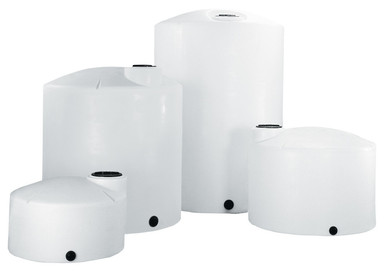
- Reference 2500 gallon tank for typical-scale filter sizing. Reference N-41524 2500 gallon Norwesco as a typical commercial-scale tank where a single 4-inch bag housing on the discharge sized for the maximum pump flow rate provides full-flow filtration. Smaller tanks may use 2-inch housings; larger tanks may use multiple housings in parallel.
The bag housing is small capital relative to the equipment it protects, the product it preserves, and the customer relationships it sustains. The decision against installing a filter is driven by short-term cost reasoning that ignores the long-term protection economics.
2. The Three Media Classes: Cellulose Felt, Polyester Felt, Nylon Mesh
The dominant bag filter media classes have distinct construction, performance, and chemical-compatibility profiles:
- Cellulose felt media. Cellulose is wood-fiber felt, often combined with synthetic binder for wet-strength. Cellulose felt is inexpensive, has good dirt-holding capacity, and works well in benign aqueous services. The limitations: cellulose absorbs water and swells, weakens at sustained wet contact, supports microbial growth, and is incompatible with strong acids, strong bases, and many organic solvents. Cellulose dominates low-cost commercial water-filtration applications.
- Polyester felt media. Polyester (typically polyethylene terephthalate, PET) felt is synthetic, hydrophobic, broadly chemically compatible, and dimensionally stable across wet-dry cycles. Polyester is the workhorse media for industrial filtration: tolerates a wide pH range (2 to 12), tolerates most organic solvents at ambient temperature, and provides good dirt-holding capacity at moderate cost. Polyester is the default choice for general-purpose industrial filtration.
- Nylon monofilament mesh media. Nylon mesh is a precision-woven synthetic monofilament with defined opening size. Mesh provides surface filtration (the particle is captured at the surface, not within depth like felt), produces a sharp particle-size cutoff, and resists media migration into the filtrate. Nylon mesh is the choice for fine-particle or contamination-sensitive applications where the precise cutoff matters more than dirt-holding capacity.
- Polypropylene felt as a supplementary class. Polypropylene felt is a fourth class often considered alongside polyester. Polypropylene tolerates lower pH (down to 1) and most acids better than polyester, but lower temperature (limit ~93 degrees Celsius). Polypropylene is selected for acid-service or high-acid-concentration filtration where polyester is at its compatibility limit.
- Stainless mesh and woven specialty as edge-case classes. Stainless steel mesh is selected for high-temperature or aggressive-chemical service where polymer felts are not compatible. PTFE-coated felts are selected for very aggressive chemistries. These specialty classes are 5 to 20 times the cost of polyester and are reserved for the applications that require them.
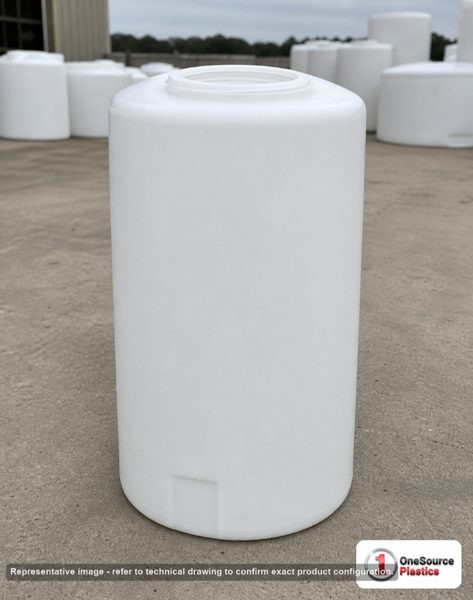
- Reference 1000 gallon as a small-scale filter-equipped tank. Reference N-40152 1000 gallon Norwesco vertical as a smaller-scale tank where a 2-inch single-bag housing on the discharge can use any of the three primary media classes, depending on the chemistry stored.
The class selection is the first decision in media specification. Each class has a performance envelope; selection within the envelope is a matter of micron rating, dirt-holding-capacity preference, and cost optimization.
3. Particle Size Rating and the Difference Between Nominal and Absolute
The micron rating on a bag filter is meaningful only with the nominal-versus-absolute qualification. The two ratings:
- Nominal rating defines the typical capture performance. A nominal 25-micron rating means the filter captures most (typically 50 to 90 percent, depending on the manufacturer's definition) of the particles at and above 25 microns. Particles below the rating may be captured by depth filtration (the felt classes); particles above the rating may pass through edge effects or fiber-shift channels. Nominal ratings vary by manufacturer; same-number nominal ratings from different manufacturers may not perform identically.
- Absolute rating defines the maximum-pass particle size. An absolute 25-micron rating means the filter captures effectively all particles at and above 25 microns within a defined test protocol. Absolute ratings are tested under ISO 16889 or equivalent and produce reproducible cross-manufacturer performance. Absolute ratings are typically applied to mesh media where the woven-opening size defines the absolute capture threshold.
- Application matching to the rating type. Nominal ratings are appropriate when the downstream protection threshold is approximate (pump protection, cosmetic protection). Absolute ratings are required when the downstream protection threshold is sharp (orifice plugging, regulatory limit on particle count).
- Beta ratio as a quantitative capture measure. Beta ratio at a given micron size (Beta-25, for example) reports the ratio of upstream-to-downstream particle counts at that size. Beta-25 of 1000 means 1000 particles upstream per 1 particle downstream, or 99.9 percent capture. Beta ratio is the most precise capture-performance measure and is reported by the better media manufacturers.
- Pleated-bag enhanced surface area. Pleated bags use the same media class but increase the filtration surface area through a folded-pleat geometry. Pleated bags handle higher dirt loading at the same micron rating, extend the change-out interval, and command a 30 to 80 percent price premium. Pleated bags are economic when change-out labor and downtime exceed the bag premium.
- Multi-stage filtration for sharp cutoff. A coarse pre-filter (100 to 250 micron) followed by a fine final filter (5 to 25 micron) handles bulk debris in the coarse stage while the fine stage captures the residual fines. The two-stage arrangement extends the fine-filter life dramatically and is the standard approach for any application requiring sharp final-particle-size control.
The micron-rating discipline turns filter specification from a guess into an engineering decision. Specifications written without the nominal-versus-absolute qualification produce field surprises when the captured-particle distribution does not match the operator's expectation.
4. Chemical Service Compatibility
The bag filter media must be compatible with the fluid that flows through it. The compatibility analysis spans the same dimensions as tank chemical compatibility:
- Aqueous benign service compatibility. Plain water, low-concentration salt brine, and dilute aqueous solutions are compatible with all three primary media classes. Selection is by particle size and dirt-holding preference, not chemical compatibility.
- Acid service compatibility. Sulfuric, hydrochloric, nitric, and phosphoric acids over a range of concentrations require compatibility check. Polyester tolerates pH 2 to 12; below pH 2 polyester is degraded by hydrolysis. Polypropylene extends the lower pH limit. Cellulose is degraded by all acid services and is not appropriate.
- Alkaline service compatibility. Sodium hydroxide, potassium hydroxide, and amine solutions over a range of concentrations require compatibility check. Polyester is degraded above pH 12 (caustic hydrolysis). Polypropylene extends the upper pH limit. Cellulose is also degraded by sustained alkaline exposure.
- Oxidizer service compatibility. Hypochlorite, peroxide, and chlorinated water at higher concentrations attack polymer media. Polyester at low chlorinated-water concentrations (1 to 5 ppm) is stable; at higher concentrations (drum-strength bleach) polyester is degraded. Stainless mesh is the choice for high-concentration oxidizer service.
- Solvent service compatibility. Most aliphatic and aromatic hydrocarbons are compatible with polyester and polypropylene at ambient temperature. Esters, ketones, and chlorinated solvents may swell polyester; PTFE-coated media is selected for these.
- Temperature limits as the second compatibility axis. Polyester tolerates ~135 degrees Celsius; polypropylene tolerates ~93 degrees Celsius; nylon tolerates ~150 degrees Celsius; cellulose tolerates ~80 degrees Celsius for short exposure. Sustained-service temperature derating is typically 20 to 30 percent below the maximum.
- Manufacturer compatibility-chart consultation. Each media manufacturer publishes a compatibility chart for the chemistries the media has been tested against. The chart consultation is mandatory before media selection; chart-extrapolation to untested chemistries should be conservative.
The compatibility analysis is a binary discipline: a compatible media filters; an incompatible media degrades, sheds fibers, or disintegrates. The mid-service failure of an incompatible media is a worse outcome than the up-front cost of selecting the right media.
5. Flow Rate Sizing and Differential Pressure Engineering
The bag housing and the bag itself are sized to the operating flow rate. The sizing discipline:
- Bag-area-to-flow-rate ratio. The flow rate per unit bag area is the design parameter. Typical targets are 10 to 30 gallons per minute per square foot of bag area for general industrial filtration. Higher loadings drive higher pressure drop and shorter bag life.
- Standard bag size series. Bag housings come in standard sizes (Size 1: 7-inch diameter by 16-inch length, ~2 square feet; Size 2: 7-inch by 32-inch, ~4 square feet; Size 3: 4-inch by 8-inch, ~0.5 square feet; Size 4: 4-inch by 14-inch, ~1 square foot). The size selection drives the housing geometry and the change-out logistics.
- Multi-bag housing for higher capacity. When single-bag area is insufficient, multi-bag housings (4-bag, 8-bag, 16-bag) are used. The multi-bag housing parallels the bags and increases the effective area proportionally.
- Clean-bag pressure drop as a baseline. A clean bag has a pressure drop of typically 0.5 to 1.5 psi at the design flow rate. The clean-bag pressure drop is the baseline against which dirty-bag pressure drop is compared.
- Change-out trigger pressure drop. The bag is changed when the pressure drop reaches a defined trigger (typically 15 to 25 psi above clean). Higher trigger pressure drives longer service life but risks bag rupture; lower trigger drives shorter service life but safer operation.
- Pressure-drop-versus-time trend monitoring. Tracking the pressure-drop curve over the bag service life reveals the dirt-loading rate. A rapidly-rising curve indicates an upstream issue (excess particle generation, bypass-leak forcing flow through filter). A flat-then-spike curve indicates a near-rupture condition.
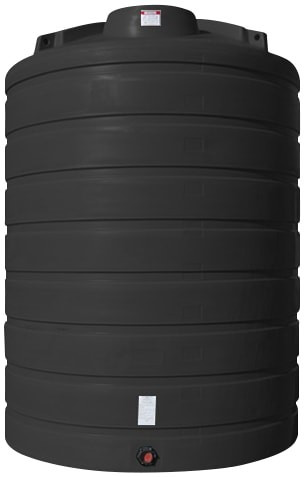
- Reference 5000 gallon tank for high-flow filter installations. Reference N-40164 5000 gallon Norwesco vertical as a typical high-volume tank where the discharge bag housing is sized for the centrifugal-pump full flow (typically 100 to 300 gpm), justifying a multi-bag Size 2 housing.
The flow-rate sizing connects the filter performance to the upstream pump capacity. An undersized housing forces excessive pressure drop and short bag life; an oversized housing carries unnecessary capital cost. Field-proven sizing rules-of-thumb produce the right scale at the first specification pass.
6. Housing Geometry and Mechanical Specification
The bag housing itself is the mechanical system that holds the bag in service. The geometry decisions:
- Material of construction. The housing is typically polypropylene, PVC, fiberglass-reinforced plastic, carbon steel, or stainless steel. Polypropylene and PVC handle benign aqueous service at low cost. Stainless steel is the choice for aggressive chemistries or high-temperature service. The material decision is driven by the filter-fluid compatibility and the operating-pressure rating.
- Pressure rating against the pump capability. The housing pressure rating must exceed the pump dead-head pressure plus the maximum-dirty bag pressure drop plus a safety margin. A typical industrial bag housing is rated 150 psi; lower-cost PVC housings may be 75 psi.
- Top-load versus side-load configuration. Top-load housings open at the top for bag change; the bag is dropped in from above. Side-load housings open through a side door; the bag is inserted laterally. Top-load is the standard for most installations; side-load supports situations where headroom above the housing is constrained.
- Bag-restraint mechanism. The bag must be held against the upper sealing surface during operation. Common restraint mechanisms include a snap-lock collar, a magnetic positioner, or a screw-down compression plate. The restraint must seal positively to prevent bypass-leak around the bag.
- Vent and drain ports. The housing has a vent at the top for air bleed during fill and a drain at the bottom for residual liquid removal during change. The presence of both ports is important for change-out efficiency.
- Sample-port options. Some housings include a downstream sample port for filtrate-quality verification. The port supports periodic monitoring without break-in to the main downstream piping.
- Reference 750 gallon cone-bottom for compact installations. Reference N-40811 750 gallon 20 degree cone bottom as a compact installation where a Size 1 bag housing on the discharge supports point-of-use filtration without dominating the equipment footprint.
The housing-mechanical specification determines the field experience of the filter installation. A well-specified housing changes out quickly with minimal liquid spill; a poorly-specified housing spills liquid through every change and frustrates the operator into deferring the change-out beyond the trigger pressure.
7. Change-Out Discipline and Operator Procedure
The change-out procedure is the routine maintenance event that keeps the filter in service. The discipline elements:
- Differential-pressure trigger documentation. The change-out is triggered by the differential-pressure-gauge reading reaching a defined threshold. The trigger is documented in the operating procedure and ideally produces an automatic alert via a pressure-switch signal.
- Isolation procedure. Before bag change, the upstream and downstream isolation valves are closed and the housing is drained. The procedure prevents in-line spillage and protects the operator from chemical contact.
- Used-bag handling. The used bag holds the captured particulate and any residual filtrate. The handling protocol covers the bag removal, the chemical-compatibility-appropriate disposal route, and the secondary-containment to prevent drip.
- New-bag installation verification. The new bag is installed, the restraint mechanism is engaged, the vent valve is opened, and the housing is filled until the air bleed is complete. The fill sequence prevents air pockets that produce flow channeling at startup.
- Pressure-drop verification at startup. Within a few minutes of return to service, the pressure drop is read and compared to the expected clean-bag baseline. Anomalous pressure drop (much higher than expected) suggests installation error or new-bag defect.
- Change-out logging. Each change is logged with the date, the operator, the pressure drop at change, the bag identity, and any anomalies observed. The log supports trend analysis and bag-supplier quality monitoring.
- Periodic housing inspection. At extended intervals (annual is typical), the housing interior is inspected for corrosion, sealing-surface damage, and restraint-mechanism wear. The inspection catches mechanical degradation before it produces a service failure.
The change-out discipline is the operator-visible face of the filter installation. Disciplined change-out produces consistent filtrate quality, predictable bag-life, and accumulating data that supports continuous improvement; undisciplined change-out produces filtrate-quality variability and intermittent bypass events that the downstream equipment absorbs.
8. The Field Operations Addendum: Common Failure Modes
The field experience of bag filter installations is rich with failure modes that the design engineering should anticipate:
- The bypass-leak failure. A bag that does not seat properly against the upper sealing surface allows bypass flow around the bag. The filter passes contaminated fluid downstream while showing minimal pressure drop (because most of the flow is bypassing). Detection requires periodic filtrate sampling rather than reliance on the differential-pressure gauge alone.
- The fiber-shed failure. Marginally compatible media degrades during service and sheds fibers into the filtrate. The shedding may not produce immediate downstream effects but accumulates in pumps, valves, and customer product over time. Detection requires media-compatibility verification and periodic filtrate inspection.
- The bag-rupture failure. A bag that exceeds its pressure-drop rating ruptures and dumps captured contaminant into the filtrate. The rupture event is sudden and produces a contamination spike. Prevention is disciplined change-out at the documented pressure-drop trigger, well below the rupture threshold.
- The false-alarm pressure-drop failure. A clogged differential-pressure-gauge transmitter line reports falsely-high pressure drop and triggers premature change. Calibration and inspection of the gauge support real readings.
- The shipped-with-wrong-media failure. A mis-shipped or mis-stocked bag installs with a different media class than specified. The mis-installed bag may produce immediate compatibility failure (chemical attack within hours) or chronic performance issues. Receipt verification and bag-labeling discipline prevent the mis-installation.
- The change-out-deferral failure. An operator deferring change-out beyond the trigger pressure (because of production demands, because the bag is hard to access, because spare bags are stocked-out) operates the filter beyond its design envelope. Deferred change increases rupture risk and reduces filtrate quality.
Each failure mode has a specific prevention discipline. Sites that build the disciplines, train the operators, and audit periodically against the modes operate filter installations that protect downstream equipment reliably; sites that treat the filter as a set-and-forget component absorb the failures into the downstream maintenance budget.
9. The Bag Filter Housing Engineering Conclusion
The bag filter housing on a tank discharge or in a tank-fed process loop is a small piece of capital that protects the larger equipment downstream. The media selection (cellulose, polyester, nylon mesh, or specialty) is matched to the chemistry, the particle-size target, and the dirt-holding-capacity preference. The micron rating (nominal or absolute, with manufacturer-specific Beta-ratio support where available) defines the capture performance. The flow-rate sizing matches the bag area to the pump flow rate. The housing geometry (material, pressure rating, configuration, restraint) supports the field operation. The change-out discipline (trigger pressure, isolation procedure, used-bag handling, new-bag verification) sustains the operating performance over time. Sites that engineer the filter installation across these dimensions protect downstream pumps, valves, nozzles, and finished product reliably; sites that under-engineer absorb the downstream failures and the customer-rejection events.
OneSource Plastics ships polyethylene tanks across the 5-brand catalog (Norwesco, Snyder, Chem-Tainer, Enduraplas, Bushman) with discharge piping, fittings, and configurations that support common bag-housing installations downstream. Tank specification for any specific filtration arrangement is performed by the customer site engineer with reference to the chemistry, the flow rate, and the downstream protection requirements. List pricing on each product page; LTL freight to your ZIP via the freight estimator or by phone at 866-418-1777.
Recommended Tanks for This Guide
Live pricing, updated automatically · estimate freight to your ZIP.