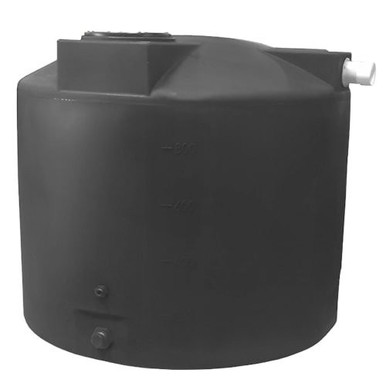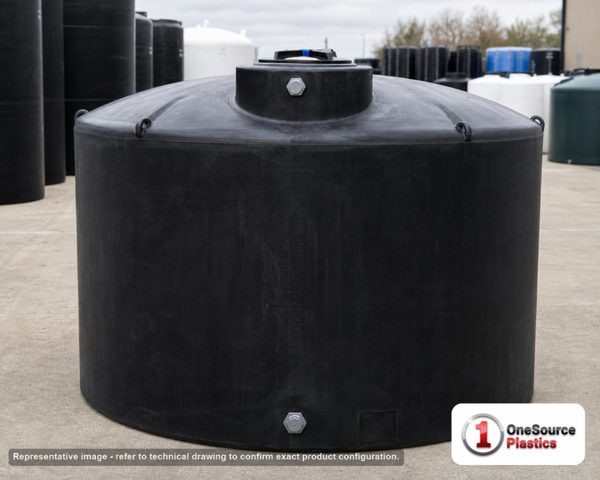
1000 Gallon Plastic Water Storage Tank - Black (72" x 66"): Complete Buyer's Guide
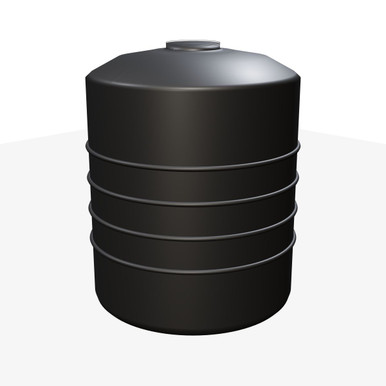
The 1,000-gallon black water tank (Norwesco, 72" x 66") is a potable-rated storage cylinder built for drinking water, hauled water, and household or agricultural supply. The black pigment isn't cosmetic — it blocks light to inhibit algae, the single biggest enemy of stored water — while the FDA-compliant resin keeps the water safe to drink.
Specifications at a Glance
Every figure below is pulled straight from the live product record for this exact tank — the same data on the product page, so what you read here and what you buy never disagree.
Standards & Materials
- ASTM D1998 — Standard Specification for Polyethylene Upright Storage Tanks. Governs wall-thickness and hydrostatic design for vertical rotomolded poly tanks of this class.
- FDA 21 CFR 177.1520 — Olefin polymers. The food-contact regulation the FDA-grade resin in this tank is compounded to meet.
- Specific gravity rating 1.1 — the tank is engineered for liquids up to 1.1× the density of water (water is about 8.34 lb/gal). Confirm your fluid’s SG before storage.
Product Overview
This is the size most homesteads, rural properties, and small farms settle on for a real water reserve: a thousand gallons is enough to ride out a well outage, buffer a low-yield well, or hold a delivered haul, in a tank that fits a typical yard without specialized equipment. At 72 inches across and 66 inches tall, it's a stable, six-foot-wide cylinder that one person can position empty and that drains cleanly under its own column.
It's rotomolded by Norwesco as a single seamless piece of virgin linear polyethylene — no seam, weld, or glued joint anywhere — and the resin is FDA compliant for potable water and food-grade contact. For drinking-water storage that seamless construction matters twice over: there's no fabricated joint to leak, and no crevice to harbor biofilm. The wall is rated to a 1.1 specific gravity, which comfortably covers water at 8.34 pounds per gallon plus the slightly denser aqueous solutions you might store, with margin to spare.
The black coloring is the feature that sets this apart from a translucent tank for water duty. Light is what lets algae bloom in stored water; the opaque black wall blocks it entirely, keeping the water clearer and reducing how often you need to clean. It also resists UV strongly for long outdoor life. Empty, the tank weighs 160 pounds; filled with water it puts roughly 9,334 pounds on the pad, which the wide 72-inch base distributes well. Maximum service temperature is 120°F.
Plumbing is generous for a water tank: a 2-inch NPT outlet for good flow to a pump or gravity line, plus a 1.5-inch NPT inlet fitting included for your fill connection — you're not left drilling your own. The 16-inch lid gives ample fill, vent, and inspection access. Norwesco's 3-year warranty applies, and the tank ships LTL freight with liftgate and residential delivery available.
Technical Drawing
Official Norwesco technical drawing — 1000 Gallon Plastic Water Storage Tank - Black (72" x 66")
Key Features and Specifications
- 1,000-gallon capacity — sized for safe potable water storage
- Constructed from virgin linear polyethylene (HDPE) with 1.1 specific gravity rating — handles liquids up to 9.2 lbs/gal
- 66" tall x 72" diameter — compact vertical footprint
- 160 lbs empty, approximately 9,334 lbs when full at rated specific gravity
- 2 NPT outlet fitting — factory installed and leak-tested
- 1.5 NPT inlet fitting included
- 16" lid opening for fill, venting, and interior access
- FDA approved for potable water and food-grade liquid contact
- 3 Year Warranty from Norwesco against manufacturing defects
- UV-resistant black pigmentation provides maximum outdoor durability and inhibits algae growth in stored liquids
- Rated for continuous service up to 120 F / 48 C
- Seamless one-piece rotational molding — no seams, no welds, no leak points
- Manufactured by Norwesco — a leading name in rotomolded polyethylene tanks
- Place on a firm, level surface free of rocks or sharp objects that could damage the tank bottom. Ensure adequate ventilation if stored chemicals produce vapors
- Ships via LTL freight — allow 2-3 weeks for delivery. Lift gate and residential delivery available at additional cost
Installation and Setup Guide
A thousand-gallon water tank is a weekend install for most properties — the wide stable base and modest height make it forgiving — but a level, well-drained foundation is what keeps it serving clean water for years.
Site Preparation
Set the tank on a flat, level base under the full 72-inch footprint: a deep compacted-gravel pad or a concrete slab, level within an inch across the diameter. Choose a spot with good drainage so water never pools and undermines the base. The broad footprint spreads the load, but the foundation must be continuous — a void or high spot under a wide tank still becomes a stress point over many fill cycles. Clear rock and debris before setting it down.
Placement and Connections
The included 1.5-inch inlet and 2-inch outlet make plumbing straightforward. Connect the inlet to your fill source and the outlet to your pump or gravity line, keeping the outlet run short for good flow. Put a flexible coupling in the first foot off each fitting — the tank expands and contracts with temperature, and rigid pipe will eventually crack or loosen a connection. Position the outlet for the shortest run, and keep clearance around the tank for inspection.
Venting
A water tank must breathe. Draw water out faster than air can enter and the wall pulls inward; fill it fast against a sealed lid and the dome pressurizes. Fit a screened vent in the lid sized to your fastest fill or draw rate. The screen does double duty on a potable tank — it keeps insects, debris, and small animals out of your drinking water while letting the tank breathe.
Maintenance and Long-Term Care
Because this holds potable water, maintenance is as much about water quality as structural care. The black wall does a lot of the work by blocking algae, but stored water still needs periodic attention to stay safe and fresh.
Quarterly Inspection Checklist
- Water clarity: Check through the lid for any cloudiness, sediment, or growth. The opaque black tank suppresses algae, so anything you find usually points to a screen gap letting light or contaminants in — track it down.
- Screened vent and lid seal: Confirm the vent screen is intact and the lid seals. A torn screen is the usual route for insects or debris into a potable tank.
- Fittings: Check the 2-inch outlet and 1.5-inch inlet for weeping; hand-tighten only.
- Foundation: Verify the pad is level and the wide base hasn't settled or washed out at any edge.
Cleaning and Sanitizing
Drain and sanitize a potable water tank at least annually, more often if the water sits a long time between uses. A standard approach: scrub the interior through the 16-inch lid, then fill with a chlorine solution — roughly a quarter cup of unscented household bleach per 15 gallons of water — let it stand a couple of hours to disinfect the walls and fittings, then drain completely and flush with fresh water until no chlorine odor remains. This clears any biofilm and keeps the stored water safe to drink.
UV and Weather
Black polyethylene is among the most UV-durable colors, so this tank handles open-sun placement well. Still, inspect the sun-facing wall periodically for surface chalking, and note that in hot climates a dark tank absorbs heat — if keeping the water cool matters, a simple shade or a north-side placement helps without sacrificing the algae control the black wall provides.
Alternatives and Comparisons
For a thousand gallons of water, the meaningful choices are color and shape:
Black versus a lighter water tank: the black wall's algae control and UV durability make it the low-maintenance choice for outdoor potable storage. A translucent or lighter tank lets you see the level through the wall but admits light that can feed algae, meaning more frequent cleaning. For stored drinking water, the opaque tank usually wins.
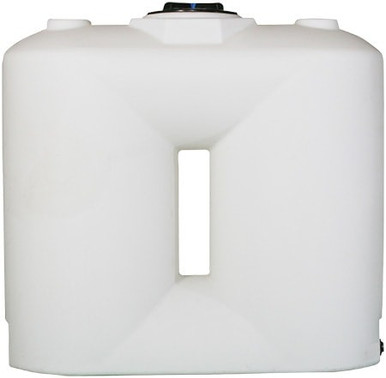
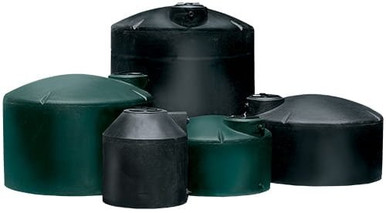
Vertical versus a low-profile water tank: this vertical drains completely under its own column and uses less floor. If you have an overhead height limit — a crawlspace, a low shed — a low-profile water tank trades floor space for headroom.
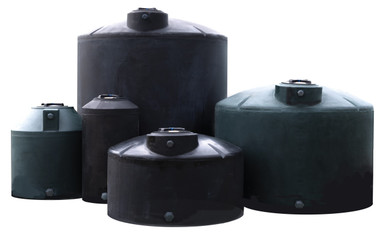
Other 1000-Gallon Options

Frequently Asked Questions
How long will the 1000 Gallon Plastic Water Storage Tank - Black (72" x 66") last?
Fifteen to twenty years is realistic with a level base and normal use. Black polyethylene is highly UV-durable, and the seamless rotomolded wall has no joints to fail, so for water storage the practical life is usually excellent. A level foundation and routine sanitizing keep it serving clean water across that span.
What chemicals can I store in this tank?
This is a potable water tank: it's FDA compliant for drinking water and food-grade liquids, and rated to a 1.1 specific gravity, so it suits water and benign aqueous solutions up to about 9.2 pounds per gallon. It is not intended for aggressive agricultural chemicals, fuels, or solvents — for heavier or chemically active liquids, choose a tank rated to a higher specific gravity and verified for that chemistry. Keep this one for water and water-based applications.
What kind of foundation does a 1000-gallon tank need?
Plan for roughly 9,334 pounds full, distributed across the 72-inch base. A deep compacted-gravel pad works well; a concrete slab is even better. The key requirement is that the surface is flat, level within about an inch across the diameter, well-drained, and continuous under the whole base — an uneven foundation is the leading cause of premature failure on tanks this size.
Does this tank come with a warranty?
Yes — Norwesco backs it with a 3-year warranty against defects in materials and workmanship: factory cracks, pinholes, fitting flaws, and material failures. It excludes uneven or improper installation, freezing damage from leaving it full in hard freezes, and impact damage. Keep your receipt and a photo of the level install.
Can I install this tank underground?
No — this is an above-ground vertical and is not engineered to resist soil pressure; burying it would collapse the wall and void the warranty. For below-grade water storage, use a purpose-built underground cistern with a reinforced, ribbed wall designed for soil load.
Buying Considerations
Three things to confirm before ordering. Measure your spot for the six-foot diameter plus clearance to reach the inlet, outlet, and lid. Provide a level, well-drained pad — gravel or concrete — that won't settle under a full thousand gallons. And if winter freezing is a concern in your area, plan to insulate, heat-trace, or keep water moving, since a full tank left in a hard freeze can be damaged. This is the workhorse residential and farm water tank; the included inlet and outlet make it ready to plumb out of the box. It ships LTL with liftgate and residential delivery available.
Related Products You May Need
Questions? Call (866) 418-1777 — our team knows these products inside and out and can help you select the right tank for your application.
Recommended Tanks for This Guide
Live pricing, updated automatically · estimate freight to your ZIP.