2100 Gallon Plastic Water Storage Tank: Complete Buyer's Guide
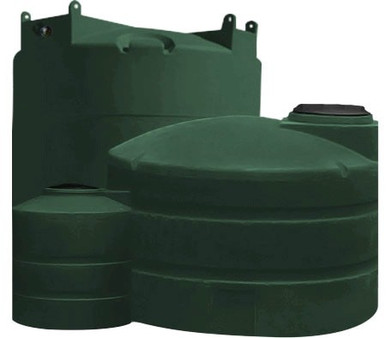
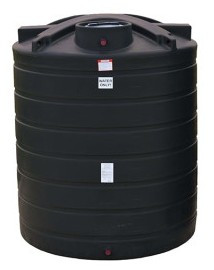
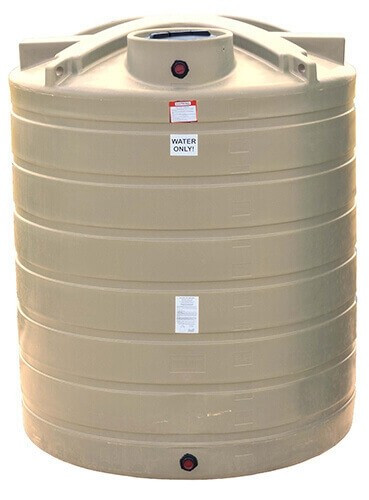
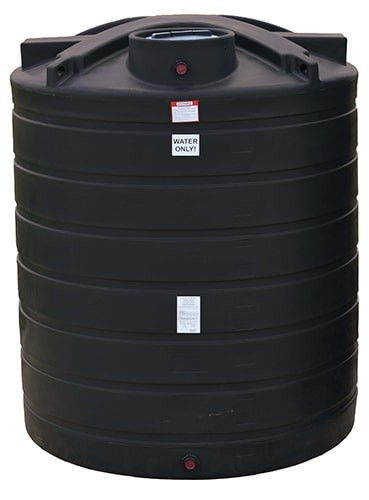
The 2,100-gallon black water tank is mid-large potable storage — 87 inches across and 89 inches tall, a near-cubic seven-foot cylinder holding close to ten tons of water full. Its black wall blocks the light that feeds algae, and the FDA-compliant resin keeps the water safe to drink.
Specifications at a Glance
Every figure below is pulled straight from the live product record for this exact tank — the same data on the product page, so what you read here and what you buy never disagree.
Standards & Materials
- ASTM D1998 — Standard Specification for Polyethylene Upright Storage Tanks. Governs wall-thickness and hydrostatic design for vertical rotomolded poly tanks of this class.
- FDA 21 CFR 177.1520 — Olefin polymers. The food-contact regulation the FDA-grade resin in this tank is compounded to meet.
- Specific gravity rating 1.1 — the tank is engineered for liquids up to 1.1× the density of water (water is about 8.34 lb/gal). Confirm your fluid’s SG before storage.
Product Overview
Twenty-one hundred gallons is the reserve that bridges household and small-operation needs — substantial enough to ride out a multi-day well outage or buffer irregular delivery, but compact enough to install on a modest pad. Its proportions are nearly square at seven feet wide and seven feet tall, giving it a stable stance while keeping the footprint reasonable for a yard or equipment area.
Norwesco rotomolds it as a single seamless piece of virgin linear polyethylene with FDA-compliant resin for potable and food-grade contact. The seamless construction means no joint to leak and no crevice to harbor biofilm in stored drinking water. The wall is rated to a 1.1 specific gravity, comfortably covering water with margin to spare.
Black is the practical color for water duty: fully opaque, it blocks the light algae needs, so a stored volume stays clearer with less cleaning, and black resists UV strongly for long outdoor service. Empty weight is 269 pounds; filled with water it loads the pad with roughly 19,534 pounds, just under ten tons across the 87-inch base. Maximum service temperature is 120°F.
Plumbing comes ready: a 2-inch NPT outlet for good flow plus a 1.5-inch NPT inlet fitting included. The 16-inch lid serves fill, vent, and inspection access. Norwesco's 3-year warranty applies, and the tank ships LTL freight — allow a couple of weeks for delivery, with liftgate and residential delivery available.
Technical Drawing

Official Norwesco technical drawing — 2100 Gallon Plastic Water Storage Tank
Key Features and Specifications
- 2,100-gallon capacity — sized for safe potable water storage
- Constructed from virgin linear polyethylene (HDPE) with 1.1 specific gravity rating — handles liquids up to 9.2 lbs/gal
- 89" tall x 87" diameter — compact vertical footprint
- 269 lbs empty, approximately 19,534 lbs when full at rated specific gravity
- 2" NPT outlet fitting — factory installed and leak-tested
- 1.5" NPT inlet fitting included
- 16" lid opening for fill, venting, and interior access
- FDA approved for potable water and food-grade liquid contact
- 3 Year Warranty from Norwesco against manufacturing defects
- UV-resistant black pigmentation provides maximum outdoor durability and inhibits algae growth in stored liquids
- Rated for continuous service up to 120 F / 48 C
- Seamless one-piece rotational molding — no seams, no welds, no leak points
- Manufactured by Norwesco — a leading name in rotomolded polyethylene tanks
- Install on a level, compacted surface. Ensure adequate clearance above for lid access and around the perimeter for plumbing connections and visual inspection
- Ships via LTL freight — allow 2-3 weeks for delivery. Lift gate and residential delivery available at additional cost
Installation and Setup Guide
A ten-ton full water tank with near-square proportions is one of the more straightforward large installs — stable, accessible, and not extreme in any dimension. The foundation still carries real weight, so build it properly.
Site Preparation
Set the tank on a flat, level base under the full 87-inch footprint — a deep compacted-gravel pad or, better for ten tons, a concrete slab, level within an inch across the diameter. Choose a well-drained spot. The base must be continuous and non-settling under the whole footprint; a void or high spot becomes a stress point over repeated fill cycles. Clear all rock and debris before placement.
Placement and Connections
Connect the included 1.5-inch inlet to your fill source and the 2-inch outlet to your pump or gravity line, keeping the outlet run short for flow. Use a flexible coupling at each fitting to absorb thermal movement — rigid pipe will eventually crack or loosen a connection. The lid sits about seven feet up, so a step ladder handles fill and inspection access. Keep clearance around the tank to walk it for inspection.
Venting
Fit a screened vent in the 16-inch lid sized to your fill and draw rate. The tank must breathe so it neither pulls vacuum on draw nor pressurizes on fill. The screen keeps insects, debris, and small animals out of the potable supply while the tank breathes — essential on a drinking-water tank.
Maintenance and Long-Term Care
Maintaining a ten-ton water reserve combines structural checks with potable-water hygiene. The black wall manages algae; you handle the rest on a schedule.
Quarterly Inspection Checklist
- Water clarity: Check through the 16-inch lid for cloudiness, sediment, or growth. The opaque tank blocks light, so growth typically points to a screen or seal letting light or contaminants in — track it down.
- Foundation: Confirm the base is level and the near-square tank hasn't shifted or settled at any edge; look for washout.
- Fittings: Check the 2-inch outlet and 1.5-inch inlet for weeping; hand-tighten only.
- Vent screen: Verify the vent is open and the screen intact.
Cleaning and Sanitizing
Sanitize at least annually, or more often if water sits a long time between uses. Drain, scrub the interior through the 16-inch lid, then disinfect with a chlorine solution — about a quarter cup of unscented household bleach per 15 gallons used — let it dwell a couple of hours, drain, and flush with fresh water until no chlorine odor remains. This clears biofilm and keeps the reserve safe to drink.
UV and Weather
Black polyethylene is highly UV-durable, so this tank handles open sun well. Inspect the sun-facing wall periodically for chalking. In hot climates the dark wall absorbs heat; if cooler water matters, partial shade helps without sacrificing the algae control.
Alternatives and Comparisons
For twenty-one hundred gallons of water, consider color and shape:
Black versus a lighter water tank: the opaque black wall controls algae and resists UV, making it the low-maintenance choice for outdoor potable storage. A translucent tank lets you read the level through the wall but admits light that feeds algae, meaning more frequent cleaning — usually the wrong trade for stored drinking water.
This versus a larger or smaller reserve: if twenty-one hundred gallons leaves you short during longer outages, stepping up to a 2,450 or larger adds buffer on a comparable foundation footprint; if it's more than you need, a smaller tank costs less and installs easier. Size to your worst-case outage, not your average use.
Other 2100-Gallon Options
Frequently Asked Questions
How long will the 2100 Gallon Plastic Water Storage Tank last?
Fifteen to twenty years is realistic with a level base and normal use. Black polyethylene is highly UV-durable and the seamless wall has no joints to fail, so for water storage the practical life is excellent. A level foundation and routine sanitizing keep it serving clean water across that span.
What chemicals can I store in this tank?
This is a potable water tank — FDA compliant for drinking water and food-grade liquids, rated to a 1.1 specific gravity for water and benign aqueous solutions up to about 9.2 pounds per gallon. It is not intended for aggressive chemicals, fuels, or solvents; for those, use a higher-specific-gravity tank verified for the chemistry. Keep this one dedicated to water.
What kind of foundation does a 2100-gallon tank need?
Plan for roughly 19,534 pounds full across the 87-inch base. A deep compacted-gravel pad works; a concrete slab is better for ten tons. The requirement is a flat, level (within about an inch), well-drained surface continuous under the whole base — an uneven foundation is the leading cause of premature failure.
Does this tank come with a warranty?
Yes — Norwesco's 3-year warranty covers defects in materials and workmanship. It excludes uneven or improper installation, freezing damage, and impact damage. Keep your receipt and a photo of the level install.
Can I install this tank underground?
No — this is an above-ground vertical not engineered to resist soil pressure; burying it would collapse the wall and void the warranty. For below-grade water storage, use a purpose-built underground cistern with a reinforced, ribbed wall.
Buying Considerations
Before ordering, measure for the seven-foot footprint plus clearance to reach the inlet, outlet, and lid; provide a level, well-drained pad — gravel or concrete — for a full ten-ton load; and plan freeze protection if hard winters are a factor in your area. The included 2-inch outlet and 1.5-inch inlet make it ready to plumb. It ships LTL on a pallet — allow a couple of weeks, and request a liftgate if you're unloading without a dock or forklift.
Related Products You May Need
Questions? Call (866) 418-1777 — our team knows these products inside and out and can help you select the right tank for your application.
Recommended Tanks for This Guide
Live pricing, updated automatically · estimate freight to your ZIP.