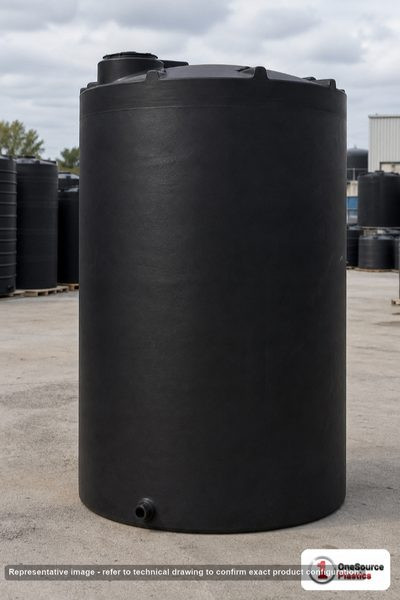
300 Gallon Green Doorway Water Tank: Complete Buyer's Guide
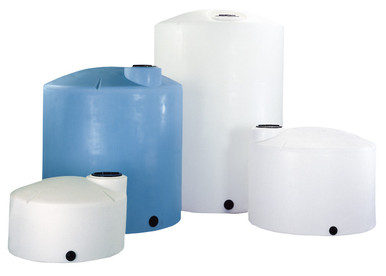
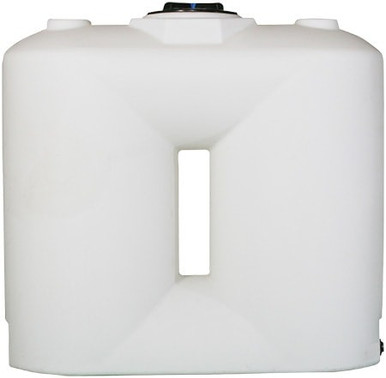
A 300-gallon reserve that walks through a standard 32-inch door. Norwesco molds this forest-green doorway tank as one seamless piece of FDA-grade polyethylene, so a homeowner can put a quarter-ton of drinking water in a basement utility room without cutting a wall open to do it.
Specifications at a Glance
Every figure below is pulled straight from the live product record for this exact tank — the same data on the product page, so what you read here and what you buy never disagree.
Standards & Materials
- ASTM D1998 — Standard Specification for Polyethylene Upright Storage Tanks. Governs wall-thickness and hydrostatic design for vertical rotomolded poly tanks of this class.
- FDA 21 CFR 177.1520 — Olefin polymers. The food-contact regulation the FDA-grade resin in this tank is compounded to meet.
- Specific gravity rating 1.5 — the tank is engineered for liquids up to 1.5× the density of water (water is about 8.34 lb/gal). Confirm your fluid’s SG before storage.
Product Overview
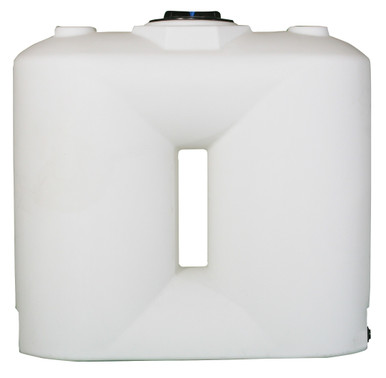
Most large water tanks lose the argument at the threshold: the cylinder is wider than the door, and the only way in is through a window or a demolished frame. The 300 Gallon Green Doorway Water Tank exists to win that argument. Its 25-inch width clears a standard interior doorway with room to spare, while the 65-inch height stacks the volume vertically instead of spreading it across a floor you may not have.
The trade-off behind that narrow body is deliberate. By flattening the cross-section into a near-rectangular profile, Norwesco gives up some of the structural elegance of a true cylinder and compensates with extra wall material along the long faces. The result is a tank that carries 300 gallons of potable water — roughly 2,500 pounds of liquid plus a 129-pound empty shell — in a footprint of about 10.2 square feet. Forest-green pigment is blended through the resin, not sprayed on, so it resists UV chalking and disappears against landscaping when the tank lives outdoors.
For potable service this tank earns its keep on details that matter to drinking water: a single seamless mold with no internal weld seams where biofilm could anchor, FDA-listed resin cleared for food-grade contact, and translucent-free opaque walls that block light to discourage algae. A 1.25-inch NPT outlet is installed and leak-tested at the factory; the inlet is left to you, which is the right call for a doorway tank that might feed a basement pressure system, a gravity line, or a haul-and-fill cistern setup depending on the home.
The 16-inch lid opening is wide enough to reach in with a brush, drop a float switch, or seat a small submersible pump for a basement booster. Norwesco backs the shell with a 3-year warranty against manufacturing defects, and as the largest rotomolder of poly tanks in North America, they have the resin chemistry and mold tolerances to make that warranty mean something.
Technical Drawing
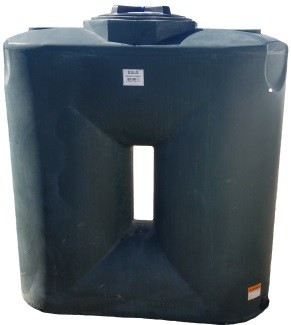
Official Norwesco technical drawing — 300 Gallon Green Doorway Water Tank
Key Features and Specifications
- 300-gallon capacity — sized for tight-access indoor liquid storage
- Constructed from virgin linear polyethylene (HDPE) with 1.5 specific gravity rating — handles liquids up to 12.5 lbs/gal
- 59" long x 25" wide x 65" tall
- 129 lbs empty, approximately 3,882 lbs when full at rated specific gravity
- 1.25 NPT outlet fitting — factory installed and leak-tested
- 16" lid opening for fill, venting, and interior access
- FDA approved for potable water and food-grade liquid contact
- 3 Year Warranty from Norwesco against manufacturing defects
- Forest green color blends naturally with landscaping for residential and agricultural installations
- Rated for continuous service up to 120 F / 48 C
- Seamless one-piece rotational molding — no seams, no welds, no leak points
- Manufactured by Norwesco — a leading name in rotomolded polyethylene tanks
- Place on a firm, level surface free of rocks or sharp objects that could damage the tank bottom. Ensure adequate ventilation if stored chemicals produce vapors
- Ships via LTL freight on a pallet — residential delivery with lift gate available
Installation and Setup Guide
A doorway tank changes the installation conversation, because the hardest part happens before the tank reaches its final resting spot. Plan the route first, the pad second.
Site Preparation
Measure every doorway, hallway turn, and stair landing on the path to the install point — then confirm the 25-inch tank width clears each one with a couple of inches to breathe. The empty shell weighs only 129 pounds, so two people can carry it, but a 65-inch upright tank does not pivot easily around a tight stair turn. Once you reach the install spot, the surface under the tank must be a continuous, level slab. A basement concrete floor is ideal; if you are placing it on a crawlspace deck or a garage corner, verify the structure can carry roughly 2,700 pounds concentrated over 10 square feet before you fill it.
Placement and Connections
Set the tank against a wall but leave 12 inches of standoff so you can read the level, reach the lid, and service the outlet without dragging the tank back out. Plumb the factory 1.25-inch NPT outlet with a true-union ball valve right at the tank so you can isolate it for cleaning without draining the building line. Because you are choosing the inlet location yourself, install a bulkhead fitting high on the wall the tank leans against — keeping the fill line off the floor where it can be kicked or frozen. Run the first foot off any fitting in flexible hose; rigid copper or PVC bolted hard to a poly tank will eventually crack the threaded boss as the plastic breathes with temperature.
Venting
Indoors, venting does double duty. The tank still needs to breathe — air in as you draw water, air out as you fill — but it also needs to not vent humidity and chlorine smell into a finished basement. A screened atmospheric vent in the lid handles the pressure balance; if the room is living space, route a short vent line to a nearby foundation penetration so the makeup air comes from outside rather than the laundry room.
Maintenance and Long-Term Care
Because this tank usually lives indoors and holds drinking water, its maintenance leans toward sanitation rather than weatherproofing. The good news is that a basement tank dodges the two harshest enemies of poly — direct sun and freeze-thaw — so the schedule is short.
Quarterly Inspection Checklist
- Wall and seam scan: Run a flashlight along the long flat faces. The doorway profile carries more bending stress than a cylinder, so any bowing, oil-canning, or a soft spot that flexes under a press of the palm is your earliest warning that the floor under it is not flat.
- Outlet boss: Feel under the 1.25-inch NPT fitting for dampness. A pinhole weep at the boss leaves a faint mineral ring on a basement floor long before it becomes a puddle.
- Lid gasket: Confirm the 16-inch lid seats flat and the screen vent is clear. In a basement, the usual clog is dust and lint rather than wasps.
- Floor contact: Slide a sheet of paper under each corner. If it glides freely under one corner, the slab has a high spot loading the tank unevenly — shim the low side with a rubber pad before it telegraphs into the wall.
Cleaning and Sanitizing
Drain and sanitize potable water tanks once a year, more often if the water sits warm or is used intermittently. Fill the tank, then add about 1/4 cup of unscented household bleach for every 15 gallons, circulate it through the outlet line, and hold the chlorine for two hours. Drain, refill with fresh water, and flush until no chlorine odor remains at the tap. The opaque green walls already suppress algae by blocking light, so most of what you are removing is fine sediment that settles below the outlet.
Indoor and Long-Term Care
A basement tank avoids UV almost entirely, which is why the green pigment matters less here than in an outdoor install — but if this tank ever moves outside, inspect the sun-facing flat face yearly for chalking. Indoors, the real long-term watch item is the floor: concrete that stays wet under one corner can heave or spall over years and slowly tilt the tank. Keep the slab dry and the pad level and a doorway tank will outlast the room it sits in.
Alternatives and Comparisons
The 300 Gallon Green Doorway Water Tank competes against several other 300-gallon shapes, and the right pick comes down to one question: does the tank have to fit through a door, or just into a yard?
Doorway vs. standard vertical: A conventional 300-gallon vertical cylinder stores the same water with less wall material and a lower price per gallon, but its diameter rules out indoor placement. If the tank lives outside or in a barn with a roll-up door, the standard vertical wins on cost. The moment a 32-inch interior door stands between you and the install spot, the doorway profile is the only shape that gets there intact.
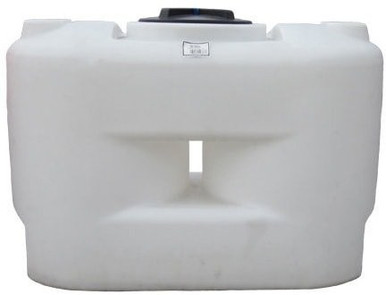
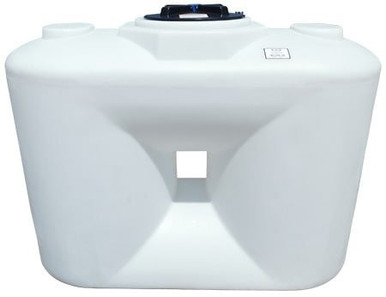
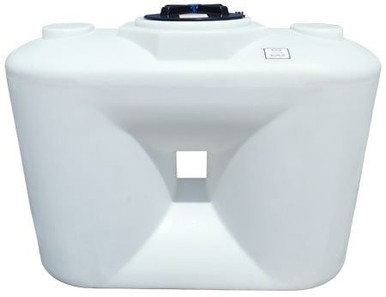
Color and width options: The same 300-gallon doorway tank ships in white and in two width-and-height combinations. The 25-inch-wide body shown here trades a taller silhouette for the narrowest squeeze; a 29-inch-wide version is stouter and shorter where ceiling height is tight but the doorway is generous. Green hides outdoors and blocks light for algae control; white reads cleaner in a finished mechanical room.
Other 300-Gallon Options
Frequently Asked Questions
How long will the 300 Gallon Green Doorway Water Tank last?
Indoors on a level slab, a doorway tank typically gives 20-plus years because it skips the two things that age poly fastest: ultraviolet light and freeze-thaw cycling. The seamless rotomolded shell has no weld lines to fatigue, and potable water at room temperature is about the gentlest service a tank can see. Push the lifespan by keeping the floor under it flat and dry; the most common premature failure on an indoor tank is a wall crack from a slab that settled unevenly under one corner.
What chemicals can I store in this tank?
This is sold as a drinking-water tank and the FDA-listed resin is cleared for potable and food-grade contact, which is its best and highest use. The shell is rated to 1.5 specific gravity, so within that density band it can also hold many water-based agricultural and cleaning solutions if the household ever repurposes it. It is never for fuel, solvents, or anything flammable, and a tank that has held drinking water should be fully sanitized before any chemical and never switched back to potable afterward. Confirm any non-water liquid against a polyethylene compatibility chart first.
What kind of foundation does a 300-gallon tank need?
Filled with water this tank carries about 2,500 pounds of liquid on top of its 129-pound shell, all riding on roughly 10 square feet. A poured concrete basement or garage slab is the natural home and needs no extra prep beyond confirming it is level. If you set it on a wood deck or crawlspace structure, have the framing checked for the concentrated load first. Whatever the surface, it must be flat under the full footprint — a single high spot bends the flat walls of a doorway tank far more than it would a cylinder.
Does this tank come with a warranty?
Yes — Norwesco provides a 3-year warranty against defects in materials and workmanship for tanks used within their rated limits. It covers what the factory is responsible for: molding voids, pinholes, and a defective outlet boss. It does not cover a wall cracked by an uneven floor, impact damage from moving the tank, or any liquid heavier than the 1.5 specific-gravity rating. Photograph the tank on its finished pad at install and keep the invoice; that pair of records settles nearly every claim quickly.
Can I install this tank underground?
No. A doorway tank is built thin and flat to clear a door, which is exactly the wrong geometry for resisting soil pressure — bury it and the flat faces will cave inward. It is engineered for above-ground use only, and burial voids the warranty. For below-grade water storage, choose a purpose-built underground cistern with ribbed, reinforced walls designed to take the load of backfill and groundwater.
Buying Considerations
Three checks turn this from a clever idea into a tank that actually fits your house. First, walk the route with a tape measure: confirm the 25-inch width and 65-inch height clear every door, turn, and stairwell between the truck and the final spot — this is the one tank where the install path matters more than the install pad. Second, confirm the surface where it lands is flat concrete or an equally rigid, level base that can carry roughly 2,700 pounds over 10 square feet. Third, plan delivery: at 129 pounds empty it ships on an LTL pallet, and a liftgate (request it when ordering) sets it at the curb so you only have to muscle it the last stretch indoors.
Related Products You May Need
Questions? Call (866) 418-1777 — our team knows these products inside and out and can help you select the right tank for your application.
Recommended Tanks for This Guide
Live pricing, updated automatically · estimate freight to your ZIP.