400 Gallon Doorway Water Tank: Complete Buyer's Guide
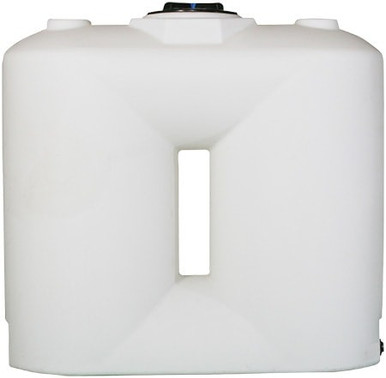
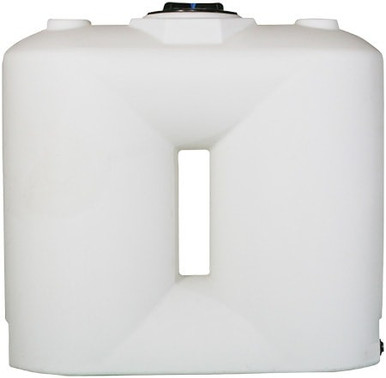
400-gallon white doorway tank built for tight-access indoor liquid storage. Manufactured by Norwesco from virgin linear polyethylene (HDPE) rated to handle liquids up to 12.5 pounds per gallon. FDA approved for contact with potable water, ensuring safe storage for drinking water and food-grade liquids.
Specifications at a Glance
Every figure below is pulled straight from the live product record for this exact tank — the same data on the product page, so what you read here and what you buy never disagree.
Standards & Materials
- ASTM D1998 — Standard Specification for Polyethylene Upright Storage Tanks. Governs wall-thickness and hydrostatic design for vertical rotomolded poly tanks of this class.
- FDA 21 CFR 177.1520 — Olefin polymers. The food-contact regulation the FDA-grade resin in this tank is compounded to meet.
- Specific gravity rating 1.5 — the tank is engineered for liquids up to 1.5× the density of water (water is about 8.34 lb/gal). Confirm your fluid’s SG before storage.
Product Overview
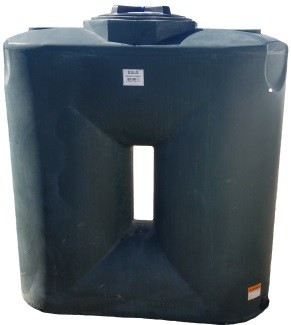
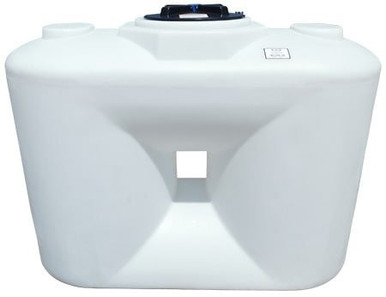
The 400 Gallon Doorway Water Tank is the narrowest member of the doorway family, just 29 inches wide, built to thread through openings that stop almost everything else. Where a round tank of this capacity would never see the inside of a finished room, this one rolls through a standard door into a basement, a closet-sized mechanical space, a barn aisle, or any interior corner that needs water on hand. The slim rectangular shell exists for exactly that reach.
Norwesco molds it in a single seamless piece of virgin linear polyethylene rated to 1.5 specific gravity, so it holds water and water-based liquids up to 12.5 pounds per gallon. The translucent natural-white wall reads as a level gauge and reflects light to keep contents cooler, with molded-in UV stabilizers and a 120 F / 48 C ceiling for outdoor stints.
It measures 66 inches long, 29 inches wide, and 70 inches tall, weighs 183 pounds empty, and reaches about 5,187 pounds full at 1.5 SG. A factory 1.25-inch NPT outlet feeds your draw line, and the 16-inch lid handles filling, venting, and access. Every unit is inspected before it leaves Norwesco and again before it ships from us.
Technical Drawing

Official Norwesco technical drawing — 400 Gallon Doorway Water Tank
Key Features and Specifications
- 400-gallon capacity — sized for tight-access indoor liquid storage
- Constructed from virgin linear polyethylene (HDPE) with 1.5 specific gravity rating — handles liquids up to 12.5 lbs/gal
- 66" long x 29" wide x 70" tall
- 183 lbs empty, approximately 5,187 lbs when full at rated specific gravity
- 1.25 NPT outlet fitting — factory installed and leak-tested
- 16" lid opening for fill, venting, and interior access
- FDA approved for potable water and food-grade liquid contact
- Translucent white walls allow visual level monitoring without opening the tank and reflect sunlight to keep contents cooler
- Rated for continuous service up to 120 F / 48 C
- Seamless one-piece rotational molding — no seams, no welds, no leak points
- Manufactured by Norwesco — a leading name in rotomolded polyethylene tanks
- Place on a firm, level surface free of rocks or sharp objects that could damage the tank bottom. Ensure adequate ventilation if stored chemicals produce vapors
- Ships via LTL freight on a pallet — residential delivery with lift gate available
Installation and Setup Guide
At 29 inches across, this is the doorway tank for the tightest squeezes, and that narrow width drives the whole installation. The job starts with proving the tank can physically reach its destination, then giving it a sound surface once it arrives.
Measure the Path First
Before the truck shows up, measure every opening and turn between the unloading point and the final spot — door jambs, hall widths, stair landings, and the ceiling clearance for a 70-inch-tall tank. The 29-inch width clears even some non-standard doors, but a sharp turn in a cramped corridor can still defeat it. Empty, at 183 pounds, two people can move it on a dolly along a cleared path.
Placing It
Full, the tank bears down at roughly 5,187 pounds on a small footprint, so site it where the floor can take that — a slab is ideal, and a framed floor should be checked first. Set it level on a clean, firm surface, and because the sides are flat it tucks neatly against a wall to reclaim floor space. Leave reach at the lid and outlet for fills and service.
Plumbing and Venting
Run the 1.25-inch outlet with a flexible first foot to absorb wall movement and add a shutoff valve. Vent the 16-inch lid with a screened breather so the tank takes in air as it empties; a closed indoor tank still needs to breathe to avoid denting under a pump, and the screen keeps the water clean.
Maintenance and Long-Term Care
This water tank gets straightforward potable maintenance, made simpler by an indoor life free of sun and weather.
Periodic Inspection
- Wall and level: Backlight the white wall to check the level and scan for any bulge or distortion.
- Fitting: Hand-snug the 1.25-inch outlet if it has crept under pressure; no pipe wrench on the poly threads.
- Lid and screen: Confirm the lid seats fully and the vent screen stays clear and intact.
Annual Sanitizing
For drinking water, drain and flush the tank once a year, then disinfect with the potable dose of a quarter cup of unscented bleach per fifteen gallons, held two hours in the filled tank, then drained and rinsed until the chlorine smell clears. If the tank holds a water-based solution, follow that product's cleaning steps before changing contents.
Why Indoors Helps
Behind walls the translucent wall never sees sunlight, so UV is a non-factor and the resin ages slowly. There is no freeze exposure in a conditioned space, and steady indoor temperatures keep stored water fresher than it would stay in an outdoor tank under summer heat.
Alternatives and Comparisons
This tank's 29-inch width is its reason for being, narrower even than the 500-gallon doorway model, so the comparison turns on access.
Narrowest doorway tank vs. wider options: If your tightest opening is the constraint — an older home with non-standard doors, a cramped utility room, a stair that barely passes — the 29-inch width may be the only thing that fits, where a 31-inch doorway tank or a round tank would not. The trade is capacity for access: at 400 gallons it holds less than the 500-gallon doorway tank, which you would step up to if your path allows the extra two inches and you want more reserve. Round tanks pack more gallons per square foot but cannot come indoors at all.
Other 400-Gallon Options

Frequently Asked Questions
How long will the 400 Gallon Doorway Water Tank last?
Installed indoors, as doorway tanks usually are, this tank can run well beyond the typical 15-to-20-year mark because it is fully protected from sun and weather. The molded-in UV stabilizers face little stress behind walls and the seamless body has no joint to fail. Kept within its 1.5 SG and 120 F ratings and cleaned periodically, it is a durable, long-serving tank.
What chemicals can I store in this tank?
It is a water tank rated to 1.5 specific gravity, so its main job is potable and general water storage, and it can also hold water-based liquids up to 12.5 pounds per gallon within that density. Do not put fuels, solvents, or flammables in it. Verify any non-water liquid against a polyethylene compatibility chart before filling.
What kind of foundation does a 400-gallon tank need?
A full 400-gallon doorway tank weighs about 5,187 pounds on a compact footprint. A concrete slab carries that easily indoors; on a framed floor, confirm the structure can take the concentrated load. The surface must be flat and clear so the tank bottom is fully supported.
Does this tank come with a warranty?
Norwesco backs the tank against manufacturing defects in materials and workmanship under normal use, covering molded-in faults rather than damage from overloading, an unsound floor, incompatible liquids, or impact. Keep your receipt and a photo of the installation for any claim, and contact us for the specific coverage terms on this model.
Can I install this tank underground?
No. This is an above-ground tank with walls that cannot resist soil pressure; burying it would risk collapse and void coverage. For below-grade water storage, our reinforced underground cisterns are the correct product.
Buying Considerations
Three things to confirm before this 400-gallon tank ships. First, the access route — measure every doorway, turn, and stair, because the 29-inch width is the whole reason to choose it. Second, the floor, which must carry about 5,187 pounds when the tank is full; a slab handles it, a framed floor needs checking. Third, your plumbing, matched to the 1.25-inch outlet. Listed at $1,221.49 before freight, quoted to your ZIP.
Related Products You May Need
Questions? Call (866) 418-1777 — our team knows these products inside and out and can help you select the right tank for your application.
Recommended Tanks for This Guide
Live pricing, updated automatically · estimate freight to your ZIP.