Field-Fabricated Piping and Welder-Qualification for Tank-Discharge Runs: Procedure Specifications, Performance-Qualification Records, ASME Section IX Parallels, and the Documentation Trail That Defends a Polyethylene Joint Twenty Years From Now
The polyethylene tank discharge piping is field-fabricated in nearly every installation. The shop drawings are translated into pipe segments, fittings, valves, supports, and anchors that are assembled at the tank site by a fabrication crew. Each joint in the assembly is a potential leak path; each fitting is a potential failure point. The discipline of welder qualification, procedure specification, and joint documentation is the framework that distinguishes a piping system that holds for 30 years from one that develops leaks within the first season. This article walks the procedure-specification structure, the welder-qualification process, the parallels to ASME Section IX in polyethylene service, the in-service inspection framework, and the documentation that defends a joint two decades after fabrication when an inspector or attorney asks how it was made.
The discussion is grounded in ASTM F2620 (heat fusion of polyethylene pipe), ASTM F3124 (electrofusion of polyethylene), DVS 2207 European fusion-welding practice, ASME B31.3 process piping code, and field experience across the 5-brand polyethylene tank catalog (Norwesco, Snyder, Chem-Tainer, Enduraplas, Bushman). List pricing on each tank product page; LTL freight quoted to your ZIP via the freight estimator or by phone at 866-418-1777.
1. Why Welder Qualification Matters in Field-Fabricated Tank Piping
The decision to require formal welder qualification on field-fabricated piping reflects the mature engineering judgment that joint quality is a function of operator skill, equipment condition, procedure adherence, and verification discipline. Each factor must be controlled to produce a reliable joint:
- The operator-skill variable. Polyethylene fusion welding is a skilled trade. A trained operator with the correct equipment and a written procedure produces consistent joints; an untrained operator with the same equipment produces joints with high variability. The variability manifests as immediate leaks (caught at hydro-test) and as long-term failures (cracks that develop over months or years from sub-optimal fusion).
- The equipment-condition variable. Fusion-welding equipment requires routine calibration: heater-plate temperature, hydraulic pressure, alignment fixtures, and timing controls. Out-of-calibration equipment produces joints that look acceptable but lack the design fusion strength. Periodic equipment qualification confirms that the joints made on the equipment meet the procedure specifications.
- The procedure-adherence variable. Each polyethylene grade, pipe size, and joint type has a specific fusion procedure: heater temperature, soak time, fusion pressure, and cool-down time. Operators who deviate from the procedure produce out-of-spec joints. The written procedure plus operator discipline plus supervisor verification produces in-spec joints.
- The verification-discipline variable. Each joint should be inspected for cosmetic indicators of fusion quality (bead pattern, alignment, parent-material melt, no contamination). Critical joints undergo destructive sample testing (cut a joint, perform peel test, verify ductile failure). Non-destructive verification (ultrasonic testing) is available for some joint types.
- The downstream-consequence multiplier. A failed joint releases tank chemistry into the environment. Depending on the chemistry the consequence ranges from a nuisance spill to a significant environmental release with regulatory consequences. The cost of post-failure cleanup and regulatory response can exceed the original fabrication cost by orders of magnitude. The qualification investment is a small fraction of the avoided-failure cost.
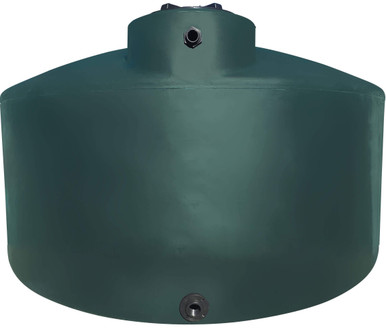
- Reference 5000 gallon tank for piping scoping. Reference N-40164 5000 gallon Norwesco vertical as a typical industrial tank where field-fabricated discharge piping is the rule. The piping run from the tank to the dispensing point may include 6 to 20 fusion joints; each joint must perform reliably for the tank service life.
The welder-qualification framework formalizes the operator-skill, equipment-condition, procedure-adherence, and verification-discipline factors into a documented system that produces consistent joint quality. The investment is justified by the avoidance of in-service failures and the documentation that supports the eventual regulatory or insurance review.
2. Welding Procedure Specification (WPS) Structure for Polyethylene Service
The Welding Procedure Specification is the controlled document that defines how a particular joint type is to be made. The WPS structure parallels the ASME Section IX format adapted for polyethylene fusion:
- The joint description and drawing reference. The WPS specifies the joint type (butt fusion, socket fusion, electrofusion, saddle fusion), the pipe materials and grades, the pipe sizes and dimension ratios, and a reference drawing. Drawings show the geometric arrangement of the joint elements.
- The pre-fusion preparation requirements. Cleaning and surface preparation requirements before fusion: pipe-end cleanliness, scraping or facing of the contact surfaces, alignment within tolerance, and cleanliness verification. Contamination is the principal cause of long-term joint failure; the preparation procedure is critical.
- The fusion-process parameters. Heater plate temperature, contact pressure during heating, heating time, transition time between heating and joining, joining pressure, and cool-down time before pressure release. Each parameter has a specified value and tolerance band. The values come from the polyethylene-grade manufacturer specification or recognized industry standards.
- The visual acceptance criteria. Cosmetic indicators that the joint was made correctly: bead size and uniformity, no contamination markers, proper alignment, no surface anomalies. The visual inspection is the first-pass quality screen; failed joints are cut out and remade.
- The destructive-test acceptance criteria. For sample joints made under the WPS, destructive testing requirements: peel test (for butt fusion), pull test, or burst test as applicable. The destructive test confirms that the cosmetic-acceptable joint also has the required mechanical strength.
- The procedure-qualification record (PQR). The WPS is supported by a Procedure Qualification Record that documents the testing performed to validate the WPS. The PQR includes the test joints made, the destructive test results, and the witness sign-offs. The PQR is the evidence that the WPS produces acceptable joints.
- The revision-control discipline. The WPS is a controlled document. Revisions require re-qualification (new PQR) for changes that affect joint properties. Out-of-date WPS copies must be removed from the field; only the current revision is authorized for use.
The WPS is the technical foundation of joint quality control. Sites that have written, qualified, and disciplined WPS documents produce predictable joint quality; sites that work without WPS documents rely on individual operator memory and produce unpredictable joint quality.
3. Welder Performance Qualification Record (WPQR)
The welder performance qualification documents that a specific operator can produce acceptable joints under the WPS. The qualification is welder-specific and process-specific:
- The performance-test specimens. The candidate welder makes a defined number of test joints under the WPS. Typical requirements include butt-fusion specimens at small, medium, and large pipe sizes; socket-fusion specimens at common sizes; electrofusion specimens for the saddle and coupler types in use.
- The witness requirement. The test joints are made under witness by a qualified examiner (Level II or Level III inspector, supervisor with documented qualification, or third-party certifier). The witness verifies that the joints were made by the candidate following the WPS without prompting or assistance.
- The destructive-test verification. The test joints undergo destructive testing per the WPS acceptance criteria. Peel tests, pull tests, or burst tests confirm that the joints meet the strength requirements. Failed tests result in additional training and re-qualification before authorization.
- The qualification-scope definition. The qualification authorizes the welder for a specific scope: pipe size range (often expressed as a multiplier of the test pipe size), pipe material, and joint type. A welder qualified on 4-inch butt fusion may be authorized for 2-inch through 6-inch butt fusion but not for 8-inch or for socket fusion without additional qualification.
- The continuing-qualification requirement. Welder qualifications expire after a defined period (typically 6 months to 1 year of inactivity). Active welders maintain qualification by performing the qualified work; inactive welders must re-qualify before returning to authorized work. The continuing-qualification record is updated periodically to confirm current status.
- The certification-organization role. Some welder qualifications are issued by recognized certification organizations (PPI, ASME-related programs, manufacturer-sponsored programs). The certification provides a portable qualification that the welder carries from job to job. Site-specific qualifications complement the certifications when site procedures differ from the certification scope.
- Reference 1000 gallon tank for qualification scoping. Reference N-40152 1000 gallon Norwesco vertical as a tank where the discharge piping fabrication may include butt and socket fusion joints. The fabrication crew should include welders qualified for both joint types in the relevant pipe size range.
The welder performance qualification is the operator-specific complement to the procedure-specific WPS. Together they document that qualified operators following qualified procedures produced the field joints.
4. The Three Polyethylene Joining Processes
Three principal joining processes cover the polyethylene tank discharge piping space. Each has specific WPS requirements, equipment, and qualification considerations:
- Butt fusion. Butt fusion is the principal process for medium and large pipe sizes (2 inch and above). The pipe ends are faced flat, heated against a temperature-controlled plate, then pressed together to form a homogeneous joint. The process requires butt-fusion machines sized to the pipe diameter; smaller portable units handle 2-inch through 4-inch, larger machines handle up to 24-inch and beyond. The procedure parameters follow ASTM F2620 and the polyethylene manufacturer specifications.
- Socket fusion. Socket fusion is the principal process for smaller pipe sizes (1/2 inch through 4 inch typical). The pipe end is heated together with a socket fitting; both surfaces are then pressed together to form the joint. Socket fusion is faster than butt fusion and works on smaller equipment; the joint is stronger than the parent pipe in axial pull. The procedure parameters follow the fitting-manufacturer specifications and ASTM F1056.
- Electrofusion. Electrofusion uses a fitting with embedded resistance heater wires. The fitting is placed over the prepared pipe ends; an electrofusion control box energizes the wires to melt the inner surface of the fitting and the outer surface of the pipe. Cool-down under fixture pressure produces a homogeneous joint. Electrofusion works in the full size range; it is preferred for tight-quarters work, repair joints, and joints that cannot be made with butt-fusion machines. The procedure follows ASTM F3124 and the fitting-manufacturer specifications.
- Mechanical fitting alternatives. Some applications use mechanical fittings (compression fittings, push-fit fittings, flanged adaptors) instead of fusion. Mechanical fittings do not require welder qualification but introduce a different reliability profile (gasket dependent, mechanically loaded). The choice between fusion and mechanical fittings is application-specific.
- Process-selection considerations. Pipe size, application chemistry, working conditions, and fabrication-time pressures all influence the process selection. Small-diameter shop work favors socket fusion; field work in tight quarters favors electrofusion; long-distance pipeline favors butt fusion; combined pipe-fitting service uses a mix of the three.
- The cross-process qualification. Welder qualification is process-specific. A welder qualified for butt fusion is not automatically qualified for socket fusion or electrofusion. Sites that use multiple processes maintain qualifications for each process used by each welder.
The three processes cover the field-fabricated polyethylene piping space. Process selection follows from the application; welder qualification follows from the process selection.
5. Equipment Calibration and Verification
The fusion-welding equipment is part of the joint-quality system. Equipment calibration produces the in-spec joint properties; out-of-calibration equipment produces out-of-spec joints regardless of operator skill:
- The heater-plate temperature calibration. The heater plate must produce the specified surface temperature (typically 400°F to 450°F for HDPE depending on grade). A pyrometer or contact thermocouple is used to verify the surface temperature. The verification is done at multiple points across the heater plate to confirm uniformity. Out-of-tolerance plates are repaired or replaced.
- The fusion pressure calibration. Butt-fusion machines apply a calibrated pressure during fusion. The pressure is set by hydraulic gauge or load cell; the calibration is verified periodically against a master gauge. Pressure errors translate directly into joint-strength errors.
- The pipe-alignment verification. The fusion machine fixtures hold the pipe ends in alignment during the joining process. Worn or damaged fixtures produce mis-aligned joints; the misalignment creates stress concentrations and accelerated long-term failure. Periodic fixture inspection and adjustment maintains alignment within tolerance.
- The timing-control verification. The procedure timing parameters (heating time, transition time, joining time, cool-down time) are controlled by the operator or the machine controls. Time verification can be done by stopwatch or by inspecting the machine controller log. Out-of-time joints are cut out and remade.
- The electrofusion-controller calibration. The electrofusion control box delivers a controlled voltage and current for a controlled time. The controller is calibrated periodically against the manufacturer specifications. Out-of-calibration controllers produce under-fused or over-fused joints.
- The equipment-record discipline. Each fusion machine has an equipment record that documents the calibration history, the maintenance history, and the fault history. The record supports troubleshooting when a joint quality problem develops; the calibration history confirms the equipment was in-spec when the joint was made.
The equipment-calibration discipline is parallel to the welder-qualification discipline; both must be in place to produce reliable joints.
6. In-Service Inspection and Documentation
The piping system is field-inspected after fabrication and periodically thereafter. The inspection records combine with the fabrication records to support service-life decisions:
- The post-fabrication hydrostatic test. The completed piping is pressurized to a multiple of the operating pressure (typically 1.5x design) and held for a defined duration (typically 1 to 4 hours) to confirm leak-tight integrity. The test is recorded with date, pressure, duration, and witness sign-off. Failed tests trigger leak identification and joint repair.
- The pneumatic-test alternative. Some applications cannot accept hydrostatic test (clean rooms, food-grade systems before commissioning). Pneumatic test at lower pressure with leak-detection fluid is used as an alternative. The test method follows ASME B31.3 or applicable code; the test record is the documentation of integrity.
- The annual visual inspection. Each joint is visually inspected annually for changes from the as-fabricated condition: signs of leakage, alignment changes, support-condition changes, surface degradation. Findings are recorded in the inspection log; trends are evaluated for systemic issues.
- The non-destructive testing protocols. Ultrasonic testing (UT) of butt-fusion joints can detect sub-surface defects (incomplete fusion, contamination inclusions, voids). UT is specialized; not every site has the capability or the qualified operators. Critical-service joints may justify the UT investment; non-critical joints rely on visual and hydro-test verification.
- The internal visual inspection. Where pipe-internal access is possible (manholes, tee junctions, removed-fitting access points), internal visual inspection captures the inner-bead condition and any signs of degradation. Internal access is rare in finished piping but is a high-value inspection when possible.
- The repair-and-modification record. Any in-service repair (cut out a joint, fabricate a replacement) is documented with the same WPS and welder-qualification rigor as the original fabrication. The repair becomes part of the piping record. Modifications (added branches, replaced sections) are similarly documented.
The inspection and documentation framework extends the fabrication-record discipline through the piping service life. The record at year 20 is the fabrication record plus the accumulated inspection and repair records; together they support the continuing-service decision.
7. The ASME Section IX Parallel for Polyethylene
ASME Section IX is the welding-qualification reference standard for steel piping in the process industries. The polyethylene-fusion industry has developed parallel structures that mirror Section IX in form while addressing the polyethylene-specific physics:
- The procedure-qualification parallel. The Section IX Procedure Qualification Record (PQR) is paralleled by the polyethylene fusion procedure qualification. The same structural concept (test joints, destructive verification, witness sign-off, controlled document) applies in both worlds.
- The performance-qualification parallel. The Section IX Welder Performance Qualification (WPQ) is paralleled by the polyethylene welder performance qualification. The same concept of operator-specific demonstration of skill against the qualified procedure applies.
- The essential-variable concept. ASME Section IX defines essential variables that, when changed, require re-qualification (different base material, different filler, different position). The polyethylene world has parallel essential variables (different polyethylene grade, different pipe size class, different fusion process). The variable framework allows scope-appropriate qualifications.
- The code-equivalence question. ASME B31.3 (process piping) has provisions for non-metallic piping that reference the polyethylene-specific standards (ASTM F2620, ASTM F3124). Sites operating under B31.3 jurisdiction can use the polyethylene standards as their qualification framework with Section IX equivalence.
- The testing-standard differences. Steel welds are typically verified by tensile, bend, and macro testing per Section IX. Polyethylene fusion joints are verified by peel, pull, and bead-shape evaluation per the polyethylene standards. The test concepts parallel; the specific tests differ to match the material physics.
- The certification-organization parallel. Section IX qualifications are issued by certified inspectors and welder-qualifiers. Polyethylene qualifications are issued by certified fusion-machine instructors and qualified-supervisor inspectors. The certification-organization concept parallels in both worlds.
The Section IX parallel gives the polyethylene-fusion world a familiar framework for engineers and inspectors trained in steel-welding code. The parallel is structural; the technical specifics differ to match the polyethylene physics.
8. Procurement Implications and Tank Selection
The welder-qualification discipline informs procurement at the tank-specification stage:
- Discharge-fitting compatibility with planned piping. The tank discharge fitting type (threaded, flanged, bulkhead) should match the planned piping fabrication. Threaded fittings transition to threaded pipe with mechanical or fusion adapters; flanged fittings transition to flanged piping; bulkhead fittings have specific compatible-piping configurations.
- Pipe-material specification consistency. The piping pipe-material specification (HDPE PE 4710, MDPE, polypropylene) should be consistent with the tank chemistry compatibility. Different pipe materials have different fusion procedures and different welder qualifications; mixing materials across an installation multiplies the qualification scope.
- Fusion-equipment access. The fabrication site must accommodate the fusion equipment. Butt-fusion machines require space and lifting access. Tight or crowded installations may force socket or electrofusion alternatives. The planning at procurement time prevents field-discovery of access problems.
- Qualified fabricator selection. The fabricator engaged for the work should have current welder qualifications, current procedure specifications, and recent qualification records. Sites that engage fabricators without verifying qualifications take on the risk that the fabrication does not meet the documented standards.
- Inspection-budget allocation. The tank specification should include the inspection budget: hydrostatic test, witness-services, NDT if required, and final-acceptance documentation. Under-funded inspection produces incomplete documentation and degraded long-term defensibility.
- Reference 100 gallon tank for small-scale procurement. Reference N-44800 100 gallon Norwesco doorway tank as the smallest-scale procurement where the welder-qualification discipline still applies. Even a small-tank installation with a few-foot piping run benefits from documented welder qualification; the avoided-failure value is proportionally similar to larger installations.
The procurement-stage decisions enable or constrain the welder-qualification discipline through fabrication and the subsequent service life. Sites that integrate procurement and fabrication-quality planning produce piping that performs reliably for 20 to 30 years.
9. The Welder Qualification Engineering Conclusion
The welder-qualification discipline is the framework that translates polyethylene-fusion physics into reliable field-fabricated piping joints. The Welding Procedure Specification, the Procedure Qualification Record, the Welder Performance Qualification, and the equipment-calibration record together produce the documentation that supports each joint at the time of fabrication and twenty years later. The three principal joining processes (butt fusion, socket fusion, electrofusion) each have specific procedures and qualifications. The ASME Section IX parallel gives the polyethylene world a familiar structural framework. The in-service inspection extends the fabrication record across the piping service life. Sites that build the full discipline produce piping installations that perform predictably for decades; sites that work without the discipline accept variability that surfaces in leaks, environmental releases, and the regulatory consequences of inadequate documentation.
OneSource Plastics ships polyethylene tanks across the 5-brand catalog (Norwesco, Snyder, Chem-Tainer, Enduraplas, Bushman) with discharge fittings and accessory configurations matched to typical field-fabricated piping. Tank specification for any specific application is performed by the customer site engineer with reference to the chemistry, the piping design, and the fabrication-qualification framework. List pricing on each product page; LTL freight to your ZIP via the freight estimator or by phone at 866-418-1777.
Recommended Tanks for This Guide
Live pricing, updated automatically · estimate freight to your ZIP.