Tank Polyethylene Resin Density Decoded: 0.94 vs 0.95 vs 0.96 What Each Means For Service Life
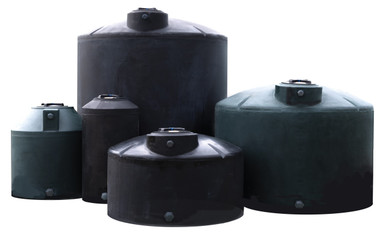
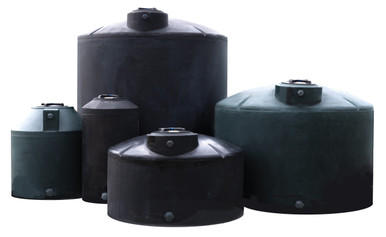
Polyethylene resin density is the single most informative number on a tank build sheet, and it is also the most misunderstood. The three numbers that appear on Norwesco, Snyder, Chem-Tainer, Enduraplas, and Bushman datasheets — 0.94, 0.95, and 0.96 g/cm3 — encode the polymer's branching, crystallinity, stiffness, environmental stress crack resistance (ESCR), and impact toughness. Higher density means more crystallinity, more stiffness, and more resistance to chemistry, but also less ESCR and less low-temperature impact toughness. Picking the right density is the difference between a 25-year tank and a tank that cracks in year 7 at the lower-third hoop stress band where bottom-load and chemistry stress combine.
This pillar decodes the density numbers into engineering language: what each density buys you, what it costs you, and which OneSource Plastics SKUs ship at each density tier. References include ASTM D3350 (cell classification for PE compounds), ASTM D1505 (density measurement), ASTM D1693 (ESCR), ASTM D1998 (rotomolded tank fabrication), and the Plastics Industry Association resin classification standards.
What Density Is Actually Measuring
Polyethylene is a long chain of -CH2-CH2- repeat units. The density depends on how tightly those chains pack against each other, which depends on how much short-chain branching is present. More branching = less crystalline packing = lower density. Less branching = more crystalline packing = higher density. The branching itself is a process control variable during polymerization (Phillips chrome catalyst, Ziegler-Natta, or metallocene). The downstream tank manufacturer buys resin pellets at a specified density and uses them in the rotational mold cycle.
ASTM D3350 organizes polyethylene resins into a four-digit cell classification: density class, melt index class, flexural modulus class, tensile strength class. The first digit (density) is the headline number. ASTM D1505 specifies the gradient-column method that produces the published density value, accurate to 0.0005 g/cm3.
The Three Density Tiers
| Density (g/cm3) | ASTM D3350 Class | Crystallinity | Common Trade Name |
|---|---|---|---|
| 0.926-0.940 | Class 2 (MDPE) | ~50-60% | Medium-density PE |
| 0.941-0.955 | Class 3 (HDPE) | ~60-75% | High-density PE (rotomold standard) |
| 0.956 and above | Class 4 (HDPE) | ~75-85% | High-crystallinity HDPE |
The density numbers you see on tank build sheets are mostly Class 3 HDPE: 0.945, 0.948, 0.952. Cross-linked polyethylene (XLPE) starts as Class 3 HDPE and gets chemically cross-linked during the rotational mold cycle, which preserves the density value but adds three-dimensional polymer network bonds. This is why XLPE shows up at 0.945-0.952 g/cm3 on the spec sheet but performs structurally different from un-cross-linked HDPE at the same density.
What Each Density Buys You
0.94 g/cm3 (low end of HDPE / high end of MDPE)
Strengths: highest impact toughness, best low-temperature performance, highest ESCR. The polymer chains are loosely packed which makes it the most flexible and the most fracture-resistant under impact load.
Weaknesses: lower stiffness, lower tensile yield, less chemistry resistance (more amorphous polymer to dissolve in solvents).
Best for: low-temperature outdoor tanks (USDA Zone 3-5), tanks subject to impact load (vehicles, ice loading, freeze-thaw cycles), large-diameter horizontal tanks where flex tolerance matters.
0.95 g/cm3 (the rotomold standard)
Strengths: the balance point. Sufficient stiffness for vertical tank wall load, sufficient ESCR for general chemistry, sufficient impact for normal service. Ninety percent of rotomolded industrial tanks are made from resin in this density band.
Weaknesses: not extreme on any axis. Cannot match 0.94 on impact, cannot match 0.96 on chemistry resistance.
Best for: the default. Norwesco, Snyder, and Chem-Tainer rotomold the bulk of their catalog at this density.
0.96 g/cm3 (high crystallinity)
Strengths: highest stiffness, best chemistry resistance to organic solvents, lowest permeation rate for hydrocarbons. The packed crystalline structure is hard for foreign molecules to penetrate.
Weaknesses: lowest ESCR, lowest impact toughness, brittle behavior at low temperature. The packed structure has internal stresses that propagate cracks faster.
Best for: petroleum and hydrocarbon storage where permeation matters (UL 142 secondary containment specifications), high-temperature service (the higher melting point comes with the territory).
Density vs ESCR: The Inverse Relationship
This is the key trade-off that the density number captures. ESCR (environmental stress crack resistance) is the polymer's resistance to crack propagation under simultaneous tensile stress and aggressive environment. ASTM D1693 measures it. The relationship to density:
Higher density → higher crystallinity → brittler failure path → lower ESCR
Lower density → more amorphous polymer → ductile failure path → higher ESCR
Tank engineers fight this trade-off by using XLPE: cross-linking adds three-dimensional bonds that compensate for the brittleness penalty of high crystallinity. XLPE at 0.948 g/cm3 outperforms un-cross-linked HDPE at 0.948 g/cm3 on ESCR by 5x to 10x. This is also why XLPE is the spec for sustained chemistry: HDPE at the same density would crack in year 5; XLPE handles 20+ years.
How to Read a Tank Build Sheet for Density
Most Norwesco datasheets list resin specification as ASTM D3350 cell classification. Sample build sheet excerpt:
Resin: HDLPE per ASTM D3350 cell class 345434E
Density: 0.941-0.949 g/cm3
Melt index: 4.0-7.0 g/10 min (190 C, 2.16 kg)
Flexural modulus: 110,000 psi minimum
Tensile yield: 3,000 psi minimum
ESCR: 100 hours, condition B (10% Igepal at 50 C)
Decode: density 0.945 typical (0.941-0.949 range), melt index 4-7 (rotational-mold standard, low MI for thick walls), flex modulus 110 ksi (industry standard for rotomolded HDPE), tensile yield 3,000 psi, ESCR 100 hours minimum. This is a Class 3 HDPE at the rotomold default density.
Real SKU Density Reference
The OneSource Plastics master catalog tags every product with material classification. The bulk of the Norwesco vertical and horizontal catalog runs at Class 3 HDPE around 0.945-0.952 g/cm3. Cross-linked Snyder XLPE products start at the same nominal density and add cross-links. Here are reference SKUs by density tier:
HDPE at 0.94-0.95 (rotomold standard)
- N-40892: 1,000 gallon Vertical Water Storage Tank in black HDPE. Norwesco MPN 40892. Density class 0.945.
- N-41500: 1,000 gallon Vertical Water Storage Tank in black HDPE. Norwesco MPN 41500.
- N-42040: 2,500 gallon Vertical Water Storage Tank in black HDPE. Norwesco MPN 42040.
- N-44844: 10 gallon Vertical Liquid Storage Tank in white HDPE. Norwesco MPN 44844. Smaller spinning rotomold class.
HDPE at 0.94 + heavier wall (SG 1.9 service)
- N-47564: 2,000 gallon Vertical Liquid Storage Tank in blue HDPE, SG 1.9. Norwesco MPN 47564.
- N-40775: 2,035 gallon HDPE Horizontal Elliptical Leg Tank in black, SG 1.9. Norwesco MPN 40775.
- N-42380: 3,000 gallon Vertical Liquid Storage Tank in blue HDPE, SG 1.9. Norwesco MPN 42380.
XLPE (cross-linked, similar density)
- SII-1800000N42: 550 gallon XLPE Vertical Liquid Storage. Snyder MPN 1800000N42. Cross-linked HDPE at ~0.948 g/cm3.
- SII-1002100N42: 5,000 gallon XLPE Vertical Liquid Storage. Snyder MPN 1002100N42.
- SII-1006600N42: 10,000 gallon XLPE Captor double-wall. Snyder MPN 1006600N42.
Density-Driven Decision Tree for Tank Specification
Question 1: Cold climate service?
If the tank ships to USDA zones 3-5 with sustained sub-zero winter temperatures, lean toward 0.94-0.945 density. The lower density tolerates freeze-thaw stress without crack propagation. Snyder XLPE is the preferred sub-zero spec.
Question 2: Hydrocarbon or petroleum storage?
If diesel, gasoline, or solvents will see continuous contact, the higher density (0.95-0.96) reduces permeation. Specify the resin grade explicitly on the order; standard rotomold HDPE may not meet the lower permeation specification UL 142 expects.
Question 3: Sustained chemistry above 50 F?
Standard 0.945-0.95 HDPE works for up to ~5,000 to 10,000 hour ESCR before cracking initiates. For 20+ year service, specify XLPE. The cross-linking adds the ESCR margin without giving up chemistry resistance.
Question 4: High impact / mobile / hauling service?
Norwesco MPN 40775 / 41294 / 40283 horizontal leg tanks are spec'd at the higher-impact rotomold resin for road service. The wall thickness handles the dynamic loading; the resin density is in the 0.94 band for impact toughness.
Question 5: Standard ambient water storage?
The rotomold default Class 3 HDPE at 0.945-0.95 is the right pick. Norwesco MPN 41500 / 42040 / 45246 cover the 1,000 to 3,000 gallon range. Don't pay XLPE premium unless the chemistry or temperature justifies it.
Density Mistakes We Catch in Field Audit
Mistake 1: Specifying a higher density to "make it stronger"
Higher density is stiffer but lower ESCR. Engineers specifying 0.96 to oversize the tank actually reduce service life on chemistry. Match density to the application.
Mistake 2: Buying low-cost off-spec rotomold product
Some low-cost rotomolders run at 0.940 with reground material. Reground polyethylene has 50-70% of virgin ESCR. Verify the build sheet specifies virgin resin per ASTM D3350.
Mistake 3: Assuming density tells you about cross-linking
HDPE at 0.948 and XLPE at 0.948 look identical on density. The cross-linking is a different test. ASTM D2765 measures gel content (the cross-link density indicator). Confirm gel content > 65% for genuine XLPE per ASTM D1998 Type II.
Mistake 4: Trusting cell-class headline without reading the full string
ASTM D3350 cell class 345434E means specific things at every digit. The trailing letter is the chemistry-resistance class. Reading only the first digit (density class) misses 80% of the resin specification.
Mistake 5: Ignoring melt index
Melt index (the second number in the cell class) controls the rotomold cycle and the wall thickness uniformity. A high MI (12-25) is for injection molding; rotomolded tanks need MI 3-7. Wrong MI = inconsistent walls, premature failure.
Procurement Checklist
- Build sheet lists ASTM D3350 cell class (full 6-character string).
- Density range covered, not single point. Industry-standard 0.941-0.949 for HDPE rotomold.
- Melt index in the 3-7 g/10 min range for thick-wall rotomold.
- Virgin resin specified, not regrind.
- For XLPE: gel content > 65% per ASTM D2765.
- For chemistry service: ESCR > 1,000 hours condition B at 10% Igepal 50 C, or > 192 hours condition A.
- For petroleum service: UL 142 listing for the specific tank model.
- For potable: NSF/ANSI 61 listing for the tank model and the resin compound.
Internal Resources
- HDPE vs XLPE Resin Selection Decision Tree
- How to Read a Tank Spec Sheet
- ASTM Specific Gravity Decoded
- Tank Lifecycle ASTM D1998 Methodology
- Cold Climate HDPE vs XLPE Field Data
- Chemical Compatibility Database
- Freight Cost Estimator
Source Citations
- ASTM D3350 - Standard Specification for Polyethylene Plastics Pipe and Fittings Materials (cell classification system applied to tank resin)
- ASTM D1505 - Standard Test Method for Density of Plastics by the Density-Gradient Technique
- ASTM D1693 - Standard Test Method for ESCR of Polyethylene Plastics
- ASTM D2765 - Standard Test Methods for Determination of Gel Content of Crosslinked Polyethylene
- ASTM D1998 - Standard Specification for Polyethylene Upright Storage Tanks
- UL 142 - Standard for Steel Aboveground Tanks for Flammable and Combustible Liquids (referenced for petroleum service)
- NSF/ANSI 61 - Drinking Water System Components: Health Effects
- Plastics Industry Association resin classification standards
- OneSource Plastics master catalog data, 2026-03-26 snapshot (9,419 products)
Recommended Tanks for This Guide
Live pricing, updated automatically · estimate freight to your ZIP.