
Bioreactors & Fermenters
Bioreactors & Fermenters
A bioreactor is a vessel built to keep living cells productive. Oxygen, mixing, sterility, and tight environmental control turn a culture into a manufacturing process.
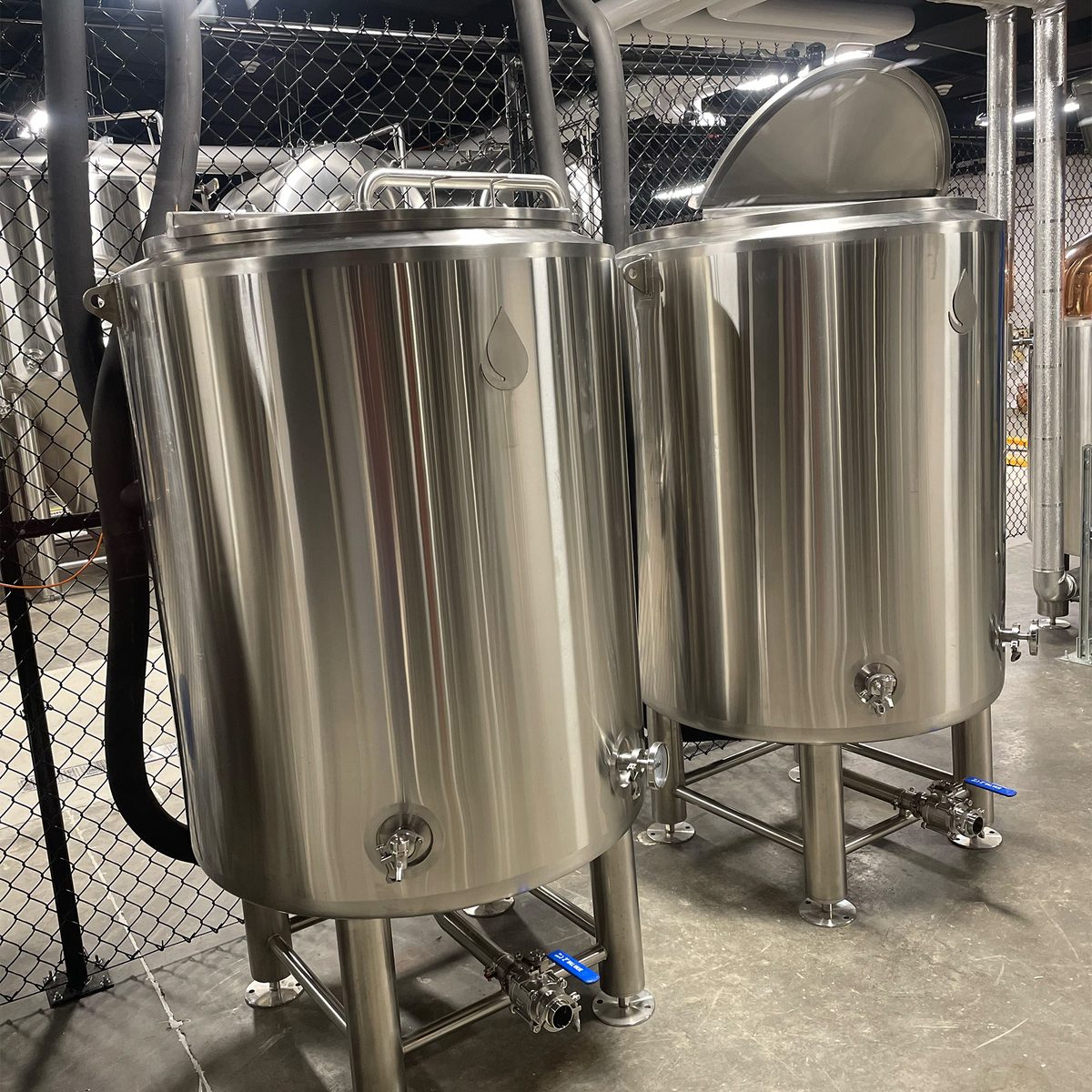
What a Bioreactor Has to Do
A bioreactor — or, when the process is fermentation, a fermenter — is a vessel engineered to grow living cells under conditions that keep them healthy and productive. Whether the organism is a yeast making protein, a bacterium making an enzyme, or a mammalian cell line making a therapeutic, the vessel's job is the same: deliver the nutrients, oxygen, mixing, and stable environment the cells need while excluding everything that would harm or contaminate them. The difference between a bioreactor and a simple tank is that a bioreactor must satisfy biology, not just chemistry. Cells are sensitive to oxygen starvation, to shear, to temperature and pH excursions, and above all to contamination by competing organisms.
Because of this, a bioreactor integrates several systems into one vessel: an aeration system to supply oxygen, an agitation system to mix and distribute it, jacketing for temperature control, instrumentation and dosing for pH and other parameters, and a design that can be reliably sterilized and kept sterile throughout a run. Each of these has to be matched to the organism and to the scale of production.
Aeration and Sparging
Most industrial bioprocesses are aerobic: the cells need a continuous supply of oxygen to respire and grow. Oxygen, however, is only slightly soluble in water, and a dense, actively growing culture consumes it faster than it can dissolve. Supplying enough oxygen is therefore one of the hardest engineering problems in bioprocessing. Air or oxygen-enriched gas is introduced through a sparger at the base of the vessel, breaking the gas into bubbles that rise through the broth. The smaller the bubbles and the longer they stay in the liquid, the more oxygen transfers across the gas-liquid interface into solution where cells can use it.
The capacity of a system to dissolve oxygen is described by its oxygen transfer rate, and maximizing it is a balance of sparge rate, bubble size, the gas-liquid contact area, and how vigorously the contents are agitated to keep bubbles dispersed and renew the liquid at their surface. Aeration also strips carbon dioxide produced by the cells out of the broth, and it generates foam, which is why antifoam dosing and foam control are routine parts of fermentation. The aeration strategy is one of the first things that must be re-engineered when a process moves to a larger vessel.
Agitation
Agitation serves several purposes at once: it disperses the sparged gas into fine, well-distributed bubbles to raise oxygen transfer, it keeps cells and nutrients suspended and homogeneous, it distributes heat to and from the jacket so temperature is uniform, and it eliminates the gradients in pH, oxygen, and concentration that would otherwise form in different regions of a large vessel. Impeller choice matters greatly. High-shear radial-flow turbines are excellent at breaking up gas bubbles and dispersing oxygen and are common in microbial fermentation, while gentler axial-flow or large low-shear impellers are used for fragile cells such as mammalian or plant cell cultures that would be damaged by intense shear.
Baffles fixed to the vessel wall convert the swirling motion of an unbaffled tank into the turbulent top-to-bottom flow that actually mixes the contents, preventing a central vortex that would draw air in and mix poorly. The combination of impeller type, speed, and baffling is selected to deliver enough mixing and oxygen transfer without subjecting the culture to more shear than it can survive.
Sterility
A bioreactor grows one organism on purpose; any other organism that enters is a contaminant that competes for nutrients, produces unwanted byproducts, and can ruin a batch outright. Maintaining sterility is therefore non-negotiable in most bioprocessing. The vessel and its piping are sterilized before each run, commonly with steam under pressure, and every connection that could admit microbes — the sparge gas, dosing lines, sample ports, and the agitator shaft seal — must be designed to stay sterile during operation. Sparge and vent gases pass through sterilizing filters; the agitator entry uses a sterile mechanical seal; and the vessel maintains a slight positive pressure so that any leak pushes outward rather than drawing contamination in.
Hygienic design supports sterility: smooth crevice-free interior surfaces, full drainability, sanitary fittings, and the ability to be cleaned in place and sterilized in place so that no harbor for organisms survives between batches. The discipline that protects a fermentation from contamination is the same discipline that defines sanitary process design generally.
pH and Temperature Control
Cells thrive only within narrow ranges of pH and temperature, and both shift during a run as the culture grows and metabolizes. Temperature is held by circulating heating or cooling fluid through the vessel jacket; fermentation is exothermic, so cooling is often the dominant need as the culture reaches high density. pH is held by automated dosing of acid or base in response to a probe, because metabolism continuously drives the broth acidic or basic depending on the organism and the nutrients it is consuming. Dissolved oxygen, controlled through aeration and agitation, is monitored continuously as well, and modern bioreactors track and log these parameters in real time so the environment stays within the tight window the cells require throughout the entire process.
Scale-Up: The Hard Part
A process that works beautifully in a small laboratory vessel rarely behaves the same way when scaled to a large production tank, and scale-up is one of the defining challenges of bioprocess engineering. The problem is that the physical conditions cells experience change with size. As a vessel gets larger, its volume grows faster than its surface area, so heat removal per unit of volume becomes harder. Mixing takes longer to homogenize a large tank, so gradients in oxygen, pH, and nutrients appear that a small vessel never had. Oxygen transfer, easy to achieve at small scale, becomes a constraint at large scale where a dense culture's oxygen demand is enormous.
| Challenge | Small scale | Large scale |
|---|---|---|
| Oxygen transfer | Readily achieved | Often limiting |
| Mixing time | Near-instant, uniform | Longer, gradients form |
| Heat removal | Easy, high surface ratio | Harder, jacket may not suffice |
| Shear environment | Easier to keep gentle | Varies across the vessel |
Engineers approach scale-up by holding some key parameter constant from small to large scale — often the power input per unit volume, the oxygen transfer capacity, or the impeller tip speed — while accepting that no single criterion preserves every condition perfectly. The art is choosing which parameter most governs the particular process and designing the larger vessel's aeration, agitation, and cooling to maintain it. This is why production-scale bioreactors are not simply enlarged copies of bench units; their geometry, impeller configuration, and gas-handling are engineered specifically for the conditions that large volumes impose.
Batch, Fed-Batch, and Continuous Modes
Bioreactors are operated in several modes. In a batch process, all nutrients are loaded at the start and the culture runs until it is harvested. In a fed-batch process, the most common mode in industrial fermentation, nutrients are added gradually during the run to keep the cells productive without overwhelming them, which often gives the highest product yields. In continuous operation, fresh medium flows in and product-containing broth flows out at a steady rate, holding the culture in a constant productive state for extended periods. The choice of mode shapes the vessel's instrumentation, dosing, and control strategy, and like every other element of bioreactor design it is selected to suit the organism, the product, and the scale at which the process must ultimately run.
Cleaning, Sterilizing, and Turnaround
What happens between runs is as important to a bioreactor's value as what happens during them. After a batch is harvested, the vessel and its piping carry residues of broth, cells, and product that must be removed before the next run, because any leftover material is a nutrient source for contaminants and a risk of carryover. Cleaning in place circulates cleaning solutions — typically a caustic wash to break down organic residue and an acid wash to remove mineral deposits — through spray devices that wet the entire interior, followed by thorough rinsing. Sterilizing in place then follows, commonly with pressurized steam that brings every internal surface to a temperature high enough to kill organisms for a validated hold time.
The faster and more reliably a vessel can be cleaned, sterilized, and returned to service, the more batches it can run in a given period, so turnaround is a real economic factor, not just a hygiene step. This is one reason hygienic design discipline — smooth surfaces, full drainability, no dead legs in the piping, and sanitary connections — pays off twice: it protects sterility during a run and it makes the cleaning between runs quicker and more dependable. Sample ports, dosing lines, and the agitator seal all have to be cleanable and sterilizable along with the main vessel, since a single uncleaned harbor can contaminate an otherwise spotless tank.
Single-Use and Stainless Systems
Not every bioreactor is a fixed stainless vessel. Single-use systems built around presterilized disposable bags housed in a support structure have become common, particularly at smaller scales and in applications where rapid changeover between different products matters. They eliminate the cleaning and sterilization burden between runs because the contact surface is simply replaced, which reduces turnaround time and the risk of cross-contamination. The tradeoff is the recurring cost of consumables and limits on scale and operating conditions. Fixed stainless vessels remain the standard at large production scale, where their durability, pressure and temperature range, and cost over many runs win out. The choice between them is another instance of matching the equipment to the product, the scale, and the way the facility intends to operate.
Frequently asked questions
- Why is supplying oxygen the hardest part of aerobic fermentation?
- Oxygen is only slightly soluble in water, yet a dense, actively growing culture consumes it faster than it can dissolve from the gas phase. The vessel must continuously sparge gas as fine bubbles and agitate vigorously to transfer enough oxygen into solution. As scale increases, the oxygen demand of a large culture often becomes the limiting factor for the entire process.
- What is the tradeoff between agitation and shear?
- Vigorous agitation breaks gas into fine bubbles and maximizes oxygen transfer, but it also generates shear forces. Robust microbes tolerate high-shear radial turbines, while fragile cells such as mammalian or plant cultures can be damaged by intense shear and need gentle low-shear impellers. The agitation system must be matched to how much shear the specific organism can survive.
- Why is sterility so critical in a bioreactor?
- A bioreactor is meant to grow one organism; any contaminant competes for nutrients, makes unwanted byproducts, and can ruin a batch. The vessel is sterilized before each run, sparge and vent gases are filtered, the agitator uses a sterile seal, and a slight positive pressure keeps contamination out. Hygienic, crevice-free, fully drainable design supports cleaning and sterilization between batches.
- Why does scale-up change how a process behaves?
- As a vessel grows, its volume increases faster than its surface area, so heat removal per unit volume gets harder, mixing takes longer and creates gradients, and oxygen transfer becomes constrained. A recipe that works in a small flask can stall in a large tank. Engineers scale up by holding a key parameter such as power per volume or oxygen transfer constant and designing the large vessel's aeration, agitation, and cooling around it.
Scope your custom build
Send us your volume, service chemistry, dimensions, and finish or code requirements. We return a full engineering package, firm lead time, and a fixed quote — freight quoted separately to your ZIP.
Request a Custom QuoteCall 866-418-1777