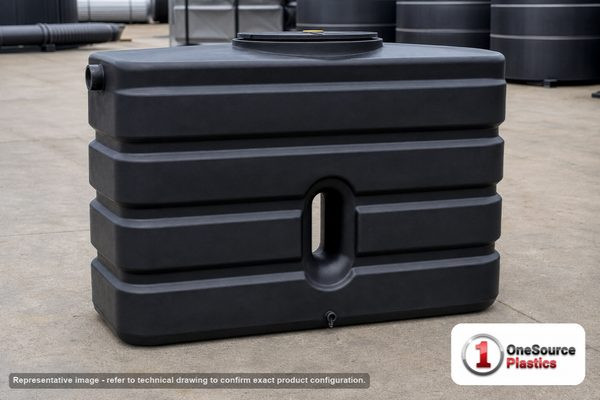
150 Gallon Doorway Water Tank: Complete Buyer's Guide
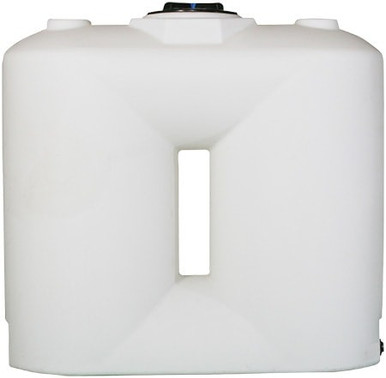
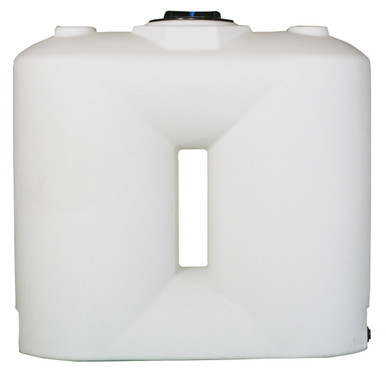
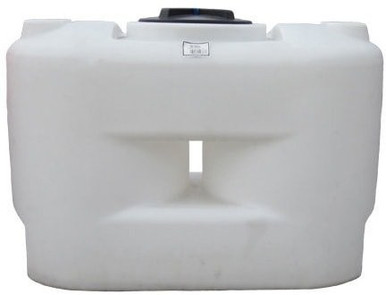
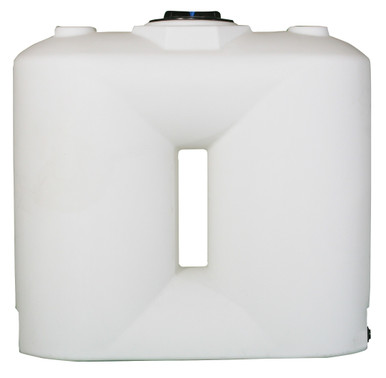
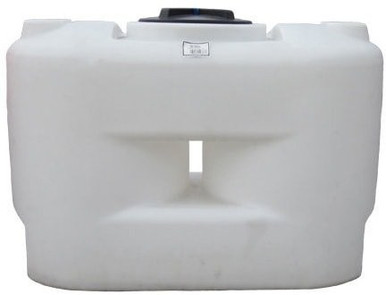
A 150-gallon doorway water tank from Norwesco — a slim, seamless polyethylene reserve sized to clear a standard interior door and tuck into a basement, closet, or utility room. The doorway profile trades a little structural efficiency for the one thing that matters when access is tight: it actually fits through the door.
Technical Drawing
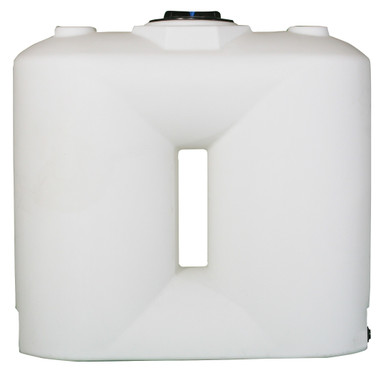
Official Norwesco technical drawing — 150 Gallon Doorway Water Tank
Specifications at a Glance
Every figure below is pulled straight from the live product record for this exact tank — the same data on the product page, so what you read here and what you buy never disagree.
Standards & Materials
- ASTM D1998 — Standard Specification for Polyethylene Upright Storage Tanks. Governs wall-thickness and hydrostatic design for vertical rotomolded poly tanks of this class.
- FDA 21 CFR 177.1520 — Olefin polymers. The food-contact regulation the FDA-grade resin in this tank is compounded to meet.
- Specific gravity rating 1.0 — the tank is engineered for liquids up to 1.0× the density of water (water is about 8.34 lb/gal). Confirm your fluid’s SG before storage.
Installation and Setup Guide
With a doorway tank, the install starts before the tank reaches its spot. The narrow profile exists to solve the access problem — so plan the path first, then the pad.
Plan the Route
Walk the full path from the delivery point to the install location with a tape measure, checking every doorway, hallway pinch, and stair turn against the tank's slim width. A doorway tank is designed to clear a standard interior door, but a tall upright shell does not pivot easily around a tight landing, so confirm the turns as carefully as the straightaways.
Site Preparation
The tank needs a firm, continuous, level surface — a concrete basement or garage floor is ideal. Clear the area of debris and confirm the spot is flat, because a doorway tank's flat walls magnify any high spot in the floor far more than a round tank would. Make sure the surface can carry the filled weight of 150 gallons of water concentrated over the tank's compact footprint.
Placement, Connections, and Venting
Set the tank against a wall with room to read the level and reach the lid. Plumb the outlet with a ball valve at the tank so you can isolate it for service, and run the first foot off any fitting in flexible hose rather than rigid pipe — polyethylene moves with temperature and will crack a hard connection over time. Fit a screened vent so the tank can breathe both ways; without it, drawing water can pull a vacuum that deforms the flat walls.
Maintenance and Long-Term Care
An indoor potable tank is about as low-maintenance as storage gets — out of the sun and away from frost — so the routine is short and centered on clean water.
Quarterly Inspection Checklist
- Flat-wall check: Sight along the long faces for bowing or a soft spot that flexes under hand pressure; on a doorway tank, wall distortion is the earliest sign the floor under it is not level.
- Fitting check: Feel beneath the outlet fitting for dampness and hand-snug any connection that has loosened — never with a pipe wrench, which over-stresses poly threads.
- Lid and vent: Confirm the lid seats flat and the vent screen is clear of dust and lint.
- Floor contact: Check that all corners bear evenly; shim a low corner before a high spot telegraphs into the wall.
Cleaning and Sanitizing
Sanitize a drinking-water tank about once a year, more often if the water sits warm or is used intermittently. Fill it, add roughly 1/4 cup of unscented household bleach per 15 gallons, circulate the solution through the outlet, hold the chlorine for two hours, then drain and flush with fresh water until no chlorine odor remains. Most of what you remove is fine sediment settled below the outlet.
Indoor Long-Term Care
An indoor tank avoids UV almost entirely, so the long-term watch item is the floor rather than the sun. Keep the slab dry and level; concrete that stays damp under one corner can spall and slowly tilt the tank over years. Should the tank ever move outdoors, begin checking the sun-facing face annually for chalking.
Alternatives and Comparisons
The 150 Gallon Doorway Water Tank is one of several 150-gallon shapes, and the choice comes down to access.
Doorway vs. standard vertical: A conventional 150-gallon vertical cylinder stores the same water with less material and a lower cost per gallon, but its diameter cannot pass through an interior door. When the install spot sits behind a standard doorway, the slim profile is the only shape that gets there intact; when the tank lives outdoors, the round cylinder is the more economical pick.
Sizing up or down: If 150 gallons is light for your reserve, larger doorway tanks step up on the same narrow footprint, gaining capacity as height. If you only need a modest indoor buffer, a smaller doorway or compact vertical tank fits tighter spots. Match the gallons to your draw and refill cycle.
Other -Gallon Options
Frequently Asked Questions
How long will the 150 Gallon Doorway Water Tank last?
Indoors on a level slab, a doorway water tank typically gives 20-plus years because it skips ultraviolet light and freeze-thaw cycling, the two things that age polyethylene fastest. The seamless rotomolded shell has no weld lines to fatigue, and room-temperature drinking water is gentle service. The usual cause of an early failure indoors is a wall crack from a floor that settled unevenly under one corner — keep the slab flat and dry to reach the long end of that range.
What chemicals can I store in this tank?
This is a drinking-water tank, and that is its best use — Norwesco molds it from resin suited to potable contact. The shell is rated to 1.5 specific gravity, so within that density band it could also hold many water-based agricultural or cleaning solutions if repurposed. It is never for fuel, solvents, or flammables, and a tank that has held drinking water should be fully sanitized before any chemical and not returned to potable use afterward. Check any non-water liquid against a polyethylene compatibility chart first.
Does this tank come with a warranty?
Yes — Norwesco backs the tank with a manufacturer warranty against defects in materials and workmanship when used within its rated limits. It covers factory faults such as molding voids, pinholes, and a defective fitting. It does not cover a wall cracked by an uneven floor, impact damage from moving the tank, or any liquid heavier than the rated specific gravity. Keep your invoice and a photo of the installed tank for any claim.
Can I install this tank underground?
No. A doorway tank is built thin and flat to clear a door, which is exactly the wrong geometry for resisting soil pressure — buried, the flat faces would cave inward. It is for above-ground use only, and burial voids the warranty. For below-grade water storage, choose a purpose-built underground cistern with ribbed, reinforced walls engineered for backfill and groundwater loads.
Buying Considerations
Before ordering the 150 Gallon Doorway Water Tank, settle three things. First, the route — measure every door, turn, and stairwell on the path to the install spot and confirm the slim profile clears them; on a doorway tank the access path matters more than anything else. Second, the surface — the tank lands on flat, level concrete or an equally rigid base able to carry the filled weight of 150 gallons over its compact footprint. Third, delivery — plan how the tank will reach the door, and request a liftgate if you lack a dock or forklift so it can be set at the curb for the final carry indoors.
Related Products You May Need
Questions? Call (866) 418-1777 — our team knows these products inside and out and can help you select the right tank for your application.
Recommended Tanks for This Guide
Live pricing, updated automatically · estimate freight to your ZIP.