4995 Gallon Vertical Liquid Storage Tank: Complete Buyer's Guide
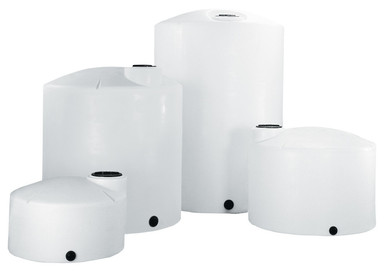
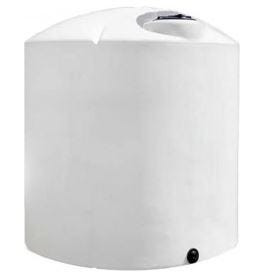
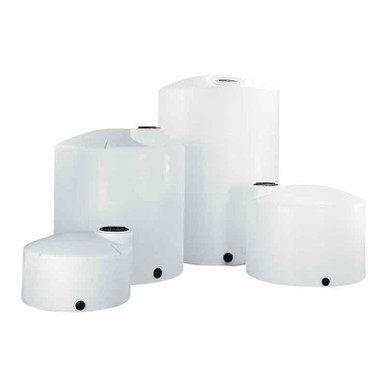
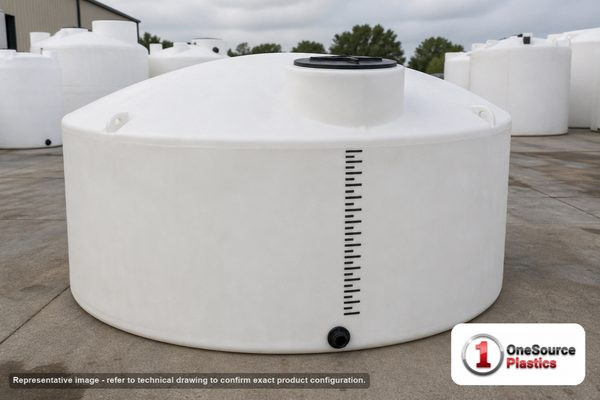
The 4,995-gallon vertical is a bulk chemical-storage workhorse — 89 inches tall on a wide 142-inch base, the squat-and-stable counterpart to the tall slender tanks. Its 1.5 specific-gravity wall and 3-inch outlet (with a 2-inch reducer and a 3-inch siphon tube) are sized for moving large volumes of dense agricultural and industrial liquid.
Specifications at a Glance
Every figure below is pulled straight from the live product record for this exact tank — the same data on the product page, so what you read here and what you buy never disagree.
Standards & Materials
- ASTM D1998 — Standard Specification for Polyethylene Upright Storage Tanks. Governs wall-thickness and hydrostatic design for vertical rotomolded poly tanks of this class.
- FDA 21 CFR 177.1520 — Olefin polymers. The food-contact regulation the FDA-grade resin in this tank is compounded to meet.
- Specific gravity rating 1.5 — the tank is engineered for liquids up to 1.5× the density of water (water is about 8.34 lb/gal). Confirm your fluid’s SG before storage.
Product Overview
At nearly 5,000 gallons this is bulk storage, and its proportions reflect that mission. Rather than reaching for height, the tank spreads wide: 142 inches across on an 89-inch-tall body. That low, broad stance keeps the center of gravity down, spreads the immense full weight over a large footprint, and makes the tank inherently stable — the engineering opposite of the slender column tanks. For a chemical yard, a fertilizer dealer, or an industrial site with floor area to spare, this is the geometry that handles five thousand gallons gracefully.
It's built the Norwesco way: one rotomolded piece of virgin linear polyethylene, no seam or weld anywhere, rated to a 1.5 specific gravity. That rating means the wall carries liquids up to 12.5 pounds per gallon, which at this volume is a critical number — a full 4,995 gallons of 1.5-SG product is an enormous mass, and the wide-body construction is engineered to hold it. The wide base actually moderates the hydrostatic head compared to a tall tank of similar volume, because the liquid column is shorter; the load is distributed rather than concentrated.
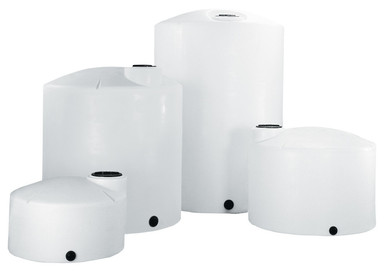
Empty weight is 855 pounds — this is equipment that arrives by freight and gets positioned with machinery, not muscle. Filled with a 1.5-SG product it loads the pad with roughly 63,342 pounds, over thirty tons spread across the 142-inch footprint. The translucent natural-white wall lets you read the level on a tank far too large to gauge by any other casual means, and reflects sunlight to keep a large stored volume cooler. Maximum service temperature is 120°F, with UV inhibitors molded into the resin.
The outlet is a 3-inch fitting with a 2-inch reducer and a 3-inch siphon tube, factory-installed and leak-tested — the larger bore is necessary to move bulk volume at a useful rate, and the siphon tube draws low for fuller recovery of the stored product. The 22-inch lid provides large fill, vent, and man-access for inspecting a tank of this size. Norwesco's 3-year warranty applies. Because of its dimensions it ships via dedicated freight carrier — contact us for delivery timeline and site-access requirements.
Technical Drawing
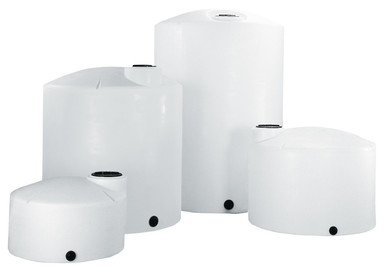
Official Norwesco technical drawing — 4995 Gallon Vertical Liquid Storage Tank
Key Features and Specifications
- 4,995-gallon capacity — sized for agricultural chemical and fertilizer storage
- Constructed from virgin linear polyethylene (HDPE) with 1.5 specific gravity rating — handles liquids up to 12.5 lbs/gal
- 89" tall x 142" diameter — compact vertical footprint
- 855 lbs empty, approximately 63,342 lbs when full at rated specific gravity
- 3" with 2" Reducer and 3" Siphon tube NPT outlet fitting — factory installed and leak-tested
- 22" lid opening for fill, venting, and interior access
- FDA approved for potable water and food-grade liquid contact
- 3 Year Warranty from Norwesco against manufacturing defects
- Translucent white walls allow visual level monitoring without opening the tank and reflect sunlight to keep contents cooler
- Rated for continuous service up to 120 F / 48 C
- Seamless one-piece rotational molding — no seams, no welds, no leak points
- Manufactured by Norwesco — a leading name in rotomolded polyethylene tanks
- Install on a level, compacted surface. Ensure adequate clearance above for lid access and around the perimeter for plumbing connections and visual inspection
- Ships via dedicated freight carrier due to oversized dimensions — contact us for delivery timeline and site access requirements
Installation and Setup Guide
A thirty-ton-plus full tank is a civil project, not a drop-and-go. The good news is that the wide, low geometry is forgiving of the things that punish tall tanks — but the sheer load demands a properly engineered base and a realistic plan for getting the empty 855-pound shell into position.
Site Preparation
Build an engineered concrete pad sized for the full 63,000-plus-pound load distributed across the 142-inch base. While the wide footprint spreads the weight, the total mass is still enormous, so the slab and its subgrade must be specified to carry it without settling. Level is essential — aim for within an inch across the full diameter on a tank this large — and the subgrade must be uniformly compacted so the tank doesn't settle unevenly across its broad base. Allow generous perimeter clearance for plumbing, the freight set, and inspection access.
Placement and Connections
The 3-inch outlet with its reducer gives you flexibility — run full 3-inch for high-volume transfer, or step to 2 inches where your downstream plumbing dictates. Keep the siphon-tube line geometry clean so air doesn't break the low draw. Use flexible connections at the bulkhead; even a stable wide tank breathes with temperature, and a thirty-ton load makes any rigid-connection failure expensive. The 22-inch lid sits high enough that you should plan permanent or portable platform access for filling and inspection.
Venting
A 3-inch outlet can move bulk volume fast, and a five-thousand-gallon tank pulls a large air volume during draw. Size the vent in the 22-inch lid generously to match peak flow — on a tank this big, an undersized vent during a fast transfer can pull enough vacuum to damage even a robust wide body. For off-gassing chemistry, fit a pressure/vacuum relief vent rated to the vapor and the flow.
Maintenance and Long-Term Care
A bulk tank's maintenance is less about its geometry and more about the consequences of scale: at five thousand gallons, a small problem represents a large volume and a large potential spill, so inspections are about catching issues early and protecting the substantial inventory inside.
Quarterly Inspection Checklist
- Base and settlement: Walk the full 142-inch perimeter checking for any sign the broad base has settled unevenly — a low edge, a gap under the rim, soil washout. Differential settlement is the main structural risk for a wide heavy tank.
- Wall and seams of light: Scan the large wall area for bulging or any change in translucency that signals stress; the lower wall and the knuckle where wall meets floor deserve extra attention under a thirty-ton load.
- 3-inch outlet and siphon: Inspect the larger fitting and reducer for weeping — at this scale even a slow seep is a significant loss. Confirm the siphon draws cleanly.
- Vent: Verify the large vent is clear and sized to the bulk draw; a plugged vent on a fast transfer is dangerous on a tank this size.
Cleaning and Changeover
Changing chemicals in a bulk tank is a planned operation. Drain via the siphon-tube outlet for fuller recovery, then flush thoroughly per the outgoing product's procedure — the residual volume left in a poorly cleaned 5,000-gallon tank is itself a substantial quantity that can contaminate or react with the next load. Use the 22-inch lid for man-access inspection of the floor, and verify polyethylene compatibility before introducing new chemistry. Manage rinsate per the chemical's label and your site's permits.
UV and Heat
The broad wall takes significant sun load. Inspect the exposed faces yearly for chalking, and recognize that a large stored volume changes temperature slowly — an advantage in moderating thermal swings but a reason to manage extreme heat for temperature-sensitive products. In a hard-UV climate, shading a tank this large is a real project but extends its life meaningfully.
Alternatives and Comparisons
At five thousand gallons your real choices are about shape and recovery, not capacity steps:
Wide-and-low versus tall-and-narrow at similar volume: this wide body is the stable, foundation-friendly, easy-to-set option when you have the floor area — lower hydrostatic head, distributed load, simpler base. A tall tank of comparable volume saves floor space but demands an engineered point-load slab and serious height. With bulk volume, most sites favor the wide body unless floor space is genuinely scarce.
The siphon-tube and reducer: this tank's 3-inch outlet, reducer, and low siphon give you both high transfer rate and fuller pull-down — worth weighing against a plainer-outlet tank if maximizing usable volume and flow matters to your operation.
Other 4995-Gallon Options
Frequently Asked Questions
How long will the 4995 Gallon Vertical Liquid Storage Tank last?
With an engineered pad and use inside the 1.5-SG and 120°F ratings, fifteen to twenty years is realistic. On a bulk tank the practical life factor is foundation performance and chemical aggressiveness; the wide, low geometry avoids the lean-and-stress problems of tall tanks, so a level base and compatible chemistry get you to the top of the range.
What chemicals can I store in this tank?
The 1.5-SG rating handles ag chemicals, liquid fertilizers, herbicides, pesticides, and industrial and treatment solutions up to 12.5 pounds per gallon. Not for fuels, solvents, or flammables. At bulk scale, confirm compatibility carefully against a chart before committing 5,000 gallons of any product — polyethylene resists most acids and bases but not certain hydrocarbons and strong oxidizers.
What kind of foundation does a 4995-gallon tank need?
It requires an engineered concrete pad sized for roughly 63,342 pounds distributed across the 142-inch base. The wide footprint spreads the load, but the total mass demands a properly specified slab on uniformly compacted subgrade, level within about an inch across the diameter. Differential settlement under the broad base is the main thing to design against.
Does this tank come with a warranty?
Yes — Norwesco's 3-year warranty covers factory material and workmanship defects. It excludes over-spec products, inadequate or uneven foundations, incompatible-chemical attack, and impact damage. At this scale, keep thorough documentation of the engineered pad for any claim.
Can I install this tank underground?
No — this is an above-ground bulk vertical, not engineered for burial. Soil pressure would deform the wall, and a tank this large would be impractical to bury regardless. For below-grade storage, use a purpose-built underground cistern designed for soil load.
Buying Considerations
Buying at bulk scale means planning the project, not just the product. Confirm an engineered slab is in your scope — thirty-plus tons full needs real concrete and compacted subgrade. Verify the 3-inch outlet and reducer match your transfer plumbing and pump capacity. Confirm your product is at or under 1.5 SG before committing five thousand gallons to it. And coordinate the freight early: this ships by dedicated carrier, and you'll need machinery and site access to set an 855-pound, twelve-foot-wide shell. Call us to scope delivery and access before you order.
Related Products You May Need
Questions? Call (866) 418-1777 — our team knows these products inside and out and can help you select the right tank for your application.
Recommended Tanks for This Guide
Live pricing, updated automatically · estimate freight to your ZIP.