Anti-Static Plastics for Flammable Solvent Storage: Why Standard Polyethylene Is Wrong for Class I Service, NFPA 77 and IEC 60079-32 Bonding Requirements, and the Conductive-Tank Specification
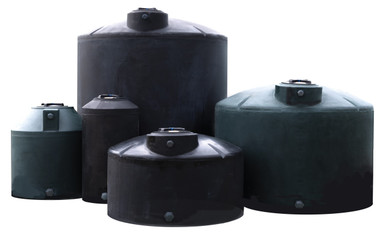
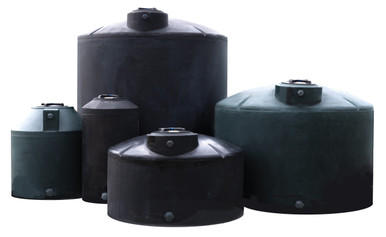
Polyethylene tanks are excellent for water, fertilizer, brine, and most agricultural and industrial chemicals. They are the wrong choice for storing flammable solvents - acetone, ethanol, methanol, isopropanol, toluene, xylene, MEK, hexane, gasoline, and the broader Class IB and IC flammable liquid families - in any quantity beyond a few gallons. The reason is not chemical compatibility (most flammable solvents are compatible with HDPE and XLPE wall material). The reason is electrostatic. Standard polyethylene tank wall has surface resistivity in the 10^14 to 10^16 ohms-per-square range, which is enough to develop and hold static charge during fill, transfer, or agitation. The accumulated charge can discharge as a spark with energy sufficient to ignite the solvent vapor in the tank headspace. The documented incident pattern is fatal explosion of polyethylene tanks during routine fill operations.
This guide walks the engineering reality of static electricity in flammable solvent storage: the bonding and grounding rules under NFPA 77 and IEC 60079-32-1, why standard polyethylene cannot satisfy them, the conductive-additive plastic alternatives that can, and the broader question of when to step up to stainless steel or coated steel rather than continuing with plastic in the first place. Reference standards: NFPA 77 (Recommended Practice on Static Electricity, 2024 edition); IEC 60079-32-1 (Electrostatic hazards - Guidance); AS/NZS 1020 (the Australian/New Zealand standard frequently cited for static control in chemical handling); NFPA 30 (Flammable and Combustible Liquids Code) for the regulatory framework that drives the requirement; and OSHA 29 CFR 1910.106 for the federal flammable-liquid storage rule.
1. The Static Electricity Mechanism in Solvent Tank Filling
Static charge develops on flowing liquids by a process called streaming current. As a non-conductive liquid (acetone, toluene, xylene have conductivities below 50 picosiemens/meter, making them low-conductive per IEC 60079-32-1) flows through pipe and into a tank, the contact between liquid and pipe wall creates a charge separation. The liquid acquires net charge in proportion to flow velocity, fluid resistivity, and pipe length. By the time the liquid arrives in the tank, it is at a potential of several thousand volts relative to ground.
If the tank is conductive and properly bonded to ground, the charge bleeds off through the bonding wire to ground at a rate that prevents accumulation. If the tank is non-conductive, the charge has nowhere to go. It accumulates on the liquid surface, on the tank wall (the wall acts as the dielectric of a capacitor whose plates are the liquid and the surroundings), and on any conductive object inside the tank that is electrically isolated. The accumulated potential rises until either (a) the rate of charge arrival equals the rate of leakage through the air, the wall, or any contaminating ionic species in the liquid, or (b) the potential exceeds the breakdown strength of the local geometry and a spark discharges.
The minimum ignition energy of typical solvent vapors:
- Acetone: 0.62 millijoules
- Ethanol: 0.65 millijoules
- Toluene: 0.24 millijoules
- Hexane: 0.24 millijoules
- MEK: 0.27 millijoules
- Hydrogen (in case anyone is mixing solvents and reactive chemistry): 0.017 millijoules
A static spark of 1 millijoule is plenty to ignite any of these vapors at stoichiometric mixture in air. A 1 millijoule spark forms readily across a 1 cm gap at potentials around 5-10 kilovolts, which a non-conductive plastic tank can develop within seconds during a high-velocity fill. The arithmetic does not favor plastic for solvent service.
2. NFPA 77 Section 16: Plastic Containers and Tanks
NFPA 77 explicitly addresses non-conductive plastic containers and tanks in Section 16. The recommended practices that emerge from the 2024 edition:
- Section 16.5.1: non-conductive plastic containers larger than 5 gallon capacity should not be used to store or handle Class I flammable liquids unless additional precautions are taken to prevent static accumulation. The 5-gallon threshold derives from the energy that can be stored in a charged container of that volume; below 5 gallons, the maximum possible discharge energy is below the minimum ignition energy of common flammable vapors.
- Section 16.5.2: the additional precautions for larger non-conductive plastic include (a) limiting the fill rate to 1 m/s during the entire fill, (b) using a centrally located fill pipe that extends to within 150 mm of the tank bottom, (c) bonding any conductive objects within the tank to ground, and (d) using anti-static or conductive plastic where available.
- Section 16.6: the use of conductive plastic tanks (surface resistivity below 10^11 ohms-per-square) bonded to ground is acceptable for Class I service when properly specified and installed.
- Section 16.4 General Bonding: all conductive components in the fill path (pumps, hose, nozzle, fill pipe) must be bonded to a common ground at resistance below 1 megohm. The bond verifies during installation with a megohmmeter test.
The practical implication: a standard polyethylene tank with surface resistivity around 10^15 ohms-per-square cannot satisfy NFPA 77 Section 16 for any Class I solvent service larger than 5 gallons without a hard upgrade. The upgrade options are (a) anti-static or conductive polyethylene specially compounded for the application, (b) coated steel tank (the underlying bare-steel tank is conductive and grounded; the coating provides chemical resistance), or (c) stainless steel tank.
3. Conductive Polyethylene: What Is Available and Where the Limits Lie
Conductive polyethylene is HDPE or XLPE compounded with carbon black, conductive carbon, or specialty conductive additives at loadings of 5-25 weight percent. The carbon-black formulations achieve surface resistivity in the 10^4 to 10^7 ohms-per-square range, well within the conductive-plastic threshold of NFPA 77. The catalog availability is limited:
- Conductive HDPE drums (55-gallon and smaller) are widely available from drum manufacturers for solvent transport and dispensing. These drums are the standard for Class I solvent containers in industrial settings.
- Conductive HDPE intermediate bulk containers (IBCs) at 275 to 330 gallons are available from specialty manufacturers but are not stocked at most polyethylene tank distributors.
- Conductive HDPE or XLPE rotomolded tanks above 1,000 gallons are uncommon. The mechanical properties of carbon-loaded polyethylene are different from virgin polyethylene - higher modulus, lower elongation, less impact resistance - which makes large rotomolded tanks more failure-prone if not specifically engineered for the conductive compound.
- Anti-static (rather than fully conductive) plastic with surface resistivity in the 10^9 to 10^11 ohm range is available in some custom rotomolded tanks. Anti-static is sufficient for some Class I service per IEC 60079-32-1 but requires more careful specification of fill rate and bonding.
The conclusion: for flammable solvent storage above 275 gallons, polyethylene is generally not the right material. The upgrade to coated steel or stainless steel typically lands in the same capital-cost range as a properly-engineered conductive-polymer rotomolded tank, and the regulatory documentation is cleaner for steel construction.
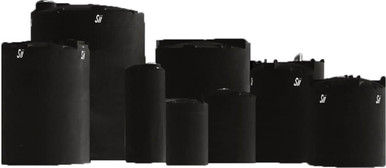
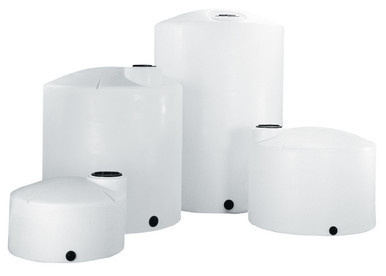
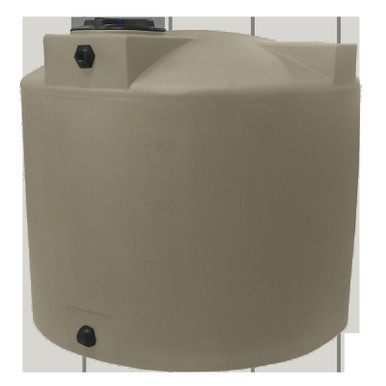
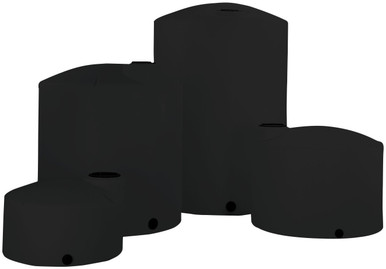
The catalog polyethylene tanks at OneSource Plastics are not specified for Class I service in volumes above 5 gallons. The Norwesco N-40146 1,500 gallon vertical in standard polyethylene is not appropriate for flammable solvent storage; it is appropriate for water, fertilizer, food-grade additives, and most non-flammable industrial chemicals. Same for the Snyder SII-5990102N42 1,000 gallon Captor and Enduraplas EP-THV02500FG 2,500 gallon. For Class IIIB liquids (high flash point, fire point above 200 deg F) such as some lubricating oils and waste-oil applications, the standard polyethylene tanks are usable; for Class I and Class II liquids, they are not. The Snyder SII-5740102N95703 275-gallon waste-oil tank is intentionally configured for Class IIIB used-oil service where flammability hazard is low.
4. IEC 60079-32-1 Charge Relaxation Time and the Anti-Static Threshold
IEC 60079-32-1 defines a different threshold framework than NFPA 77. The IEC framework uses charge relaxation time as the primary criterion: a material is considered anti-static if charge relaxes through the material to ground in less than 1 second after deposition. This translates to a surface resistivity threshold of approximately 10^9 ohms-per-square or volume resistivity of 10^11 ohm-cm depending on geometry.
The IEC 60079-32-1 thresholds for plastic tanks in Class I solvent service:
- Conductive (resistivity below 10^9 ohms-cm): acceptable with bonding to ground.
- Anti-static (resistivity 10^9 to 10^11 ohms-cm): acceptable with bonding to ground and fill-rate control to 1 m/s.
- Insulating (resistivity above 10^11 ohms-cm): not acceptable for Class I solvent service in volumes above 5 gallons regardless of bonding.
Standard FDA-grade polyethylene falls in the 10^15 to 10^16 ohms-cm range, well into the insulating zone. The IEC framework reaches the same conclusion as the NFPA framework: standard polyethylene is not suitable for Class I flammable solvent storage, and anti-static or conductive plastic is required.
The Australian/New Zealand standard AS/NZS 1020 (Control of Undesirable Static Electricity) is the third major framework cited in this space and reaches similar conclusions. AS/NZS 1020 is not enforceable in the United States but is referenced in operational best-practice documents from multinational chemical companies because it is more prescriptive than NFPA 77 in some areas.
5. Bonding and Grounding: What Has To Be In Place
Even with conductive plastic or anti-static plastic, the tank must be bonded to ground and the fill path must be bonded together. The bonding requirements:
- Tank shell bond: a dedicated bonding strap from a metal insert in the tank wall to a ground rod or station ground bus. The bond must achieve resistance below 1 megohm under NFPA 77, ideally below 10 ohms for solid grounding. Inspect the bond annually with a megohmmeter.
- Fill pipe bond: the pipe that delivers solvent to the tank must be bonded to the same ground as the tank shell. If the fill pipe is removed during loading (a common practice with portable solvent fills), the bonding clamp must remain attached during the entire transfer.
- Pump and hose bond: the dispensing pump and any hose used in the transfer must be bonded together and to the tank ground. Hose with non-conductive layers requires an integral bonding wire from the inlet flange through the hose to the outlet flange.
- Nozzle and operator bond: the dispensing nozzle must be bonded to the receiving vessel before flow starts. For drum filling, the standard is a bonding clamp on the drum bunghole connected to the nozzle body. For vehicle tank filling, the bonding clamp goes on the vehicle frame. The operator may also be required to wear conductive footwear and stand on a conductive floor in some settings.
- Conductive container bond: any conductive object inside the tank (level sensors, dip tubes, agitator shafts) must be bonded to the tank shell. An isolated metal object inside a tank holding flammable solvent is the classic spark-source incident pattern.
The bonding paperwork should be assembled and verified before any solvent is loaded into a new system. Megohmmeter readings on every bond, photographed installation of every bonding clamp, and a written hot-work permit procedure that requires bond verification before any work near the tank are the documents that an OSHA inspector will request after a fire incident.
6. Decision Matrix: When To Step Up From Plastic
The decision matrix for solvent storage tank selection:
- Volume below 5 gallons: standard polyethylene container is acceptable for Class I solvents. Use FM-approved safety cans or NFPA 30-compliant safety cabinets for storage.
- Volume 5 to 275 gallons: conductive HDPE drum or IBC bonded to ground. Specify the drum manufacturer's anti-static documentation. Limit fill rate to 1 m/s. Use grounding cables at every transfer.
- Volume 275 to 1,000 gallons: coated steel single-wall or double-wall tank, FM-approved or UL-142 listed, bonded to ground. The polyethylene path at this volume is generally not cost-effective once the conductive-polymer specification, fill-rate controls, and bonding apparatus are added.
- Volume above 1,000 gallons: coated steel UL-142 listed double-wall tank or stainless steel tank. NFPA 30 storage rules drive the area classification and ventilation requirements at this scale. The polyethylene path is essentially unavailable.
- Class IIIB (high flash point) at any volume: standard polyethylene is acceptable. Used motor oil, hydraulic fluid, mineral oil, and similar liquids fall in this class and store comfortably in standard polyethylene tanks. Snyder SII-5740102N95703 275-gallon waste-oil tank and similar SKUs serve this market.
The temptation to use polyethylene for "just a little flammable solvent storage" - acetone in an art studio, isopropanol in a lab, ethanol in a brewery - is high because the catalog is familiar and the price is low. The right answer at any meaningful scale (above the 5-gallon threshold) is to step away from polyethylene and into a tank specifically designed and listed for the service. The capital cost difference is real but recoverable; the cost of one explosion is not.
7. Headspace Inerting as a Compensating Control
For applications where conductive plastic or steel is not feasible and a non-conductive tank must be used (rare, but it happens in field-erected applications), nitrogen blanketing the headspace is a compensating control that reduces the explosion risk by removing oxygen from the flammable mixture. The principle: if the headspace oxygen concentration is below the limiting oxygen concentration (LOC) for the solvent in question, ignition is impossible regardless of static spark energy.
The LOC values for common solvents at room temperature:
- Acetone: 11.5 percent O2
- Methanol: 10.0 percent O2
- Toluene: 9.5 percent O2
- Hexane: 11.9 percent O2
Maintaining headspace O2 below 8 percent (with a 3 percent safety margin) prevents ignition for any common solvent. Nitrogen blanketing requires a continuous nitrogen supply (typically liquid nitrogen vaporized through a pressure-regulated system, or pressure-swing adsorption nitrogen generator), an oxygen analyzer in the headspace, and a tank specifically designed for the slight positive pressure (1-2 inches of water column) that the blanket maintains.
Standard polyethylene tanks are not pressure-rated and can deform under even slight positive pressure. Nitrogen blanketing on polyethylene tanks is therefore a compensating control that requires a specifically engineered low-pressure vent and a pressure relief device to limit blanket pressure to safe values. This adds substantial complexity. For most users, the right answer is the steel-tank upgrade rather than the nitrogen blanket on plastic.
8. Procurement and Specification Checklist
Before specifying any tank for flammable solvent service:
- Identify the solvent class per NFPA 30 (IA, IB, IC, II, IIIA, IIIB).
- Identify the volume and operating frequency (daily fill, weekly fill, archival storage).
- Apply the decision matrix in Section 6 to identify the appropriate tank class.
- If conductive polymer is selected, specify surface resistivity below 10^9 ohms-per-square, manufacturer documentation of anti-static performance, and integral bonding insert in the tank wall.
- If steel is selected, specify FM-approved or UL-142 listed construction with chemical-compatible interior coating.
- Specify all bonding hardware including ground rod, bonding straps, and conductive hose.
- Specify fill rate control - mechanical flow restrictor or controlled-rate pump - to limit velocity to 1 m/s during the fill cycle.
- Specify atmospheric vent with flame arrestor sized for the solvent vapor pressure and fill rate.
- Coordinate with the local fire marshal and AHJ on area classification, ventilation, and ignition-source separation distances per NFPA 30.
- Document the bonding and grounding installation with megohmmeter readings before placing the tank in service.
9. Where Polyethylene Still Wins
None of the analysis above eliminates polyethylene from the chemical storage tank market. Standard polyethylene remains the dominant material for water, brine, fertilizer, dilute acids and bases, food-grade additives, and most non-flammable industrial chemicals. The five-brand catalog at OneSource Plastics covers thousands of these applications across Norwesco, Snyder Industries Captor, Enduraplas, Chem-Tainer, and Bushman lines. The lesson of this article is narrowly that flammable Class I and Class II solvent storage is the wrong service for standard polyethylene, and substituting in steel or specialty conductive polymer is the right answer.
OneSource Plastics carries the Class IIIB used-oil and lubricant tanks across all five brands. For Class I and Class II flammable solvent storage that requires NFPA 30 compliance, our role is connecting customers with appropriately listed equipment from the steel-tank manufacturer network, plus the chemical-compatibility consultation that ensures the specification is correct before procurement. Reference list pricing on a Class IIIB-rated 275-gallon waste-oil tank starts at $1,050 and scales by volume. LTL freight to your ZIP is quoted via the freight estimator or by phone at 866-418-1777.
For complementary reading on related topics, see our tank chemical spill cleanup protocol for incident-response context, and the chemical compatibility hub for material selection guidance ahead of any chemical service decision.
Recommended Tanks for This Guide
Live pricing, updated automatically · estimate freight to your ZIP.