Calculating LTL Freight Cost for 5,000-Gallon HDPE Tanks ZIP-by-ZIP
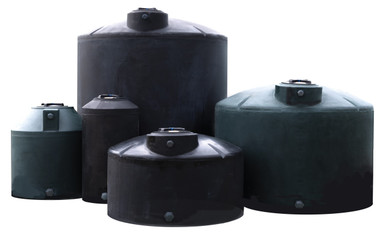
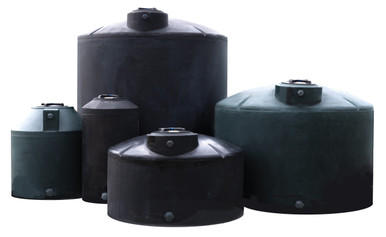
A 5,000-gallon vertical HDPE water tank is the largest single piece of equipment most operators ever buy that ships on the road on a flatbed instead of inside a van trailer. The product itself is a one-piece rotomolded shell — typically 102″ or 119″ in diameter, 112″ to 152″ tall, 1,000-1,200 lb depending on wall thickness and resin. Freight on that single piece of cargo regularly costs 25-60% of the list price of the tank. Operators who do not understand how the LTL freight bill is built end up surprised, blame the tank vendor, and then make worse decisions on the next purchase.
This post walks through how an LTL freight bill on a 5,000-gallon HDPE tank is actually constructed by the carrier, what the variables are, which ones are negotiable, and what to ask the freight estimator at /freight-cost-estimator/ before requesting a quote.
The 5,000-gallon vertical class — what we actually ship
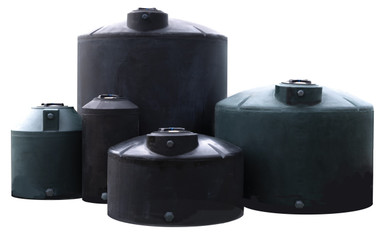
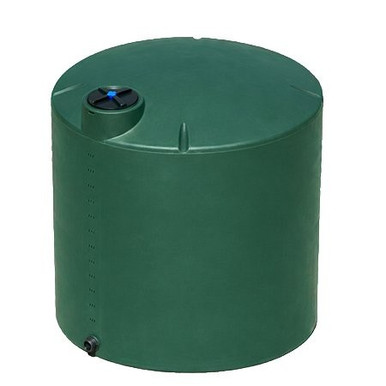
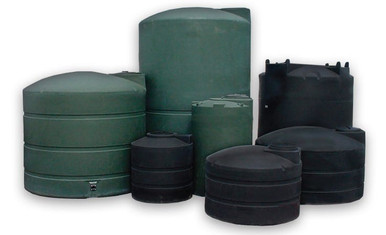
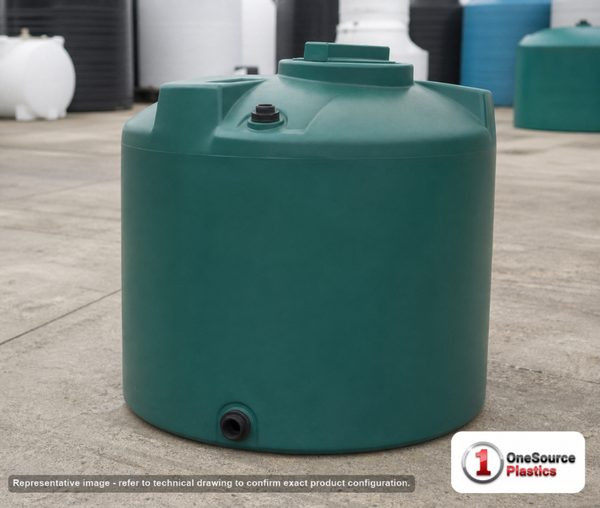
The vertical HDPE tanks at 5,000 gal in the OneSource catalog cluster into two diameter families. Tall-and-narrow tanks like the Norwesco N-40641 (102″ × 152″, listed at $5,899.00) and N-40943 (141″ × 86″, listed at $5,099.00) trade height for footprint. The wider Snyder Industries SII-32382 (Listed at $6,498.99) and SII-32370 (Listed at $5,111.43) are similar one-piece rotomolded shells. From a freight standpoint, all four are identical-class cargo: a single oversized but lightweight piece of pipe-and-fitting cargo with a low density-per-cubic-foot.
That low density is the problem. The cube the tank occupies on a flatbed or stepdeck is 7-9 times larger than what a same-weight pallet of dense industrial cargo would take. LTL carriers price by class, and class is fundamentally a density calculation. A 5,000-gal tank is almost always class 70, 85, or "freight all kinds" depending on carrier — never the cheap class 50 or 55 that dense cargo lives in.
NMFC class — the rule that decides everything else
The National Motor Freight Classification (NMFC), maintained by the National Motor Freight Traffic Association, is the published commodity rulebook every LTL carrier in North America uses to translate a piece of cargo into a freight class. Plastic tanks fall under NMFC item 156600 ("Tanks, water, sewage, oil, gasoline, or other liquid storage, NOI, plastic, NOI"), with subprovisions that classify by density (lb / cubic foot). For a 5,000-gallon vertical at roughly 1,150 lb in a 102″ × 152″ cylinder, the cube is approximately:
- Bounding box 102″ × 102″ × 152″ = 1,581,408 in³ = 915 ft³
- Density = 1,150 lb / 915 ft³ ≈ 1.26 lb/ft³
That density falls below the 4 lb/ft³ threshold for low-density commodities, which puts the tank in the high-class brackets (class 250-400 if priced strictly by density). Carriers do not actually price 5,000-gal tanks at class 400 because they would be commercially uncompetitive. In practice, every major flatbed and oversized-LTL carrier publishes a tariff exception that prices these as class 70-85 with a "cube-rule" or "deficit weight" override. The actual rate is built from base linehaul + cube-deficit charge + accessorials.
The freight bill — line by line
A typical residential delivery quote for a 5,000-gallon vertical tank from a Midwest origin to a rural Texas ZIP looks something like this. Real numbers vary by lane, season, and carrier — these are illustrative orders of magnitude, not commitments.
| Line item | Typical $ |
|---|---|
| Base linehaul (1,200 mi flatbed/stepdeck) | $1,650 |
| Fuel surcharge (7-12%) | $165 |
| Residential delivery accessorial | $95 |
| Limited-access charge (farm / ranch) | $85 |
| Liftgate (only if required and tank fits) | N/A |
| Notification / call-before-arrival | $25 |
| Total to delivery | ~$2,020 |
Note what is not on this bill: a liftgate, an inside-delivery, a re-delivery fee. A 5,000-gallon vertical does not fit on a standard 33″ tractor liftgate (max ~3,000 lb capacity but more importantly only ~96″ long), so the carrier is dropping at the curb or at the gate. The receiver must have a tractor, telehandler, crane, or strap rigging on site to handle a 1,150 lb tank that cannot be skidded.
The five variables you actually control
1. Origin selection — manufacturer plant matters
Norwesco and Snyder Industries each operate multiple plants across the US. A 5,000-gallon vertical can ship from any of 4-7 plants depending on inventory. The published list price at OneSource is the same regardless of origin, but the freight bill is not. A West Coast destination from a Pacific Northwest plant might be $900; the same tank from a Midwest plant to the same destination is $2,400. Always ask the freight estimator to optimize plant origin against your destination ZIP. We do this transparently — the tank vendor name is the same on the BOL either way.
2. Destination commercial vs residential vs limited-access
Carriers classify destinations into three buckets that drive accessorials. A commercial address with a forklift dock is the cheapest. A residential address (single-family home, farm) adds a $75-150 residential surcharge. A "limited access" address — gated community, military base, mine site, ranch, school, church — adds another $75-100. Be honest about the receiving environment when you quote; misclassifying a farm as "commercial" gets the carrier driver out to a gravel road with a 53″ trailer that cannot turn around, and the rebill plus the failed-delivery charge dwarfs the $85 you saved on the original quote.
3. Time-of-year — peak season and capacity
LTL flatbed capacity tightens twice a year: spring planting (March-May) and produce season (June-August). Freight rates on tank-shaped cargo can swing 20-35% between trough and peak. If the install date is flexible, requesting a tank in February or November versus April or July saves real money. The Federal Motor Carrier Safety Administration (FMCSA) Hours-of-Service rule (49 CFR Part 395) caps driver duty time at 11 hours driving in a 14-hour on-duty window, which is why long lanes (1,500+ mi) cost more in absolute terms — they require multiple driving days.
4. Single vs consolidated shipments
If you are buying a 5,000-gal tank plus accessories (a stand, a 100-gal day tank like the Norwesco N-44218 listed at $298.99, plumbing skid components), shipping all on one BOL versus two separate BOLs almost always saves 15-30%. The carrier amortizes the truck call across more cargo. Tell the freight estimator everything you intend to buy in the same project, not just the headline tank.
5. Accessorials you can decline
Not every accessorial is mandatory. "Notification" calls are sometimes worth the $25 if you are coordinating a forklift; if you are home all day, you can decline. "Inside delivery" almost never applies to a 5,000-gal tank (it does not fit through a door), so refuse if a carrier tries to add it. "Sort and segregate" is a warehouse charge that should not appear on a single-piece tank shipment.
Lane variance — same tank, different destinations
For a 5,000-gallon Norwesco N-40943 (Listed at $5,099.00) shipping from a Midwest plant, here are the order-of-magnitude freight costs we typically see by destination region. Quoted ZIP-specific via /freight-cost-estimator/ before purchase:
| Destination region | Typical freight $ | % of tank list |
|---|---|---|
| Same state, commercial dock | $650-950 | 14-20% |
| 500 mi, commercial dock | $1,150-1,500 | 24-32% |
| 1,000 mi, residential | $1,800-2,300 | 38-49% |
| 1,500+ mi, rural / limited-access | $2,400-3,200 | 51-68% |
The 50-68% top end is real and not a typo. A 5,000-gal tank to a remote ZIP can cost almost as much in freight as the tank itself. Operators planning installs in low-population destination ZIPs should price freight before they commit to the tank.
Comparison shopping — where vendors differ
Tank list prices on the same Norwesco / Snyder SKU are nearly identical across legitimate authorized resellers. The list price is published, the manufacturer enforces it, and arbitrage opportunity is small. Freight is where competitive resellers actually differ. Some reseller models bake freight into a single bundled price, which superficially looks simple but typically buries 8-15% margin on top of the carrier rate. We do not bundle freight into the list price — the BC list price is the tank, and freight is quoted by ZIP via /freight-cost-estimator/ or by phone at 866-418-1777. You see the carrier rate as a separate line item. If a competitor bundles freight into a single number on a 5,000-gallon tank, ask for the carrier name and the linehaul-vs-margin split — most will not show it.
What to send the freight estimator
To get a tight freight quote on a 5,000-gallon tank, the estimator needs:
- Exact SKU — N-40943 vs N-40641 vs SII-32382 etc. The cube and weight differ enough to matter.
- Destination ZIP — full 5-digit ZIP, not city name. ZIP determines carrier zone.
- Address type — commercial dock, commercial no-dock, residential, farm, limited-access.
- Forklift / equipment availability — if you have a tractor with a forklift attachment that can lift 1,500 lb at extension, the carrier can drop curbside; if not, you need a stepdeck with a winch or a crane on-site.
- Acceptable delivery window — same-day is most expensive, "any day next 2 weeks" is cheapest.
- Any other items in the same order — pumps, fittings, smaller tanks bundled save freight.
Federal regulations that touch this freight bill
Three federal frameworks shape what carriers can charge and how they must operate:
- 49 CFR Part 371 (Brokers of Property) — disclosure requirements when a freight broker is between you and the carrier.
- 49 CFR Part 395 (Hours of Service) — limits driver duty time, drives multi-day-lane pricing.
- 49 CFR Part 393 (Parts and Accessories Necessary for Safe Operation) — including 49 CFR 393.100 cargo securement, which is why 5,000-gal tanks ship strapped at multiple anchor points and why the carrier's securement labor is part of the linehaul.
None of these are negotiable. They are baseline costs of running a federally compliant motor carrier and they appear in the linehaul rate.
Bottom line
Freight on a 5,000-gallon HDPE vertical tank is real money — typically 14-68% of the tank list price depending on lane and destination type. The variables are manageable if you understand them: optimize origin plant against destination ZIP, classify your delivery environment honestly, time the order against capacity seasons, consolidate adjacent purchases on one BOL, and decline accessorials you do not need. The tank Listed at $4,700 on a SKU like the Norwesco N-40943 is one number; the freight is a separate number quoted by ZIP at /freight-cost-estimator/. Treat them as two line items, ask for both upfront, and you will not be surprised on delivery day.
Need a freight quote on a specific 5,000-gallon SKU to a specific ZIP? Use the freight estimator or call 866-418-1777 with the SKU + destination ZIP + address type. We respond same business day.
Field Operations Addendum
Once the line-haul rate clears, the accessorial stack is what surprises receivers on a tank delivery. A commercial dock with a forklift and a trained receiver is the cheap end of the curve; a residential or limited-access stop with no equipment is the expensive end. Three accessorial categories drive almost every overage I see on the bill of lading.
Residential and limited-access surcharges. A "residential" classification under NMFC rules is not just a house — it includes farms, churches, schools, mini-storage, and any address the carrier flags as non-commercial. Plan on a residential surcharge per shipment regardless of weight. Limited-access stops (gated communities, military bases, construction sites without a posted street address) stack a second fee on top. Both are billed by the carrier off their published tariff, so confirm the classification before the truck rolls.
Liftgate and inside delivery. Vertical bulk-storage tanks above roughly 500 gallons cannot ride a liftgate — the deck rating and the tank's height-of-gravity rule it out. For those, the receiver needs a forklift with extended forks or a tractor-mounted bucket. For smaller cone-bottoms, transport tanks, and accessories, a liftgate is fine but bills as a flat accessorial. Inside delivery — past the threshold of a building — is a separate line item again and is rarely worth it for tanks; stage the unit at the dock or curb and roll it from there.
Detention and lumper fees. Carriers allow a free unloading window (commonly 30-60 minutes for LTL). Past that, detention bills by the quarter-hour. If the receiver has no labor and the driver helps unload, that is a lumper charge, not a courtesy. Have the forklift staged and the offload spot cleared before the truck arrives.
Class scaling. Empty poly tanks ship at NMFC class 300 because they are low-density, high-cube freight. Class 300 means the rate-per-hundred-pounds is high relative to a class 70 commodity, but the dimensional weight cap usually controls. Confirm the class on the quote, not just the dollar number — a misclassified shipment gets reweighed and reclassed at the terminal, and the corrected invoice arrives weeks later.
Recommended Tanks for This Guide
Live pricing, updated automatically · estimate freight to your ZIP.