Florida DEP Chapter 62-762 Aboveground Storage Tank Compliance: Registration, Secondary Containment, Closure Procedures, and the County-Level Implementation Maze
Florida regulates above-ground storage tank (AST) systems containing regulated substances under Chapter 62-762 of the Florida Administrative Code, administered by the Florida Department of Environmental Protection (FDEP) Storage Tank Regulation Section. The rule covers AST systems storing pollutants (petroleum, petroleum products, and certain hazardous substances listed in 62-762.201) at threshold quantities and applies statewide with delegation to local programs in some counties. Florida's AST program is one of the more rigorous state programs and operates alongside the federal SPCC rule at 40 CFR 112 and the federal underground storage tank (UST) program. For operators planning bulk above-ground tank installations in Florida - whether ag retail fertilizer storage, industrial chemical bulk, or fuel-related service - the Chapter 62-762 framework is the controlling state regulation and must be addressed in the project planning before tank purchase.
This guide walks the registration thresholds, the secondary containment engineering, the integrity testing cadence, the closure procedures when a tank is taken out of service, and the county-delegated authority structure that determines who actually inspects the installation. The reference text is Florida Administrative Code Chapter 62-762 as published by the Florida Department of State, with cross-references to FDEP guidance documents and the federal SPCC and UST rules where they intersect with Florida state requirements.
1. The Florida AST Regulatory Framework Overview
Florida tank regulation is layered across federal, state, and local jurisdictions. The relevant statutes and rules:
- Florida Statute Chapter 376 - Pollutant Discharge Prevention and Removal. The enabling statute for state tank regulation, including the Inland Protection Trust Fund and the Petroleum Restoration Program.
- Florida Administrative Code Chapter 62-761 - Underground Storage Tank Systems. Federal UST program at 40 CFR 280 plus state-specific provisions.
- Florida Administrative Code Chapter 62-762 - Aboveground Storage Tank Systems. The state AST rule. Applies to AST systems storing regulated pollutant.
- Florida Administrative Code Chapter 62-770 - Petroleum Contamination Site Cleanup Criteria.
- Federal SPCC 40 CFR 112 - federal Spill Prevention Control and Countermeasure plan. Applies to non-transportation oil-bearing facilities above 1,320 gallons aggregate above-ground capacity.
- County-level delegation - FDEP has delegated tank program implementation to several Florida counties under formal contracts. The implementing agency depends on the county.
The county delegation matters because the inspector showing up at your facility may be a county employee operating under a state contract, not an FDEP employee. The substantive rules are the same; the administrative contact is local.
2. Registration Thresholds and Regulated Substances
Chapter 62-762.301 establishes registration requirements for AST systems. Registration is required for AST systems with capacity:
- Greater than 550 gallons individual tank capacity for petroleum or petroleum products.
- Aggregate capacity greater than 110 gallons for hazardous substances listed in 62-762.201 (the Florida AST hazardous substance list, which mirrors the federal CERCLA Hazardous Substance list at 40 CFR 302).
- Other thresholds for specific chemistry classes - ammonia, certain pesticides, and specialty industrial chemistry have specific thresholds.
The AST hazardous substance list in 62-762.201 includes most chemistries that ag retailers and industrial operators handle in bulk: anhydrous ammonia, aqua ammonia (ammonium hydroxide), sulfuric acid, phosphoric acid, sodium hydroxide, hydrochloric acid, sodium hypochlorite (above certain thresholds), pesticide concentrates listed under FIFRA, and many specialty industrial chemicals. UAN fertilizer is generally NOT on the FDEP AST hazardous substance list because UAN's primary regulator in Florida is the Florida Department of Agriculture and Consumer Services (FDACS) under the Florida fertilizer law, not FDEP.
Registration is via FDEP form 62-762.900(2) submitted to the local FDEP district office or the county delegated program office. Registration must be filed before the tank is placed in service. Re-registration is required upon ownership change, tank replacement, or significant modification.
3. Secondary Containment Requirements per 62-762.501
Florida requires secondary containment for regulated AST systems sized to hold the volume of the largest single tank within the containment area, plus precipitation accumulation for outdoor installations. The Florida engineering rule:
- Containment volume = 110% of largest tank within the containment area (110% rule).
- Precipitation accumulation = 25-year/24-hour storm event for the geographic location. Florida coastal counties typically use 8-12 inches; inland counties use 6-9 inches.
- Containment construction must be impervious to the chemistry stored. Acceptable construction includes concrete with chemical-resistant liner, earthen dike with HDPE/elastomer liner (limited to certain chemistry classes), or self-contained double-wall tank.
- Containment must drain via manual valve to a holding sump - automatic drain to the environment is prohibited. Stormwater accumulating in the containment must be inspected before release; contaminated stormwater is hazardous waste.
- Containment integrity must be tested at installation and re-tested per the inspection schedule (typically 5-year intervals for liner integrity).
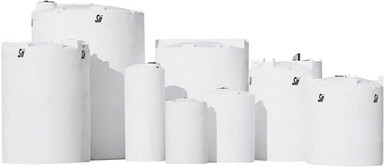
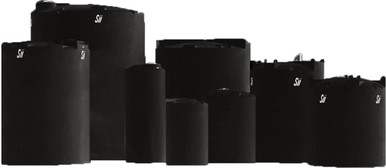
For sites where engineered concrete dike construction is impractical (small ag retailer, distributed industrial sites, mobile or temporary installations), Florida accepts double-wall AST construction as an equivalent secondary containment. This is the engineering reason that Snyder Captor double-wall tanks are widely deployed in Florida bulk chemical service - the integrated 110% secondary containment satisfies 62-762.501 without the cost and footprint of an engineered concrete dike.
Snyder Captor sizes commonly specified for Florida AST service include the SII-5990102N42 (1,000 gallon XLPE Captor), the SII-5490000N42 (1,550 gallon Captor), and the SII-1006600N42 (10,000 gallon XLPE Captor) for larger industrial duty.
4. Spill Containment and Overfill Protection per 62-762.701
In addition to secondary containment, Florida requires specific overfill protection devices on AST systems above 550 gallons. The 62-762.701 requirements:
- Catchment basin or spill bucket at fill connection - sized to hold the volume of the delivery hose (typically 5 gallons minimum, 25 gallons for tanker delivery applications).
- Overfill prevention device - high-level audible alarm, automatic shut-off valve, ball float valve, or equivalent device. Activation point must be at 90% of tank capacity or below.
- Tight-fill connection that prevents discharge to grade during disconnection.
- Marking/labeling identifying the chemistry at the fill connection - the Florida marking requirement is more specific than federal SPCC.
For polyethylene plastic tank installations the overfill protection commonly takes the form of a level switch (ultrasonic or float type) connected to an audible alarm and an electric solenoid valve at the fill manifold. Catalog options include level sensors compatible with chemical service - see our tank level gauge selection guide for the full engineering walkthrough.
5. Integrity Testing and Inspection Cadence per 62-762.601
Florida requires integrity testing of AST systems on a defined cadence. The 62-762.601 requirements:
- Annual visual inspection by qualified facility personnel. Documented in the facility records. Looks for visible deterioration, leaks, corrosion, secondary containment integrity, and operational equipment status.
- Periodic comprehensive inspection (typically 5-year cadence for steel AST per API 653 or equivalent for non-steel material) by a Florida-licensed professional engineer or AST inspector. Includes wall thickness verification (where applicable to material type), bottom integrity, and full mechanical assessment.
- Repair documentation for any identified deficiency. Repairs requiring tank entry or weld work require qualified contractor and submitted-and-approved repair plan.
- Recordkeeping of all inspections and repairs for the operating life of the tank plus 3 years after closure.
For polyethylene AST the inspection adapts to the polymer material. Wall-thickness verification by ultrasonic measurement is not appropriate for HDPE/XLPE; visual inspection with photographic documentation and dimensional verification of any swelling or deformation is the engineering equivalent. Florida-licensed inspectors familiar with polyethylene AST inspection procedures will document this appropriately. See our mechanical integrity testing engineering guide for the full method comparison.
6. Closure Procedures per 62-762.801
When an AST system is taken out of service, Florida requires formal closure procedures. The 62-762.801 closure requirements:
- Notification to the FDEP district office or county delegated program before closure activity begins.
- Removal of all chemistry from the tank and associated piping. Triple rinse with appropriate decontamination solution (water for water-soluble chemistry; specialized rinsate for organic chemistry).
- Disposal of rinsate as hazardous waste if the original chemistry was a listed hazardous substance.
- Soil sampling beneath the tank if the tank had a documented release or if the tank is being permanently abandoned in place.
- Tank removal and disposal as solid waste (HDPE/XLPE tanks accepted at Florida solid waste facilities; some Florida facilities accept HDPE for recycling).
- Site closure report documenting the closure activity, signed by the facility operator and any consulting engineer.
For polyethylene tanks the recycling pathway is increasingly viable in Florida. HDPE rotomolded tanks can be cleaned, cut into manageable pieces, and accepted at HDPE recycling facilities for grinding into recycled resin pellets. The recycle credit can offset disposal cost. See our tank decommissioning and disposal guide for the closure economics walkthrough.
7. Florida-Specific Tank Selection Considerations
Beyond the regulatory framework, Florida operating conditions impose specific tank engineering requirements:
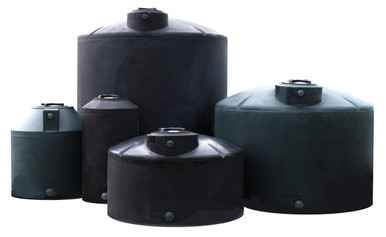
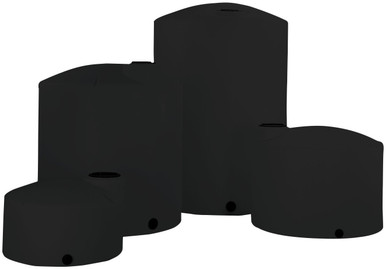
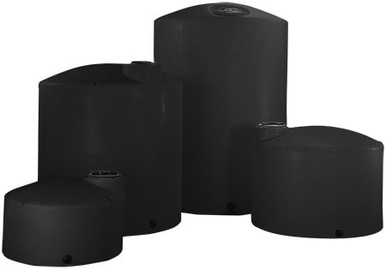
- UV exposure. Florida latitudes 24-31 deg N produce some of the most aggressive UV flux in the continental US. Polyethylene tank service life is reduced 30-50% versus mid-Atlantic states for white/translucent unstabilized formulations. Black HDPE with carbon-black UV stabilization is the appropriate exterior color for outdoor Florida service. The Norwesco N-43675 925 gallon black leg tank, EP-TLV02100BK 2,100 gallon black vertical, and similar carbon-black-formulated tanks are widely deployed in Florida for this reason. See our UV service-life prediction guide.
- Hurricane wind load. Florida coastal counties under ASCE 7 Risk Category III/IV use 150-180 mph wind speeds for tank tie-down design. Anchor-bolt sizing, foundation reinforcement, and strap-down hardware must satisfy ASCE 7-22 for the design wind speed of the specific location. See ASCE 7 wind load engineering for tanks.
- Storm surge and flood zone. Florida AST in FEMA Zone V or coastal A flood zones must consider buoyancy under flooded conditions. An empty 1,500 gallon tank floats; the anchor system must restrain buoyant uplift in addition to wind load. Snyder Captor double-wall and other ballast-bottom tank configurations are preferred for flood-zone service.
- Saltwater corrosion of metal hardware. Anchor bolts, fittings, valves, and pump hardware exposed to coastal Florida humidity must be 316L stainless or hot-dip galvanized to prevent rapid corrosion. Aluminum hardware not appropriate.
- Lightning exposure. Florida is the highest-flash-density state in the continental US. Tank installations near other infrastructure require lightning protection per NFPA 780. See our tank lightning protection guide.
8. Procurement and Compliance Action Checklist
For sites planning AST installation in Florida, the procurement checklist:
- Confirm chemistry classification under 62-762.201 hazardous substance list. Determine registration threshold.
- Identify the implementing agency - state FDEP district office or delegated county program. Begin pre-permit consultation with the local agency.
- Determine SPCC applicability under federal 40 CFR 112. If aggregate above-ground oil-bearing chemistry exceeds 1,320 gallons, SPCC plan is required in addition to Florida 62-762.
- Specify secondary containment - engineered concrete dike with chemical-resistant liner OR Snyder Captor double-wall integrated containment. Document the 110% rule plus precipitation allowance in the design.
- Specify overfill prevention - high-level alarm and automatic shut-off solenoid valve. Spill containment basin at fill connection.
- Specify tank material and color appropriate to Florida UV: black HDPE/XLPE for outdoor; light colors only for shaded or indoor installations.
- Specify wind/seismic anchoring per ASCE 7 design wind speed for the site location.
- File registration form 62-762.900(2) with the implementing agency before tank delivery.
- Develop integrity testing schedule (annual visual + 5-year comprehensive) and operational records keeping.
- Document the full installation in a Tank System File maintained at the facility - registration, design drawings, secondary containment design, integrity test reports, repair records, and SPCC plan if applicable.
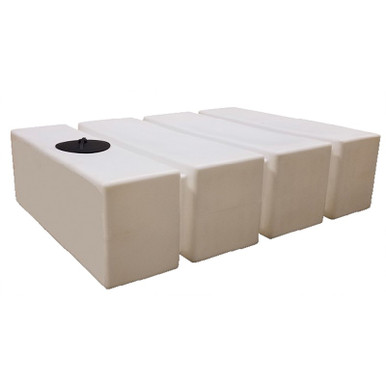
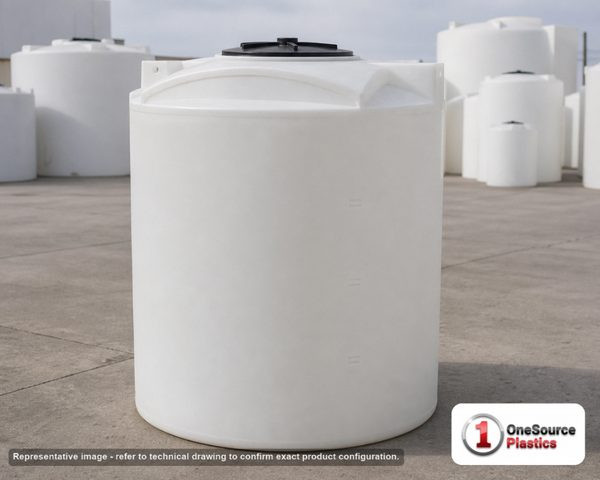
OneSource Plastics ships AST product into all 67 Florida counties. The catalog options for Florida AST service include the Norwesco vertical bulk line (N-40146 1,500 gallon vertical entry size and larger), the Norwesco horizontal leg line including the N-43675 925 gallon black leg (preferred for Florida UV), the Snyder Captor double-wall line covering 1,000 to 10,000 gallon XLPE for SPCC compliance, and the Enduraplas vertical line including the EP-TLV02100BK 2,100 gallon black for water and lower-SG chemistry duty.
Reference list pricing: Norwesco N-40146 1,500 gallon at $2,837.16; Norwesco N-43675 925 gallon black leg at $2,427.90; Snyder SII-5990102N42 1,000 gallon Captor XLPE at $6,798.99; Enduraplas EP-TLV02100BK 2,100 gallon at $2,198.99. LTL freight to Florida ZIPs runs $2,198.99 to $2,198.99 depending on origin and destination remoteness; quoted via the freight estimator.
For comprehensive Florida regulatory map covering tank installations and related state requirements see our Florida state regulations pillar. Call OneSource Plastics at 866-418-1777 for AST specification on Florida bulk storage projects. We will run the chemistry, capacity, and 62-762 / SPCC requirements against the catalog and recommend the right tank. Compliance with Chapter 62-762, the federal SPCC plan, and the local AHJ remains the operator's responsibility - we provide the tank engineering. The reference framework is comprehensive; the tank specification is a defensible foundation.
Recommended Tanks for This Guide
Live pricing, updated automatically · estimate freight to your ZIP.