Tank Inventory Stocking Math for Distributors: Min-Max vs JIT vs Single-Stock Strategies
Tank distributors face an unforgiving inventory math problem. Polyethylene rotomolded tanks are heavy, low-density, and freight-expensive. A 1,500-gallon vertical tank takes ~90 cubic feet of warehouse space; a 3,000-gallon takes ~210 cubic feet; a 10,000-gallon vertical takes ~600+ cubic feet and may not fit through standard warehouse doors. Stocking 50 SKUs of mid-size vertical water tanks consumes the entire square footage of most regional distributor warehouses. Stocking 200 SKUs is impossible without a sprawling outdoor yard. The right stocking strategy is not "more stock" — it's the correct strategy matched to SKU velocity, lead time risk, freight class, and customer service expectation.
This guide walks the three real stocking strategies tank distributors deploy — min-max, just-in-time (JIT), and single-stock specialty — with worked numerical examples on real OneSource catalog SKUs. The recommendations come from operating distribution against the Norwesco, Snyder, Chem-Tainer, Enduraplas, and Bushman supply chains and watching where each strategy wins or loses money.
The Three Stocking Strategies
Strategy 1: Min-Max
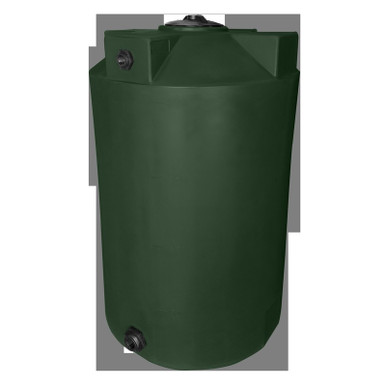
Set a minimum stock level (re-order point) and a maximum (target on-hand after replenishment). When stock crosses the minimum, place a PO that brings inventory back to maximum. Best for high-velocity SKUs where the cost of stockout exceeds the holding cost. Examples: Norwesco MPN 41464 (100-gallon vertical black, ~80 lb, list ~$394), Norwesco MPN 41861 (100-gallon vertical white, list ~$320), Snyder MPN WB46 (1,500-gallon vertical black). These move 5-25 units per month at a busy regional distributor.
Strategy 2: Just-In-Time (JIT)
Hold no stock. Order from manufacturer when customer order arrives. Customer accepts the manufacturer lead time; distributor margin captured without inventory carrying cost. Best for medium-to-low velocity SKUs where customers will tolerate 14-35 day lead times. Examples: Bushman MPN 45466 (2,650-gallon dark green vertical), Enduraplas MPN TLV02100 (2,100-gallon vertical), Chem-Tainer MPN R545442A (530-gallon rectangular open-top).
Strategy 3: Single-Stock (Specialty)
Hold exactly one unit of a high-margin specialty SKU as a demonstration unit and a same-week order. When the unit sells, replenish on a make-to-order basis. Best for premium SKUs with sporadic demand where the demonstration value of having one on the floor exceeds the carrying cost. Examples: large-capacity vertical tanks (Norwesco MPN 47638 10,500-gallon, Snyder MPN 32076 12,000-gallon, Enduraplas MPN TLV10000 10,000-gallon).
The Stocking Math Equations
Reorder Point (ROP) for min-max
ROP = (Average Daily Demand × Lead Time in Days) + Safety Stock
Where Safety Stock = Z × StDev(Lead Time Demand)
Z is the service-level z-score: 1.65 for 95% service level, 1.96 for 97.5%, 2.33 for 99%. For most tank distributors targeting 95% in-stock service on stocked SKUs, Z = 1.65.
Worked example for Norwesco MPN 41464 (100-gallon vertical black) at a Texas regional distributor:
- Average daily demand: 0.8 units/day (24/month)
- Lead time from Norwesco Texas plant: 7-14 days; use 10 days average
- StDev(Lead Time Demand) measured: 4 units
- Safety Stock = 1.65 × 4 = 6.6 → round to 7
- ROP = (0.8 × 10) + 7 = 8 + 7 = 15 units
When on-hand inventory drops to 15 units, place a replenishment PO. Stock-out probability: 5%.
Economic Order Quantity (EOQ)
EOQ = sqrt(2 × Annual Demand × Order Cost / Holding Cost per Unit per Year)
For the same Norwesco MPN 41464:
- Annual demand: 24 × 12 = 288 units
- Order cost: $250 (PO admin + truckload-coordination overhead)
- Unit cost: $250 distributor net
- Holding cost rate: 25% per year (typical: warehousing + opportunity cost + obsolescence + insurance)
- Holding cost per unit per year: $62.50
- EOQ = sqrt(2 × 288 × $250 / $62.50) = sqrt(2,304) = 48 units
Optimal order quantity: 48 units per replenishment. With ROP at 15, the stock cycle runs from 15 (trigger) to ~63 (post-receipt) and back down. Average on-hand: ~39 units.
Carrying Cost Reality Check
Holding 39 units of MPN 41464 at $250 net unit cost = $9,750 inventory value. Annual carrying cost at 25% = $2,437. Plus floor space: 100-gallon tank footprint ~12 sq ft; 39 units = 468 sq ft, at $0.75/sq ft/month warehouse cost = $4,212/year. Total annual cost to stock this SKU min-max: ~$6,650.
Margin generated: 288 units × $50 contribution margin = $14,400. Net contribution: $7,750. Stock-strategy is profitable.
When Each Strategy Wins
Min-Max wins on:
- High-velocity SKUs (15+ units/month)
- SKUs where customer expects same-day or next-day shipment
- SKUs with predictable demand (low CV — coefficient of variation under 0.5)
- SKUs where stockout drives substitution to a competitor
- Small-to-medium tanks (under 1,500 gallon) that fit the warehouse footprint
JIT wins on:
- Medium-velocity SKUs (1-10 units/month)
- Customer applications where 14-35 day lead time is acceptable (new construction, planned replacement, scheduled commissioning)
- Large tanks (3,000+ gallon) where warehouse cube cost dominates
- High-cost SKUs where carrying-cost exposure is large
- SKUs with high CV (sporadic demand) where EOQ math breaks down
Single-Stock wins on:
- Premium specialty SKUs that benefit from on-floor demonstration
- Replacement-cycle markets where the customer arrives unscheduled
- SKUs where the single demonstrated unit can be sold and replaced as a normal cycle
- High-margin units where the carrying cost of one is small relative to the conversion lift from demonstration
SKU Velocity Tiers — A Real-World Mapping
| Velocity Tier | Monthly Demand | Strategy | Example SKUs |
|---|---|---|---|
| A — Fast | 15+ units | Min-Max stocked | Norwesco MPN 41464 (100-gal black), Snyder WB46 (1,500-gal vertical) |
| B — Medium | 5-15 units | Min-Max OR JIT depending on cube | Norwesco 45246 (3,000-gal), Bushman WW-1500-GL-NAT |
| C — Slow | 1-5 units | JIT | Bushman 45466 (2,650-gal dark green), Enduraplas TLV02100 |
| D — Very Slow / Premium | 0-1 units | Single-Stock or pure JIT | Norwesco 47638 (10,500-gal), Snyder 32076 (12,000-gal), Enduraplas TLV10000 |
Carrying Cost Components (the 25% Number Decomposed)
The 25% holding cost rate used in EOQ math is not arbitrary. It decomposes as:
- Cost of capital (8-12%): the return the distributor could earn elsewhere on the cash tied up in inventory. Higher in high-interest-rate environments.
- Warehouse rent and operations (4-8%): floor-space cost, lighting, insurance on the facility, security, dock maintenance.
- Insurance on inventory (1-2%): property insurance covering loss/damage of stored goods.
- Obsolescence (3-7%): color discontinuations, fitting changes, model updates that strand inventory.
- Shrinkage and damage (1-3%): forklift impacts, sun cracking on outdoor yard, theft.
- Property tax on inventory (state-dependent, 0-2%): states like Texas and California impose business personal property tax on inventory at year-end snapshots.
Distributors operating in low-cost-of-capital environments with owned warehouse and disciplined inventory rotation can sometimes operate at 18-22% effective carrying cost. Distributors in high-cost markets with leased space and outdoor yard storage often see 28-35%. Plug your actual rate into EOQ math; the formula is sensitive to this input.
Cube Math: The Tank Distributor's Hidden Constraint
Indoor warehouse space rents at $0.40-1.20/sq ft/month depending on market. A 3,000-gallon vertical tank has an 86-inch diameter footprint plus material handling clearance: ~52 sq ft per unit. At $0.75/sq ft/month, one unit indoors costs $39/month or $468/year just for floor space. Twenty 3,000-gallon tanks indoors costs $9,360/year in floor space alone — equivalent to half a warehouse worker's salary.
Outdoor yard storage runs $0.10-0.30/sq ft/month and works for UV-stabilized polyethylene tanks (which all reputable manufacturer products are). Outdoor storage on a fenced gravel yard with monthly tank rotation is the practical answer for tanks 1,500 gallon and up. The distributor advantage of outdoor yard inventory is large; the disadvantage is shrinkage exposure, weather damage on fittings (UV can degrade exposed gaskets even when tank shell is rated), and requires forklift and yard-truck handling overhead.
| Tank Capacity | Footprint | Indoor Annual Cost | Outdoor Annual Cost |
|---|---|---|---|
| 100 gallon | 12 sq ft | $108 | $30 (rarely outdoor) |
| 500 gallon | 22 sq ft | $198 | $53 |
| 1,500 gallon | 36 sq ft | $324 | $86 |
| 3,000 gallon | 52 sq ft | $468 | $125 |
| 5,000 gallon | 82 sq ft | $738 | $197 |
| 10,000 gallon | 130 sq ft | $1,170 | $312 |
Hybrid Strategy: The Real Distributor Playbook
No tank distributor runs a pure single strategy. The actual stocking pattern at a healthy regional distributor:
- 20-50 SKUs on min-max — fast-mover water and septic verticals plus saddle tanks, all under 1,500 gallon
- 100-300 SKUs on JIT — everything 1,500-5,000 gallon and most specialty configurations
- 5-15 SKUs on single-stock — premium large-capacity demonstrators in the outdoor yard
- 0 stock on the long tail — special colors, special fittings, custom dimensions sourced 100% make-to-order
The discipline question is which SKUs sit in which bucket and how often the bucket assignments get reviewed. SKU velocity drifts. Quarterly ABC analysis on actual sales data — not gut-feel — is the difference between profitable inventory and dead capital.
The Common Distributor Mistakes
Mistake 1: Stocking what's "always been stocked"
Inventory inertia is the largest hidden cost in tank distribution. SKUs that moved well three years ago but have softened to one unit per quarter are burning floor space at a $400-500/year/unit rate while the distributor optimizes other parts of the business. Run quarterly ABC analysis; promote slowing SKUs out of stock and into JIT.
Mistake 2: Underestimating large-tank cube cost
"We have the space." That's true until the next 10,000-gallon tank arrives and there is nowhere to put it. The opportunity cost of dedicating 130 sq ft to a single 10,000-gallon demonstrator is real; sometimes the right answer is to position the demonstrator outdoors and run JIT on the SKU itself.
Mistake 3: Confusing customer service with stock level
"We need to have it in stock" is a customer-service belief that often fails the math. For new-construction customers buying tanks 4-12 weeks ahead of installation, JIT lead time is usually fine. The customer service that matters is the accurate quote, the right method coordination, and the on-time delivery — not whether the tank shipped from your yard or from the manufacturer's plant.
Mistake 4: Letting freight class drive stocking
Tanks ship at NMFC class 250-300 LTL (low density, high cube). The freight class cost is the same whether the tank ships from the distributor warehouse or directly from the manufacturer plant. Stocking does not save freight cost on tanks — it adds the inbound freight cost to the warehouse and then incurs the outbound freight cost again on customer delivery. JIT often saves total freight cost because the manufacturer ships direct.
Mistake 5: Not tracking obsolescence
Color discontinuations, fitting-package changes, manufacturer model updates: all of these strand inventory. A tank dropped from the manufacturer's product line is often unsellable at full margin. Monitor manufacturer change notices monthly; mark stranded inventory for promotional discount before the obsolescence is total.
Distributor-to-Manufacturer Relationship
The strongest distributor inventory positions come from manufacturer relationships that include rotation transparency, batch-flexibility, and stocking-program coordination. The five brands OneSource works with all run distributor stocking programs:
- Norwesco publishes weekly capacity rotations and can flex truckload mixes for distributor stocking POs
- Snyder Industries runs distributor stocking programs at Lincoln, Nebraska
- Chem-Tainer coordinates eastern-region distributor stock from Babylon, New York
- Enduraplas runs distributor stock from Royse City, Texas (US-side) with predictable rotation
- Bushman coordinates Marshall, Indiana stock-program with mid-region distributors
Truckload (TL) inbound shipments at 80,000 lb capacity are dramatically cheaper per unit than LTL re-stocks. A distributor that can place truckload POs gets 30-50% lower freight per unit than a JIT competitor placing LTL POs on each customer order. That freight differential is a real competitive advantage on the fast-mover segment of the catalog.
How OneSource Stocks
OneSource Plastics operates a hybrid model with truckload stocking on fast-movers and JIT direct-from-plant on slower SKUs and large-capacity tanks. Our Freight Cost Estimator reflects the actual ship-from address (whether OneSource warehouse or manufacturer plant) so freight quotes are accurate to the actual route, not a generic estimate. List prices on the BigCommerce catalog do not include LTL freight; freight is quoted separately per ZIP via the Freight Estimator or by phone at 866-418-1777.
For commercial distributor accounts and large-volume buyers, direct phone coordination at 866-418-1777 surfaces stocking-program pricing tiers and manufacturer truckload-coordination opportunities that aren't visible in the standard catalog quote flow.
Internal Resources
- Geographic Sourcing & Regional Lead Time
- Tank Procurement Lead-Time Drivers
- Loadout Logistics by Method
- Material Selection HDPE vs XLPE vs Steel vs FRP
- Freight Cost Estimator
- Water Storage Tanks Catalog
- Specialty & Metal Fabrication
Source Citations
- NMFC (National Motor Freight Classification) tariff publication — LTL freight class for polyethylene tanks (typical class 250-300)
- 49 CFR 392 — DOT Driving of Commercial Motor Vehicles
- ASTM D1998 — Standard Specification for Polyethylene Upright Storage Tanks
- APICS Operations Management Body of Knowledge — EOQ and ROP formulas
- OneSource Plastics master catalog data, dated 2026-03-26 snapshot (9,419 products across Norwesco, Snyder, Chem-Tainer, Enduraplas, Bushman)
Recommended Tanks for This Guide
Live pricing, updated automatically · estimate freight to your ZIP.