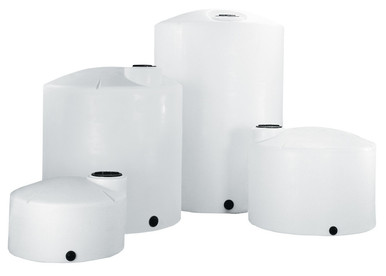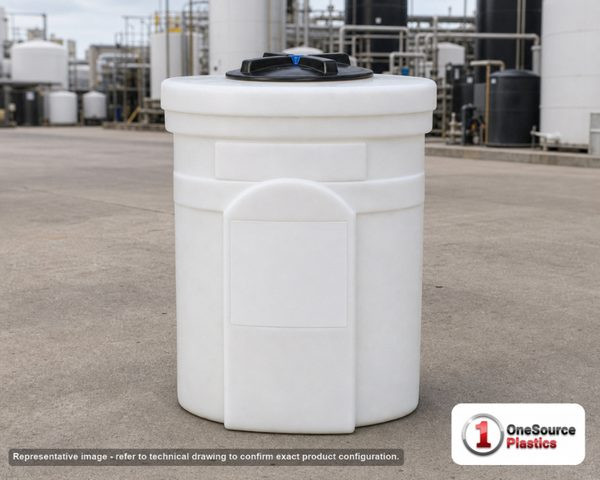
2500 Gallon Vertical Liquid Storage Tank - Natural White: Complete Buyer's Guide
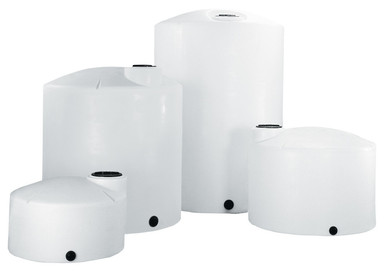
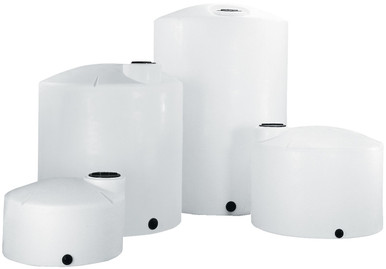
2500 Gallon Vertical Liquid Storage Tank - Natural White from Norwesco.
Technical Drawing
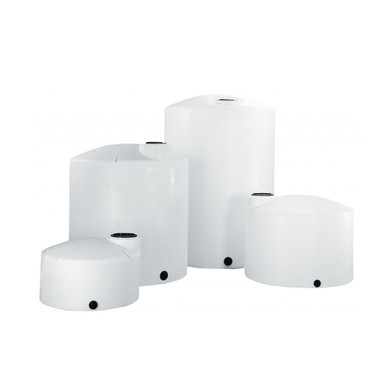
Official Norwesco technical drawing — 2500 Gallon Vertical Liquid Storage Tank - Natural White
Specifications at a Glance
Every figure below is pulled straight from the live product record for this exact tank — the same data on the product page, so what you read here and what you buy never disagree.
Standards & Materials
- Specific gravity rating 1.5 — the tank is engineered for liquids up to 1.5× the density of water (water is about 8.34 lb/gal). Confirm your fluid’s SG before storage.
Installation and Setup Guide
A 2,500-gallon vertical liquid tank is bulk chemical storage, and full of a 1.5-density product it weighs in the neighborhood of fifteen tons. That weight makes the foundation the heart of the installation: the tank itself is sound from the mold, and field failures almost always trace to what it stands on.
Engineered Foundation
This tank needs a reinforced concrete slab sized for its loaded weight and brought level across the full base. For chemical service the slab should double as secondary containment, curbed to hold the volume your regulations require so a leak or overflow is captured. Cure the concrete fully before filling, and grade the surrounding ground so spills and runoff are directed rather than allowed to spread.
Plumbing for Chemical Duty
Run the outlet in schedule 80 PVC or stainless rated for your chemistry, keep the first foot flexible to absorb the wall's seasonal movement, and fit a full-port chemical-service valve. Support each line on its own hangers so its weight never bears on the tank fitting, and avoid metals your product can attack.
Venting at Volume
At 2,500 gallons the air exchange during fills and draws is significant. Fit a pressure/vacuum relief vent rated for your chemical and sized to your transfer rates, so the tank neither pulls a vacuum on a fast draw nor pressurizes on a fast fill. Correctly sized chemical venting safeguards the tank wall and anyone working nearby.
Maintenance and Long-Term Care
Bulk chemical storage is maintained for containment and compatibility, with structural checks scaled to the fifteen tons the tank carries when full.
Quarterly Checks
- Foundation: Inspect the containment slab for cracking or settlement; a corner that drops under this weight shifts the load in ways the tank was not designed to take.
- Wall: Walk the full circumference looking for bulging or stress whitening, especially low on the wall where pressure peaks, and for any swelling that signals a compatibility problem with the stored product.
- Fittings and vent: Check the outlet and valve for weeping or chemical etching, hand-snug loosened threads, and confirm the relief vent is clear and rated for the current chemical.
Changing Products
Drain completely, decontaminate per the incoming chemical's procedure, and verify the new product on a polyethylene compatibility chart before refilling. A residual film from the previous chemistry can react with the next, so never skip the compatibility step. This vessel has no potable role; cleaning targets compatibility and carryover, not sanitation.
UV and Heat
The molded-in UV package protects the wall through years of sun; inspect the sun-facing side yearly in high-UV regions. A light, reflective wall helps keep volatile products cooler over a large sun-exposed surface, holding internal vapor pressure down through summer.
Alternatives and Comparisons
At 2,500 gallons the decision usually comes down to one large chemical tank versus several smaller ones, and to how the tank is proportioned.
Single bulk tank vs. multiple tanks: A single 2,500-gallon vertical liquid tank is the lowest cost per gallon and the simplest plumbing for steady bulk chemical supply, but it concentrates your storage in one vessel that must be drained and decontaminated to switch products. Two smaller liquid tanks let you keep two chemistries on hand at once and isolate one for cleaning, at higher cost and footprint. For a single high-volume product the large tank wins; for operations juggling several chemicals, the multi-tank approach earns its keep.
Other -Gallon Options
Frequently Asked Questions
How long will the 2500 Gallon Vertical Liquid Storage Tank - Natural White last?
On an engineered, level containment slab and within normal polyethylene density and temperature limits, this tank generally serves 15 to 20 years in bulk chemical duty. The seamless body has no weld to fail and the molded-in UV package handles the sun. Incompatible chemistry, over-density, or a settling foundation are what shorten that life, not the tank used as intended.
What chemicals can I store in this tank?
It is built for general chemical service and handles most liquid fertilizers, crop-protection chemicals, and industrial solutions. Confirm each product on a polyethylene compatibility chart before filling, because the resin resists many acids and bases but is vulnerable to certain solvents and oxidizers. It is not for fuels or flammables, and it is a chemical-storage tank rather than a potable-water vessel.
Does this tank come with a warranty?
Norwesco backs the tank against manufacturing defects in materials and workmanship under normal use, covering molded-in faults rather than damage from incompatible chemicals, exceeding the rated density, an inadequate foundation, or impact. Keep your documentation and installation photos, and contact us for the specific coverage terms.
Can I install this tank underground?
No. A vertical tank of this size is engineered for above-ground service and cannot resist soil pressure; burying it would collapse the tank and void coverage. For below-grade storage, our underground cistern and septic products are reinforced specifically for that environment.
Buying Considerations
Three things to settle before this 2,500-gallon liquid tank ships. First, the engineered foundation: a reinforced containment slab sized for roughly fifteen tons full and brought level. Second, your chemistry, verified against a polyethylene compatibility chart, since the tank's density rating covers most but not all agricultural and industrial liquids. Third, freight, which is the big consideration — a tank this size ships oversized on a dedicated truck and needs a forklift to set, not a curbside hand-off. Listed at $2,800.00 before freight, quoted to your ZIP.
Related Products You May Need
Questions? Call (866) 418-1777 — our team knows these products inside and out and can help you select the right tank for your application.
Recommended Tanks for This Guide
Live pricing, updated automatically · estimate freight to your ZIP.