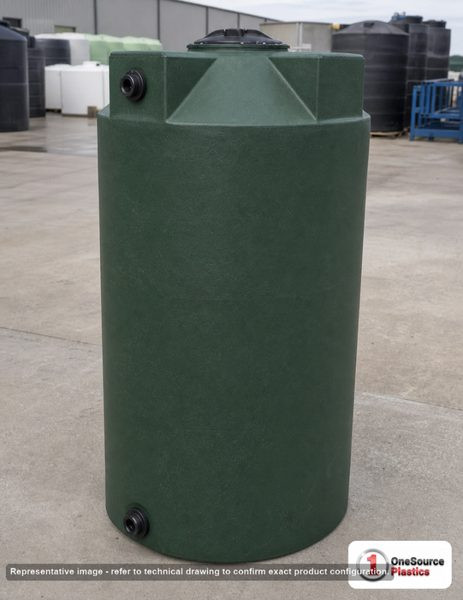
Fire-Water Reservoir Tank Design for Rural and Remote Sites: NFPA 22 Sizing Discipline, Polyethylene Tank Role in the Private Fire Protection Stack, and Freeze-Protection Engineering for Cold-Climate Service
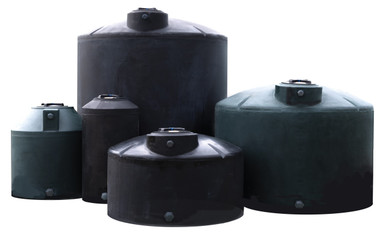
NFPA 22 is the standard that governs water-storage reservoirs for private fire protection. The 2023 edition is the current version, and it consolidates the requirements for tank sizing, construction, installation, and maintenance for tanks supplying sprinkler systems, standpipes, and fire-pump suction reservoirs at facilities that do not have adequate municipal water supply. NFPA 22 was historically written around steel tanks and concrete reservoirs. The 2023 edition acknowledges polyethylene tanks for limited applications, but the polyethylene-tank role in fire-water service is not a drop-in substitute for the steel reservoir; it is a specific niche where polyethylene's combination of cost, freeze tolerance, and corrosion resistance solves problems that steel and concrete cannot solve economically. This article walks the design discipline for polyethylene fire-water service.
References: NFPA 22 Standard for Water Tanks for Private Fire Protection, 2023 edition; NFPA 13 Installation of Sprinkler Systems; NFPA 24 Installation of Private Fire Service Mains; NFPA 20 Installation of Stationary Pumps for Fire Protection; ASTM D1998 Standard Specification for Polyethylene Upright Storage Tanks; FM Global Property Loss Prevention Data Sheet 3-2 Water Tanks for Fire Protection; ICC International Fire Code 2024 §507. Specifications and thresholds quoted below are from these sources; engineering judgment for polyethylene-specific applications draws on manufacturer field deployment data.
1. When NFPA 22 Applies and When It Doesn't
NFPA 22 applies whenever a private water tank is intended to supply fire protection systems and the supply is not provided by a municipal water main meeting NFPA 24 standards. The applicable scenarios:
- Rural commercial or industrial sites where the nearest municipal main is too small or too far to supply the demand calculated per NFPA 13 sprinkler design.
- Sites where the municipal main exists but cannot reliably deliver the residual pressure required at the highest fire-pump suction or hydrant.
- Sites with high-hazard occupancies (warehousing, chemical storage, paper mills, wood-products manufacturing) where the municipal supply is inadequate for the protection-area calculation.
- Hazard-classified rural sites (agricultural processing, food storage, hazardous-materials warehouses) where insurance underwriting requires private fire protection.
- Construction-phase fire protection during a project where the municipal supply has not yet been activated.
NFPA 22 does not apply to potable-water-only tanks (which fall under different drinking-water standards), to firefighting-foam concentrate tanks (which fall under NFPA 11 and 16), or to dry-pipe sprinkler air supplies. The standard is specifically about the water-supply reservoir for the fire protection system.
Polyethylene tanks have a specific niche in NFPA 22 application: smaller capacity reservoirs (under 30,000 gallons, with most polyethylene applications under 12,000 gallons) where the freeze tolerance, corrosion immunity, and lower installed cost of polyethylene outweigh the larger-capacity advantages of steel or concrete. The single largest commercially available polyethylene vertical tank ranges around 15,000-20,000 gallons depending on manufacturer; above that capacity, steel or concrete is the practical option.
2. Sizing the Reservoir per NFPA 22 §4 and NFPA 13
The reservoir capacity required by NFPA 22 is set by the demand of the connected fire-protection system per NFPA 13 (sprinklers) or NFPA 14 (standpipes), with the duration specified by the hazard classification. The basic calculation:
- Determine the sprinkler design density and the protection area. NFPA 13 §11.2.3 sets density-area curves by occupancy hazard. Light hazard might require 0.10 gpm/sq ft over 1500 sq ft; ordinary hazard group 2 might require 0.20 gpm/sq ft over 1500 sq ft; extra hazard group 1 might require 0.30 gpm/sq ft over 2500 sq ft.
- Calculate the sprinkler demand. Density times area equals the sprinkler flow rate. Add the inside hose stream allowance and outside hose stream allowance per NFPA 13 §11.2.3.1 (typically 100 gpm inside, 250 gpm outside for ordinary hazard; varies by occupancy).
- Apply the duration requirement. Light hazard typically 30 minutes; ordinary hazard 60-90 minutes; extra hazard 90-120 minutes. NFPA 22 §4.1 requires the tank to hold the full demand-times-duration volume.
- Include any pressure-tank static head requirement. If the tank gravity-feeds the sprinkler system without a fire pump, the elevation must develop the residual pressure at the highest sprinkler. If the tank is on a fire-pump suction, the tank elevation only needs to keep the suction flooded and provide minimum NPSH-available per NFPA 20.
Worked example: an ordinary-hazard group 2 warehouse, 1500 sq ft sprinkler area, 0.20 gpm/sq ft density, 100 gpm inside hose, 250 gpm outside hose, 60 minute duration. Sprinkler flow = 1500 * 0.20 = 300 gpm. Total flow = 300 + 100 + 250 = 650 gpm. Required volume = 650 gpm * 60 min = 39,000 gallons.
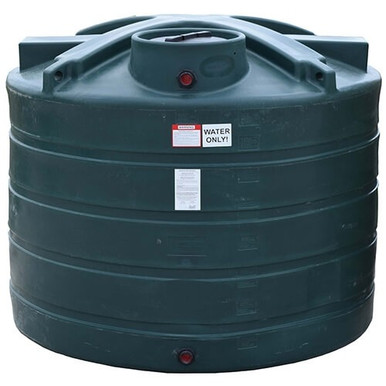
This example is at the upper end of polyethylene-tank applicability and would typically be served by a steel reservoir or by multiple polyethylene tanks manifolded together. A smaller light-hazard occupancy (e.g., 1500 sq ft at 0.10 gpm/sq ft density, 30 minute duration, 100 gpm inside hose) requires only 7,500 gallons, which fits comfortably within polyethylene-tank capacity ranges. The Snyder SII-5490000N42 1,550 gallon in 5-tank manifolds has been specified for this profile, as has the Norwesco N-40164 5,000 gallon single-tank or in pairs.
3. Why Polyethylene Earns a Role in Fire-Water Service
Steel tanks have been the default for fire-water service for a century. Polyethylene tanks earn a specific role despite the steel default for several reasons:
- Freeze tolerance. A polyethylene tank that freezes solid expands without splitting in most freezing scenarios; the polymer accommodates the ice expansion within the elastic limit. A steel tank that freezes solid splits the wall, and the post-thaw repair cost is substantial. In cold climates, polyethylene removes the freeze-induced wall failure mode.
- Corrosion immunity. Stagnant fire-water in a steel tank corrodes the wall over time; the corrosion product accumulates as scale at the suction strainer and degrades fire-pump performance during the rare actuation event. Polyethylene does not corrode in water service; the suction strainer stays clean.
- Lower installed cost at small capacity. A 5,000-gallon steel reservoir runs 12,000-25,000 dollars installed; the equivalent polyethylene tank runs 4,000-8,000 dollars installed (excluding tank-pad foundation, which is roughly equivalent). For sites with capacity under 10,000-12,000 gallons, polyethylene is the lower-cost option.
- Faster installation. A polyethylene tank ships complete from the factory; steel and concrete reservoirs are field-erected. A small-capacity fire-water installation can be operational in 1-2 weeks with polyethylene; the equivalent steel install is 6-12 weeks.
- UV-stabilized polymer for outdoor service. Modern polyethylene tank specifications include UV stabilizers that deliver 20+ year service life on outdoor water service. The wall does not crack from UV cycling on the timescale that the fire-water reservoir is expected to operate.
The trade-offs that limit polyethylene's role: capacity ceiling (above 15,000-20,000 gallons, polyethylene tank availability tapers), fire-rating limitations (a polyethylene tank exposed to direct flame impingement during the fire event itself can soften and lose containment, which is why polyethylene fire-water tanks are sited at distance from the protected occupancy or are below-grade buried), and limited recognition in some jurisdictions where the local AHJ has not approved polyethylene for the application.
4. Tank Siting and the Distance-from-Hazard Calculation
NFPA 22 §4.5 addresses tank siting relative to the protected occupancy. The intent is that the water supply must remain available even during the fire event; the tank cannot be in the area that the fire is consuming.
For polyethylene tanks specifically, the siting discipline is more conservative than for steel:
- Minimum 50-foot distance from any building or storage area that could become the fire source. The polyethylene wall starts to soften above approximately 200 degrees F, and a fire 50 feet away can produce radiant flux that exceeds the wall's thermal tolerance.
- Tank protected from radiant heat by site geometry, by intervening structure, or by a dedicated wetted-down zone. The site walk should consider sight-lines from likely fire scenarios to the tank.
- Fire-pump room separated from the tank by code-compliant distance and fire-rated construction. The pump house typically has a 1-hour or 2-hour fire-rated wall; the tank itself is not fire-rated and depends on distance.
- Underground burial as an alternative siting strategy. Buried polyethylene tanks (with appropriate burial-rated wall thickness) are immune to radiant heat from above-ground fires and meet most local AHJ acceptance.
- Insulated and weather-shield enclosure as another alternative. A tank house with insulated walls and freeze protection (covered in section 5) keeps the tank out of direct weather and provides modest fire-radiation shielding.
The siting decision affects the plumbing run from the tank to the fire pump or to the sprinkler riser. Long runs increase friction loss, which the fire pump must overcome; the pump sizing accounts for this. Long buried runs are typically acceptable up to a few hundred feet at modest pipe size; very long runs argue for a different siting or for a multi-tank distributed reservoir.
5. Freeze Protection in Cold-Climate Service
NFPA 22 §16 addresses freeze protection for water-storage tanks. The basic requirement: the water in the tank must not freeze to the extent that it cannot supply the fire-protection system on demand. The standard does not specify zero ice; it specifies enough liquid water available at the suction outlet to supply the design demand for the design duration.
The freeze-protection methods recognized by NFPA 22:
- Heated tank house. A weather-tight enclosure around the tank with electric or fuel-fired heating to maintain interior temperature above 40 degrees F. Cost: 10,000-30,000 dollars depending on tank size and climate. Highest reliability; recognized by all AHJs.
- Submerged heating elements (immersion heater). Electric heater elements in the tank, controlled by thermostat, maintain water temperature above 40 degrees F. Power consumption is significant; installation is straightforward. Cost: 1,500-5,000 dollars in heating hardware. Cost: hundreds to low thousands per year in electricity.
- Recirculation heating with external boiler. Pump tank water through a heat exchanger and back; boiler supplies heat. Used on larger reservoirs where in-tank heating is impractical. Higher capital cost; lower energy cost on natural-gas-served sites.
- Insulation plus burial. Buried tanks below the frost line (typically 36-48 inches below grade) stay above 40 degrees F naturally; insulation around the tank top and the riser piping completes the protection. Most cost-effective for new construction; expensive to retrofit.
- Heat tracing on suction piping with insulation. Self-regulating heat trace on the suction line, plus 2-4 inches of pipe insulation, prevents the suction line from freezing while the tank itself relies on its thermal mass. Combined with periodic recirculation (run the pump for 5 minutes per day), keeps the system operational. Cost: 500-2,000 dollars per 100 feet of pipe protected.
For polyethylene tanks specifically, the buried approach is often the most economical and reliable. Polyethylene tanks rated for burial are available in ASTM D1998 specification with appropriate wall thickness; the buried tank stays above freezing even in zone-7 USDA climates without active heating. The riser piping and any above-ground manifold needs separate freeze protection.
The Norwesco N-40635 3,000 gallon in vertical configuration is a common above-ground fire-water reservoir for small commercial sites; pair with an immersion heater and an insulated weather shield for cold-climate service. The Bushman BM-WW-1500-GL-NAT 1,500 gallon and BM-WW-1500-GL-BLK are alternatives in the same capacity range.
6. Tank-to-Pump Connection and NFPA 20 Suction-Side Discipline
The tank's role in the fire-protection system is to supply water to the fire pump (in pumped systems) or to the sprinkler riser (in gravity systems). The connection discipline:
For pumped systems, NFPA 20 §4.16 specifies the suction-side requirements. The fire pump suction line must:
- Be sized for at most 15 feet per second velocity at design flow (typically a 6-inch suction line for a 500 gpm pump).
- Slope continuously upward from the tank to the pump to prevent air pockets; minimum 1/4 inch per foot.
- Include a flexible connector to absorb pump vibration and prevent vibration transmission to the tank.
- Include a strainer at the tank end to capture debris before it reaches the pump impeller.
- Include a low-water cutoff or float switch that prevents pump-dry operation if the tank drops below the minimum suction-flooded level.
- Develop minimum NPSH-available equal to 1.5 times the pump's NPSH-required at design flow per NFPA 20 §4.16.10.2.
For polyethylene tanks, the suction outlet is typically a 4-inch or 6-inch threaded bulkhead at the lower sidewall. The bulkhead must be heat-traced or located inside the freeze-protected envelope. The transition from polyethylene bulkhead to steel pipe uses an insulating union (covered in our cathodic-protection article), and the steel suction line runs directly to the fire pump.
Gravity-feed systems are simpler but rarer because the elevation required to develop sprinkler-design pressure (typically 50-65 psi residual) is 115-150 feet of head, which most sites cannot accommodate. Gravity systems are typically used only for very-low-pressure standpipe applications or for booster-pump suction supply.
7. Maintenance and Inspection Cadence per NFPA 25
NFPA 25 §9.2 specifies the inspection, testing, and maintenance cadence for water-storage tanks in fire service. The applicable schedule for polyethylene tanks:
- Weekly water level check. Visual or remote level reading. Tank must be at the design fill level; under-fill is a code violation.
- Monthly check of heating system if installed. Verify the heater is operational; verify thermostat setting; verify temperature reading.
- Monthly check of tank exterior. Walk the tank and look for signs of leakage, structural deformation, or weather damage.
- Annual interior inspection. Drain the tank (or use boroscope through manway), inspect the interior for sediment accumulation, biological growth, and wall condition. Polyethylene tanks tend to accumulate less sediment than steel tanks because the smooth wall does not provide attachment sites for biofilm.
- Annual valve and trim test. Operate every isolation valve, every check valve, every drain valve. Frozen or stuck valves are a common reliability issue.
- Five-year integrity test. NFPA 25 §9.2.6 requires a hydrostatic or volumetric integrity test on a 5-year cycle. For polyethylene tanks the test is typically a 24-hour static-level monitor with documented start and end levels.
The maintenance log is the audit deliverable for insurance underwriting. A facility with a complete and current NFPA 25 log on its fire-water reservoir is treated favorably in property-insurance pricing; a facility with a lapsed or missing log faces premium adjustments and can lose coverage entirely.
8. Documentation and AHJ Approval
Local AHJ approval for a polyethylene fire-water reservoir is the gating step. The documentation package:
- Sprinkler hydraulic calculation per NFPA 13. Demand-times-duration determines the required reservoir volume.
- NFPA 22 compliance summary. Tank sizing, siting, freeze protection method, suction connection, integrity testing plan.
- Tank manufacturer documentation. ASTM D1998 compliance certificate, wall thickness specification, fitting materials, warranty.
- Site plan showing tank location, distance from buildings, distance from property lines, fire-truck access.
- Foundation engineering for tank pad. Bearing capacity calculation, freeze-heave resistance for cold climates.
- Piping plan showing suction line to fire pump or riser, all fittings, all isolation valves, freeze protection.
- Heating system specification if applicable. Heater capacity calculation against site climate data, control system, alarms.
- Maintenance plan referencing NFPA 25.
The AHJ approval timeline runs 4-12 weeks depending on jurisdiction complexity. The submission should be made before tank delivery; tanks installed without prior approval can be subject to removal-and-resubmission orders if any specification fails the AHJ review.
9. Brand-by-Brand Fire-Water Service Notes
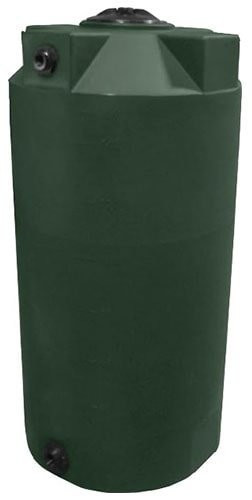
- Norwesco vertical for above-ground fire-water reservoir: standard polyethylene, UV-stabilized. Suitable for capacity 500-5,000 gallons. Reference: N-40635 3,000 gallon, N-40164 5,000 gallon, N-43128 10,000 gallon.
- Snyder Captor double-wall for fire-water in chemical-storage occupancies: double-wall geometry adds defense-in-depth that some AHJs prefer in mixed-use installations. Reference: SII-5490000N42 1,550 gallon.
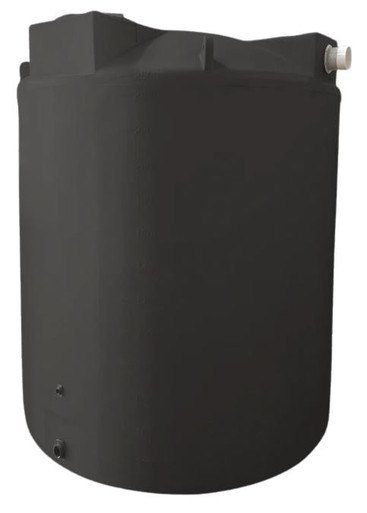
- Bushman water tanks for fire-water: dedicated water-service tank lines; UV-stabilized natural and pigmented options. Reference: BM-WW-1500-GL-NAT 1,500 gallon, BM-WW-1500-GL-BLK 1,500 gallon.
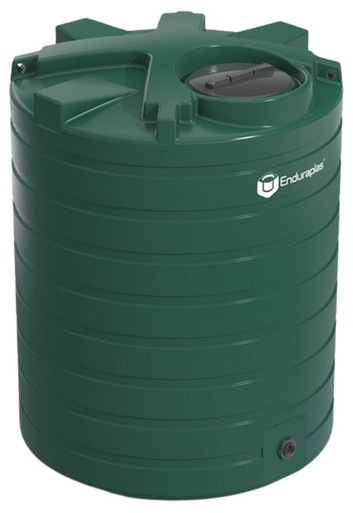
- Enduraplas vertical for industrial fire-water: larger-capacity polyethylene options where a single tank covers the demand. Reference: EP-THV02500FG 2,500 gallon.
- Chem-Tainer vertical for general fire-water: standard HDPE; quote pigmented for outdoor service to limit UV exposure. Reference: TC6446IA 500 gallon.
- Manifolded multi-tank arrays for capacity above single-tank availability: 2-4 tanks in parallel with a common manifold. Architecture follows our redundant-feed manifold pattern. Reference: N-40146 1,500 gallon in pairs or triples.
OneSource Plastics quotes complete fire-water reservoir packages including tank, foundation specification, freeze-protection package, suction-line piping, NFPA 22/25 documentation, and AHJ submission support. List pricing on a 5,000-gallon Norwesco above-ground fire-water reservoir with insulation and immersion heater runs $6,400 and up depending on configuration. LTL freight to your ZIP is quoted via the freight estimator or by phone at 866-418-1777.
For complementary reading, see our heat-trace and insulation cost-benefit for the climate-specific freeze-protection economics, and our tank-to-tank manifold engineering for the multi-tank manifold architecture used in larger fire-water installations.
Recommended Tanks for This Guide
Live pricing, updated automatically · estimate freight to your ZIP.