Tank Coating and Paint Specification: When to Coat HDPE Black vs White and Why
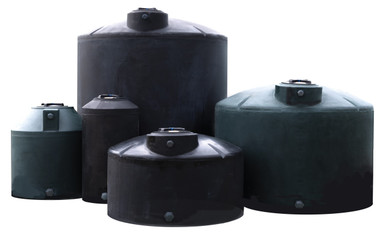
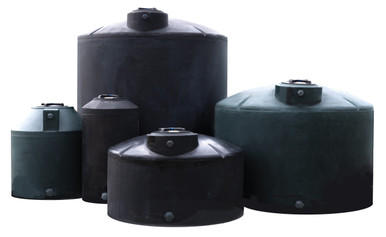
The coating and paint question on a polyethylene tank is asked from two directions. Some operators want to paint a white tank black to limit algae. Others want to paint a black tank white to limit thermal load. Some need a brand-color overlay for compliance reasons (red for fire suppression, yellow for caustic, green for ammonia under chemical-handling color codes). The instinct most installers reach for is a hardware-store latex or alkyd paint — and that decision destroys the tank's UV stabilizer system, voids the manufacturer warranty, and produces a mottled flaking finish inside 18 months.
This guide walks the actual coating decision: when to coat at all, what coatings adhere to polyethylene, what coatings DESTROY polyethylene, and what the warranty and safety implications are. We cite ASTM D1998, ASTM D7254 (resin testing), ASTM G154 / G155 (UV exposure), NSF/ANSI 61, FDA CFR 21 Part 177, OSHA color codes per 29 CFR 1910.144, and ANSI Z535. No fabrication.
The Polyethylene Surface Problem
Polyethylene is non-polar. Its surface energy is approximately 30-35 dynes/cm. For comparison, steel is 80-90 dynes/cm and concrete is 50-60 dynes/cm. Standard paints — latex, alkyd, oil-based, two-component epoxy — are formulated to wet surfaces with 50+ dynes/cm energy. They will NOT wet polyethylene.
The visible result: paint applied to a polyethylene tank wall puddles, beads, or flakes off within months. The non-visible result: even when the paint appears to adhere initially (some flexible elastomeric formulations achieve mechanical bond into surface texture), differential thermal expansion between the paint and the polyethylene shell produces stress cracking at the paint interface. Over 5-10 thermal cycles per year, the paint cracks. Through the cracks, UV reaches the underlying polyethylene. The original UV stabilizer system was matched to the original color formulation — it does NOT account for the additional photodegradation from cracked-paint UV channels.
The blunt summary: most tank coatings are wrong. The minority that work are very narrow specifications — flame-treated or corona-treated surface preparation, specific elastomeric or specialty coatings rated for polyethylene substrates, and chemical-resin-compatible products that do not destroy the tank's NSF/ANSI 61 or FDA potable status.
Why Tanks Come in Specific Colors From the Factory
Polyethylene tank manufacturers produce specific color formulations because color choice is a stabilizer engineering decision, not a marketing one. The pigment package and the UV stabilizer package work together.
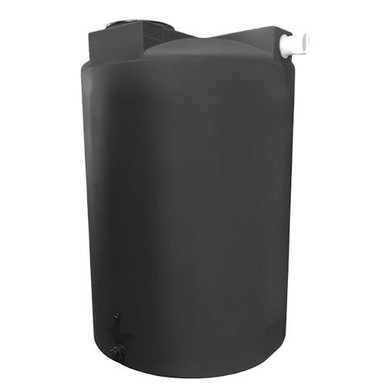
Black Tanks (Carbon Black Pigmentation)
Black polyethylene tanks like the Norwesco MPN 41504 (1500-gallon natural-white vertical, $1,389 list — note this is the natural-white version; black variants in the same Norwesco vertical line are also produced) and the Bushman WW-1500-GL-NAT class (note the natural color variant; black variants exist) carry carbon black pigment at typically 2-3% by weight. Carbon black is the single most effective UV stabilizer known for polyethylene. It absorbs UV at the surface and prevents penetration into the bulk polymer.
- Service life advantage: 25-30+ year UV resistance vs 15-20 year for white tanks in equivalent exposure
- Algae prevention: blocks visible light penetration; prevents photosynthesis-driven biofilm growth inside
- Thermal absorption: the obvious downside — outer wall surface temps reach 140-160°F in direct sun in southern states
- Use case: outdoor water storage, aboveground rainwater capture, agricultural fluid storage where UV stability matters more than thermal
White / Natural Tanks (Translucent or Opaque White Pigmentation)
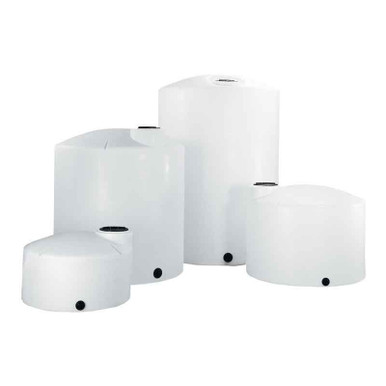
White polyethylene tanks like the Norwesco 41464-class (100 gallon vertical white, $319.99-393.86 list) and the Snyder Industries WB46/WB47 1500-gallon class (representative natural variants in the same line, $1,540 list) carry titanium dioxide (TiO2) pigment with hindered amine light stabilizer (HALS) UV stabilizer package. TiO2 reflects visible light; HALS scavenges free radicals from UV-initiated polymer degradation.
- Thermal advantage: reflects ~80% of incident solar; outer wall stays within 10-20°F of ambient
- Visible level indication: translucent versions allow seeing fluid level through the wall (NOT FDA-approved versions — see chemical service note below)
- UV service life: 15-20 year typical service life vs 25-30 for black, dependent on geographic UV exposure
- Algae growth: translucent tanks in sunlight grow algae unless the contents are biocide-treated or the tank is shaded; opaque white blocks light better than translucent
- Use case: chemical storage requiring visible level, NSF-rated potable water indoor or shaded, FDA food-grade process
Other Colors
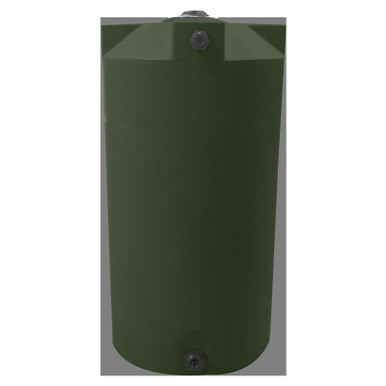
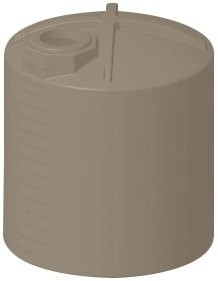
Green tanks (often used for agricultural applications), blue (water service in some markets), tan/mocha (architectural), red (fire suppression), and yellow (warning/hazard) all use specific pigment + stabilizer combinations matched to their target service life. The pigment is COMPOUNDED into the resin during the rotational molding process — it is not a coating, it is a structural feature of the tank.
The Three Categories of Tank Coating
Category 1: Functional Color Change (Almost Always a Bad Idea)
An operator who installs a translucent white tank and discovers algae growth after 6 months wants to paint it black. An operator who installs a black tank in Phoenix and discovers fluid temperatures reaching 110°F wants to paint it white. Both are trying to reverse a factory decision that was wrong for their site.
The right answer is replace the tank with the correct color from the factory, not coat the existing tank. Cost differential between black and white tanks of the same size is typically under 10% of tank list price, and the factory tank carries full warranty. Coating the wrong tank delivers 3-5 years of acceptable performance and then peeling failure plus warranty void.
If replacement is not feasible, opaque white shade screening (commercial shade structure, fabric mesh) over a translucent tank stops algae more reliably than paint. White-on-black coating to reduce thermal load similarly works better as a shade structure or reflective screen separated from the tank wall by air gap.
Category 2: Compliance Color Marking (OSHA / ANSI Z535 / Chemical Color Coding)
OSHA 29 CFR 1910.144 specifies safety color marking — red for fire-protection equipment, yellow for caution / physical hazards, orange for guarding, green for safety, blue for caution against energizing equipment. ANSI Z535 expands this for hazard signage. Tank-specific color coding (red for fire suppression water, yellow for caustic, etc.) is industry practice but not federally mandated for the tank itself.
For COMPLIANCE color marking, the right approach is signage and banding, not full-tank coating:
- Adhesive identification labels: 4-inch × 12-inch ANSI Z535-compliant labels at eye-level, 3M IJ180 or equivalent acrylic adhesive on properly cleaned PE surface
- Vinyl banding: 12-inch wide pressure-sensitive vinyl band around tank circumference at marking height; corona-treated or flame-treated polyethylene wall accepts this far better than paint
- Color-band stripes: 4-inch high colored stripes via vinyl banding at hazard intervals matching ANSI Z535-1 color significance
Vinyl banding is mechanically attached and uses pressure-sensitive acrylic adhesive engineered for olefin substrates. Service life on UV-exposed polyethylene exterior is 5-10 years before fading or peeling. Replacement is straightforward.
Category 3: Coating for Specific Service Reasons (Rare and Specialty)
The rare legitimate coating applications:
- Anti-graffiti coating: for tanks at public-facing sites. Specialty fluoropolymer coating with documented PE adhesion (verify against manufacturer technical data; typically requires corona-treatment or chemical-etch surface preparation).
- Frost / icing reduction: proprietary specialty coatings for water-tower-class polyethylene tanks in freezing climates. Rare; usually addressed by tank insulation or heat tracing per Tank Heat Trace + Insulation Cost-Benefit.
- Thermal-reflective coating: aluminum-pigmented specialty coatings, marine-grade. Documented as PE-compatible by specific manufacturers; do NOT extrapolate from generic aluminum paint.
For ALL three of these categories, the specification is:
- Manufacturer of coating provides written documentation of polyethylene compatibility
- Surface preparation (corona, flame, plasma, or chemical etch) per coating manufacturer specification
- Test patch on the tank, allow 90-day weathering exposure, evaluate adhesion (ASTM D3359 cross-cut or ASTM D4541 pull-off) before full application
- Tank manufacturer's warranty position confirmed in writing — most warranty positions exclude coated tanks unless coating is from an approved supplier and applied per approved specification
Coatings That Will Destroy Your Tank
Solvent-Based Paints (Alkyd, Lacquer, Oil-Based)
The solvent in oil-based paints (mineral spirits, xylene, MEK in the lacquer base) IS a chemical attack on polyethylene. Polyethylene swells in contact with these solvents, the surface stress-cracks, and the paint produces a permanent damage layer in the underlying polymer. Even when the paint is removed, the damage remains. NEVER use oil-based, alkyd, lacquer, or solvent-thinned paint on polyethylene.
Two-Component Epoxy on Bare Polyethylene
Epoxy formulations adhere to clean steel and concrete excellently. They do NOT adhere to polyethylene without surface treatment, and even with treatment, the epoxy's rigid cured film does not match polyethylene's coefficient of thermal expansion (CTE). Polyethylene CTE is approximately 100 × 10^-6 / °C; cured epoxy is 30-50 × 10^-6 / °C. Differential expansion produces interface cracking inside the first thermal cycle from -10°F to 100°F.
Polyurethane Top-Coat Without Compatible Primer
Same CTE mismatch problem as epoxy. Polyurethane is more flexible than epoxy but still hardens beyond what polyethylene tolerates over thermal cycles.
Latex / Acrylic Water-Based on Untreated Polyethylene
Latex paint dries by water evaporation, leaving an acrylic film. The film cannot wet the low-energy polyethylene surface. Within 1-3 months of service the film flakes off in sheets. The paint manufacturer's specification sheets often explicitly exclude polyethylene as an acceptable substrate.
Generic Spray Paint (Auto Body, Hardware Store Aerosol)
Same problem as alkyd. Solvent base attacks polyethylene; non-solvent base doesn't adhere. Either way, failure inside one season.
If You Must Coat: The Right Specification
If business requirements force a tank coating despite all of the above, the specification that has the best chance of succeeding:
- Substrate prep: degrease with isopropyl alcohol; corona discharge treatment OR flame treatment to lift surface energy from 30 dynes/cm to 50+ dynes/cm. (Industrial corona treatment is the controlled version; flame treatment using propane torch in carefully measured exposure produces similar surface activation. Both raise surface energy temporarily — the coating must be applied within hours of treatment before surface relaxes.)
- Primer: chlorinated polyolefin primer specifically formulated for low-surface-energy substrates. 3M, Bondloc, and specialty marine and aerospace coating manufacturers produce these; verify by chemical SDS that the primer is documented for PE substrates.
- Topcoat: elastomeric polyurethane or specialty polyolefin-bonding system. The topcoat must cure to a flexible film that can absorb thermal cycle stress without cracking.
- Test: 12-inch × 12-inch test patch, 90-day exposure (180 days in high-UV regions), tape-off cross-cut adhesion test per ASTM D3359 before full-tank application.
The total system cost typically $40-80/sq ft applied. For a 1500-gallon tank with ~40 sq ft external surface, that's $1,600-3,200 in coating cost — often more than the tank itself. This is why "just paint it" almost never makes economic sense vs replacing the tank with the correct factory color.
Color Decision Matrix
| Service / location | Recommended color | Why |
|---|---|---|
| Outdoor potable water, southern states | Black | Algae prevention; UV resistance dominates over thermal |
| Outdoor potable water, northern states | Black or dark green | UV resistance; thermal less critical in northern latitudes |
| DEF (urea solution) | Opaque white or natural | DEF degrades above 86°F; thermal management priority |
| Sodium hypochlorite (bleach) | Opaque white | NaOCl decomposes with UV exposure; black absorbs heat that accelerates decomposition; opaque white reflects light AND blocks UV penetration to fluid |
| Caustic (NaOH 50%) | Natural / translucent (level visibility) | No UV degradation; visible level is operational priority |
| Sulfuric acid 93% | Natural / translucent | High specific gravity (1.84) requires fitting-quality monitoring |
| Indoor process / building-protected | White or natural | No UV exposure; thermal a non-issue indoors |
| Agricultural — fertilizer / herbicide | Black or dark green | Outdoor UV stability dominates; thermal excursion of fertilizers tolerable |
| Fire suppression water reserve | Red (factory-pigmented) | NFPA color coding for fire equipment; specify red from factory not coating |
| Public-facing or aesthetic location | Mocha, tan, dark green factory pigmentation | Architectural matching from factory beats post-applied paint |
NSF and FDA Implications
NSF/ANSI 61 (Drinking Water System Components) certifies polyethylene tanks for potable water service based on the resin formulation INCLUDING pigment and stabilizer. A coated tank is NOT NSF-certified — the coating is a non-certified material in the wetted environment if the coating is on the interior, and even exterior coatings can affect certification status because the certification testing was done on the original surface chemistry.
FDA 21 CFR Part 177 (Indirect Food Additives — Polymers) similarly addresses food-grade polyethylene. Coatings break the FDA-compliant material chain.
For potable water, food-grade, or FDA-regulated service, coating the tank voids the certification. Replacement with the correct factory product is the only compliant option.
Common Coating Mistakes
Mistake 1: Painting a translucent tank black to stop algae
Paint flakes within a year. Algae returns. Tank now has UV-damaged surface under the flaking paint. Replacement with opaque or carbon-black factory tank is the correct solution.
Mistake 2: Hardware-store spray paint for color marking
Looks fine for 6 months, peels for the next 3 years. Use ANSI Z535 vinyl bands or pressure-sensitive labels.
Mistake 3: Two-component epoxy on bare PE
Cross-hatch test fails inside 30 days from thermal cycling. Even successful initial application produces interface cracking that admits UV.
Mistake 4: Coating a tank still under warranty without warranty validation
Most polyethylene tank warranties (Norwesco, Snyder, Chem-Tainer, Bushman, Enduraplas) explicitly exclude coatings or modifications. Coating voids the warranty before the work is complete. Validate warranty position in writing first.
Mistake 5: Coating interior surface for "chemical resistance"
Interior coatings on polyethylene tank are nearly always wrong. The polyethylene itself IS the chemical-resistant surface. Coating it adds a non-tested material in the wetted environment, contaminates the chemistry, and may not even be chemistry-compatible itself. The correct approach is select the right resin (HDPE, XLPE, modified polyolefin) for the service per Polymer Selection, not coat HDPE to handle chemistry.
Mistake 6: Mismatched paint to the warranty / certification
Generic "exterior-grade" paint with no manufacturer documentation of polyethylene compatibility. Within 1-3 years the paint fails, the tank's UV stabilizer system is compromised, AND the warranty no longer applies. Triple loss.
Mistake 7: Skipping surface prep on legitimate coating
Even a chlorinated-polyolefin primer engineered for polyethylene fails without proper surface activation. Corona, flame, or chemical etch is required. Contractor who says "just clean it and paint it" doesn't understand the substrate.
Bottom Line
The right coating decision for 95% of polyethylene tank installations is: don't coat. Specify the correct factory color the first time. Use vinyl banding for compliance marking. Accept the trade-off between UV stability (black) and thermal absorption (white) at specification time, not after install.
For the 5% where coating is justified, use only manufacturer-documented PE-compatible coating systems with proper surface prep, validated test patches, and warranty position confirmed in writing.
For the algae or thermal-load problem, the right answer is shade structure or correct factory color — not paint.
Internal Resources
- Tank Color Selection by Use Case
- UV Degradation: 30-Year Service Curve
- Polymer Selection: HDPE vs XLPE
- Tank Heat Trace + Insulation
- Sodium Hypochlorite Storage
- DEF Storage
- Freight Cost Estimator
- Contact OneSource
Source Citations
- ASTM D1998 — Standard Specification for Polyethylene Upright Storage Tanks
- ASTM D7254 — Standard Test Method for Determining the Volatile Content of Polyethylene Resins (resin testing)
- ASTM G154 — Standard Practice for Operating Fluorescent Ultraviolet (UV) Lamp Apparatus for Exposure of Materials
- ASTM G155 — Standard Practice for Operating Xenon Arc Lamp Apparatus for Exposure of Materials
- ASTM D3359 — Standard Test Methods for Rating Adhesion by Tape Test
- ASTM D4541 — Standard Test Method for Pull-Off Strength of Coatings Using Portable Adhesion Testers
- NSF/ANSI 61 — Drinking Water System Components, Health Effects
- FDA 21 CFR Part 177 — Indirect Food Additives, Polymers
- OSHA 29 CFR 1910.144 — Safety Color Code for Marking Physical Hazards
- ANSI Z535-1 — Safety Color Code (color significance for warning, danger, caution)
- ANSI Z535-2 — Environmental and Facility Safety Signs
- NFPA 30 — Flammable and Combustible Liquids Code (color marking for fire equipment)
- OneSource Plastics master catalog data — 9,419 products, 2026-03-26 snapshot
Recommended Tanks for This Guide
Live pricing, updated automatically · estimate freight to your ZIP.