Tank Foam Insulation vs Rigid Board vs Spray Engineering: R-Value vs Cost vs Service Life
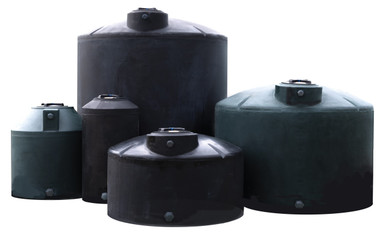
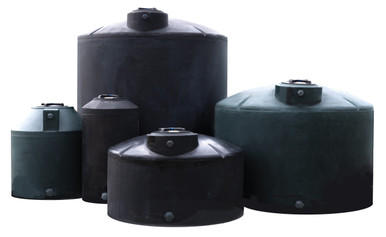
The insulation question on a stationary polyethylene tank rarely starts with R-value. It starts with the operator who walks out one February morning, finds a 2,500-gallon HDPE tank with a frozen pipe at the bulkhead, and decides "we're insulating that thing this spring." Two months later the quote comes back at $0.85 per board-foot for rigid foam, $1.10 for sprayed-in-place polyurethane, and $0.55 for bonded-blanket fiberglass with a vinyl jacket. Which one wins depends on far more than the first-year price-per-foot. R-value retention curve, water-vapor permeance, sun exposure, mechanical impact zone, and 20-year service life cost all enter the math before the right answer surfaces.
This guide walks the three insulation systems side-by-side using ASTM C518, ASTM C1029, ASTM C1289, ASTM C1149, and IECC 2021 references, then maps each to the tank service patterns OneSource Plastics ships into: bulk water reserves, chemistry storage, DEF, fertilizer solution, hot-water process, and cold-climate frost-protection scenarios. The output is a real R-value-per-dollar-per-year comparison instead of a sales-sheet quote.
The Three Insulation Systems
System 1: Rigid Board (XPS, EPS, Polyiso)
Rigid foam board is precut panels of extruded polystyrene (XPS), expanded polystyrene (EPS), or polyisocyanurate (polyiso) that are mechanically banded or adhesive-mounted to the tank shell, then jacketed in aluminum, stainless, or PVC. The pieces are cut to fit the tank curvature; gaps are foamed-in-place with low-expansion polyurethane.
- R-value per inch (per ASTM C518 at 75 F mean temp): XPS 5.0, EPS 3.6-4.2, polyiso 6.0-6.5 (initial) declining to 5.0-5.5 at 5+ years (LTTR per ASTM C1289).
- Density: XPS 1.3-2.5 lb/ft3, EPS 1.0-2.0 lb/ft3, polyiso 2.0 lb/ft3.
- Vapor permeance: XPS 0.4-1.5 perms, EPS 1.0-3.5 perms (vapor-permeable in real conditions), polyiso 0.03-0.4 perms with foil facing.
- Service temp: XPS -100 F to 165 F; EPS -100 F to 165 F; polyiso -100 F to 250 F (better for hot service).
- Compressive strength: XPS 25-100 psi, EPS 10-60 psi, polyiso 25 psi.
- Cost per board-foot installed (jacketed, 2026 USD): $0.65-$1.20 depending on thickness and jacket spec.
Rigid board is the Swiss-army option: any tank curvature, any climate, easily field-modified, and replaceable in sections. Jacket integrity is the failure mode — once water gets behind the jacket, fiberglass-faced boards wick water, R-value crashes, and the metal jacket corrodes from the inside out.
System 2: Spray-Applied Polyurethane Foam (SPF)
SPF is a two-component (isocyanate plus polyol) liquid sprayed onto the tank shell where it expands in seconds into a closed-cell foam that bonds molecularly to the polyethylene surface (with proper primer). The foam is then UV-protected with elastomeric coating (silicone, polyurea, or acrylic) or a metal/PVC jacket.
- R-value per inch (per ASTM C518 / C1029): Closed-cell SPF 6.0-7.0 initial, 5.5-6.5 LTTR at 5 years; open-cell SPF 3.5-4.0 (rarely specified for tanks).
- Density: Closed-cell 2.0-3.0 lb/ft3; open-cell 0.5 lb/ft3.
- Vapor permeance: Closed-cell 1-2 perms at 1 inch, dropping to under 1 perm at 2+ inches; open-cell 10+ perms (vapor-open).
- Service temp: -200 F to 200 F continuous (closed-cell).
- Compressive strength: Closed-cell 25-40 psi; open-cell 4 psi.
- Cost per board-foot installed (with elastomeric topcoat, 2026 USD): $0.95-$1.45.
SPF eliminates seams. There are no panel joints to leak, no bands to slip, no jacket fasteners to corrode. A properly sprayed and topcoated tank looks monolithic and stays that way for 15-25 years if the topcoat is renewed on schedule. The downside is install: weather-window dependency (60-95 F surface temp; under 80 percent RH; no rain in 24 hours), trained applicators required, and the surface prep on polyethylene is critical because PE is intrinsically low-surface-energy and won't bond without flame, plasma, or specialty primer treatment.
System 3: Engineered Insulation Wrap / Blanket
The third system is fiberglass or mineral-wool batt in a foil or vinyl jacket, banded to the tank, or a flexible elastomeric foam (closed-cell EPDM/NBR rubber, e.g. Armaflex or K-Flex class) glued and seamed. This is the "tarp method's" engineered cousin — quick, removable, repairable.
- R-value per inch: Fiberglass batt 3.1-3.7; mineral wool 3.7-4.3; closed-cell elastomeric foam 3.3-3.6.
- Vapor permeance: Foil-jacketed fiberglass under 0.05 perms (vapor-tight); elastomeric foam under 0.10 perms.
- Service temp: Fiberglass 20 F to 450 F; elastomeric foam -297 F to 220 F (excellent cold service).
- Cost per board-foot installed: Fiberglass blanket $0.45-$0.75; elastomeric foam $1.20-$1.80 (highest material cost but lowest install labor).
Wrap and blanket systems shine for retrofits, removable inspection access, and tanks that get relocated. The fiberglass jacket fails first in UV-exposed installs (vinyl chalking, foil tearing); under cover or behind a metal building wall, it lasts indefinitely.
Side-by-Side Comparison Table
| Property | Rigid XPS Board | Rigid Polyiso Board | Closed-cell SPF | Fiberglass Blanket | Elastomeric Foam |
|---|---|---|---|---|---|
| R-value/inch (ASTM C518) | 5.0 | 5.5 LTTR | 6.5 LTTR | 3.4 | 3.5 |
| Vapor perm | ~1 perm | <0.4 perms | <1 perm at 2" | <0.05 perms (foil) | <0.10 perms |
| Service temp range | -100 to 165 F | -100 to 250 F | -200 to 200 F | 20 to 450 F | -297 to 220 F |
| Install $/bd-ft (jacketed) | $0.85 | $1.05 | $1.20 | $0.55 | $1.50 |
| Service life (proper jacket) | 15-20 yr | 15-20 yr | 20-25 yr | 10-15 yr | 15-20 yr |
| Field repair difficulty | Easy (re-cut panel) | Easy | Moderate (spray patch) | Easy (rewrap) | Moderate (glue+seam) |
| UV durability bare | Fails <6 months | Fails <6 months | Fails <1 year | Fails <3 years | Fails <1 year |
The Real R-Value Question: LTTR and Aged Performance
Manufacturer R-value claims are measured per ASTM C518 at 75 F mean temperature, fresh out of the package. This is fair for fiberglass and for closed-cell foams that don't out-gas. It is misleading for polyiso and SPF because the cell-gas (HFC, hydrofluoroolefin, or pentane) diffuses out over the first 1-5 years, replaced by air. R-value drops correspondingly. ASTM C1289 mandates Long Term Thermal Resistance (LTTR) reporting for polyiso; SPF manufacturers report initial and aged values per ASTM C1029.
Real-world: a freshly-installed 4-inch polyiso board reads R-26. After 5 years in a -10 F to 95 F service cycle, it reads R-22. A 4-inch closed-cell SPF reads R-28 fresh, R-24 at 5 years, and stays at R-22 indefinitely thereafter. Fiberglass and XPS are stable — what you measure on day-one is what you have on year-twenty (assuming no moisture infiltration).
For the operator, this means: polyiso wins on label R-value but tied with XPS on 10-year average performance. SPF wins overall on aged R-value but only if topcoat integrity is maintained. Fiberglass loses on R-value-per-inch but its R-value never declines.
Application Decision Matrix by Tank Service
Bulk Water Storage (Norwesco / Snyder vertical, 1,000-10,000 gal)
Service temp 35-90 F; freeze protection is the only thermal driver; no chemistry exposure; outdoor install in IECC zones 4-7.
- Recommended: 2-3 inch closed-cell SPF with elastomeric topcoat, OR 2-inch polyiso rigid with aluminum jacket.
- Why: single-skin, monolithic finish minimizes ice-bridging at penetrations. SPF is the gold-standard for cold-climate water tanks because the foam-to-PE bond eliminates condensation behind insulation.
- Avoid: bare fiberglass blanket (UV-fails, wicks water, ice-bridges at seams).
Chemistry Storage (Snyder XLPE / Chem-Tainer XLPE, sodium hypochlorite, sulfuric, caustic)
Service temp 40-110 F; condensation control matters more than R-value; chemistry vapor at sun-warmed surface drives expansion and potential pressure events.
- Recommended: 1.5-inch elastomeric closed-cell rubber foam OR 2-inch foil-faced polyiso with PVC jacket.
- Why: low vapor perm prevents in-wall condensation; UV-resistant jacket prevents bleach degradation of foam; field-replaceable panels simplify repair if a chemistry leak penetrates the jacket.
- Avoid: raw SPF without UV topcoat near vent stacks or PRV outlets — UV plus chemistry vapor degrades SPF rapidly.
DEF Storage (ISO 22241 service, 12-100 F retention)
DEF freezes at 12 F and degrades above 86 F; the tank wants both insulation and active heat trace in cold climates and reflective shading in hot climates.
- Recommended: 1.5-inch elastomeric closed-cell foam with white UV-resistant jacket on top. Heat trace cable directly on tank shell, then insulation over.
- Why: elastomeric foam is the standard insulation for refrigerant lines (-40 F service), bonds well to PE, accommodates heat trace pass-through, and the white jacket reflects summer sun to keep DEF below the 86 F degradation threshold.
- Avoid: SPF on a tank that may need to be cleaned of DEF crystallization — SPF is permanent; you can't remove it for tank-shell access.
Hot-Water / Process-Heat Tanks (140-200 F service)
Material limits drive the choice: HDPE softens above 140 F so most hot-water tanks are XLPE or polypropylene; insulation must withstand surface temp and not transfer heat to occupied space.
- Recommended: 3-4 inch polyiso rigid with stainless or aluminum jacket; OR 3-inch SPF where seamless finish matters.
- Why: polyiso service temp ceiling (250 F) handles hot tank surfaces; rigid construction allows higher-density jacket needed near steam lines and process valves.
- Avoid: XPS (165 F service ceiling fails near outlet bulkheads at 180 F process water) and elastomeric rubber foam near 220 F surfaces.
Cold-Climate Frost Protection (IECC zones 6-8, agricultural and rural water)
Zone 7 and 8 see -30 F design temps; an uninsulated outdoor 2,500 gal water tank loses 12,000 BTU/hr at -10 F outdoor and 35 F water. Insulation alone slows the loss; insulation + heat trace is the engineered answer.
- Recommended: 3-4 inch closed-cell SPF with self-regulating heat trace (5-10 W/ft) on tank shell beneath foam, controlled by ambient thermostat.
- Why: SPF's seamless, vapor-tight envelope works with heat trace to maintain 40-50 F tank temp through Zone 8 winters at lowest annual energy cost. Polyiso rigid is acceptable substitute at 80-90 percent of SPF performance and 75 percent of cost.
20-Year Cost-of-Ownership Math
Comparing on year-one install cost is the wrong question. The right question is total $/year over 20-year service life, including jacket replacement, R-value decay, and energy savings vs uninsulated baseline. For a 2,500-gallon vertical tank with ~250 ft2 of insulated surface area, IECC zone 6:
| System | Day-1 cost | Mid-life refurb | Energy save vs bare | 20-yr total |
|---|---|---|---|---|
| 3" SPF + elastomeric topcoat | $3,200 | $800 (re-topcoat yr 10) | $280/yr | ~$5,600 net (-$1,600 vs bare) |
| 3" Polyiso + aluminum jacket | $2,650 | $400 (re-flash, replace 1-2 panels yr 12) | $255/yr | ~$5,150 net (-$2,150 vs bare) |
| 3" XPS + PVC jacket | $2,200 | $600 (jacket replacement yr 8 in UV) | $235/yr | ~$4,500 net (-$2,500 vs bare) |
| 2" Fiberglass blanket + foil | $1,400 | $1,000 (full re-wrap yr 10) | $160/yr | ~$2,800 net (-$400 vs bare) |
| No insulation (heat trace only) | $700 | $0 | ($600/yr extra heat) | ~$13,700 (energy-loss cost) |
The 20-year math reveals what the day-one quote hides: cheap fiberglass requires complete re-wrap mid-life, eroding its cost advantage. SPF and polyiso are the value plays once you carry a 20-year horizon. Bare-with-heat-trace is the budget trap — heat trace is cheap to install but the operating cost compounds annually.
Common Insulation Mistakes
Mistake 1: Ignoring vapor drive direction
In a heated tank in cold climate, vapor moves from inside to outside. The vapor barrier (foil, jacket) belongs on the warm side. Reverse the layering and you trap moisture in the foam, kill the R-value, and rot the jacket from the inside. ASTM C1136 covers facing materials; IECC 2021 Table R702.7 codifies vapor-retarder placement by zone.
Mistake 2: Not flame-treating PE before SPF
Polyethylene's surface energy (~32 dyne/cm) is below the threshold for adhesion of most coatings (~40 dyne/cm minimum). Flame treatment, corona treatment, or specialty primer (e.g. 3M Scotch-Weld AP-115) raises the surface energy long enough for SPF to bond. Skip this step and the SPF peels off the tank in 2-3 years.
Mistake 3: Insulating the bulkhead but not the pipe stub
Frost migrates along uninsulated metallic pipe stubs faster than through 4 inches of insulated tank wall. Insulate the first 36-48 inches of every penetration outboard of the tank shell, with continuous coverage to the next valve or wall penetration.
Mistake 4: Over-spec'ing R-value where heat-source is the bottleneck
R-30 insulation around a 50-watt heat trace is wasted material; the bottleneck is BTU input, not BTU loss. Match R-value to heat-trace wattage; common practice is R-15 to R-20 around 5 W/ft trace, R-25 to R-30 around 10 W/ft trace.
Mistake 5: Using bonded-blanket where chemistry vapor exposure is real
Sodium hypochlorite vapor degrades fiberglass binder rapidly; sulfuric vapor degrades vinyl jackets; ammonia vapor swells elastomeric foam. Match the insulation chemistry to the tank vapor environment, especially around vents and PRVs.
Mistake 6: Not engineering jacket fastener pattern for wind
An aluminum jacket on a 12-foot-diameter tank in ASCE 7 wind zone D-E catches 30+ psf wind pressure. Jacket banding and fasteners need engineered spec (typically 12-inch on-center 304 stainless bands, 6-inch on-center fasteners at seam joints). Cheap installations use 24-inch on-center bands and the jacket peels in the first hurricane.
Mistake 7: Insulating around an unfunctional vent
Insulation forces the operator to lose visual contact with the vent. Verify the vent is correctly sized and operational BEFORE insulating; once buried in foam, troubleshooting an undersized vent requires destruction and rebuild.
Quick-Pick Reference
| Service profile | Recommended system | Thickness |
|---|---|---|
| Outdoor water (zone 4-5) | 2" polyiso + Al jacket | 2" |
| Outdoor water (zone 6-8) | 3" SPF + elastomeric topcoat + heat trace | 3" |
| Sodium hypochlorite | 2" foil-faced polyiso + PVC jacket | 2" |
| Sulfuric / caustic | 1.5" elastomeric foam + chem-resistant topcoat | 1.5" |
| DEF | 1.5" elastomeric + white jacket + heat trace | 1.5" |
| Hot process (140-200 F) | 3" polyiso + stainless jacket | 3-4" |
| Indoor mechanical room | 2" fiberglass blanket + foil | 2" |
| Removable inspection access | Snap-on elastomeric foam | 1.5-2" |
Internal Resources
- Tank Insulation R-Value vs Climate Zone
- Tank Heat Trace + Insulation Cost-Benefit by Climate Zone
- Cold Climate Tank Field Performance HDPE vs XLPE
- Tank Operating Temperature Engineering
- Hot-Water Storage Temperature Engineering
- Tank Weather Protection Comparison
- Freight Cost Estimator
- Contact OneSource
Source Citations
- ASTM C518 - Standard Test Method for Steady-State Thermal Transmission Properties by Heat Flow Meter Apparatus
- ASTM C1029 - Standard Specification for Spray-Applied Rigid Cellular Polyurethane Thermal Insulation
- ASTM C1289 - Standard Specification for Faced Rigid Cellular Polyisocyanurate Thermal Insulation Board (LTTR reporting)
- ASTM C1149 - Standard Specification for Self-Supported Spray Applied Cellulosic Thermal Insulation
- ASTM C1136 - Standard Specification for Flexible, Low Permeability Vapor Retarders for Thermal Insulation
- ASTM E96 - Standard Test Methods for Water Vapor Transmission of Materials
- IECC 2021 - International Energy Conservation Code, Section R402 / R702 (vapor retarder placement by climate zone)
- NFPA 285 - Standard Fire Test Method for Evaluation of Fire Propagation Characteristics of Exterior Wall Assemblies (foam plastic insulation in commercial walls)
- SPFA AY-102 - Spray Polyurethane Foam Alliance, Polyurethane Foam Application Best-Practice Guide
Recommended Tanks for This Guide
Live pricing, updated automatically · estimate freight to your ZIP.