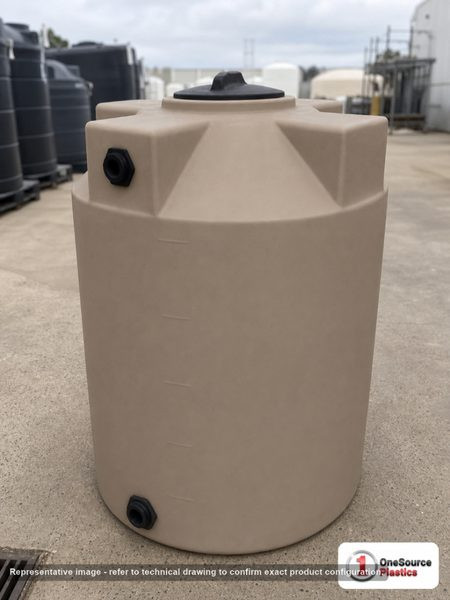
Tank Modular Tank Farm Design: 4-Tank vs 8-Tank vs 16-Tank Berm + Plumbing Engineering
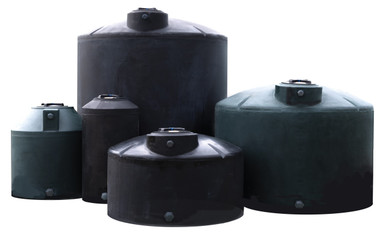
A single tank is a tank. Two tanks become a manifold. Four tanks plus a containment berm and a common plumbing header become a tank farm. The transition from "tanks at a site" to "engineered tank farm" happens at roughly the four-tank threshold, where berm sizing, common-spill containment, manifold routing, and operator-access geometry start dictating layout. This guide walks the engineering of three common scales: the 4-tank farm (small process / chemistry hub), the 8-tank farm (mid-sized treatment plant), and the 16-tank farm (large industrial / municipal scale). Each tier has distinct design rules. Get the layout wrong and you spend the next 25 years working around bad geometry.
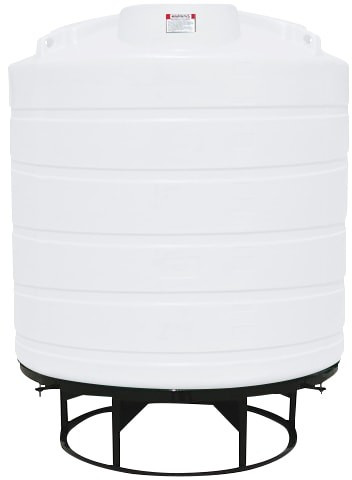
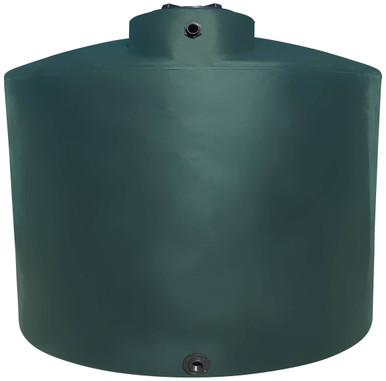
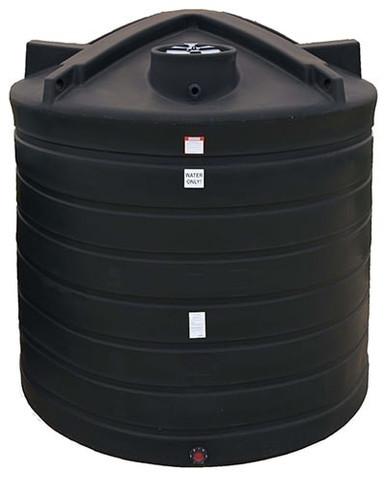
OneSource Plastics ships the polyethylene tanks (Norwesco, Snyder, Chem-Tainer, Enduraplas, Bushman) that populate most modular farms; Specialty & Metal Fabrication partners handle the FRP, lined-steel, and stainless tanks that show up in higher-temperature or aggressive chemistry installs. The plumbing, berm, and operator-deck engineering happens in concert with the tank choice.
The Three Standard Scales
4-Tank Farm: small process or chemistry hub
Typical capacity: 4 x 1,000-2,500 gallon HDPE/XLPE verticals = 4,000-10,000 gallons aggregate. Use cases: small water-treatment chemical-feed (acid + caustic + polymer + hypochlorite), industrial fluid management (coolant + lubricant + cleaning solution + waste), agricultural fertilizer blend (nitrogen + phosphorus + potassium + micronutrient), small-shop fuel and petroleum service (diesel + def + waste oil + new oil).
8-Tank Farm: mid-sized treatment plant or process facility
Typical capacity: 8 x 2,500-6,000 gallon = 20,000-48,000 gallons aggregate. Use cases: municipal water treatment (multiple chemistry feeds with bulk receiving), wastewater pretreatment 40 CFR 403 compliance, electroplating chemistry distribution, dairy/food CIP chemistry storage, mid-size agricultural fertilizer co-op.
16-Tank Farm: large industrial or municipal-scale
Typical capacity: 16 x 5,000-15,000 gallon = 80,000-240,000 gallons aggregate. Use cases: large municipal water plant, regional fertilizer distribution, industrial wastewater plant, chemical distribution warehouse, oilfield brine and produced-water handling.
Design Driver 1: Containment Berm Sizing
EPA 40 CFR 112 (Spill Prevention, Control, and Countermeasure or SPCC) requires secondary containment of 100 percent of the largest single tank for petroleum facilities. State-level chemistry regulations (state environmental codes) typically require 110 percent of the largest tank, OR 10 percent of total aggregate, whichever is greater. Some jurisdictions (California, Texas, agriculture-permit states) require 125 percent for high-hazard chemistry.
| Farm size | Largest tank | Berm vol (110% rule) | Berm vol (10% aggregate) | Berm vol (use larger) |
|---|---|---|---|---|
| 4-tank @ 2,500 gal | 2,500 gal | 2,750 gal | 1,000 gal | 2,750 gal |
| 8-tank @ 5,000 gal | 5,000 gal | 5,500 gal | 4,000 gal | 5,500 gal |
| 16-tank @ 10,000 gal | 10,000 gal | 11,000 gal | 16,000 gal | 16,000 gal |
| 16-tank @ 15,000 gal | 15,000 gal | 16,500 gal | 24,000 gal | 24,000 gal |
Larger farms hit the "10 percent aggregate" rule first; smaller farms are governed by "110 percent of largest." Always calculate both, use the larger.
Berm geometry
For a 5,500-gallon berm requirement (8-tank farm with 5,000-gallon largest), the volume must be available below the top-of-berm elevation, around the tanks. If the tank pad is 30 ft x 30 ft = 900 sq ft, and the berm is 12 inches tall above pad, the available volume is 900 sq ft x 1 ft - tank footprints. For 8 tanks at 95-inch diameter (Snyder 5,000-gallon vertical) each occupying ~50 sq ft = 400 sq ft total. Net pad area = 500 sq ft. 500 sq ft x 1 ft = 500 cubic feet = 3,740 gallons. Insufficient. Either raise berm height to 16 inches, expand pad to 1,300 sq ft, or move to engineered concrete walled containment.
Berm construction options
- Compacted earth + clay liner: cheapest, ~$5-10/sq ft. Requires liner (60-mil HDPE or PVC) for chemistry containment. Periodic re-grading.
- Concrete curb wall: 6-inch reinforced concrete, ~$25-40/sq ft including coating for chemistry resistance. Standard for water-treatment plants.
- Modular HDPE liner-pan systems: drop-in containment pans with sealed seams. Convenient for small farms; expensive at scale.
- Modular concrete vault systems: precast vault with integrated drain, sump, and leak-detection. Top-tier; required for high-hazard service.
Design Driver 2: Tank Spacing
NFPA 30 (Flammable and Combustible Liquids Code) sets minimum tank-to-tank spacing for petroleum service. For non-petroleum chemistry, manufacturer recommendations and operator-access requirements drive spacing. Practical rules:
| Driver | Minimum spacing |
|---|---|
| Operator walkway between tanks | 36 inches min, 48 preferred |
| Tank-to-berm wall | 24-36 inches |
| Forklift / loader maintenance access | 10-12 ft drive lane |
| Crane lift radius for tank replacement | 25-40 ft setback from obstacles |
| NFPA 30 petroleum tank-to-tank (non-flammable adjacent) | Min 3 ft for <10,000 gal; scale up |
| Chemistry tank to incompatible chemistry tank | Separate berm, or 10+ ft barrier |
Critical rule: never put incompatible chemistry tanks in the same berm. Acid + hypochlorite mix produces chlorine gas; acid + cyanide produces hydrogen cyanide; concentrated bleach + ammonia produces chloramines. Each incompatible-chemistry pair needs its own berm with positive separation.
Design Driver 3: Manifold and Plumbing Routing
4-tank farm: simple parallel manifold
Common header (typically 2-inch to 4-inch PVC Sch 80 or CPVC) above operator-deck level, branch line down to each tank with isolation valve, dispense and return loops. Total piping length: 60-150 linear feet.
- Header sized for max simultaneous demand of 2 tanks (worst case).
- Each tank tap has at minimum: bottom outlet (transfer pump suction), top inlet (fill), top vent (atmospheric), level sensor port.
- Aggregate pump capacity scaled to one tank's transfer rate; one shared transfer pump with valving.
8-tank farm: zoned parallel manifold with isolation
Two header runs (north and south, or east and west). Each header serves 4 tanks. Cross-connect with isolation valves allows partial shutdown for maintenance. Total piping: 200-450 linear feet.
- Two transfer pumps minimum; flexible duty/standby.
- Independent header for incompatible chemistry zones.
- Engineered drain return + emergency shutoff at every tank.
- Flow meter at each header for usage tracking.
16-tank farm: ring manifold with redundant pumps
Closed-loop ring header serves all 16 tanks; any tank can supply or receive from the loop. Piping schedule and material selected per chemistry compatibility. Total piping: 600-1,200 linear feet, plus pump/valve assemblies.
- 3-4 transfer pumps with duty/standby/backup configuration.
- Flow meter and level sensor on every tank with PLC integration.
- Emergency-stop pull stations at 4-6 locations around the farm perimeter.
- Operator-deck access at headers; not at tank tops (avoids fall hazards).
Pipe material selection
For chemistry compatibility, see our outlet plumbing materials guide. Quick summary:
- Water + dilute chemistry: PVC Schedule 80.
- Hot or aggressive chemistry: CPVC or PP.
- Aggressive oxidizer (sulfuric, nitric): PVDF or specialty FRP.
- Petroleum: carbon steel per ASME B31.4 / NFPA 30.
- Caustic + soft-serve chemistry: XLPE / FEP / PFA.
Design Driver 4: Operator Access
Walkway and platform engineering
OSHA 1910.28 requires fall protection at 4 feet of elevation. For 8-foot-tall tanks (1,000-gallon vertical), a step-up to manway height is OK. For 14-16-foot tanks (5,000+ gallon), an engineered platform with guardrails (top rail 42 in, midrail 21 in, toeboard 4 in) is required.
Modular farm best practice: ground-level access to all tank fittings. Rather than climbing each tank, route fill, vent, and level sensor wiring to a ground-level panel. Tank-top inspection still requires platform access, but routine operations don't.
Heavy-equipment access
Plan for one tank replacement during the farm's life. Crane access must reach every tank position with adequate setback. For a 5,000-gallon tank (8 ft diameter, 14 ft tall, ~1,800 lb empty), a 60-ton mobile crane needs ~30 ft radius lift; plan that drive lane in the layout from day one.
Spill response and emergency egress
Two egress routes from any work position. Eyewash + drench shower per OSHA 1910.151 within 10 seconds (~55 ft) of any chemistry hazard. Spill kit + absorbent storage at the perimeter, not inside the berm.
Worked Example: 8-Tank Water-Treatment Plant
Facility: 5 MGD municipal water plant. Chemistry stack:
- 1 x Snyder MPN 6000VLPC 6,000-gallon HDPE: ferric sulfate (1.4 SG)
- 1 x Snyder XLPE 6,000-gallon: aluminum sulfate (1.32 SG)
- 1 x Snyder XLPE 5,000-gallon: sodium hypochlorite 12.5% (1.20 SG, separate berm)
- 1 x Snyder XLPE 5,000-gallon: liquid caustic soda 50% (1.53 SG, separate berm)
- 1 x Norwesco 2,500-gallon HDPE: anti-scale polymer (1.05 SG)
- 1 x Norwesco 1,500-gallon HDPE: corrosion inhibitor (1.10 SG)
- 1 x Norwesco 1,000-gallon HDPE: fluoride (hydrofluorosilicic acid, 1.25 SG, separate berm)
- 1 x Norwesco 1,000-gallon HDPE: orthophosphate (1.10 SG)
Berm strategy: 4 separate berms (incompatible chemistry isolation):
- Berm A (coagulant): ferric sulfate + alum, 6,000-gal largest, 6,600-gal berm
- Berm B (oxidizer): sodium hypochlorite alone, 5,000-gal largest, 5,500-gal berm
- Berm C (caustic): liquid caustic alone, 5,000-gal largest, 5,500-gal berm
- Berm D (acid): hydrofluorosilicic alone, 1,000-gal, 1,100-gal berm
- Polymer / inhibitor / orthophosphate consolidate into one general-chemistry berm; 2,500 gal largest, 2,750-gal berm
Manifold: each berm has independent feed pumps; no cross-piping between incompatible chemistry. Common operator-deck integration via PLC.
Total footprint: ~80 ft x 120 ft pad including drive lanes, operator decks, eyewash stations.
Common Mistakes
Mistake 1: Single berm for all chemistry
Saves footprint but creates spill cross-contamination risk. Acid + hypochlorite in same berm during a leak event = chlorine gas release. Always isolate by chemistry compatibility.
Mistake 2: Undersized berm
"110 percent of largest" or "10 percent of aggregate, whichever is greater" - use the LARGER number. A farm with 8 x 5,000-gallon tanks has 4,000-gallon "10 percent aggregate" which is less than 5,500-gallon "110 percent of largest" - so use 5,500. But a farm with 16 x 10,000-gallon = 16,000-gallon aggregate vs 11,000-gallon "110 percent" - use 16,000.
Mistake 3: Tank-top fittings without platform
Fill ports and vents on top of a 14-foot tank are an OSHA fall hazard. Either route fittings to ground level (preferred) or build engineered platform with guardrails.
Mistake 4: Common manifold for incompatible chemistry
Even if chemistry is in separate tanks, sharing a manifold means cross-contamination during valve failure, residual product mixing, or chemistry-distribution error. Separate manifolds for incompatible chemistry.
Mistake 5: No future expansion space
The 8-tank farm becomes a 12-tank farm in 5 years. Plan from day one for 50 percent future expansion. Pre-poured concrete pad with stub-outs for future tank locations + spare manifold capacity.
Mistake 6: Pump room inside the berm
Pumps inside the secondary containment berm flood during a tank failure event. Pump enclosure outside berm with piping crossing through bermed-and-sealed wall penetration.
Mistake 7: Ignoring SPCC plan + state regulations
EPA SPCC compliance is federal; state regulations layer additional requirements. Hydrogen sulfide states (Texas, Wyoming) have additional rules; agricultural-runoff states (California, Florida) have additional rules. Always confirm both federal AND state at design phase.
Quick-Pick Reference
| Farm scale | Aggregate vol | Pad footprint | Berm budget |
|---|---|---|---|
| 4-tank | 4,000-10,000 gal | 25-40 ft x 25-40 ft | $10K-50K |
| 8-tank | 20,000-48,000 gal | 60-100 ft x 40-60 ft | $50K-200K |
| 16-tank | 80,000-240,000 gal | 120-180 ft x 80-120 ft | $200K-1M+ |
Internal Resources
- Multi-Tank Manifolding: Series, Parallel, Selective Drain
- Secondary Containment Volume Math: 110% vs 125%
- Tank Plumbing System Design
- Tank Outlet Plumbing Materials
- Water Treatment Plant Chemical Storage
- Tank Impact Protection
- Tank Foundation Pad Engineering
- Freight Cost Estimator
- Contact OneSource
Source Citations
- 40 CFR 112 - Oil Pollution Prevention (SPCC plan requirements)
- 40 CFR 264.193 - Containment and Detection of Releases (RCRA hazardous waste)
- 40 CFR 403 - General Pretreatment Regulations for Existing and New Sources
- NFPA 30 - Flammable and Combustible Liquids Code
- API 650 - Welded Tanks for Oil Storage
- ASME B31.4 - Pipeline Transportation Systems for Liquids and Slurries
- OSHA 29 CFR 1910.28 - Duty to Have Fall Protection and Falling Object Protection
- OSHA 29 CFR 1910.151(c) - Eyewash and Emergency Shower
- ASTM D1998 - Polyethylene Upright Storage Tanks
- State environmental regulations (varies by jurisdiction; consult state code)
Recommended Tanks for This Guide
Live pricing, updated automatically · estimate freight to your ZIP.