Water Treatment Plant Chemical Storage: The Five-Tank Spec Stack
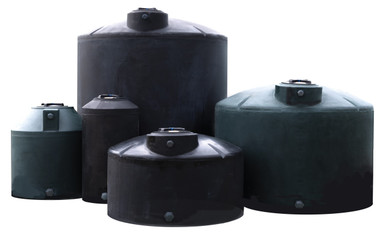
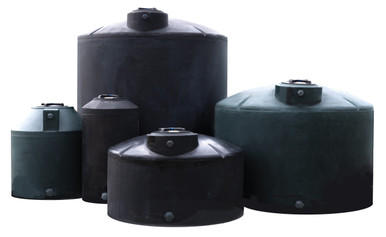
Municipal and industrial water treatment plants run on a remarkably consistent chemistry stack: a coagulant at the front of the train, pH adjustment at several points, a disinfectant before the clear well, and a corrosion inhibitor before distribution. Five chemistries do 95% of the work — and each one demands a specific tank specification. Build the stack wrong and you get regulatory findings, service interruptions, and expensive retrofits. Build it right and a well-designed plant runs on a 15-year tank cycle with predictable maintenance.
This guide walks through the five most-common water-treatment chemicals in the order they're typically dosed into the process, cites the Snyder-published MOC specifications for each, and calls out the interlocks between tanks that matter at plant-level design.
Tank 1: Ferric Chloride (Coagulant)
Ferric chloride (FeCl3) at 40–50% concentration is the dominant inorganic coagulant in North American drinking-water treatment. It hydrolyzes in the rapid-mix basin to form iron hydroxide floc that captures colloidal material for removal in the sedimentation basin.
See our ferric chloride pillar page for the complete specification. The short version:
- Resin: HDLPE or XLPE at 1.9 ASTM SG
- Fittings: PVC
- Gasket: Viton
- Bolts: Hastelloy OR Titanium — not 316SS (chloride pitting)
- Secondary containment: Required by most state SPCC rules; ferric stains permanently
Tank 2: Sulfuric Acid (pH Down)
Sulfuric acid at 93% or 98% is used for pre-treatment pH adjustment and for on-demand pH control at multiple points in the train. Even when the operating pH setpoint is only slightly acidic, the concentrated stock feed is 93%+ because diluting on-site saves freight cost per pound of active acid.
From our sulfuric acid pillar:
- Resin: HDLPE #880046 (specialty resin) at 1.9 ASTM SG
- Fittings: CPVC (not PVC — sulfuric heats the PVC above its softening point)
- Gasket: Viton
- Bolts: Hastelloy C-276
- Tank discoloration: Expected and cosmetic; does not indicate failure
Dilution of 93%/98% sulfuric to operating concentrations is strongly exothermic. Most plants do this in a dedicated mix/day tank rather than in the bulk storage tank.
Tank 3: Sodium Hydroxide (pH Up)
Sodium hydroxide at 50% (or hydrated lime slurry in some plants) handles pH-up duty. The MOC stack is the simplest of the five tanks — caustic is benign to polyethylene at the 50% concentration once past a couple of crystallization gotchas.
From our sodium hydroxide pillar:
- Resin: HDLPE or XLPE at 1.9 ASTM SG
- Fittings: PVC (CPVC if heated)
- Gasket: EPDM (Viton performs worse here)
- Bolts: 316SS (no exotic alloys needed)
- Crystallization risk: 50% caustic crystallizes at 55°F — heat-trace outdoor tanks
Tank 4: Sodium Hypochlorite (Disinfection)
Sodium hypochlorite at 12.5% is the primary disinfectant in most modern water treatment plants, having largely replaced chlorine gas for safety reasons. The tank specification diverges between indoor and outdoor/UV-exposed installations:
From our sodium hypochlorite pillar:
- Resin (indoor): HDLPE at 1.9 ASTM SG
- Resin (outdoor UV-exposed): HDLPE #880059 specialty UV-stabilized grade
- Fittings: PVC
- Gasket: Viton
- Bolts: Titanium (chloride pitting is severe on 316SS and notable on Hastelloy)
- Concentration ceiling: <16.5% active chlorine
- Venting: Critical — hypo off-gasses oxygen + chlorine under thermal cycling
Hypochlorite tanks at water treatment plants are typically stored outdoors on chemical pads. Specify the #880059 resin grade or tank shade/insulation at order — otherwise UV-accelerated decomposition will kill the tank in 12–24 months.
Tank 5: Phosphoric Acid (Corrosion Inhibitor)
Phosphoric acid at 85%, dosed at the finished-water post-disinfection stage, passivates the distribution piping to reduce lead and copper leaching into delivered water. Lead-and-Copper Rule (LCR) compliance makes this tank non-optional for any plant serving residential customers with pre-1986 plumbing infrastructure — which is most of the United States.
From our phosphoric acid pillar:
- Resin: HDLPE at 1.9 ASTM SG
- Fittings: PVC
- Gasket: Viton (EPDM fails in concentrated phosphoric)
- Bolts: 316SS (no exotic alloy needed, this is one of the more benign strong-acid services)
- Temperature: Ambient only — phosphoric attacks 316SS above 120°F
Plant-Level Interlocks
Installing these five tanks side-by-side on a single chemical pad creates system-level interactions worth planning for:
- Ferric chloride & sulfuric acid stain everything. Route fill hoses, vent terminations, and drip pans so that a failure in one tank doesn't contaminate the next. Ferric stains are permanent and point to sloppy maintenance practices during facility inspections.
- Don't mix incompatible storage wastes. Hypo + sulfuric = chlorine gas release. Hypo + ferric chloride = iron precipitation. Each tank needs its own dedicated drip pan and secondary containment — don't cost-optimize by connecting drains.
- Bolt material gets complicated. Hastelloy (sulfuric + ferric + HCl if used), Titanium (hypo), 316SS (caustic + phosphoric). Don't assume one alloy works everywhere. A purchasing shortcut that specifies "all 316SS" will fail on the sulfuric and hypo tanks within a year.
- Venting terminals matter. Hypo vent gases + acid vent gases + any spark source is a bad combination. Terminate vents outside the chemical building, on different roof quadrants, and well away from any make-up air intake.
- Heat trace is a bigger line item than most estimates show. Caustic (55°F crystallization) and calcium-chloride brine (if used for other duties) both require heat-trace in any climate with sub-60°F winter temperatures. Budget 50–100W/ft of piping plus tank-blanket heaters on the caustic tank itself.
Sizing & Redundancy
Water treatment plants operate on continuous duty. Chemical tank sizing typically targets:
- 30-day supply at peak-week dosing rate, to handle delivery scheduling issues.
- Dual tanks per chemistry where the process cannot tolerate a service outage. Hypochlorite especially — running without disinfection is a regulatory violation.
- Manifold piping that allows one tank to be taken offline for inspection or cleaning while the other provides duty.
- Dedicated dosing day tanks for acids to avoid pumping concentrated stock through long distribution piping.
Regulatory Snapshot
Water treatment plant tank installations intersect with multiple regulatory frameworks. Check the applicable rules in your jurisdiction — our State Regulation Guides cover permit and inspection rules for 11 states including California, Texas, Florida, and New York.
Federal rules that intersect with WTP chemical storage include:
- Lead and Copper Rule (LCR) — drives the phosphoric acid dosing; monitoring and compliance timelines.
- SPCC (Spill Prevention, Control, and Countermeasure) under 40 CFR 112 — applies to petroleum only, but state-level spill-prevention rules often mirror it for chemicals.
- RMP (Risk Management Program) under 40 CFR 68 — threshold-quantity chemicals trigger this. Some hypo installations at very large plants are over threshold.
- Chlorine Institute guidelines — not regulations but industry consensus standards that state regulators reference.
What We Bring to the Table
OneSource Plastics ships Snyder Industries, Norwesco, Enduraplas, Chem-Tainer, and Bushman tanks direct to water treatment facilities across the United States. Our specifications team verifies the full MOC stack — resin, design SG, fittings, gaskets, bolts, vent, and drip pan — against Snyder-published chemical-resistance data before shipment. No single-line purchase orders processed without specification review.
If you are designing or retrofitting a water treatment plant chemical pad, contact us with your flow rates, target dosing concentrations, and state/county. We'll provide complete spec documentation for each tank plus delivery scheduling coordinated with your construction timeline.
Source Citations
- Snyder Industries Chemical Resistance Recommendations (current edition)
- Enduraplas / Equistar Technical Tip — Chemical Resistance of Polyethylene
- 40 CFR 141 (Lead and Copper Rule)
- 40 CFR 112 (SPCC)
- 40 CFR 68 (Risk Management Program)
- Chlorine Institute Pamphlet 96 (Sodium Hypochlorite Manual)
Related chemical compatibility resources
For deeper engineering specifications on the chemicals discussed above, see our chemical-compatibility pillars:
- Ferric Chloride — storage compatibility, recommended resin grade, fittings, secondary containment.
- Sulfuric Acid — storage compatibility, recommended resin grade, fittings, secondary containment.
- Phosphoric Acid — storage compatibility, recommended resin grade, fittings, secondary containment.
- Sodium Hypochlorite — storage compatibility, recommended resin grade, fittings, secondary containment.
Recommended Tanks for This Guide
Live pricing, updated automatically · estimate freight to your ZIP.