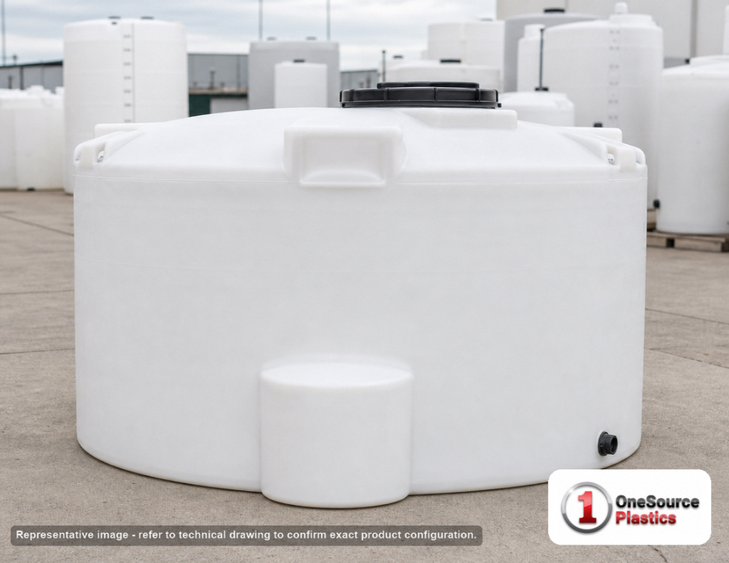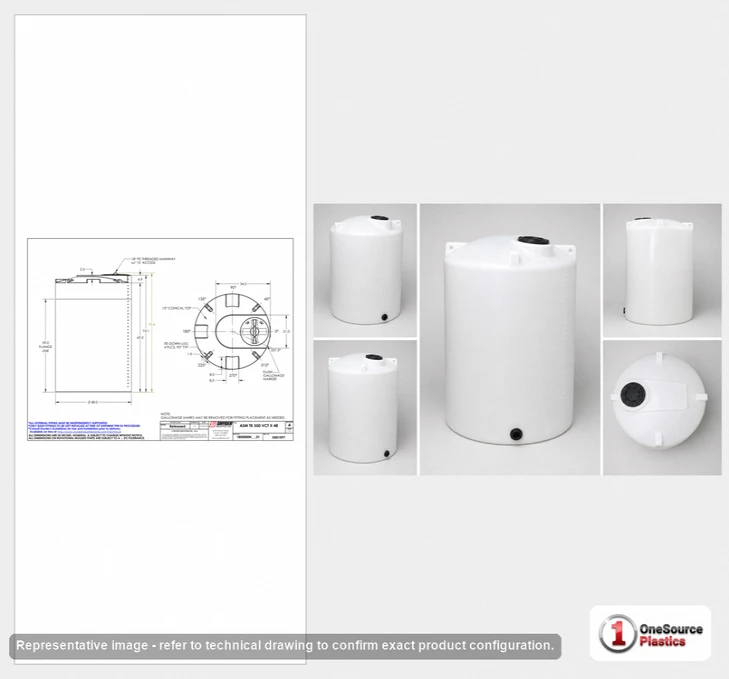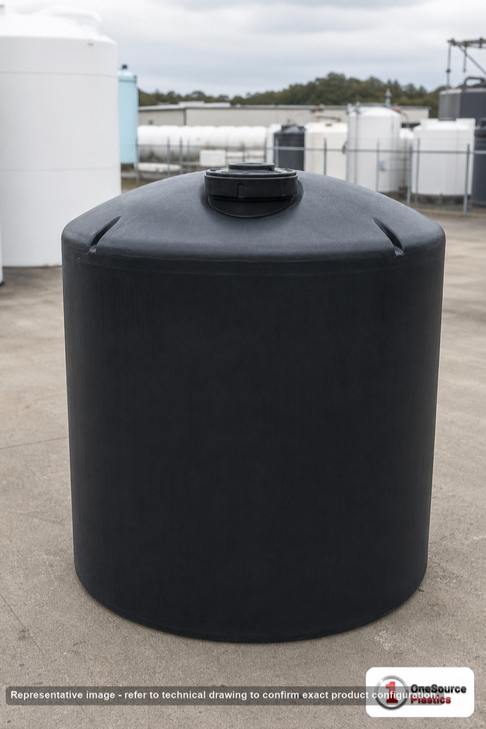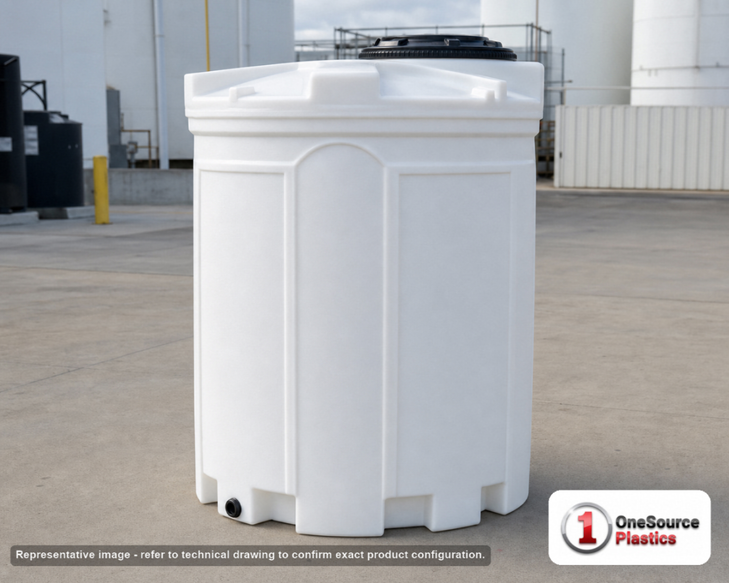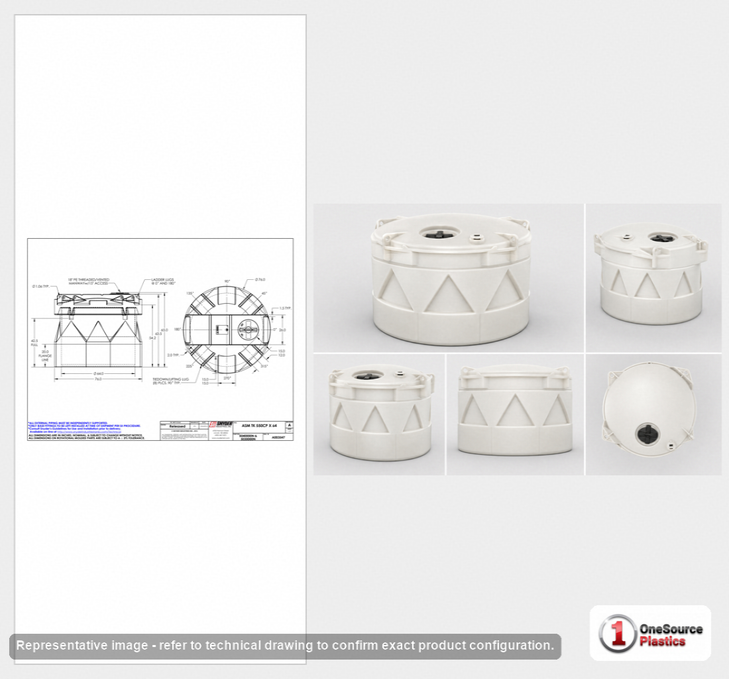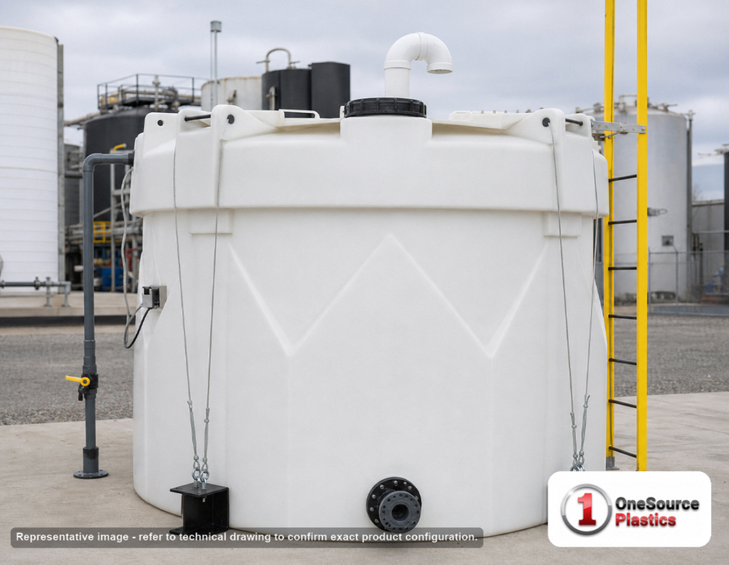
A 550 gallon double wall chemical tank at 1.9 specific gravity, ASTM model
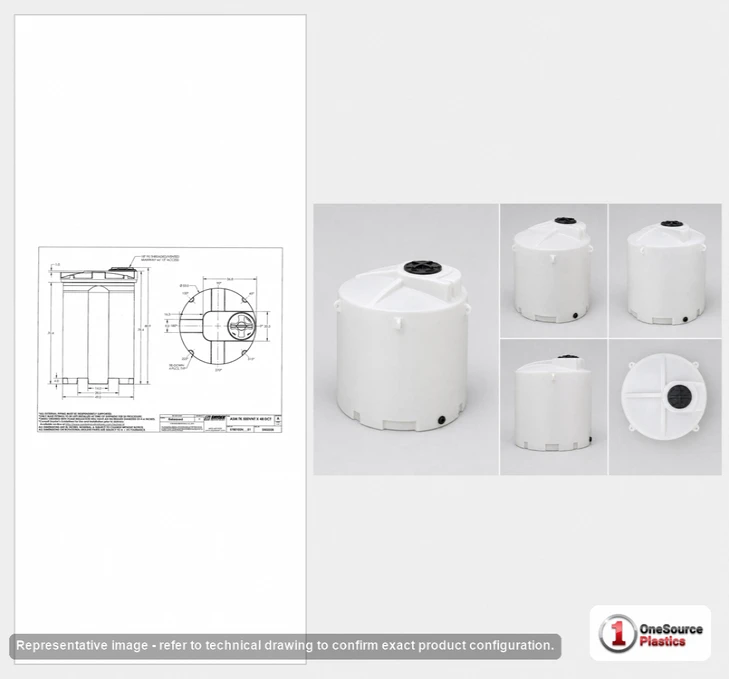
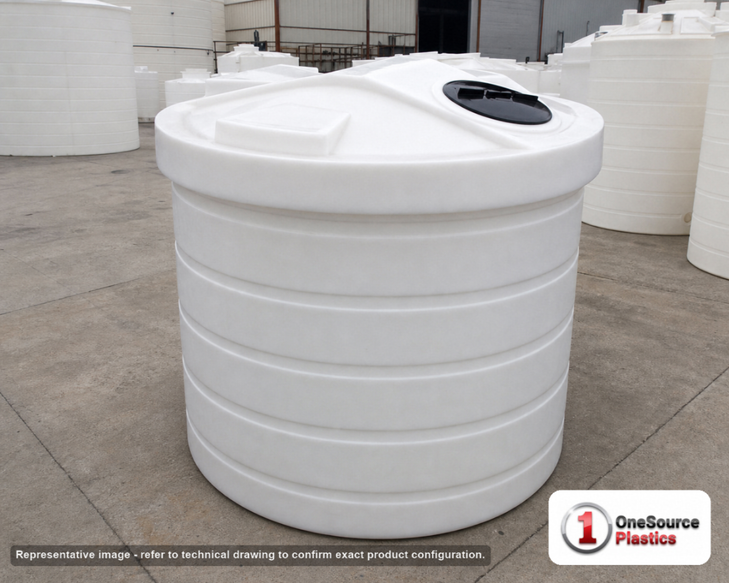
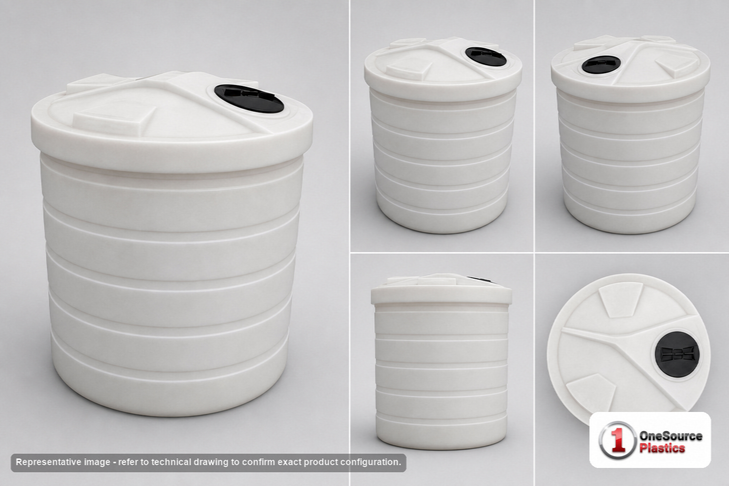
The Snyder 5040000N52 is a double wall chemical storage tank: a 550 gallon opaque white high density linear polyethylene primary rated for a specific gravity of 1.9, or 8,715 pounds of contents against 4,587 for water, standing inside its own secondary containment in a shell 76 inches across and only 65 inches tall, weighing 670 pounds. It is sold from Snyder's ASTM line, the wide, low shape keeps the 18 inch manway within a short step and the whole tank under a low ceiling, and the opaque wall keeps light off a chemical that degrades in it. A 3 year warranty, and standard LTL freight.
Want it on the pad this month? Check freight to your ZIP, add it to your cart above, and 866-418-1777 will confirm the ship date.
The full-density day tank, contained
Five hundred fifty gallons is two totes and a margin, drawn down over a week or two, and this shape holds it at 65 inches, so it goes under a mezzanine or a low pipe rack where a tall tank of the same volume would not. The 1.9 wall is sized for a liquid nearly twice as dense as water, which is what ferric chloride at strength and concentrated acid weigh, and the wall is designed to ASTM D1998. A leak lands in the interstitial space instead of on the floor, so a double wall tank stands without a spill pallet or a berm; the SPCC 40 CFR 112 compliance walkthrough covers where a double wall tank satisfies a spill plan on its own, and the Captor double wall freeboard sizing guide works out how much of the nominal 550 gallons is usable once thermal expansion and the interstice are accounted for. The chemistry list below is what the resin is rated for; check the liquid at its concentration in the chemical compatibility database. The tank sizing calculator sizes the tank to feed rate and delivery interval, and the tank sizing guide covers the reserve.
Grades on the 76 x 65 inch double wall, and the sizes beside it
| Part | Gallons | Diameter x height | Empty weight |
|---|---|---|---|
| 5040000N52 (this tank, 1.9 SG, ASTM model) | 550 | 76 x 65 in | 670 lb |
| 5040000N45 (1.5 SG) | 550 | 76 x 65 in | 670 lb |
| 5040000N30 (sulfuric grade) | 550 | 76 x 65 in | 315 lb |
| 5040000N48 | 550 | 76 x 65 in | 315 lb |
| 5780102N42 (tall, XLPE) | 500 | 53 x 81 in | 290 lb |
| 5990902N30 (sulfuric grade) | 750 | 73 x 67 in | 390 lb |
The N45 is the 1.5 specific gravity grade in the same shell for coagulants and brines that never approach this density; the N30 is the sulfuric acid grade and the N48 another linear grade. The 5780102N42 stands 500 gallons on a 53 inch base at 81 inches in cross-linked resin for the corner with height and no floor, and the 5990902N30 is the 750 gallon sulfuric-grade double wall at nearly the same height on a 73 inch base.
Need a different size? Every tank in the table is in stock programs; call 866-418-1777 for the one that fits.
Connections, alarms and the interstitial check
- Access: 18 inch threaded, vented manway on the primary, a short step up; fill by hose or tote pump down a dip tube, and vent to the outside if the liquid fumes.
- Outlet: through both walls together, with the transition supported off the floor; the fitting material is chosen for the chemical at order time.
- Service limit: 120 F / 48 C.
- Snyder line: ASTM.
Watch two levels: the primary, with a sender chosen for the chemical per the level gauge selection guide, and the interstitial space, which is the leak alarm and gets a float switch and a logged check. A tank filled from totes or a small truck is also where overfills happen, because the pump runs until someone stops it; the tank spillover redundancy guide walks through the alarm and cutoff layers that stop an overfill upstream of the containment. A low, wide tank cannot tip and needs no strap; full, it puts 8,715 pounds on a 76 inch circle at the rating, which a slab in full contact carries. The dosing pump sits below the outlet so it primes by gravity, and give the vent a line routed away from the pump's electrical gear.
Turnover and changeover
Size the refill schedule so the tank turns over before the chemical degrades. At changeover the low shape earns its keep: the manway is a short step up and the floor is within reach through it, so a wash-down wand cleans the primary without anyone leaning far over an opening. Drain, rinse, drain again, let it dry before the new fill, and log each fill with its date and strength; on a dense chemical the log is also the check that the tank was never filled past its rated weight with something heavier than it was bought for.
Where you will find one
Ferric and acid day tanks inside occupied buildings with a low ceiling, dense process chemicals at two-tote scale, polymer make-down and brine, and any regulated chemical tank at a site an inspector visits. Two liquids this tank is often bought for are sodium hypochlorite, which wants the tank shaded and turned over quickly, and diesel exhaust fluid, where the opaque wall keeps light off a fluid that degrades in it; check either at its concentration before ordering the fitting. Label it, keep one chemical in it, and keep the manway shut against vapor loss.
Shipping the tank
The 5040000N52 ships palletized as LTL freight (NMFC 156600-03) at a class rate; the freight cost estimator turns your ZIP into a freight number; the price on this page is before freight. A forklift or a pallet jack moves 670 pounds; at 76 inches across it needs a wide door. Water-test the primary, confirm the interstice stays dry through the hold, then drain and dry before the first chemical fill. Walk the base after the first hard rain; a pad that shifts shows it at the edge first.
Freight and documents
Ships from: Philippi, WV. LTL freight is quoted to your ZIP with the freight cost estimator or by phone at 866-418-1777. The listed price is before freight.
Technical drawing (PDF) for Snyder Industries 5040000N52.
See this tank
Product video. Watch the Snyder Industries 550 Gallon 1.9 S.G. Vertical Double Wall Liquid Chemical Storage Tank in Opaque White video (71 seconds) with dimensions, fittings and shipping notes.
Ready to order?
Add it to your cart at the top of this page, get LTL freight to your ZIP, or call 866-418-1777. The listed price is before freight.