110 Gallon Full Drain Cone Bottom Inductor Tank: Complete Buyer's Guide
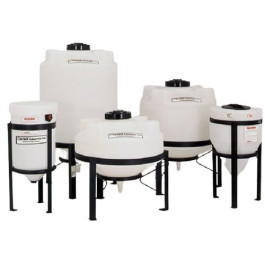
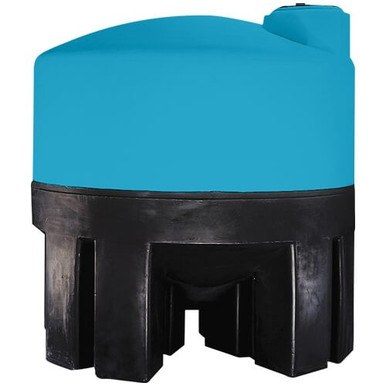
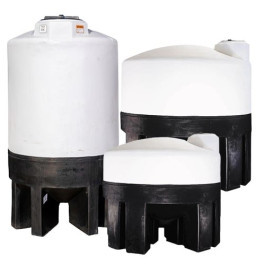
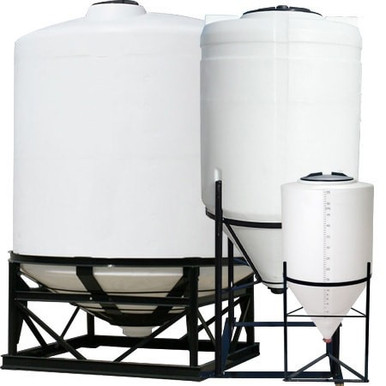
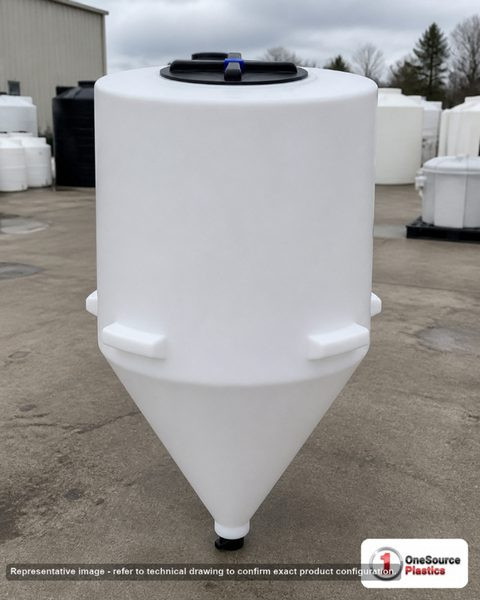
The 110-gallon full-drain cone bottom inductor tank is a purpose-built chemical mixing vessel — 56 inches tall on a 30-inch diameter, with a cone bottom that drains completely and geometry suited to inductor (eductor) mixing. Rated to a 1.5 specific gravity, it's designed to draw in and dissolve dry chemical into solution, then discharge a clean batch through the apex.
Specifications at a Glance
Every figure below is pulled straight from the live product record for this exact tank — the same data on the product page, so what you read here and what you buy never disagree.
Standards & Materials
- ASTM D1998 — Standard Specification for Polyethylene Upright Storage Tanks. Governs wall-thickness and hydrostatic design for vertical rotomolded poly tanks of this class.
- FDA 21 CFR 177.1520 — Olefin polymers. The food-contact regulation the FDA-grade resin in this tank is compounded to meet.
- Specific gravity rating 1.5 — the tank is engineered for liquids up to 1.5× the density of water (water is about 8.34 lb/gal). Confirm your fluid’s SG before storage.
Product Overview
An inductor tank is a mixing tank with a job: it's built to take dry chemical — powders, granules, water-soluble bags — and pull it into a circulating liquid stream through an eductor, dissolving it into a uniform solution. The 110-gallon size is an operator-scale batch vessel, big enough to mix a useful quantity of working solution but compact enough to sit in a process area and be loaded by hand. The combination of the inductor function and a full-drain cone bottom means you can mix a precise batch and then discharge all of it, with no residue left to skew the next mix.
Norwesco rotomolds it as a single seamless piece of virgin linear polyethylene rated to a 1.5 specific gravity, handling solutions up to 12.5 pounds per gallon — the agricultural and industrial chemicals an inductor tank typically prepares. The seamless wall is important for a mixing vessel: nothing for the circulating flow to abrade, and no crevice to trap undissolved product or residue between batches. The translucent natural-white wall lets the operator watch the chemical dissolve and confirm a clear, complete mix before discharge.
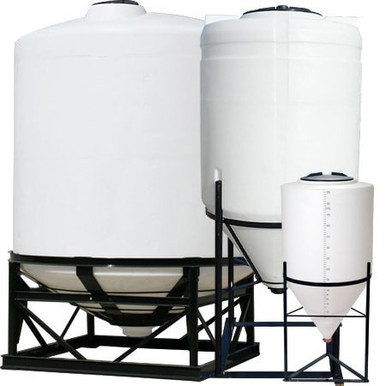
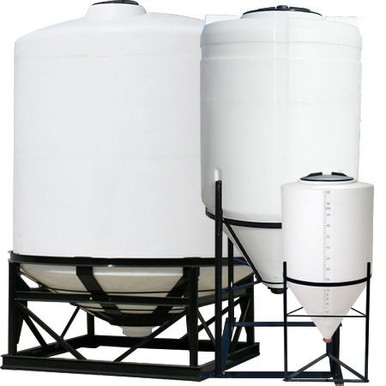
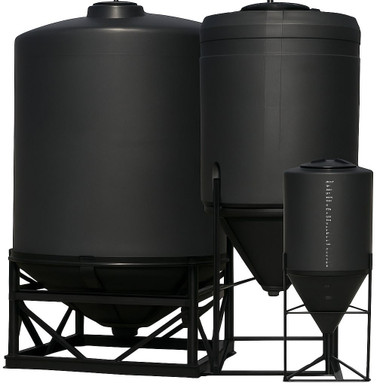
Because it has a full-drain cone bottom, this tank does not stand on its own — like any cone tank, it must be supported in a stand rated for the full loaded weight, cradling the sidewall and carrying the load through the legs, never resting on the cone apex. Empty, the tank weighs 44 pounds; filled with a 1.5-SG solution it carries roughly 1,420 pounds, which a properly rated stand must support. The stand also sets the tank at a convenient working height for loading chemical and operating the eductor.
The bottom outlet is a 2-inch NPT fitting at the apex, factory-installed and leak-tested, sized to discharge the mixed batch and to support the recirculation plumbing the inductor uses. The 16-inch lid is the working opening — it's where the operator introduces dry chemical and where the eductor and recirculation typically tie in. Maximum service temperature is 120°F. Norwesco's 3-year warranty applies, and the tank ships LTL freight — allow a couple of weeks, with liftgate available.
Technical Drawing
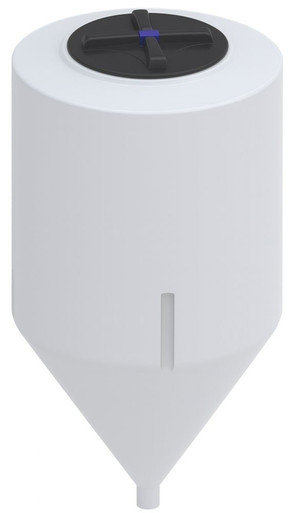
Official Norwesco technical drawing — 110 Gallon Full Drain Cone Bottom Inductor Tank
Key Features and Specifications
- 110-gallon capacity — sized for rainwater harvesting and collection
- Constructed from virgin linear polyethylene (HDPE) with 1.5 specific gravity rating — handles liquids up to 12.5 lbs/gal
- 56" tall x 30" diameter — compact vertical footprint
- 44 lbs empty, approximately 1,420 lbs when full at rated specific gravity
- 2" NPT outlet fitting — factory installed and leak-tested
- 16" lid opening for fill, venting, and interior access
- FDA approved for potable water and food-grade liquid contact
- 3 Year Warranty from Norwesco against manufacturing defects
- Translucent white walls allow visual level monitoring without opening the tank and reflect sunlight to keep contents cooler
- Rated for continuous service up to 120 F / 48 C
- Seamless one-piece rotational molding — no seams, no welds, no leak points
- Manufactured by Norwesco — a leading name in rotomolded polyethylene tanks
- Place on a firm, level surface free of rocks or sharp objects that could damage the tank bottom. Ensure adequate ventilation if stored chemicals produce vapors
- Ships via LTL freight on a pallet — residential delivery with lift gate available
Installation and Setup Guide
An inductor tank install is part cone-tank discipline (the stand) and part process plumbing (the recirculation and eductor loop). Both have to be right for the tank to mix and drain as intended.
Stand and Working Height
Support the tank in a stand rated for the full loaded weight — roughly 1,420 pounds at 1.5 SG — that cradles the sidewall and carries the load through its legs to a level, load-bearing surface. Never rest the cone on its apex. Beyond carrying the load, the stand sets the operator working height: position it so loading dry chemical through the 16-inch lid and operating the eductor are comfortable and safe, and so there's clearance under the apex for the discharge valve.
Eductor and Recirculation Plumbing
The inductor function depends on a circulating flow: a pump draws liquid from the tank, drives it through the eductor (which entrains and mixes the introduced chemical), and returns it to the tank. Plumb the 2-inch apex outlet to feed that pump cleanly, and route the eductor return to promote good mixing. Use flexible connections to absorb flex and pump vibration, and match every wetted component — pump, eductor, valve, hose — to the chemicals you'll mix. A full-port discharge valve at the apex preserves the complete-drain capability for emptying finished batches.
Venting
Provide a vent in the lid sized to your fill and drain rate so the tank neither pulls vacuum during a fast bottom-drain nor pressurizes during fill. Because you're introducing chemical through the lid and may be mixing products that off-gas or dust, ensure good ventilation around the working opening, and use a chemical-rated vent appropriate to the chemistry being mixed.
Maintenance and Long-Term Care
An inductor tank lives a hard life — frequent batches, dry chemical introduction, recirculation — so maintenance focuses on the stand, the mixing and drain plumbing, and scrupulous cleaning between chemistries. This is chemical-handling equipment, not a storage tank.
Quarterly Inspection Checklist
- Stand: Inspect for corrosion, cracked welds, loose fasteners, or a settled leg, and confirm it's level so the cone drains evenly. The stand carries the full load — any weakness is the most serious finding.
- Cone, apex, and outlet: Check the cone wall and apex for stress or distortion and the 2-inch fitting for weeping or undissolved-product buildup that would impede the full drain.
- Eductor and pump loop: Verify the recirculation plumbing, eductor, and pump are clear of scale or chemical buildup that would degrade mixing performance.
- Vent and lid: Confirm the vent is clear and the working lid seals when needed.
Cleaning and Changeover
Clean discipline matters even more on an inductor tank because residue from one chemical can contaminate or react with the next batch you mix. After a batch, discharge completely through the apex (the cone's full-drain geometry makes this clean), then flush the tank and the entire recirculation and eductor loop per the outgoing chemical's procedure — not just the tank, the plumbing too. Verify through the 16-inch lid that the cone and outlet are clear, confirm polyethylene compatibility with the incoming chemistry, and handle rinsate per the label.
UV and Heat
Inductor tanks frequently work indoors in a chemical mixing station; if yours is outdoors, inspect the wall yearly for chalking. Indoors, prioritize ventilation for dust and vapors generated when introducing dry chemical. Stay within the 120°F service limit, especially if dissolution generates heat.
Alternatives and Comparisons
Whether an inductor tank is the right tool depends on what you're actually doing with the chemical:
Inductor tank versus a plain cone bottom tank: if your job is dissolving dry chemical into solution, the inductor tank's eductor-mixing geometry is purpose-built for it and far more effective than trying to dissolve product by stirring a storage tank. If you only need to mix two liquids or store a pre-made solution, a plain cone bottom tank (or even a flat-bottom storage tank) is simpler and cheaper.
110 versus the 85-gallon inductor: the 110 gives you a larger working batch on a similar footprint; the 85-gallon is lighter and a bit lower for tighter stations or smaller batches. Choose by the batch size your process needs and the room your mixing station has.
Other 110-Gallon Options


Frequently Asked Questions
How long will the 110 Gallon Full Drain Cone Bottom Inductor Tank last?
Fifteen to twenty years is realistic with a properly rated, level stand and use within the 1.5-SG and 120°F limits. On a hard-working inductor tank the practical life is usually decided by chemical aggressiveness and how well the recirculation loop is maintained, not the wall aging. A sound stand and compatible chemistry carry the seamless tank to the upper range.
What chemicals can I store in this tank?
Rated to a 1.5 specific gravity, it mixes and holds agricultural and industrial chemicals and solutions up to 12.5 pounds per gallon — the dry-and-liquid chemistries an inductor tank is built to dissolve. It is not for fuels, solvents, or flammables. Because you cycle many products through it, verify polyethylene compatibility against a chart for each chemical — poly is attacked by certain hydrocarbons and strong oxidizers.
What kind of foundation does a 110-gallon tank need?
As a cone bottom tank it doesn't sit on a foundation directly — it requires a stand rated for the full loaded weight (roughly 1,420 pounds here) that cradles the tank and carries the load through its legs, never resting on the apex. The stand sits on a level, load-bearing surface and also sets the operator working height. The stand, not a pad, is the critical support.
Does this tank come with a warranty?
Yes — Norwesco's 3-year warranty covers factory material and workmanship defects. It excludes over-spec products, improper support (apex resting or an inadequate stand), incompatible-chemical attack, and impact damage. Document your rated stand and level setup for any claim.
Can I install this tank underground?
No — this is an above-ground process and mixing vessel that drains through a bottom cone while supported in a stand; it cannot be buried. For below-grade storage, use a purpose-built underground cistern engineered for soil load.
Buying Considerations
Buy this tank for what it is — a chemical mixing and induction vessel, not a storage tank. Confirm you have or will provide a stand rated for the full loaded weight that also sets a comfortable operator height. Plan the eductor, pump, and recirculation loop and match every wetted component to your chemistry. Verify your mixed solution stays at or under 1.5 SG. And lay out the bottom-valve clearance under the stand for clean batch discharge. It ships LTL on a pallet — allow a couple of weeks and request a liftgate if you lack a dock or forklift.
Related Products You May Need
Questions? Call (866) 418-1777 — our team knows these products inside and out and can help you select the right tank for your application.
Recommended Tanks for This Guide
Live pricing, updated automatically · estimate freight to your ZIP.