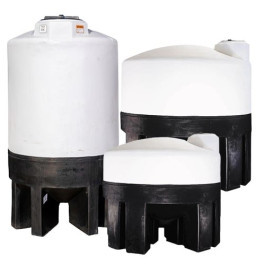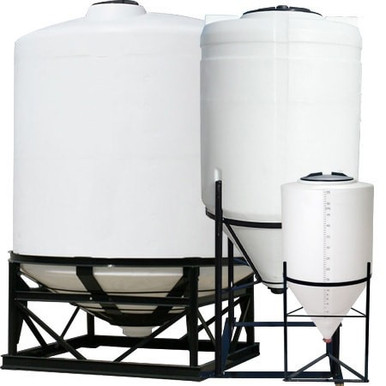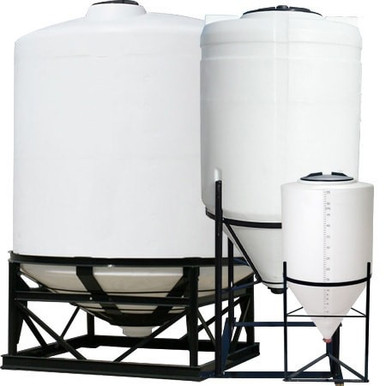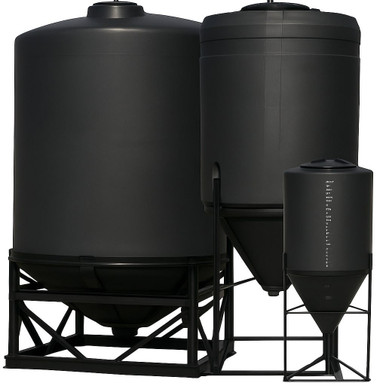
15 Gallon 57 Degree Cone Bottom Inductor Tank: Complete Buyer's Guide
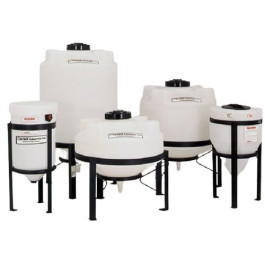
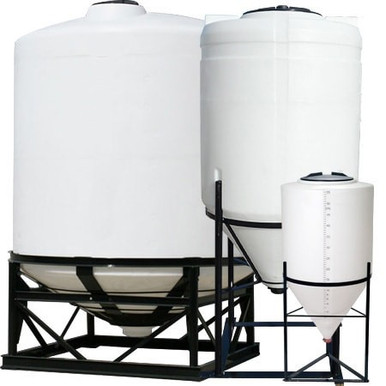
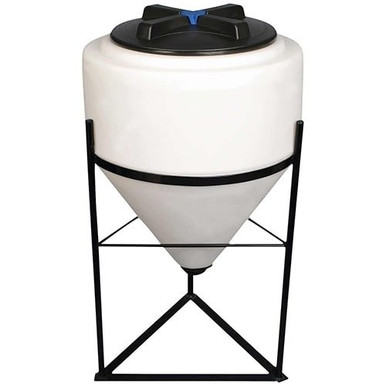
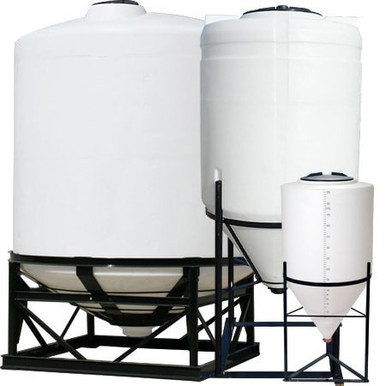
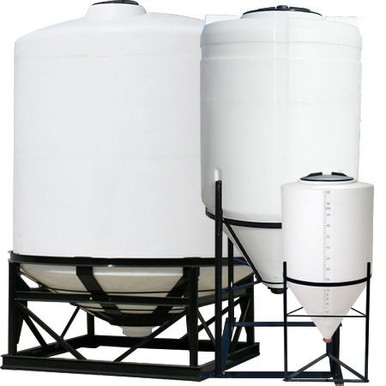
15-gallon white inductor cone bottom tank built for chemical induction and mixing operations. Manufactured by Norwesco from virgin linear polyethylene (HDPE) rated to handle liquids up to 12.5 pounds per gallon. FDA approved for contact with potable water, ensuring safe storage for drinking water and food-grade liquids.
Specifications at a Glance
Every figure below is pulled straight from the live product record for this exact tank — the same data on the product page, so what you read here and what you buy never disagree.
Standards & Materials
- ASTM D1998 — Standard Specification for Polyethylene Upright Storage Tanks. Governs wall-thickness and hydrostatic design for vertical rotomolded poly tanks of this class.
- FDA 21 CFR 177.1520 — Olefin polymers. The food-contact regulation the FDA-grade resin in this tank is compounded to meet.
- Specific gravity rating 1.5 — the tank is engineered for liquids up to 1.5× the density of water (water is about 8.34 lb/gal). Confirm your fluid’s SG before storage.
Product Overview
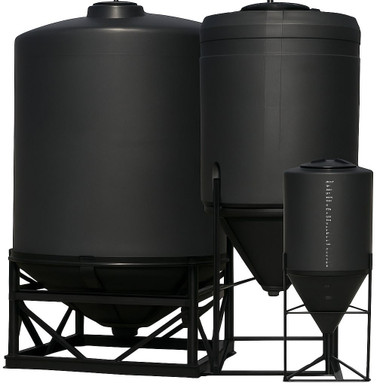
The 15 Gallon 57 Degree Cone Bottom Inductor Tank is a small-batch mixing and chemical-induction vessel, built for the bench, the cart, or the skid where operators blend, dissolve, and meter chemicals rather than store them in bulk. The steep 57-degree cone is the working feature: it funnels solids and slurry straight toward the bottom outlet so the tank drains and discharges completely, leaving nothing to settle and cake.
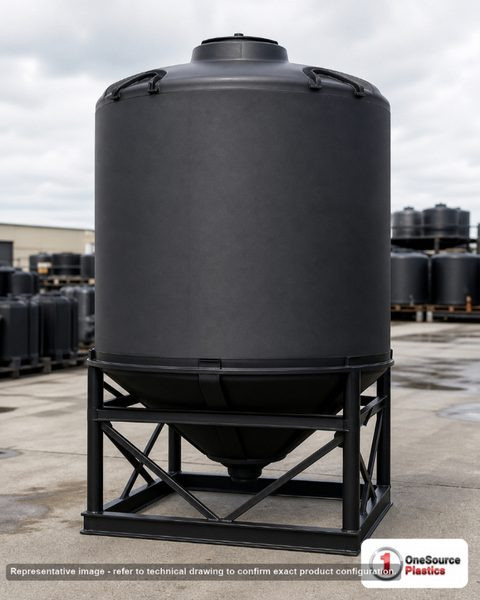
It is rotationally molded in one piece from virgin linear polyethylene with a 1.5 specific gravity rating, so it handles the heavier mixed chemistries common in induction work — liquids up to 12.5 pounds per gallon — without compromising the wall. Because the cone cannot stand on its own point, the tank is designed to be carried by a stand or legs that take the load through the rim and skirt, never the apex.
At a compact 21 inches tall over a 24-inch span, this 15-gallon tank weighs just 15 pounds empty and about 203 pounds when full of a 1.5-SG mix — light enough to integrate into a benchtop eductor or batching setup. A 16-inch lid opens the top wide for charging dry product, fitting a mixer or eductor, and cleaning between batches.
Key Features and Specifications
- 15-gallon capacity — sized for chemical induction and mixing operations
- Constructed from virgin linear polyethylene (HDPE) with 1.5 specific gravity rating — handles liquids up to 12.5 lbs/gal
- 21" tall x 24" diameter — compact vertical footprint
- 15 lbs empty, approximately 203 lbs when full at rated specific gravity
- 2" NPT outlet fitting — factory installed and leak-tested
- 16" lid opening for fill, venting, and interior access
- FDA approved for potable water and food-grade liquid contact
- 3 Year Warranty from Norwesco against manufacturing defects
- Translucent white walls allow visual level monitoring without opening the tank and reflect sunlight to keep contents cooler
- Rated for continuous service up to 120 F / 48 C
- Seamless one-piece rotational molding — no seams, no welds, no leak points
- Manufactured by Norwesco — a leading name in rotomolded polyethylene tanks
- Must be installed on the manufacturer-supplied or compatible stand rated for the full loaded weight. Never rest a cone bottom tank directly on its apex
- Ships via UPS or FedEx ground — typically arrives within 5-7 business days
Installation and Setup Guide
An inductor tank is defined by what it cannot do: a 57-degree cone has no flat base, so this 15-gallon tank must always ride in its stand or leg set, with the load carried through the rim and skirt — never resting on the cone tip. Mount the stand to a stable bench, cart, or skid that is level and rated for a full tank, and confirm the structure clears the cone so the bottom outlet hangs free for discharge.
Site Preparation
Position it as a working station, not a storage tank. Leave room above for charging dry chemical through the 16-inch lid and for whatever mixer, eductor, or recirculation line the process uses, and keep the steep cone outlet accessible underneath for a valve and drain line. With only about 203 pounds full, the priority is a rigid, level mount that will not rack or vibrate during mixing, rather than a heavy foundation.
Placement and Connections
Plumb the bottom-of-cone outlet for complete discharge — the whole reason for the 57-degree geometry is that the contents flow to that single low point and out, so route a short, direct line to a valve with no low traps that would hold residue. Use chemically compatible piping for the mix being run, and hand-tighten poly threads a quarter turn past snug; on a small fitting under an inductor, a wrench cracks the boss easily.
Venting
Mixing and eductor work move air and can build pressure or vacuum as batches charge and drain, so keep the tank vented through the lid. A simple screened vent suits open-batch work; for volatile or fuming chemistries, fit a pressure/vacuum relief vent rated to the specific chemical. Never seal an inductor tank tight while recirculating — the pressure swing of a fast eductor needs somewhere to go.
Maintenance and Long-Term Care
An inductor tank earns a different maintenance rhythm than a storage tank: it is a process vessel that sees frequent batches, chemical changes, and aggressive cleaning, so care centers on the cone, the outlet, and compatibility between runs rather than on long-term standing storage.
Quarterly Inspection Checklist
- Cone and outlet check: Inspect the 57-degree cone and bottom fitting for residue buildup or weeping after batches; the cone should drain clean, and anything clinging signals an outlet restriction.
- Stand inspection: Confirm the stand or legs are sound and the tank is still seated on its rim and skirt, never bearing on the cone apex.
- Fitting check: Hand-snug the outlet and any process connections; vibration from mixing loosens threads faster than static storage does.
- Vent check: Verify the lid vent or pressure/vacuum relief is clear and rated for the chemistry currently in use.
Cleaning
Because this is a chemical-service mixing vessel, clean it to the chemical manufacturer's decontamination guidance between incompatible batches — never assume a rinse is enough when switching chemistries. The 57-degree cone is an asset here: it drains completely through the bottom outlet, so flushing leaves little behind, and the wide 16-inch lid lets you reach in to scrub the cone walls directly. This tank is not for potable water; do not treat it as a drinking-water vessel.
UV and Weather Protection
If the inductor station lives outdoors or in a sun-exposed work area, the UV stabilizer in the resin protects the wall, but check the exposed side periodically for chalking. Most induction and batching setups are indoor bench or skid installations, where UV is not a concern and the tank's life is governed instead by the chemistries it processes.
Alternatives and Comparisons
Fifteen gallons is the smallest cone-bottom inductor here, sized for tight benchtop batches and low-volume induction. The 30- and 60-gallon cone inductors step the batch size up while keeping the same 57-degree drain geometry; for bulk chemical storage rather than mixing, a vertical liquid tank is the right tool. Choose by batch volume and whether you are mixing or storing.
Cone Bottom vs. Flat Bottom: Cone bottom tanks allow complete drainage without tilting or pumping. The trade-off is you need a stand, which adds height and cost. If your application doesn't require 100% drainage between batches, a flat-bottom tank is simpler and cheaper.
Other 15-Gallon Options
Frequently Asked Questions
How long will the 15 Gallon 57 Degree Cone Bottom Inductor Tank last?
As a process vessel, this inductor's life depends mostly on the chemistries it handles and how well it is cleaned between batches rather than on calendar years. Kept within its 1.5 SG rating, cleaned per chemical guidance, and supported correctly on its stand, the seamless rotomolded wall holds up for many years; aggressive or incompatible chemicals are what shorten it, not age.
What chemicals can I store in this tank?
It is rated to 1.5 specific gravity, so it handles the heavier mixed chemistries typical of induction work up to 12.5 pounds per gallon — but you must confirm each specific chemical against a polyethylene compatibility chart before running it. Keep all fuels, solvents, and flammable liquids away from it. This is a chemical-mixing tank, not a potable-water vessel.
Does this tank come with a warranty?
Yes — the manufacturer's warranty stands behind it for material and workmanship defects in normal use. That covers factory faults, not damage from incompatible chemicals, exceeding the 1.5 SG rating, supporting the tank on its cone tip, or impact. Tuck the receipt away — it is what a warranty claim will require.
Can I install this tank underground?
No. A cone-bottom inductor cannot be buried — it has no flat base and is designed to hang in a stand for mixing and discharge, not to resist soil load. It is strictly an above-ground process vessel; for any storage role at all, a flat-bottom or underground tank is the correct choice.
Buying Considerations
Match this to your process, not your storage needs: confirm a level bench, cart, or skid rated for a full 15-gallon batch, verify the stand carries the cone by its rim and skirt, and plan the bottom-outlet plumbing and venting for the specific chemistry you will run. Pick the cone tank only if you are mixing or inducting — for plain storage, a flat-bottom tank costs less and sits on the floor.
Related Products You May Need
Questions? Call (866) 418-1777 — our team knows these products inside and out and can help you select the right tank for your application.
Recommended Tanks for This Guide
Live pricing, updated automatically · estimate freight to your ZIP.