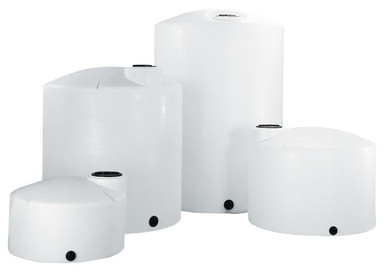
3000 Gallon Vertical Liquid Storage Tank - Natural White (102" x 93") #45246: Complete Buyer's Guide
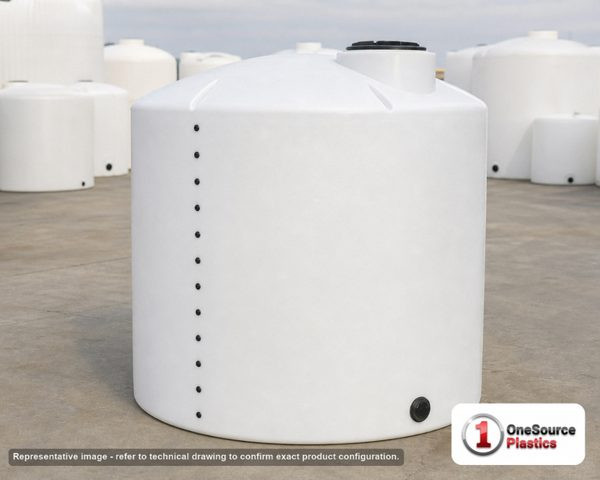
Three thousand gallons of bulk chemical storage in a broad, low 102-inch-diameter vertical — a tank wider than it is tall, engineered for stability under nineteen tons of solution. The factory siphon-tube outlet draws cleanly from the bottom, making this the workhorse holding tank for a fertilizer dealer, co-op, or process line.
Specifications at a Glance
Every figure below is pulled straight from the live product record for this exact tank — the same data on the product page, so what you read here and what you buy never disagree.
Standards & Materials
- ASTM D1998 — Standard Specification for Polyethylene Upright Storage Tanks. Governs wall-thickness and hydrostatic design for vertical rotomolded poly tanks of this class.
- FDA 21 CFR 177.1520 — Olefin polymers. The food-contact regulation the FDA-grade resin in this tank is compounded to meet.
- Specific gravity rating 1.5 — the tank is engineered for liquids up to 1.5× the density of water (water is about 8.34 lb/gal). Confirm your fluid’s SG before storage.
Product Overview
The 3000 Gallon Vertical Liquid Storage Tank takes the opposite shape from the slim field tanks: at 102 inches in diameter and 93 inches tall it is broader than it is high, a deliberately squat profile that keeps the center of gravity low and the tank stable under a very large charge. This is bulk holding capacity for an operation that buys, blends, or dispenses chemical by the truckload — a fertilizer dealer, an agricultural co-op, or a process facility.
Rated to 1.5 specific gravity, the tank holds solutions up to 12.5 pounds per gallon. Three thousand gallons at that density is roughly 37,950 pounds — nearly nineteen tons — on top of a 420-pound shell, and that number drives the entire installation: the pad, the access, the rigging to set it. The broad base spreads the load over a wide footprint, which helps, but the foundation must still be engineered for the filled weight. Norwesco molds the tank as one seamless piece of polyethylene; across a vessel this large, the absence of any weld seam is a real structural and chemical advantage.
The outlet configuration is built for bulk draw. A 2-inch NPT outlet with a factory siphon tube pulls solution from the bottom of the tank, drawing the charge down cleanly rather than leaving a heel above a side outlet — the right design when you want to dispense most of the volume. A 16-inch lid provides access for filling, level instrumentation, and inspection, and the translucent white wall lets an operator gauge a tank far too large to open casually.
This is bulk chemical-storage equipment rated within its 1.5 specific-gravity envelope — not a potable-water tank — backed by Norwesco's 3-year warranty against manufacturing defects.
Technical Drawing
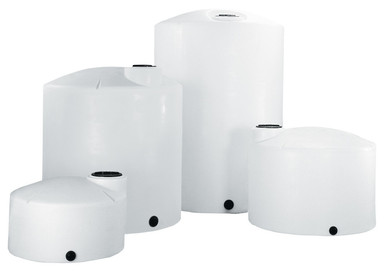
Official Norwesco technical drawing — 3000 Gallon Vertical Liquid Storage Tank - Natural White (102" x 93") #45246
Key Features and Specifications
- 3,000-gallon capacity — sized for agricultural chemical and fertilizer storage
- Constructed from virgin linear polyethylene (HDPE) with 1.5 specific gravity rating — handles liquids up to 12.5 lbs/gal
- 93" tall x 102" diameter — compact vertical footprint
- 420 lbs empty, approximately 37,950 lbs when full at rated specific gravity
- 2" with siphon tube NPT outlet fitting — factory installed and leak-tested
- 16" lid opening for fill, venting, and interior access
- FDA approved for potable water and food-grade liquid contact
- 3 Year Warranty from Norwesco against manufacturing defects
- Translucent white walls allow visual level monitoring without opening the tank and reflect sunlight to keep contents cooler
- Rated for continuous service up to 120 F / 48 C
- Seamless one-piece rotational molding — no seams, no welds, no leak points
- Manufactured by Norwesco — a leading name in rotomolded polyethylene tanks
- Install on a level, compacted surface. Ensure adequate clearance above for lid access and around the perimeter for plumbing connections and visual inspection
- Ships via dedicated freight carrier due to oversized dimensions — contact us for delivery timeline and site access requirements
Installation and Setup Guide
Setting a nineteen-ton bulk tank is an engineered, equipment-assisted installation. The broad base helps, but the foundation and access are the project.
Foundation
This tank requires a reinforced concrete pad engineered for the full loaded weight of roughly 37,950 pounds, level across the entire 102-inch footprint. A broad vertical spreads its load better than a tall one, but at nineteen tons the pad must still be designed for that dead load — do not set a bulk tank on gravel or an undersized slab. Confirm the pad is level within an inch across the full diameter before filling; on a tank this wide, even a gentle slope shifts the load toward one side of the base.
Plumbing the Siphon Outlet
Plumb the 2-inch siphon-tube outlet to your dispensing or transfer system with a full-bore valve and allowance for thermal movement. The siphon tube draws from the bottom, so keep the external piping arranged to maintain prime and avoid air locks. Isolate the tank from rigid bulk-pipe loads with flexible or expansion-jointed connections; a large tank moves its fittings measurably as it fills, empties, and changes temperature.
Access, Venting, and Containment
Provide clearance above for the 16-inch lid and around the perimeter for plumbing and visual inspection. Fit a vent sized for the fill-and-draw rates and matched to the chemistry — a tank dispensed quickly needs enough makeup air to avoid vacuum. Integrate the tank into secondary containment sized to the volume; nineteen tons of chemical demands engineered spill control. This is professional installation territory.
Maintenance and Long-Term Care
A bulk holding tank is a capital asset with a scheduled inspection program focused on the foundation, the lower wall, and the siphon draw.
Scheduled Inspection
- Foundation: Inspect the concrete pad for settling, cracking, or edge erosion. At nineteen tons a pad that shifts under one side loads the broad wall unevenly — the most serious failure mode this tank has.
- Lower-wall survey: Through the translucent wall, survey the lower section where hydrostatic load concentrates for bulging, crazing, or stress whitening. A bulge low on a tank this size is an urgent finding.
- Siphon and outlet: Confirm the siphon tube still draws cleanly to the bottom and the 2-inch outlet and valve are leak-free and chemically sound.
- Vent and instrumentation: Verify the vent is clear and adequate for the draw rate, and that any level instrumentation reads true.
Decontamination Between Products
Before switching chemistries, fully decontaminate the tank, siphon tube, outlet, and piping to the chemical manufacturer's procedure. A 3,000-gallon vessel holds a significant residual volume, and cross-contamination at bulk scale ruins a truckload-sized batch. This is bulk chemical equipment and is never converted to potable service.
Long-Term Care
Out of direct sun and within its ratings, the seamless poly shell gives many years of bulk service. The long-term watch items are the pad under sustained nineteen-ton load, the lower wall's hydrostatic zone, and the outlet hardware. A documented inspection log is the asset-management tool that keeps a tank this valuable safely in service.
Alternatives and Comparisons
The 3000 Gallon Vertical Liquid Storage Tank competes with cone-bottom bulk tanks and with other vertical profiles, and the choice turns on whether you store or process.
Vertical vs. cone-bottom at bulk scale: This flat-bottom vertical with a siphon-tube outlet is built to store and dispense — the siphon draws the charge down cleanly without the height and engineered stand a cone requires. If your operation batch-mixes and needs a complete, residue-free drain every cycle, a cone-bottom tank is the better tool; for bulk holding and dispensing, the siphon vertical is simpler and lower.
Broad vs. tall at 3,000 gallons: This broad 102-inch tank keeps a low center of gravity and stays stable under a large charge, at the cost of a wide footprint. A taller, narrower 3,000-gallon tank saves floor area but raises the load higher and demands an even more carefully leveled pad. For a fixed bulk site with floor to spare, the broad profile is the steadier choice.
Other 3000-Gallon Options

Frequently Asked Questions
How long will the 3000 Gallon Vertical Liquid Storage Tank - Natural White (102" x 93") #45246 last?
Within its ratings, on an engineered pad, and out of direct sun, the seamless poly shell delivers many years of bulk service. At this scale the life-limiting risks are structural — a foundation that settles under sustained nineteen-ton load — and chemical, where an aggressive product works on the lower wall. A documented inspection program covering the pad, the lower-wall hydrostatic zone, and the siphon outlet is what carries a tank this valuable through a long, safe service life.
What chemicals can I store in this tank?
This is bulk chemical-storage equipment rated to 1.5 specific gravity, built to hold and dispense agricultural and industrial solutions up to 12.5 pounds per gallon — liquid fertilizers, water-based process chemistries, and similar within that density. It is not for drinking water and never for fuels, solvents, or flammables. At truckload volume the cost of an incompatible chemistry is large, so verify every product against a polyethylene compatibility chart before it goes in.
What kind of foundation does a 3000-gallon tank need?
An engineered one. A full 3,000-gallon charge at 1.5 specific gravity is roughly 37,950 pounds — nearly nineteen tons — spread across the broad 102-inch base. This requires a reinforced concrete pad designed for that dead load and level within an inch across the full diameter. The broad footprint helps distribute the weight, but this is never a gravel-pad installation; have the foundation engineered for the load.
Does this tank come with a warranty?
Yes — Norwesco's 3-year warranty covers material and workmanship defects in the shell when the tank is used within its ratings, including molding flaws across a vessel this size. It does not cover chemical attack from an incompatible product, damage from a settling or inadequate foundation, or improper installation. Retain the pad engineering documentation with your invoice; at bulk scale it matters for any claim.
Can I install this tank underground?
No. A bulk vertical tank is engineered for above-ground service; its wall is not built to resist the soil and groundwater pressure of burial, and a tank this large would be especially prone to collapse. Burial voids the warranty. For below-grade bulk storage, use a purpose-built underground tank engineered with ribbed, reinforced walls for those loads.
Buying Considerations
Ordering the 3000 Gallon Vertical Liquid Storage Tank starts an engineering project. First, the foundation: have a reinforced concrete pad designed for the roughly 37,950-pound full load and leveled across the broad footprint before the tank ships. Second, the system: plan the siphon-outlet plumbing with thermal-expansion allowance, the vent sized for your draw rate, and secondary containment for the volume. Third, the freight and rigging: at 420 pounds empty and over eight feet across, it ships on a dedicated oversized carrier and needs equipment and clear access to offload and set — contact us to coordinate the delivery timeline and confirm your site can receive it.
Related Products You May Need
Questions? Call (866) 418-1777 — our team knows these products inside and out and can help you select the right tank for your application.
Recommended Tanks for This Guide
Live pricing, updated automatically · estimate freight to your ZIP.