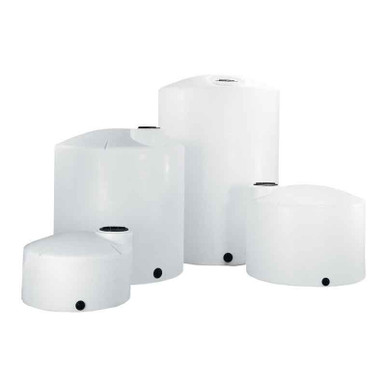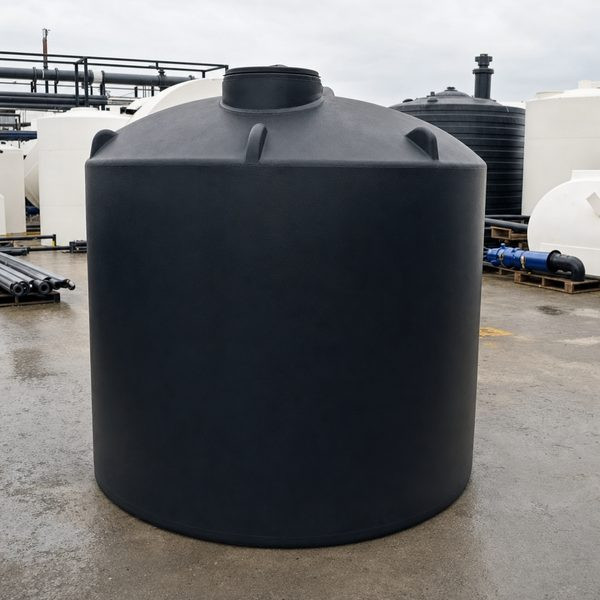
3000 Gallon Vertical Liquid Storage Tank - Natural White (95" x 109") #40754: Complete Buyer's Guide
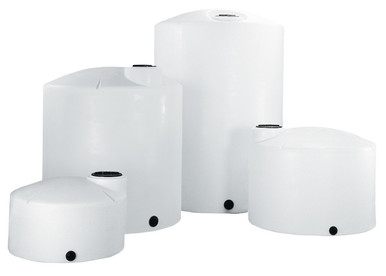
A 3,000-gallon vertical liquid tank from Norwesco for bulk fertilizer and ag-chemical storage, seamlessly molded in 1.5-specific-gravity polyethylene with translucent level-reading walls.
Specifications at a Glance
Every figure below is pulled straight from the live product record for this exact tank — the same data on the product page, so what you read here and what you buy never disagree.
Standards & Materials
- ASTM D1998 — Standard Specification for Polyethylene Upright Storage Tanks. Governs wall-thickness and hydrostatic design for vertical rotomolded poly tanks of this class.
- FDA 21 CFR 177.1520 — Olefin polymers. The food-contact regulation the FDA-grade resin in this tank is compounded to meet.
- Specific gravity rating 1.5 — the tank is engineered for liquids up to 1.5× the density of water (water is about 8.34 lb/gal). Confirm your fluid’s SG before storage.
Product Overview
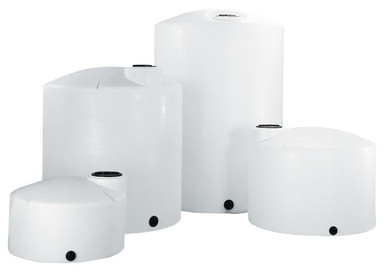
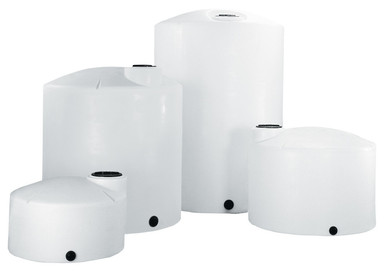
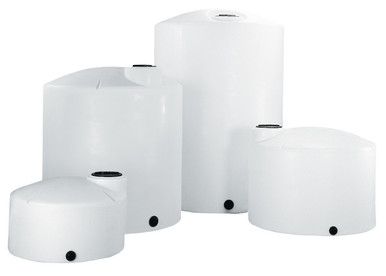
The 3,000-gallon vertical liquid tank is a bulk fertilizer and ag-chemical reservoir sized for a real operation — the kind of volume a custom applicator draws down across a spray season or a co-op holds for fill-station service. Norwesco builds it as a stout vertical cylinder, 109 inches tall on a 95-inch diameter, a proportion that keeps a thirty-eight-thousand-pound full load reasonably low while still standing tall enough to gravity-feed a transfer pump. Empty, the shell weighs 450 pounds.
It is rotationally molded in one seamless shot from virgin linear polyethylene rated to 1.5 specific gravity, so it carries dense liquids — up to 12.5 pounds per gallon — that would overload a water-grade tank. The walls are translucent natural white, which lets you read the liquid level straight through the side without opening the lid and reflects sunlight to keep heat-sensitive chemistry a few degrees cooler. The resin is FDA-compliant for food-grade contact.
At 3,000 gallons the loaded weight — about 37,980 pounds at the rated specific gravity — demands an engineered foundation, not a casual pad. The outlet is a 2-inch fitting with a 2-inch siphon tube, factory-installed and leak-tested for clean bottom draw, and the 16-inch lid opens the top for fill, venting, and inspection. Norwesco backs the tank with a 3-year warranty.
Technical Drawing
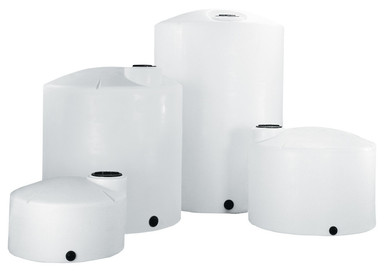
Official Norwesco technical drawing — 3000 Gallon Vertical Liquid Storage Tank - Natural White (95" x 109") #40754
Key Features and Specifications
- 3,000-gallon capacity — sized for agricultural chemical and fertilizer storage
- Constructed from virgin linear polyethylene (HDPE) with 1.5 specific gravity rating — handles liquids up to 12.5 lbs/gal
- 109" tall x 95" diameter — compact vertical footprint
- 450 lbs empty, approximately 37,980 lbs when full at rated specific gravity
- 2" fitting with 2" siphon NPT outlet fitting — factory installed and leak-tested
- 16" lid opening for fill, venting, and interior access
- FDA approved for potable water and food-grade liquid contact
- 3 Year Warranty from Norwesco against manufacturing defects
- Translucent white walls allow visual level monitoring without opening the tank and reflect sunlight to keep contents cooler
- Rated for continuous service up to 120 F / 48 C
- Seamless one-piece rotational molding — no seams, no welds, no leak points
- Manufactured by Norwesco — a leading name in rotomolded polyethylene tanks
- Install on a level, compacted surface. Ensure adequate clearance above for lid access and around the perimeter for plumbing connections and visual inspection
- Ships via dedicated freight carrier due to oversized dimensions — contact us for delivery timeline and site access requirements
Installation and Setup Guide
A 3,000-gallon chemical tank lives or dies by its foundation. Nineteen tons of liquid concentrated under a 95-inch circle is a load you engineer for deliberately — and because the contents are agricultural chemistry, you also engineer for what happens if the tank ever weeps.
Site Preparation
Set this tank on a concrete pad at least four inches thick (six is better at this volume), engineered to carry the full 37,980-pound load and finished flat to within a quarter inch across the entire 95-inch base. Where the stored chemical warrants it, build the pad with containment — a curbed slab or a lined berm sized to hold the tank's volume — so a leak is captured rather than released. Site it where a tender truck or fill line can reach.
Placement and Connections
Leave three feet of clearance around the perimeter for service and spill response. Plumb the 2-inch siphon outlet to your transfer pump by the shortest run, and use chemical-rated flexible couplings — not rigid pipe — for the first foot off the fitting, since a tank this large moves measurably as it fills, empties, and cycles through temperature. Choose gasket and valve materials compatible with the specific chemical, not just the threads.
Venting
Venting a 3,000-gallon chemical tank is both a structural and a safety matter. Size the vent to your peak fill and draw so the wall neither collapses under vacuum nor bulges under pressure, and if the stored chemical gives off vapor, fit a pressure/vacuum relief vent rated for that chemistry rather than a plain atmospheric screen.
Maintenance and Long-Term Care
Maintenance on a bulk chemical tank is part inspection, part chemical discipline. The polyethylene asks little; the contents ask that you watch compatibility and containment as closely as the shell.
Quarterly Inspection Checklist
- Shell and base: walk the full 95-inch circumference looking for bulging, stress whitening, or weeping, with the closest attention on the lower wall where hoop stress peaks. Any distortion there is a stop-and-investigate finding on nineteen tons.
- Fittings and seals: hand-check the siphon outlet and inspect every gasket and valve for chemical attack — swelling, hardening, or discoloration of a seal is an early warning the elastomer is incompatible. A quarter turn past finger-tight on the poly threads, never a wrench.
- Foundation and containment: confirm the engineered pad is level and the containment curb or berm is intact and clear of debris.
- Vent: verify the relief vent is clear and functioning — a blocked vent on this volume can deform the wall in one transfer.
Cleaning and Chemical Changeover
Before switching to a different chemical, decontaminate the tank exactly per the chemical manufacturer's protocol — residues of one ag chemical can react with or contaminate the next, and some combinations are hazardous. Triple-rinse with a compatible neutralizing or rinse solution, capture and dispose of the rinsate according to the product label and local regulation, and confirm the new chemical is compatible with both the polyethylene and every seal in the system before refilling.
UV and Weather Protection
The translucent white wall reflects sun and runs cooler than a dark tank, but it does let some light through, which can encourage algae in a water-based solution and accelerate UV aging of certain chemistries. In intense sun, inspect the wall annually and consider a shade structure for both the tank's longevity and the stability of light-sensitive contents.
Alternatives and Comparisons
At 3,000 gallons the real decision is geometry and bottom shape. This flat-bottom vertical holds bulk liquid efficiently and drains through a siphon tube, which is ideal for storage and transfer. If your process needs the tank to empty completely and self-clean between batches, the 30-degree cone-bottom version of this volume drains to the last drop through its apex — at the cost of height and a required stand. Step down to a 2,100 for a tighter site, or up to a 4,200 or 5,000 for greater bulk capacity.
Other 3000-Gallon Options

Frequently Asked Questions
How long will the 3000 Gallon Vertical Liquid Storage Tank - Natural White (95" x 109") #40754 last?
Used within its 1.5 SG and 120 F ratings, with compatible chemistry and a sound engineered pad, a tank this size routinely runs 15 to 20 years. The dominant variables are foundation quality and chemical compatibility — a true slab and a chemistry the polyethylene and seals tolerate are what carry the seamless shell to the long end of that range.
What chemicals can I store in this tank?
It is rated to 1.5 specific gravity and built for agricultural chemicals, fertilizers, herbicides, pesticides, and industrial solutions within that density. The resin is also FDA-compliant for food-grade liquids. It is not for gasoline, diesel, solvents, or any flammable, and certain oxidizers and hydrocarbons attack polyethylene — always verify your specific chemical and its concentration against a compatibility chart, and confirm your seal materials too.
What kind of foundation does a 3000-gallon tank need?
Full it weighs about 37,980 pounds — roughly nineteen tons — so it requires an engineered concrete pad, at least four to six inches thick, designed for the load and dead level across the 95-inch base. For hazardous or regulated chemistry, build secondary containment into the foundation.
Does this tank come with a warranty?
Norwesco's three-year warranty answers for manufacturing defects — molding voids, pinholes, and factory fitting flaws. Overloading past 1.5 SG, an inadequate foundation, chemical attack from an incompatible substance, and impact are excluded. Keep records and pad engineering on file given the tank's value.
Can I install this tank underground?
No. This is an above-ground vertical tank; its walls cannot resist soil pressure and burying it guarantees collapse and voids the warranty. Underground chemical storage requires purpose-engineered tankage with appropriate containment.
Buying Considerations
Three things to settle before ordering. First, the foundation: have it engineered for nineteen tons, with containment if the chemistry requires it. Second, compatibility: confirm your chemical and concentration against the polyethylene and every seal and valve in the system. Third, the freight — at 109 inches tall and 95 wide this tank moves by dedicated oversize carrier, and the site needs crane or heavy-forklift access to set it. Call us early to coordinate carrier, unload, and slab timing.
Related Products You May Need
Questions? Call (866) 418-1777 — our team knows these products inside and out and can help you select the right tank for your application.
Recommended Tanks for This Guide
Live pricing, updated automatically · estimate freight to your ZIP.