4000 Gallon Vertical Liquid Storage Tank: Complete Buyer's Guide
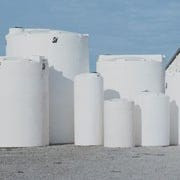
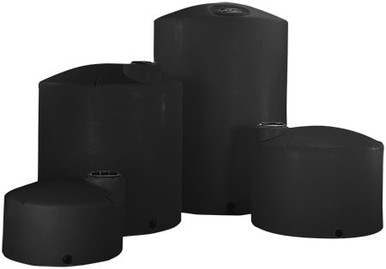
A 4,000-gallon Norwesco vertical built for serious bulk chemical and fertilizer storage — 125 inches tall on a 102-inch base, over twenty-five tons when full, and fitted with a 3-inch siphon outlet to move volume quickly. The 1.5-SG wall accommodates liquids weighing up to 12.5 pounds per gallon.
Specifications at a Glance
Every figure below is pulled straight from the live product record for this exact tank — the same data on the product page, so what you read here and what you buy never disagree.
Standards & Materials
- ASTM D1998 — Standard Specification for Polyethylene Upright Storage Tanks. Governs wall-thickness and hydrostatic design for vertical rotomolded poly tanks of this class.
- FDA 21 CFR 177.1520 — Olefin polymers. The food-contact regulation the FDA-grade resin in this tank is compounded to meet.
- Specific gravity rating 1.5 — the tank is engineered for liquids up to 1.5× the density of water (water is about 8.34 lb/gal). Confirm your fluid’s SG before storage.
Product Overview
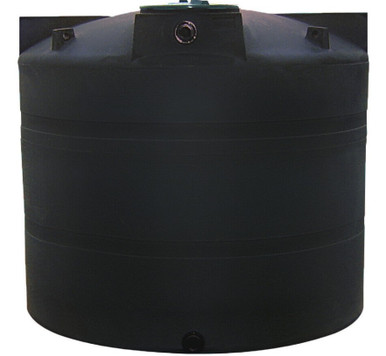
The 4000 Gallon Vertical Liquid Storage Tank is the size where on-site storage starts to consolidate a real chunk of a tanker delivery. At 125 inches tall on a broad 102-inch base, it holds a substantial reserve while keeping the loaded mass reasonably low for its volume. This is a planned, engineered installation rather than a roll-into-place tank.
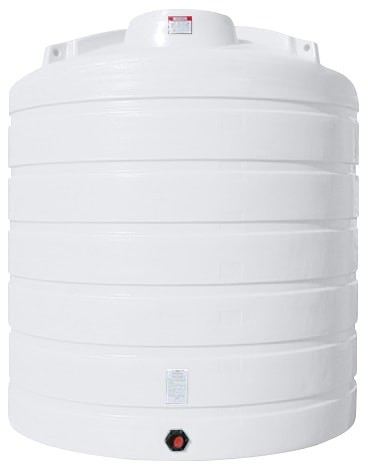
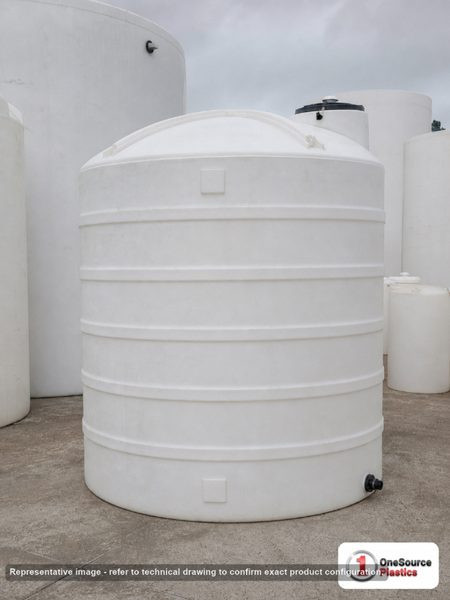
It is plumbed for throughput. The outlet is a 3-inch fitting with a 2-inch reducer and a 3-inch siphon tube, sized to fill or empty thousands of gallons without choking the flow. The wide base spreads the load across 56.7 square feet, easing pad pressure relative to a narrower tank of similar capacity. Translucent white walls allow level reading and reflect heat across the large surface.
Empty, the tank weighs 760 pounds. Filled with a 1.5-SG liquid it reaches about 50,800 pounds — over twenty-five tons that require a professionally engineered foundation. Top access for cleaning and instrumentation is through the 16-inch lid. The factory ships no inlet fitting; add a bulkhead to match your system.
The tank is molded seamlessly with UV stabilizer in the resin and Norwesco's 3-year defect warranty. Its size requires dedicated freight and planned site access, which we coordinate with you.
Technical Drawing
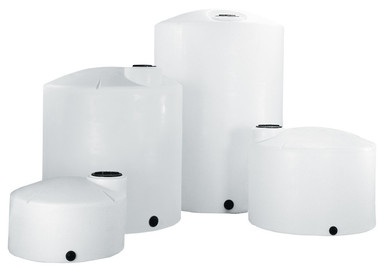
Official Norwesco technical drawing — 4000 Gallon Vertical Liquid Storage Tank
Key Features and Specifications
- 4,000-gallon capacity — sized for agricultural chemical and fertilizer storage
- Constructed from virgin linear polyethylene (HDPE) with 1.5 specific gravity rating — handles liquids up to 12.5 lbs/gal
- 125" tall x 102" diameter — compact vertical footprint
- 760 lbs empty, approximately 50,800 lbs when full at rated specific gravity
- 3" with 2" Reducer and 3" Siphon tube NPT outlet fitting — factory installed and leak-tested
- 16" lid opening for fill, venting, and interior access
- FDA approved for potable water and food-grade liquid contact
- 3 Year Warranty from Norwesco against manufacturing defects
- Translucent white walls allow visual level monitoring without opening the tank and reflect sunlight to keep contents cooler
- Rated for continuous service up to 120 F / 48 C
- Seamless one-piece rotational molding — no seams, no welds, no leak points
- Manufactured by Norwesco — a leading name in rotomolded polyethylene tanks
- Install on a level, compacted surface. Ensure adequate clearance above for lid access and around the perimeter for plumbing connections and visual inspection
- Ships via dedicated freight carrier due to oversized dimensions — contact us for delivery timeline and site access requirements
Installation and Setup Guide
At over twenty-five tons full, the 4000 is a structural installation where the foundation and access are engineered up front. The wide base helps spread the load, but the absolute weight still demands a proper slab.
Site Preparation
This tank requires a reinforced concrete foundation designed for the full 50,800-pound load and sized to support the entire 102-inch base. Have a structural engineer specify the slab for your soil. The surface must be flat across the diameter within a tight tolerance — at this weight and height a high spot concentrates damaging stress in the lower wall. Plan the pad, truck access, and offloading equipment together before delivery.
Placement and Connections
Set the tank so the 3-inch siphon outlet points at your transfer system, keeping the run short. Use schedule-80 PVC or stainless on the bulkhead, hand-tighten with a strap-wrench finish, and add a flexible section before rigid pipe to absorb the substantial thermal movement. Build permanent, safe access to the lid and leave generous clearance for inspection.
Venting
Moving thousands of gallons through a 3-inch line shifts large air volumes, so generous venting is essential to prevent vacuum creasing on draw or over-pressure on fill. Provide a vent sized to your maximum flow rate, and for any off-gassing chemical use a pressure-vacuum relief vent rated for the product.
Maintenance and Long-Term Care
A tank holding this much value justifies a disciplined quarterly inspection using your permanent access.
Quarterly Inspection Checklist
- Lower wall: Inspect the high-stress base ring for bulging, distortion, or a flat spot against the slab.
- Outlet: Check the 3-inch fitting and siphon for weeping under the head and snug by hand.
- Foundation: Examine the engineered slab for cracking or settlement and confirm it remains level.
- Vent: Verify the vent is fully clear; at this volume a blocked vent can deform the wall in one fast cycle.
Cleaning
Empty the tank fully through the 3-inch siphon outlet, then flush from above with a neutralizing rinse for the prior chemical. Follow the manufacturer's decontamination procedure and handle the large rinse volume per its safety data sheet as a planned step.
UV and Weather Protection
The tall south wall gathers significant sun; check it annually for chalking. In severe-sun regions, shading the sunny side protects the surface of this large, costly tank.
Alternatives and Comparisons
At 4,000 gallons the question is volume strategy. One tank like this consolidates storage onto a single foundation; two smaller tanks give redundancy and let you service one while the other works. Stepping up to a 5,000 or 6,000 buys more reserve if a full tanker is your unit of purchase. For batch processes needing a complete drain at this scale, a cone-bottom on a steel stand is the right tool. And for bulk water, the matching water tank costs less by carrying a lighter 1.1-SG wall than this 1.5-SG construction.
Frequently Asked Questions
How long will the 4000 Gallon Vertical Liquid Storage Tank last?
Given an engineered foundation, use within the 1.5-SG rating, and compatible chemistry, fifteen to twenty years is a sound estimate — and carefully maintained tanks of this build frequently last longer. The seamless shell and in-resin UV package make the vessel durable; what shortens it is an overloaded or vacuum-creased wall, a chemical attack, or a foundation never designed for twenty-five-plus tons.
What chemicals can I store in this tank?
Rated to 1.5 SG, it suits most liquid fertilizers and ag chemicals, plus many industrial acids and bases up to 12.5 pounds per gallon. Polyethylene tolerates those well, but strong oxidizers and many solvents will damage it, and fuels are never allowed. Check your specific chemical on a polyethylene compatibility chart and confirm its weight before filling.
What kind of foundation does a 4000-gallon tank need?
A full load is roughly 50,800 pounds, requiring a reinforced concrete foundation engineered by a structural professional and sized to support the full 102-inch base. The wide base eases pad pressure, but a dead-level engineered slab is essential at this weight.
Does this tank come with a warranty?
Yes. Three years of Norwesco coverage applies to material and workmanship defects such as fitting and molding flaws. Not covered: loads over 1.5 SG, chemical attack, an inadequate or unengineered foundation, and impact. Keep your invoice and installation documentation on file for any claim.
Can I install this tank underground?
No. This above-ground vertical has flat walls that cannot take soil pressure and would buckle if buried. For below-grade storage at this scale, use vessels engineered with ribbed, reinforced walls for soil loads.
Buying Considerations
Plan three things before ordering. First, the foundation — over twenty-five tons full requires a professionally engineered reinforced slab specified ahead of delivery. Second, access and offloading — at 760 pounds empty and over ten feet tall, it ships by dedicated freight and needs equipment and clear access to set. Third, the product: stay within the 1.5-SG rating and check its weight before you fill. Reach out early so we can coordinate the delivery and site requirements with you.
Related Products You May Need
Questions? Call (866) 418-1777 — our team knows these products inside and out and can help you select the right tank for your application.
Recommended Tanks for This Guide
Live pricing, updated automatically · estimate freight to your ZIP.