Loading Dock and Receiving Site Design for Tank Delivery: Crane, Forklift, and Slide-Off Methods
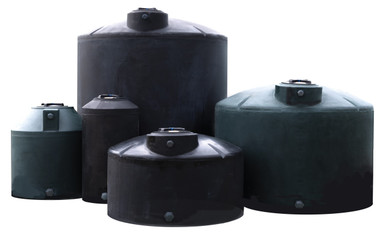
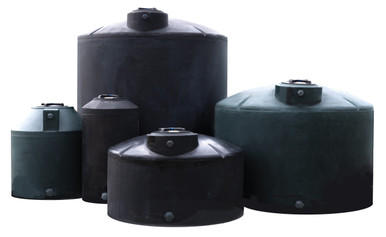
Tank delivery is the moment where most of a tank purchase project's risk concentrates. The tank arrives on the truck. The driver wants to be unloaded in 30 minutes and back on the road. The site needs to receive a 200-2,800 lb empty polyethylene shell that may be 5-13 feet tall and 4-12 feet wide, position it on its final pad or staging area, and not damage the tank, the truck, the driver, or the receiving crew. Three offload methods dominate: forklift, crane (boom truck), and slide-off (truck-tilting or roller). Picking the right method — and engineering the site to support it — turns a high-risk hour into a routine procedure.
This guide walks the three offload methods, dimensional and weight thresholds for each, site preparation requirements, and the worked decisions that determine which is right for a specific tank delivery. SKUs and weights cited come from the OneSource Plastics commodity catalog (Norwesco, Snyder, Chem-Tainer, Enduraplas, Bushman). For freight quote with offload-method specification call 866-418-1777 or use the Freight Cost Estimator.
Why Offload Method Matters
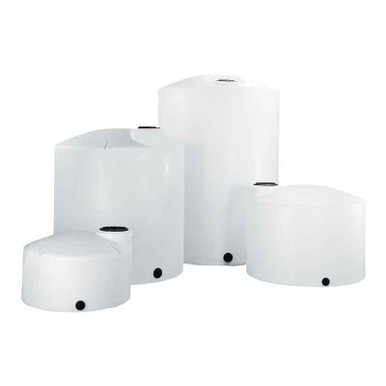
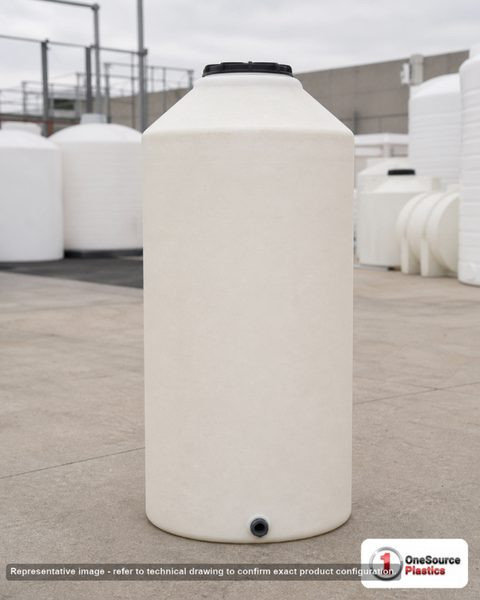
Polyethylene tank shells are large, awkward, and surprisingly easy to damage during offload. A vertical 2,500-gallon tank is roughly 96" diameter, 96-102" tall, and 350-450 lb empty. Drop it from 18" onto concrete and the shell can crack at the contact line, often along the molded boss for a fitting. Catch it with a single forklift fork pressed against the shell sidewall (not under a pallet) and you can punch through the wall. Strap it incorrectly to a crane hook and the strap can chafe through the molded surface. Each offload method has specific failure modes that proper site preparation prevents.
The cost of a damaged tank at receiving is the tank price (often $1,500-$30,000) plus the freight to return-ship (often $300-$1,500) plus the freight to send a replacement (another $300-$1,500) plus 7-21 days of project delay. Doing it right at offload is much cheaper than fixing it after.
Method 1: Forklift Offload
The default for tanks under 2,500 gallons that arrive on standard pallets or with engineered forklift slots molded into the base. The forklift drives up to the truck side or rear, fork tines slide under the tank pallet or into the molded slots, lift, back away, place on staging area or final pad.
Dimensional and weight constraints
- Tank weight (empty): typically 50-450 lb for tanks up to 2,500 gallon. Most warehouse forklifts (5,000 lb capacity) handle this trivially.
- Tank diameter: up to about 96". Beyond that, the tank often exceeds forklift mast clearance or fork-tine length.
- Tank height: up to about 96-102". Taller tanks need more mast lift than most warehouse forklifts provide.
- Pallet or fork-slot geometry: standard 40"x48" pallet or factory-molded slots work; non-standard footprints may require chain-and-strap adapter.
Site requirements
- Forklift on-site at appointment time (rented or owned, 5,000+ lb capacity).
- Operator with current forklift certification.
- Hard-surface drive and offload area (concrete or compacted gravel rated for the loaded forklift weight, typically 8,000-12,000 lb total).
- Approach clearance: minimum 12' wide drive lane to truck position.
- Staging area: large enough to set the tank flat without obstruction. Minimum 1.5x tank diameter clear floor area.
Tanks well-suited to forklift offload
Most catalog tanks under 2,500 gallon. Examples: Norwesco MPN 41500 (1,000 gal black vertical, ~225 lb empty), MPN 40892 (1,000 gal black, ~230 lb), MPN 43808 (1,525 gal black, ~290 lb), MPN 43804 (1,075 gal black, ~240 lb), MPN 40860 (1,350 gal black, ~280 lb), MPN 41294 (2,635 gal HDPE black horizontal, ~520 lb — horizontal because of height profile that suits forklift mast). Smaller utility tanks like Norwesco MPN 44963 (100 gal portable loaf, ~50 lb) and MPN 60204 (100 gal applicator saddle, ~55 lb) are easily forklift-handled.
Failure modes to avoid
- Punch-through: never put fork tines directly against the tank shell. Always under a pallet or in molded slots.
- Tip-over during transit: tall vertical tanks on forks can become unstable during a transit move. Keep mast vertical and travel slow; use spotters on routes with grade or turns.
- Drop on placement: lower the tank slowly to within 1" of pad surface, then tilt forks forward gently to seat. Do not let the tank free-fall the last 6-12".
Method 2: Crane (Boom Truck) Offload
For tanks that exceed forklift handling envelope — typically 2,500+ gallons, > 8' tall, or oversized custom tanks — crane offload is standard. A boom truck (typically 8-30 ton capacity) parks adjacent to the delivery truck, the operator rigs slings around the tank shell, lifts vertically, swings to the staging or final pad position, lowers and seats.
Dimensional and weight constraints
- Tank weight (empty): typically 350-2,800 lb for 2,500-16,500 gallon range. Easily within boom truck capacity.
- Boom reach: truck must be positioned so the boom can reach both pickup point (delivery truck deck) and placement point (final pad). Reach typically 25-60' depending on truck.
- Lift height: boom must clear the tank's full height plus 6' safety clearance during the swing.
- Sling rigging: nylon web slings (not chains) wrapped around the tank shell at the molded reinforced shoulder area. Spreader bar between slings prevents shell pinch.
Site requirements
- Boom truck delivery scheduled (separate vendor; coordinate with tank delivery).
- Sufficient swing radius around the boom truck position. No overhead power lines, tree branches, building eaves, or other obstructions in the swing arc.
- Stable ground for outrigger pads if the boom truck deploys outriggers (most do for tanks > 1,500 lb).
- Operator with current crane operator certification (OSHA 1926.1427 mandate for crane operators on construction sites).
- Spotters and ground crew with hand-signal training or two-way radio.
Tanks well-suited to crane offload
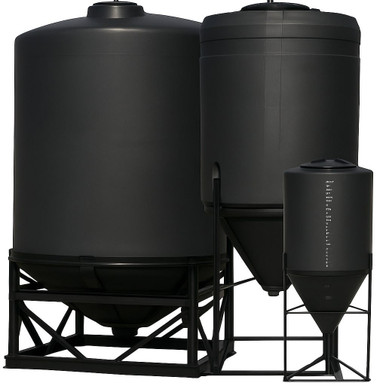
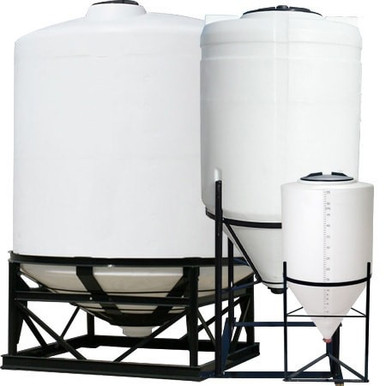
Tanks > 2,500 gallon and most cone-bottom tanks. Examples: Norwesco MPN 43852 (1,000 gal 45° cone bottom, ~280 lb but tall geometry), MPN 43854 (1,500 gal 45° cone bottom, ~360 lb), MPN 40817 (1,600 gal 30° cone, ~390 lb), MPN 40359 (1,050 gal 20° cone with poly stand, ~340 lb — ships with stand pre-attached, awkward forklift profile). Larger SKUs in the Enduraplas TLV05000 (5,000 gal, ~1,100 lb), TLV10000 (10,000 gal, ~2,600 lb) range almost always crane-offload.
Failure modes to avoid
- Sling pinch: single sling around a flexible shell pinches the wall under load. Always use two slings with a spreader bar to maintain shell roundness.
- Powerline contact: the most common crane fatality cause. Survey overhead clearance before truck positioning. OSHA 1926.1408 requires 10' minimum clearance from energized lines.
- Outrigger pad failure: outriggers on soft ground can sink under load and tilt the crane. Use cribbing pads (steel or hardwood) under each outrigger on grass, gravel, or unstable surfaces.
- Wind drift: tall tanks present sail area. Crane lifts above 25 mph wind are unsafe; check NOAA wind forecast for delivery day and have a contingency plan.
Method 3: Slide-Off (Roller, Tilt, or Skid)
For very large tanks and certain horizontal tank deliveries, slide-off methods skip lifting entirely. The truck deck tilts (some flatbeds are mechanically tiltable), or rollers / skids are positioned, and the tank slides off the truck onto the staging pad. Properly executed, this is the fastest offload method for the largest tanks — but it requires perfect site preparation and is the highest-stakes if executed poorly.
Dimensional and weight constraints
- Tank weight (empty): 500-3,000+ lb. Bigger tanks favor slide-off because crane reach gets harder at extreme size.
- Truck capability: must be a tilt-deck or roll-off equipped flatbed. Standard flatbeds cannot slide-off without auxiliary roller setup.
- Receiving pad geometry: ramp grade or roller setup matched to truck deck height. Pad surface must accept the slide loading without damage.
Site requirements
- Tilt-deck or roll-off truck specified at freight booking (NOT all carriers offer; specialty service).
- Receiving pad with hardened surface (concrete or steel-plated wood) where the tank lands.
- Ramped or roller-equipped transition between truck deck and pad. Typical 8-15° ramp angle.
- Trained ground crew with controlled-release tag lines on tank to manage slide speed.
- Wheel chocks / blocking on truck wheels (truck cannot roll forward as load shifts).
Tanks well-suited to slide-off
Large horizontal leg tanks where the geometry self-supports during the slide and the tank lands on its molded saddle legs. Examples: Norwesco MPN 40775 (2,035 gal black HDPE horizontal elliptical leg tank, ~480 lb), MPN 41294 (2,635 gal black HDPE horizontal, ~520 lb). Also large cone-stand combinations where a crane lift is impractical due to overall height. For very large vertical tanks (8,000-16,500 gallon range), slide-off may be the only practical method — coordinate with the manufacturer's logistics group at order placement.
Failure modes to avoid
- Uncontrolled slide: if the slide accelerates beyond walking pace, the landing impact can crack the tank. Use tag lines and friction control.
- Off-axis landing: if the tank rotates during slide, it lands skewed and may not seat properly on the foundation. Pre-mark the intended landing position; use ground crew to manage rotation.
- Truck movement during slide: as the load shifts off the truck, the truck's center of gravity changes. Ensure parking brake and wheel chocks are engaged.
- Pad damage: a hard-landing tank can spall or crack a fresh concrete pad. Wait the recommended cure time for the pad before slide-off delivery.
Selection Matrix
| Tank capacity | Tank type | Recommended offload |
|---|---|---|
| Up to 1,000 gal vertical | HDPE / XLPE vertical | Forklift |
| 1,000 - 2,500 gal vertical | HDPE / XLPE vertical | Forklift if site permits; crane if site cannot accommodate forklift |
| Any horizontal leg tank | HDPE elliptical leg / cradle | Forklift up to 2,000 gal; slide-off above |
| Any cone-bottom tank | Cone bottom on stand | Crane (geometry awkward for forklift) |
| 2,500 - 5,000 gal vertical | HDPE / XLPE vertical | Crane |
| 5,000 - 10,000 gal vertical | XLPE typically | Crane or slide-off depending on site |
| 10,000+ gal vertical | XLPE | Slide-off + crane assist; coordinate with manufacturer |
Worked Site Design Decisions
Case 1: 1,000-gallon vertical to commercial dock with rented forklift
Tank: Norwesco MPN 41500 (1,000 gal black, ~225 lb, 64" diameter, 80" tall).
Site: warehouse with concrete drive lane and 5,000 lb capacity rental forklift available for the day.
Method: forklift. Specify standard freight (not lift-gate). Driver pulls truck to dock, forklift driver lifts tank from truck deck, transports to staging within warehouse. Total offload time: 15-20 minutes. Risk: low.
Case 2: 2,500-gallon vertical to greenfield agricultural site, no forklift
Tank: Enduraplas MPN THV02500 (2,500 gal XLPE, ~420 lb, ~96" diameter, ~96" tall).
Site: open pasture, fresh concrete pad 30' from truck-accessible road. No forklift on-site.
Method: boom truck. Schedule local crane vendor (10-12 ton boom truck typical) to arrive at delivery appointment time. Crane operator rigs the tank with double-sling and spreader bar, lifts from delivery truck deck, swings to pad. Total offload: 30-45 minutes including rigging setup. Crane vendor cost: $400-$700 for a 1-hour minimum call. Risk: moderate; key risk is overhead clearance — verify no overhead lines across the swing path.
Case 3: 5,000-gallon XLPE delivery to industrial process site
Tank: Enduraplas MPN TLV05000 equivalent (5,000 gal XLPE, ~1,100 lb, ~120" diameter, ~144" tall).
Site: industrial chemistry plant with on-site 25-ton boom truck and trained operators.
Method: on-site crane. Coordinate delivery time with crane availability. Plant operator pre-positions tank on staging pad, plumbing crew does final connection. Total offload: 45-60 minutes. Risk: managed by trained on-site team.
Case 4: 10,000-gallon XLPE delivery to remote tank farm
Tank: Enduraplas MPN TLV10000 (10,000 gal XLPE, ~2,600 lb, ~141" diameter, ~189" tall).
Site: remote rural site, foundation pad poured but no crane within 100 miles.
Method: tilt-deck flatbed slide-off. Coordinate with manufacturer freight team to specify tilt-deck truck. Pre-build skid ramp from truck deck to landing pad. Two ground crew with tag lines control the slide. Total offload: 30-45 minutes including site preparation. Risk: high if site preparation is incomplete; low if executed per plan. Always over-prepare for slide-off.
Case 5: 2,635-gallon horizontal leg tank to agricultural service yard
Tank: Norwesco MPN 41294 (2,635 gal black HDPE horizontal elliptical leg tank, ~520 lb).
Site: ag service yard with concrete pad and on-site loader-tractor (5,000 lb capacity at 8' reach).
Method: forklift / loader. Horizontal geometry sits flat in transport, slides under loader forks easily. Loader lifts and places on integrated saddles. Total offload: 20-30 minutes. Risk: low.
Coordinating Offload at Order Placement
The most important moment in offload planning is at the order placement, not at delivery. Specify on the order:
- Delivery type (commercial dock, residential, limited-access, no-dock industrial).
- Equipment available at receiving (forklift capacity, on-site crane availability, none).
- Required carrier services (lift-gate, tilt-deck, residential, inside delivery).
- Delivery appointment window (forklift / crane vendor must be available).
- Site contact name and direct phone for driver coordination.
OneSource freight quotes capture this on the booking form; for nonstandard offload (slide-off, crane assist, multi-tank consolidated delivery) call 866-418-1777 directly to coordinate with the freight team.
Pad and Foundation Preparation
The receiving pad is half the install. ASTM D1998 specifies pad requirements for polyethylene tank installation: flat to within 1/2" over the full tank footprint, level to within 1/4" over any 4' span, hardened surface (concrete preferred; compacted gravel acceptable for tanks under 1,500 gallon), drainage to prevent ponding under the tank.
- Concrete pad: typical specification 6" reinforced concrete on 4" compacted gravel sub-base. Pad dimension at least 12" larger than tank diameter on all sides.
- Compacted gravel pad: minimum 8" compacted aggregate base. Acceptable for water tanks under 1,500 gallon in dry climates.
- Frost-line depth: in cold climates the pad sub-base should extend below local frost depth (24-72" depending on USDA zone) or use frost-protected shallow foundation design.
- Cure time: concrete pad needs 7 days minimum before tank delivery; 14-28 days preferred for full design strength.
Internal Resources
- Lead Time and Tank Logistics
- Tank Material Selection
- Tank Plumbing System Design
- Aboveground vs Belowground Storage
- Container vs Tank Form Factor
- Freight Cost Estimator
- Tank Sizing Calculator
- Contact OneSource
Source Citations
- OSHA 29 CFR 1910.178 — Powered Industrial Trucks (forklift operator certification)
- OSHA 29 CFR 1926.1427 — Crane Operator Certification
- OSHA 29 CFR 1926.1408 — Crane Power-Line Clearance Requirements
- ASTM D1998 — Standard Specification for Polyethylene Upright Storage Tanks (pad / foundation requirements)
- ANSI / ASME B30.5 — Mobile and Locomotive Cranes
- FMCSA cargo securement standards 49 CFR Part 393
- Norwesco published technical drawings, dimensional and weight specifications
- Enduraplas vertical tank technical specifications
- OneSource Plastics master catalog data, 2026-03-26 snapshot (9,419 products)
Recommended Tanks for This Guide
Live pricing, updated automatically · estimate freight to your ZIP.