Underground Storage Tank UST Conversion: Above-Ground Adaptation Strategies for Aging Sites
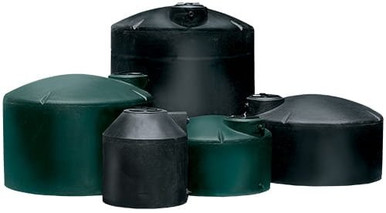
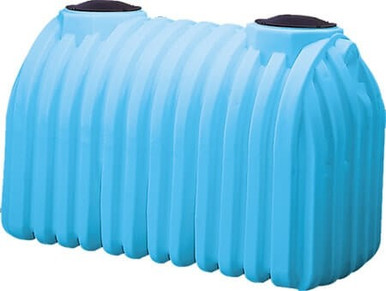
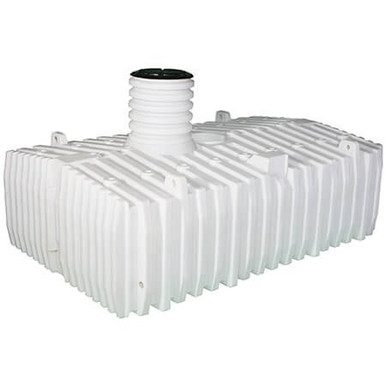
Across the United States, an inventory of roughly 540,000 federally regulated underground storage tanks is reaching the wall. The 2015 EPA UST rule revisions (40 CFR 280) tightened release-detection, spill prevention, and operator-training requirements; many tanks installed in the 1980s and 1990s now sit on the wrong side of one or more of those requirements. Site owners are facing the same decision: pay for full UST upgrade and replacement, or convert the site to an above-ground storage tank (AST) configuration and exit the UST regulatory regime entirely.
This guide walks the conversion playbook. We cite 40 CFR 280 (federal UST), 40 CFR 112 (SPCC for ASTs), NFPA 30 and NFPA 30A (flammable liquid storage and motor fuel dispensing), and reference real Norwesco, Snyder, Chem-Tainer, Enduraplas, and Bushman SKUs from the OneSource Plastics catalog. UST closure procedures cite EPA UST closure guidance; site owners should engage a state-licensed UST closure contractor for any actual decommissioning work — this is education, not a do-it-yourself manual.
Why Sites Are Converting UST to AST
The economic and regulatory drivers stack up:
- 2015 UST rule compliance gap. Walkthrough inspections every 30 days, sump and dispenser testing every three years, overfill prevention testing, release detection compliance for emergency-generator tanks. Tanks installed before 1988 often cannot meet current requirements without replacement or major upgrade.
- Single-wall tank phase-out. Many states have phased out single-wall steel UST entirely (CA, FL, MA, MN, NH, NJ, NY, PA, others). Even where federally allowed, single-wall has lost insurability.
- Insurance market. UST pollution liability insurance has tightened pricing for older tanks and small operators. Some carriers will not write new policies on tanks past 25 years.
- Closure cost trajectory. Excavation and disposal costs rise with delay; contaminated soil discovered during forced closure costs more than a planned closure with intact tank.
- AST simplicity. Above-ground tanks shift the regulatory regime from 40 CFR 280 (federal UST) to 40 CFR 112 (federal SPCC) plus NFPA 30 / 30A and state AST rules. SPCC is generally less burdensome and cheaper to maintain than UST compliance after the 2015 rule.
The conversion is not free; it shifts cost from ongoing UST compliance to a one-time AST capital project plus ongoing SPCC compliance. The break-even depends on tank age, fuel type, throughput, and state regulatory layer.
Step 1: UST Closure — What Has to Happen Before Anything Else
40 CFR 280 Subpart G governs permanent UST closure. The closure pathway depends on the tank and contents:
Closure-in-place (tank stays buried)
- Empty the tank (residue removed and disposed under RCRA / state waste rules).
- Render the tank safe (purge vapors, inert if flammable was stored).
- Fill the tank with an inert solid material — slurry, sand, or concrete (state-specific).
- Site assessment to determine if any release occurred. If yes, corrective action under 40 CFR 280 Subpart F.
- Notify the implementing agency at least 30 days in advance.
Closure by removal (tank excavated)
- Empty and render safe (same as above).
- Excavate the tank under a state-licensed UST contractor.
- Sample soils beneath and beside the tank per state procedure.
- Cut and dispose of the tank (typically sold for scrap if uncontaminated; landfill if not).
- Backfill, compact, and confirm site assessment results.
For most conversion projects, removal is preferred even when in-place is allowed — the AST replacement footprint often overlaps the old UST footprint, and excavation is going to happen anyway during AST pad preparation. Plan UST closure and AST construction as a unified project.
Site assessment (40 CFR 280.71-280.74)
The site assessment determines whether any release occurred during UST service. Requirements include soil sampling, groundwater sampling if a release is suspected, and submission of a closure report. If contamination is found, corrective action is triggered. State trust funds (where available) typically reimburse a portion of corrective-action cost; eligibility windows are tight and require enrollment before closure begins.
Step 2: AST Tank Selection by Service
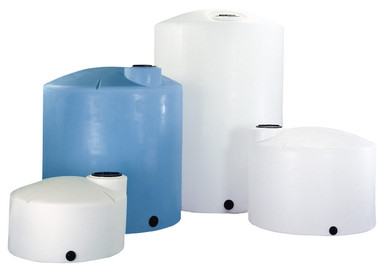
The AST replacement is sized by current and projected throughput, not historical UST capacity. Many UST sites carried 8,000 or 10,000 gallon tanks because the cost of multiple UST excavations was high. AST capacity is incremental — multiple smaller tanks tied to a manifold are often the right answer.
Diesel and motor fuel storage
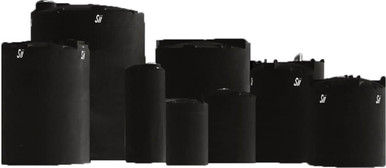
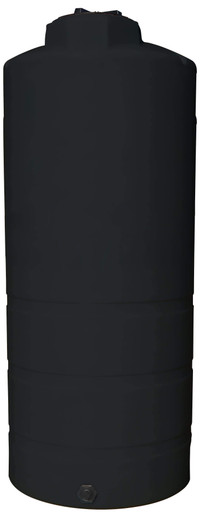
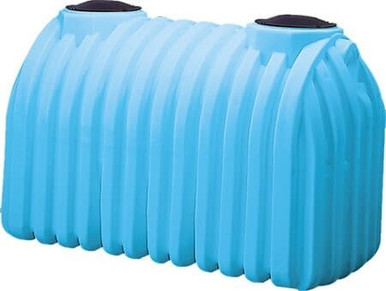
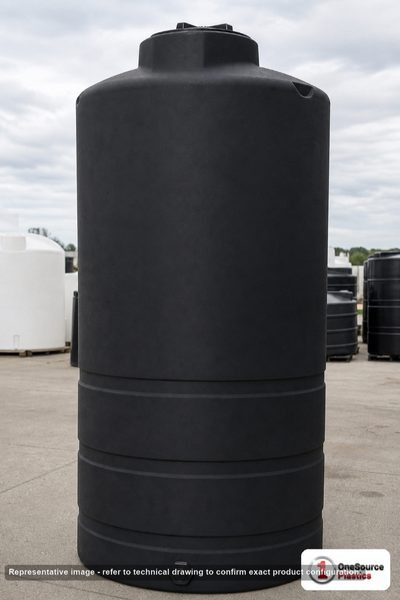
For non-retail diesel and gasoline storage at fleet, agricultural, and emergency-generator sites, polyethylene AST is widely deployed. Petroleum is HDPE-compatible across full service temperature; the engineering driver is SPCC-required secondary containment.
- Single-wall HDPE inside engineered berm. Common, lowest first cost. Berm sized at 110% of the tank capacity per 40 CFR 264.193 (RCRA) and SPCC guidance. Berm material: concrete, lined earth, or lined HDPE.
- Double-wall HDPE. Integral secondary containment, no separate berm. Examples: SII-5740102N95703 (Snyder 1,000 gallon double-wall, $5,899.99 list), SII-5740104N95703 series (Snyder 1,500-2,500 gallon double-wall).
- Steel double-wall AST. UL 142 listed; required for many retail motor fuel applications under NFPA 30A. Steel is outside the polyethylene catalog but the engineering pathway is similar.
Retail motor fuel dispensing has additional requirements under NFPA 30A and state fire marshal rules; the AST conversion path for retail gasoline is materially more complex than for fleet diesel and is often not economically attractive.
Heating oil (residential and small commercial)
Many residential UST programs (1,000-1,500 gallon heating oil) are converting to above-ground polyethylene or steel ASTs. For polyethylene, single-wall HDPE in a basement or garage with fire-rated room construction is common. Double-wall is required if outdoor or above an occupied space. Capacity is typically 275-500 gallons; SKU examples include the small-volume Norwesco rectangular and vertical lineup.
Used motor oil and waste oil
Generator status under RCRA matters. Small-quantity generators (less than 100 kg/month) and conditionally exempt small-quantity generators have lighter requirements; large-quantity generators have full Subtitle C applicability. For most fleet shops, used motor oil is managed under 40 CFR 279 (used oil management) rather than full hazardous waste rules. Polyethylene single-wall in a bermed area or polyethylene double-wall is the standard. SKU examples: EP-TFM5002 (500 gallon double-wall HDPE), SII-5740102N95703 (1,000 gallon double-wall).
DEF (diesel exhaust fluid)
DEF has no UST regulatory regime; the conversion is straightforward. ISO 22241 polyethylene tanks are used. SKU examples: EP-TFM2502 (250 gallon DEF), EP-TFM5002 (500 gallon DEF).
Chemical and process storage
Most chemical storage was already AST. Exceptions: large agricultural fertilizer (UAN, anhydrous ammonia), certain wastewater pretreatment chemistries, occasional acid storage at industrial sites. Conversion to AST follows the chemistry rules — XLPE for aggressive chemistry (see the polymer-selection guide), HDPE for mild chemistry.
Step 3: Site Survey and Pad Preparation
The AST footprint is larger than the equivalent UST because the AST sits on a pad at grade plus secondary containment. Site survey must address:
Footprint and access
- AST pad outer dimensions plus 4 feet minimum for inspection access on all sides (NFPA 30 requires 3 feet; engineering practice prefers 4-5).
- Truck access for fill and drain. Fill truck typically needs 12 feet of straight-pull access plus 60 feet turning radius.
- Setback to property line, building, ignition source per NFPA 30 and state fire code.
- Setback to public way, drinking water well, surface water per state DEQ rules. Setback distances vary materially by state.
Pad construction
The pad is a structural element, not a leveling slab. Sizing follows ASTM D1998 + soil bearing capacity:
- 4-6 inches reinforced concrete on 6-inch compacted base for vertical tanks under 5,000 gallons.
- 6-8 inches reinforced concrete on 8-12 inch compacted base for 5,000-15,000 gallon vertical.
- Slope: 0% for the tank pad itself, 1-2% for the surrounding containment area to drain to a sump.
- See our Tank Foundation Pad Engineering guide for detail.
Secondary containment
Sized per 40 CFR 112 SPCC: containment volume must equal or exceed the largest single tank capacity. For multiple tanks in shared containment, sized at 110% of the largest (some states use 100%, some 110%, some 125%). Materials:
- Reinforced concrete berm with sealed joints — most durable, highest first cost.
- Lined earth berm — middle cost; the liner is the critical component (HDPE 60 mil minimum, EPDM, or hypalon depending on chemistry).
- Prefabricated steel or polyethylene secondary containment basin — lowest first cost, fastest install, smallest capacities.
- Integral double-wall tank — eliminates separate berm; secondary containment built into the tank itself.
Dispensing and piping
Existing UST piping ran underground from tank to dispenser. AST piping is typically above-ground or shallow-buried. Considerations:
- Suction systems vs pressurized dispensing. Suction is simpler and avoids pressurized leak risk. Pressurized requires line leak detectors per 40 CFR 280 if any underground piping remains.
- Overfill prevention valves and high-level alarms per NFPA 30.
- Vent piping sized per NFPA 30 Section 22.7 for normal venting + emergency relief.
- Fire protection: dispensing area requires emergency shutoff, fire suppression per NFPA 30A.
Step 4: Regulatory Transitions — UST Out, AST In
The conversion shifts the site from one regulatory regime to another. The transition needs documentation in both:
Closing out UST
- Notice of Permanent Closure (state-specific form) submitted at least 30 days before closure.
- Closure assessment report submitted within 30-90 days after closure (state-specific).
- State UST registry update — tank status changed to closed.
- If state UST trust fund was used during operation, final reconciliation with the fund administrator.
- Annual UST fee discontinuation.
Standing up AST under SPCC (40 CFR 112)
- Update or write the SPCC Plan to reflect the new AST. The SPCC Plan must be PE-certified for facilities with greater than 10,000 gallons aggregate above-ground oil capacity (Tier I/II self-certification thresholds apply at lower volumes).
- SPCC trigger: any facility with aggregate above-ground oil storage greater than 1,320 gallons (and at least one container greater than 55 gallons), where a release could reach navigable waters.
- Containment sizing documented in the SPCC Plan.
- Inspection and testing schedules (monthly visual + STI SP001 or API 653 for steel; monthly visual for polyethylene).
- Spill response procedure and contact list.
State AST programs
Many states have AST regulatory programs separate from federal SPCC. Examples:
- California: APSA (Aboveground Petroleum Storage Act) — state-level AST registration and inspection program for facilities with aggregate above-ground storage greater than 1,320 gallons.
- Florida: 62-762 FAC — state AST rule with registration, secondary containment, and inspection requirements.
- Massachusetts: 527 CMR 9 — state AST rules within the state fire code.
- Washington: WAC 173-180 — state AST rule covering hazardous substances.
Verify state AST requirements early — they often add to federal SPCC requirements rather than replacing them.
Cost Comparison: UST Upgrade vs AST Conversion
| Cost Component | UST Upgrade (single 8K gal) | AST Conversion (single 8K gal equivalent) |
|---|---|---|
| UST closure (excavation + disposal) | Not applicable | $15-40K |
| Site assessment | Not applicable | $5-15K |
| Tank purchase + freight | $40-90K (FRP or fiberglass UST) | $8-25K (HDPE AST single or double-wall) |
| Excavation + setting + backfill | $25-50K | $3-8K (pad only) |
| Concrete pad + secondary containment | Included in tank work | $15-35K |
| Piping + dispensing + vent | $15-30K | $10-25K |
| Permits, engineering, PE certification | $5-15K | $3-10K |
| Annual UST compliance ongoing | $3-8K/yr | $0 |
| Annual AST compliance ongoing | $0 | $1-3K/yr |
| Project total (one-time) | $85-185K | $59-158K |
Ranges are illustrative and depend heavily on state, contractor market, contamination findings, and site complexity. The break-even shifts when:
- Site assessment finds contamination (corrective action runs $50K-$500K+ depending on extent).
- State trust fund covers part of UST closure or corrective action.
- UST is steel double-wall less than 15 years old (upgrade may be cheaper than full replacement).
- Site is a retail motor fuel station (NFPA 30A drives AST cost up significantly).
Common Conversion Mistakes
Mistake 1: Closing UST without trust fund pre-enrollment
Many state UST trust funds reimburse a portion of corrective action — but only if the tank owner enrolled before contamination was discovered or before closure began. Verify trust fund eligibility window first; closing the tank can disqualify the site.
Mistake 2: Sizing AST to UST capacity instead of throughput
UST tanks were oversized to amortize the high cost of underground installation. AST is incremental — multiple smaller tanks on a shared pad with manifold tie-in is often cheaper and more flexible than one large tank. See our Multi-Tank Manifolding guide.
Mistake 3: Forgetting state AST rules
Federal SPCC is the floor; many states layer AST registration, inspection, and reporting requirements on top. Engage state DEQ early and verify the full regulatory stack before pad pour.
Mistake 4: Underspecifying secondary containment
Earthen berms with inadequate liner fail SPCC inspections. Use double-wall AST or properly engineered concrete or lined containment. Earth-only berms (no liner) are not compliant for petroleum.
Mistake 5: Skipping the dispensing review
UST sites had pumps and dispensers configured for buried suction or pressurized lines. AST dispensing changes the geometry — line lengths, suction lift, vapor recovery, fire protection. Engage the dispensing equipment vendor early and confirm the AST geometry will work with your existing or replacement dispensers.
Mistake 6: Ignoring fire setback
NFPA 30 setback distances are non-negotiable. A site with marginal property line setback for an UST may not have setback for an AST. Verify setback compliance before sizing the tank.
When NOT to Convert
UST replacement (in-kind or upgrade) remains the right answer in some cases:
- Retail motor fuel dispensing under NFPA 30A — AST conversion is typically uneconomic and may not be permitted by local fire code.
- High-volume sites where AST footprint conflicts with site use (parking, traffic flow, building setback).
- Sites with newer (under 15 years) double-wall steel UST and full release detection — UST may meet 2015 rule with minor upgrade.
- Climate or operational considerations where above-ground storage creates problems (cold-climate freeze risk on certain fluids, fire risk in congested industrial yard, high ambient temperature on heat-sensitive chemistry).
Conversion Decision Quick-Reference
| Condition | UST Upgrade | AST Conversion |
|---|---|---|
| Pre-1988 single-wall steel UST | Rarely viable | Default |
| Newer (less than 15 yr) double-wall UST | Often viable | Optional |
| Retail motor fuel | Default | Rarely viable |
| Fleet diesel (non-retail) | Optional | Default |
| Emergency generator diesel | Optional | Default |
| Used motor oil / waste oil | Rarely viable | Default |
| Heating oil (residential) | Optional | Default |
| DEF | N/A | Default (no UST regime) |
| Chemical / process | Site-specific | Default |
Internal Resources
- Above-Ground vs Below-Ground Cost and Compliance Crossover
- Below-Grade Site Engineering Reality
- Tank Foundation Pad Engineering
- Multi-Tank Manifolding
- Tank Storage Compliance Audit Checklist
- DEF Storage Tank Selection
- Freight Cost Estimator
- Contact OneSource — conversion project consultation, AST sizing, double-wall RFQ
Source Citations
- 40 CFR 280 — Technical Standards and Corrective Action Requirements for Owners and Operators of Underground Storage Tanks (UST)
- 40 CFR 112 — Spill Prevention, Control, and Countermeasure (SPCC) Plan
- 40 CFR 264.193 — RCRA Secondary Containment for Tank Systems
- 40 CFR 279 — Standards for the Management of Used Oil
- NFPA 30 — Flammable and Combustible Liquids Code
- NFPA 30A — Code for Motor Fuel Dispensing Facilities and Repair Garages
- UL 142 — Standard for Steel Aboveground Tanks for Flammable and Combustible Liquids
- API 653 — Tank Inspection, Repair, Alteration, and Reconstruction
- STI SP001 — Standard for Inspection of Aboveground Storage Tanks
- EPA Office of Underground Storage Tanks — Closure and Site Assessment Guidance
- State AST regulations: California APSA, Florida 62-762 FAC, Massachusetts 527 CMR 9, Washington WAC 173-180
- Manufacturer technical data sheets: Norwesco, Snyder Industries, Chem-Tainer, Enduraplas, Bushman
- OneSource Plastics master catalog data, dated 2026-03-26 snapshot
Recommended Tanks for This Guide
Live pricing, updated automatically · estimate freight to your ZIP.