
Arizona Septic Tank Regulations — AAC R18-9, ADEQ 4.02 General Permit
Arizona Septic Tank Regulations
Arizona septic systems are unique due to AAC Title 18 Chapter 9, R18-9-A314 tank design, R18-9-E302 general permit, ADEQ and county agreements, and the high-desert environment.
The Governing Framework
Arizona regulates onsite wastewater under a state-rule-plus-county-delegation framework:
- Arizona Administrative Code (AAC) Title 18, Chapter 9 — Environmental Quality rules including all onsite wastewater provisions.
- AAC R18-9-A314 — Septic Tank Design, Manufacturing, and Installation Standards.
- AAC R18-9-E301 through E323 — General Permits covering 23 different system types (septic + dispersal combinations).
- Arizona Department of Environmental Quality (ADEQ) — state-level rule author and enforcer.
- County Environmental Health — all 15 Arizona counties hold Delegation Agreements with ADEQ and administer permits locally.
The 4.02 General Permit — R18-9-E302
Most Arizona homes use a septic system under the 4.02 General Permit (R18-9-E302). This covers a standard septic tank with gravity flow to a trench, bed, chamber, or seepage pit, handling less than 3,000 gallons per day. This permit is common for single-family homes.
Septic Tank Capacity — R18-9-A314
Arizona uses a bedroom-based capacity table with a 1,000-gallon floor:
| Bedrooms | Minimum Tank Capacity |
|---|---|
| 1–3 | 1,000 gallons |
| 4 | 1,250 gallons |
| 5 | 1,500 gallons |
| 6+ | Per R18-9-A314 calculation, typically +250 gal per bedroom |
For 2-bedroom homes, ADEQ requires a design for at least 2 bedrooms, not 1. This is because any home will likely have at least 2 people, so a partial second bedroom is considered.
Lot Size Requirements
Arizona has distinctive lot-size requirements tied to whether the parcel also has a private well:
- Well + septic on same lot: minimum 1 acre.
- Public water + septic: typically minimum 20,000 square feet (check county).
- Reserve area: 100% expansion reserve required on the lot — effectively, the lot must accommodate the entire system plus a backup dispersal field of equal size for future use.
Permit Process — County-Level via ADEQ Delegation
- Identify your county's Environmental Health office. All 15 Arizona counties hold Delegation Agreements with ADEQ and administer onsite permits.
- Site evaluation. Percolation test or soil profile per county protocol. Arizona's varied geology (caliche, granitic soils, lava rock) may require extended site work.
- Design submittal. Plot plan, system sizing, setback documentation, reserve area. Many counties accept installer-prepared designs without PE stamping for conventional systems.
- Permit issuance. Typical county fee $300–$900. Timeline 2–6 weeks.
- Installation. By a licensed Arizona septic installer (county-specific requirements).
- Pre-backfill inspection. County inspects tank, dispersal, and setbacks.
- Transfer of ownership disclosure. Arizona requires a Transfer Inspection before property sale — a licensed inspector evaluates the system and files a Notice of Transfer with ADEQ.
Transfer Inspection — Arizona-Distinct
Arizona is one of the few states that requires a pre-sale inspection of the septic system with state-level reporting:
- The inspection must be performed by an ADEQ-qualified Transfer Inspector.
- A Notice of Transfer is filed with ADEQ within a specified window before property closing.
- Deficiencies documented in the inspection may trigger required repairs before sale completes.
- Cost is typically $300–$700 for a standard residential inspection.
If buying a home with a septic system in Arizona, a Transfer Inspection will assess its condition. Sellers should plan for this inspection and any necessary repairs.
Material Approvals
Arizona allows polyethylene tanks that meet R18-9-A314 standards. Major brands like Norwesco, Snyder, Enduraplas, and Chem-Tainer have approved designs. Check these when ordering.
- IAPMO or NSF 46 listing.
- ASTM D1998 compliance for polyethylene construction.
- Heat-resistance appropriate for Arizona summer temperatures (interior tank temperatures can reach 110°F in exposed installations — not generally a concern for buried tanks but worth confirming).
- County-specific requirements — Maricopa County (Phoenix metro) has specific engineering oversight that may require a PE-stamped plan.
Arizona-Specific Considerations
- High-desert rock and caliche. Much of Arizona has rock layers that make trench dispersal difficult. Seepage pits (drilled pits into weathered rock) or engineered alternative technologies (ATUs with pressure dosing) are the workaround.
- Maricopa County (Phoenix). High-volume permitting with 4–8 week timelines. Engineering oversight is more intensive than rural counties.
- Yavapai County (Prescott). Granitic soils support seepage pit installations common in this region. Sedona and Prescott areas have specific setback requirements near Oak Creek and other perennial waters.
- Flagstaff and Coconino County. Higher elevation, colder winters, frost depth concerns. Insulated risers and deeper cover required.
- Indian reservations. Tribal lands (Navajo Nation, Hopi, Apache, Tohono O'odham, etc.) are outside ADEQ jurisdiction — tribal environmental codes apply. Contact tribal environmental authority before installation.
Frequently Asked Questions
- Can I use a seepage pit instead of a trench dispersal field?
- Yes, under the 4.02 General Permit if site geology supports it. Seepage pits are drilled-well-style dispersal structures in weathered rock. Common in north-central Arizona. Confirm with your county — some counties prefer trenches when rock conditions allow.
- What's the 100% reserve rule?
- Arizona requires a reserve area on the lot equal in size to the primary dispersal field. The reserve gives you a backup location if the primary field fails in the future. This effectively doubles the footprint of your septic system layout. Plan this at the parcel-purchase stage.
- Do I need a PE-stamped design?
- For conventional 4.02 general permit systems, typically not — a licensed installer can prepare the design. For non-conventional systems (ATUs, drip dispersal, large flows), PE stamping is usually required. Maricopa County (Phoenix metro) imposes stricter engineering oversight than rural counties.
- What's the Transfer Inspection and when do I need it?
- Arizona requires a pre-sale inspection of septic systems by an ADEQ-qualified Transfer Inspector, with a Notice of Transfer filed with ADEQ. Required before property closing. Budget $300-$700 plus any remediation of discovered deficiencies.
- Can I install on a tribal reservation?
- Yes, but under tribal environmental code, not ADEQ. Each tribe has its own environmental authority. The Navajo Nation EPA and Hualapai Tribe EPA, for example, regulate onsite systems within their reservations. Contact the tribal authority before ordering a tank.
Source Citations
- ADEQ Onsite Wastewater Treatment Facility Program
- AAC Title 18 Chapter 9 (full PDF)
- AAC R18-9-A314 — Septic Tank Design, Manufacturing, and Installation
- AAC R18-9-E302 — 4.02 General Permit: Septic Tank with Gravity Disposal
- ADEQ County Delegation Agreements — Onsite Wastewater
- ADEQ Notice of Intent form (onsite, PDF)
Shop Septic Tanks for Arizona
Arizona effectively requires IAPMO/NSF listing for polyethylene septic tanks. Specify the IAPMO-approved models below. Match capacity to your design flow per Arizona's rules summarized above. OneSource drop-ships from the OEM warehouse closest to your install address.
IAPMO Approved Septic Tanks
Required specification for most Arizona installations. NSF/IAPMO listed polyethylene tanks.
Browse IAPMO Approved Septic TanksAll Plastic Septic Tanks
Full catalog of polyethylene septic tanks. Confirm IAPMO listing with your chosen model.
Browse All Plastic Septic TanksSeptic Accessories
Risers, lids, inlet/outlet baffles, effluent filters, alarms, pumps.
Browse Septic AccessoriesMulti-Use Tanks
Dual-use tanks for combined septic/cistern installations where local code permits.
Browse Multi-Use TanksStoring chemicals in your Arizona tank?
Arizona's OSSF rules don't cover chemical-storage tanks. These are specified by the manufacturer. For tanks rated for chemicals like sulfuric acid or bleach, use our Chemical Compatibility Database for specifications.
Agricultural Tank Regulations — AZDA & ADEQ
The Arizona Department of Agriculture (AZDA) and ADEQ oversee agricultural tanks under the Arizona Revised Statutes (A.R.S.) and the Arizona Administrative Code (AAC).
- A.A.C. R3-3-106 — AZDA Pesticide rules: applicator licensing, restricted-use pesticide (RUP) recordkeeping, bulk storage, dealer registration.
- A.R.S. § 3-361 — Arizona Pesticide Control Act (statutory authority).
- A.A.C. R3-4 — AZDA Commercial Fertilizer Materials: registration, tonnage reporting, labeling.
- A.A.C. R18-9 — ADEQ Aquifer Protection Permit (APP) rules; one of the nation's strictest groundwater-protection programs because Arizona is overwhelmingly dependent on sole-source aquifers.
Arizona's agriculture includes Yuma County's winter vegetables, Maricopa and Pinal County's cotton and alfalfa, Cochise County's wine grapes and pecans, and more. Ag retailers handling bulk fertilizers and chemicals must have secondary containment at 110% of the largest tank, with impermeable liners and spill plans per A.A.C. R18-9. Facilities are presumed to need APP coverage unless exempt, pushing for zero-discharge designs.
Oil & Gas Storage — Limited Production & UST Path
Arizona has limited oil and gas production, mainly in Apache and Navajo Counties. Oversight is minimal, with petroleum storage under UST/AST and APP rules.
- A.A.C. R12-7-101 — Arizona Oil and Gas Conservation Commission rules; spacing, well integrity, and surface facility oversight for the narrow commercial slice that exists.
- A.A.C. R18-12 — ADEQ UST Program: design, installation, corrosion protection, spill/overfill, release detection, operator training, closure, financial responsibility.
- A.A.C. R18-9 APP — Aquifer Protection Permit framework applies to any discharging facility, including petroleum AST/UST operations that cannot achieve zero-discharge operation.
- International Fire Code (IFC) with Arizona amendments — adopted by Arizona State Fire Marshal and local fire departments; incorporates NFPA 30 and 30A for flammable and combustible liquids.
- A.R.S. § 49-1001 et seq. — Arizona Water Quality Assurance Revolving Fund (WQARF), the state Superfund analog for hazardous-substance releases to groundwater.
Arizona's fuel comes mostly from the Kinder Morgan SFPP West Line and El Paso East Line, supplying terminals in Phoenix, Tucson, and Flagstaff. Terminals follow federal SPCC, IFC, and APP rules. On Navajo Nation lands, EPA oversees USTs instead of ADEQ.
Septic System Sizing — A.A.C. R18-9 Subpart 3
ADEQ regulates on-site wastewater under A.A.C. R18-9-A301 through A319. Residential design flow is 150 gpd per bedroom:
| Bedrooms | Minimum Septic Tank Capacity |
|---|---|
| 1–3 BR | 1,000 gallons |
| 4 BR | 1,250 gallons |
| 5 BR | 1,500 gallons |
| 6+ BR | Add 250 gallons per additional bedroom |
County health departments in Arizona manage on-site wastewater permits under ADEQ. Soil types vary, affecting percolation and system choice. Perc tests are required, and alternative systems are used where needed. Flood-plain siting is important in some counties, and tanks in floodways need anchoring. Many properties use hauled-water systems, and rainwater-harvesting cisterns are common in some areas, regulated by A.R.S. § 9-500.31.
Aquifer Protection Permit & Monsoon Operational Considerations
Arizona's chemical-tank regulations are mainly under the APP regime in A.A.C. R18-9. Facilities discharging to soil or groundwater need a permit unless exempt.
- Individual APP — facility-specific permit with engineered Best Available Demonstrated Control Technology (BADCT), discharge monitoring, and financial assurance.
- General APPs — streamlined coverage for listed facility types (e.g., on-site septic, certain mining operations) that meet standardized design.
- Type 4 General Permit (4.01 et seq.) — common coverage for on-site wastewater systems.
- WQARF (A.R.S. § 49-281 et seq.) — Arizona's groundwater-contamination cleanup statute, strict joint-and-several retroactive liability analog to federal CERCLA.
- Monsoon design — operational issue rather than a single rule: mid-June through late September monsoon storms drop 2-4 inches of rain in under an hour across the Phoenix, Tucson, and Sonoran Desert floodplain, overloading secondary containment that is not designed with roof cover or pumped drain-down. Uncovered 110% containment will overtop on a single storm event, producing reportable discharges; Arizona best practice is covered containment, oil-water separator discharge, and formal rainwater-management SOPs for fertilizer and petroleum tank batteries.
Report federal-RQ releases to the National Response Center at 1-800-424-8802 and state releases to ADEQ at 1-602-771-2330, available 24/7.
Permit Pathways at a Glance
- Residential septic: County health under A.A.C. R18-9-A301–A319 Type 4 general permit.
- Pesticide applicator license: AZDA under A.A.C. R3-3-106.
- Fertilizer registration: AZDA under A.A.C. R3-4.
- Petroleum UST: ADEQ under A.A.C. R18-12.
- Petroleum/chemical AST: Federal SPCC + IFC/NFPA 30 + APP where discharge potential exists.
- Aquifer Protection Permit: ADEQ under A.A.C. R18-9 (individual or general).
- WQARF cleanup: ADEQ under A.R.S. § 49-281 et seq.
- Tribal land: EPA Region 9 direct oversight on Navajo Nation, Tohono O'odham, San Carlos Apache, and other reservations.
Current fees change; verify with ADEQ, AZDA, or State Fire Marshal before budgeting.
More Arizona FAQs
- Do I need an APP for a fertilizer or chemical AST?
- The APP presumption under A.A.C. R18-9 applies to any facility that discharges to soil or groundwater. A fully closed, covered, double-walled chemical AST with impervious concrete containment and documented zero-discharge operation typically qualifies for exemption or general-permit coverage; an uncovered fertilizer battery with earthen berm containment over native alluvium likely needs individual APP review. Engage ADEQ early; APP timelines run months for individual permits.
- Why is monsoon season a tank-design factor?
- Arizona monsoon storms concentrate a year's rainfall into dozens of intense events. Any secondary containment sized only to 110% of the largest tank — standard nationally — will overtop on a single 3-inch monsoon event if left uncovered. Arizona best practice is roofed containment, mechanical draw-down with oil-water separation, or impermeable shade structures that exclude rainfall; compliance plans should address rainwater management explicitly to avoid APP-triggering discharge events.
- What is BADCT and how does it apply to my tank facility?
- Best Available Demonstrated Control Technology (A.A.C. R18-9-A202) is the APP design standard requiring facilities to use control technologies demonstrated to protect groundwater. For tank storage this typically means double-wall construction, interstitial monitoring, impervious liner under containment, leak-detection infrastructure, and documented inspection programs. ADEQ publishes BADCT guidance manuals by facility type.
- Does Arizona have a state UST cleanup fund?
- Yes — Arizona operates the Underground Storage Tank Assurance Account (A.R.S. § 49-1015 et seq.) reimbursing eligible corrective-action costs for registered, compliant tanks. Coverage caps and deductibles are set by ADEQ; unregistered or out-of-compliance tanks are generally ineligible, and documentation discipline is critical to reimbursement.
- How does tribal-land jurisdiction affect my project?
- Arizona tribal reservations (Navajo Nation is the largest, spanning parts of Apache and Navajo counties plus New Mexico and Utah; Tohono O'odham, San Carlos Apache, White Mountain Apache, Gila River, and others) carry EPA Region 9 direct oversight for UST and many environmental programs, plus tribal environmental offices with their own rules. ADEQ does not have primacy on tribal lands. Confirm jurisdiction and consult the relevant tribal environmental department (e.g., Navajo Nation EPA) before scoping any project.
- How fast must I report a release in Arizona?
- Reportable releases under A.A.C. R18-12 (UST) require reporting to ADEQ within 24 hours; APP-facility discharges carry additional facility-specific reporting under the APP permit. Federal-RQ releases also go to NRC at 1-800-424-8802. ADEQ 24-hour emergency is 1-602-771-2330. WQARF-listed site discoveries and new contamination findings carry their own notification path under A.R.S. § 49-287.02.
Septic Tanks That Meet Arizona Code
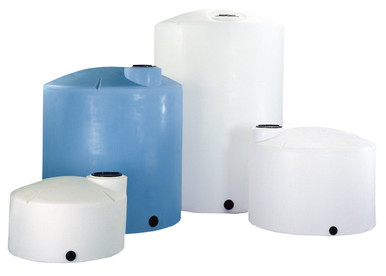
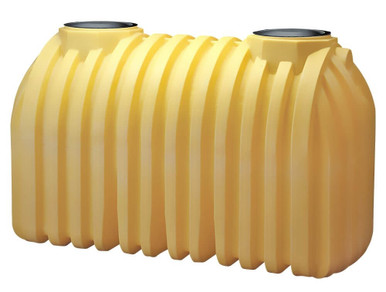
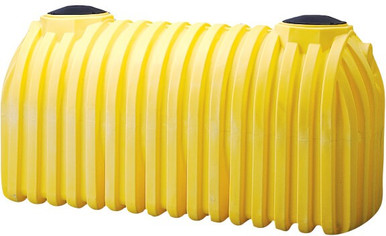
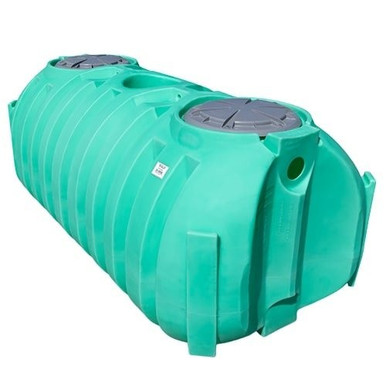
Arizona (AAC R18-9-A314) sizes septic tanks by bedroom count or design flow, with residential systems typically starting at 1,000 gallons. These IAPMO PS 1–listed polyethylene tanks meet that capacity standard; your county or state permitting office confirms the final size.
Shop all IAPMO PS 1–listed septic tanks →
Meeting the construction standard is not the same as a permit — your county environmental health office issues the permit and makes the final determination. Call us with your permit number and we will confirm the exact tank spec before shipment, with freight quoted to your ZIP.
Chemical Storage & Secondary Containment in Arizona
Storing fuel, fertilizer, or process chemicals alongside your tank changes the rules. The federal Spill Prevention, Control, and Countermeasure rule (40 CFR Part 112) applies at 1,320 gallons of aggregate aboveground oil storage and requires secondary containment sized to at least 110% of your largest tank. Releases of hazardous substances above their federal reportable quantity (40 CFR 302.4) must be reported to the National Response Center at 1-800-424-8802.
Arizona layers its own spill reportable quantities and restricted-substance rules on top of that federal floor — confirm the current thresholds with your state environmental agency before specifying a chemical tank. Just as important, the polyethylene resin must be matched to the exact chemical, concentration, and specific gravity you intend to store; a tank rated for water is not automatically rated for acid, bleach, or fertilizer.
Last reviewed: May 2026 · sourced from Arizona administrative code
Regulations change on a rolling basis — confirm the current rule with your county or state agency before purchasing. Spot something out of date? Email us and we'll fix it.
Nearby states (Mountain) & full index: