
Michigan Septic Tank Regulations — Part 128 Public Health Code, EGLE Criteria
Michigan Septic Tank Regulations
Part 128 of the Michigan Public Health Code, the EGLE Criteria for Subsurface Sewage Disposal, and the county-LHD-adopted implementation model make Michigan unique among U.S. states.
The Governing Framework — Unique Among States
Michigan is one of the few U.S. states without a statewide uniform septic code. Instead, onsite wastewater treatment systems (OWTS) are regulated through a three-layer framework.
- Part 128 of the Michigan Public Health Code — the statutory authority for onsite wastewater regulation.
- Michigan Department of Environment, Great Lakes, and Energy (EGLE) — publishes the Michigan Criteria for Subsurface Sewage Disposal, the statewide technical reference.
- Local health departments (county or multi-county) — adopt the EGLE Criteria, typically with county-specific additions, as their enforceable local ordinance.
Scale of the Program — 1.3 Million Systems
EGLE estimates there are about 1.3 million septic systems in Michigan, making it one of the most reliant states on septic systems, second only to California. This is important because Michigan drains into the Great Lakes basin, and failing septic systems contribute to nutrient pollution in Lake Erie, Lake Michigan, and other lakes.
Conventional OWTS Design
Michigan's Criteria define a "conventional system" as:
- A watertight septic tank
- Non-uniform distribution of effluent
- A soil dispersal system
- No components of an approved alternative technology
For rural residential areas, the conventional system design is standard. Larger setups like commercial, multi-family, or large institutional systems need engineered systems. EGLE directly oversees systems with a capacity of 10,000 gpd and above.
Septic Tank Capacity — Per EGLE Criteria
The EGLE Criteria set minimum tank sizes based on the size of the dwelling, usually linked to the number of bedrooms. These values are in the Criteria document and adopted by each county. Typical residential tank sizes are provided.
| Dwelling Size | Typical Minimum Capacity |
|---|---|
| 1–2 bedroom | 1,000 gallons |
| 3 bedroom | 1,000 gallons (standard) |
| 4 bedroom | 1,250–1,500 gallons |
| 5+ bedroom | 1,500+ gallons, scaling with bedrooms |
Great Lakes Watershed & Groundwater Protection
Michigan's onsite wastewater regulation focuses more on protecting watersheds than just handling sewage. Key areas needing extra attention are highlighted.
- Inland lakes and streams. Counties along major inland lakes (Grand Traverse, Leelanau, Charlevoix, Roscommon) often impose stricter setbacks and tank-integrity requirements than the EGLE baseline.
- Great Lakes coastal zone. Counties along Lake Michigan, Lake Huron, Lake Superior impose coastal-buffer setbacks for installations near the shoreline.
- Karst geology (upper peninsula). Karst areas have rapid groundwater transmission and may trigger advanced-treatment requirements even in small installations.
- Agricultural districts. Counties with heavy agricultural land use may layer farm-drainage rules on top of the residential septic framework.
Permit Process — County-Administered
- Identify your county health department. Michigan has 45 local health departments covering 83 counties (some multi-county districts).
- Site evaluation. Required before permit issuance; typically a soil profile + percolation assessment.
- Design submittal. Licensed installer or professional engineer prepares plans.
- Permit issuance. Fees typically $300–$800; timelines 2–6 weeks depending on county workload.
- Installation. By a county-registered installer.
- Inspection before backfill. County verifies tank placement, connections, and dispersal field.
- Certificate of completion / operation permit. Required before occupancy in most counties.
Pending Legislation
There are several legislative proposals in Michigan to create a uniform statewide septic code (HB 4479, SB 299-300 in the 2023-2024 session, and similar bills in past sessions). If passed, these would replace the county-adopted-EGLE-Criteria model with a single statewide rule. As of now, no uniform code has been enacted.
Material Approvals
Michigan accepts polyethylene tanks meeting EGLE Criteria construction standards:
- IAPMO or NSF 46 listing
- ASTM D1998 compliance for polyethylene construction
- Anti-flotation anchoring in high-water-table parcels (common in the Saginaw Bay region and inland-lake edges)
- Cold-climate cover depth — frost depth in the U.P. can exceed 60 inches
Norwesco, Snyder, Enduraplas, and Chem-Tainer make tanks that meet EGLE standards. Check with your county health department to ensure the tank model you want is on their approved list before buying.
Michigan-Specific Considerations
- Frost depth. Lower peninsula 36–48 inches, upper peninsula 48–60+ inches. Deep tank burial and insulated risers required.
- High water table. Large portions of Saginaw Bay basin, Thumb region, and inland-lake shorelines have seasonal high groundwater. Anti-flotation anchoring is commonly required.
- Winter access. Pumping during winter is challenging in northern counties; budget maintenance for spring/summer and keep pump-out records current.
- Lake Erie watershed. Monroe County and other Lake Erie drainage areas face additional oversight tied to HAB (harmful algal bloom) nutrient-loading concerns.
Frequently Asked Questions
- Why doesn't Michigan have a uniform statewide septic code?
- Historical political compromise — Michigan chose a state-guidance-plus-county-adoption model rather than a unitary state code when OWTS regulation emerged. Multiple legislative efforts to unify have been introduced and not passed. The EGLE Criteria function as the de facto state standard; enforcement is county-level.
- Does EGLE permit my septic system?
- No. Your county health department (or multi-county health district) permits and inspects. EGLE provides statewide policy guidance, publishes the Criteria, and exercises direct oversight only for large-capacity systems (10,000+ gpd) or appeals.
- Can I install in a high-water-table area?
- Yes, with anti-flotation anchoring on the tank and often elevated dispersal. County health departments in Saginaw Bay, Thumb, and inland-lake-shore parcels have specific detail requirements — contact them before ordering.
- What about cottages/seasonal homes on inland lakes?
- Counties with heavy inland-lake density (Roscommon, Kalkaska, Grand Traverse) often have stricter tank-integrity and pump-out inspection rules for lake-shore parcels. Some counties require periodic OSS inspection (5-year cycle typical) for any parcel within certain distance of an inland lake.
- What if my county adopts a rule stricter than the EGLE Criteria?
- You comply with the stricter county rule. The county ordinance is the enforceable law for your installation. EGLE Criteria are the floor, not a ceiling; counties are free to (and often do) exceed it.
Source Citations
Shop Septic Tanks for Michigan
OneSource stocks polyethylene septic tanks meeting Michigan construction requirements. Match capacity to your design flow per the rules summarized above. Tank + accessories + holding tank options below cover standard and alternative configurations. OneSource drop-ships from the OEM warehouse closest to your install address.
Plastic Septic Tanks
Full polyethylene septic tank catalog. Sizes from 300 to 1,500+ gallons for Michigan installations.
Browse Plastic Septic TanksIAPMO Approved Models
NSF/IAPMO listed tanks. Some counties and some installation types require this listing.
Browse IAPMO Approved ModelsSeptic Accessories
Risers, lids, baffles, filters, alarms, pumps, and install hardware.
Browse Septic AccessoriesHolding Tanks
Holding tanks for construction sites, recreational properties, and pump-and-haul installations.
Browse Holding TanksStoring chemicals in your Michigan tank?
Michigan's OSSF rules don't cover chemical-storage tanks. These are specified by the manufacturer. If you need a tank for sulfuric acid, bleach, fertilizer solution, or any of 300+ industrial chemicals, our Chemical Compatibility Database has the full construction specifications.
Agricultural Tank Regulations — Michigan Department of Agriculture and Rural Development (MDARD)
The Michigan Department of Agriculture and Rural Development oversees pesticide, fertilizer, and commercial feed storage under MCL 286.568 (Michigan Pesticide Control Act, Public Act 171 of 1976) with rules in the Michigan Administrative Code.
- R 285.637 — MDARD Pesticide Rules (registration, applicator licensing, RUP handling, bulk storage, recordkeeping).
- R 285.634 — Agricultural liming materials and fertilizer rules under the Michigan Commercial Fertilizer Act.
- MCL 286.568 — Pesticide Control Act.
- MCL 324.85101 et seq. — NREPA Part 85 (Fertilizer).
Michigan agriculture includes corn, soybeans, sugar beets, dry beans, cherries, apples, blueberries, asparagus, celery, and dairy. The Saginaw Valley and Thumb region focus on sugar beets and dry beans, while western Michigan is known for fruit and berries. Southwestern Michigan specializes in vegetables. Commercial facilities with bulk liquid fertilizer and pesticide storage follow 110% SPCC-style containment. R 285.637 and MDARD provide specific construction and inspection standards. MDARD works with EGLE on incident response. Anhydrous ammonia storage follows ANSI K61.1 standards.
Oil & Gas Produced Water — EGLE Oil, Gas, and Minerals Division
The Michigan Department of Environment, Great Lakes, and Energy (EGLE) manages upstream oil and gas through the Oil, Gas, and Minerals Division under NREPA Part 615 (MCL 324.61501 et seq.) with rules at R 324.101-1109.
- R 324.1101 et seq. — Oil and gas operational rules including pits, tanks, produced-water management, and spill reporting.
- NREPA Part 625 (MCL 324.62501) — Mineral Wells Act (brine disposal wells, storage wells).
- NREPA Part 632 — Nonferrous Metallic Mineral Mining (relevant for Upper Peninsula mining tanks).
- MCL 324.61501 — NREPA Part 615 statutory authority.
Michigan's oil and gas sector is small but includes the Antrim Shale gas play in the northern Lower Peninsula and conventional production in central and southern fields. The state has extensive brine disposal and storage infrastructure for chemical manufacturing. EGLE OGMD permits water pits and tanks under R 324.1101, requires containment, and works with the Water Resources Division on groundwater assessments. Polyethylene tanks are used at chemical-injection sites, while fiberglass and steel are used for high-volume brine service.
Petroleum USTs — LARA Bureau of Fire Services Storage Tank Division
Michigan's UST program is managed by the Department of Licensing and Regulatory Affairs (LARA) Bureau of Fire Services Storage Tank Division, not the environmental agency, under NREPA Part 211 (MCL 324.21101 et seq.) with rules at R 29.2101.
- R 29.2101 et seq. — Michigan UST technical standards (design, installation, release detection, corrective action, closure).
- MCL 324.21101 — NREPA Part 211 Underground Storage Tank Regulations.
- MCL 324.21506a — Michigan Underground Storage Tank Authority (MUSTA) fund for release-cleanup reimbursement.
- LARA Storage Tank Technical Division — Permitting, inspection, and enforcement on USTs and regulated ASTs.
Michigan UST owners register with LARA, pay annual fees for MUSTA, follow 2018 federal rule upgrades, and report suspected releases within 24 hours. MUSTA reimburses eligible owners for cleanup costs above a deductible. EGLE Remediation and Redevelopment Division handles environmental remediation after releases are confirmed. For ASTs over 1,320 gallons of oil, federal SPCC rules apply with EGLE spill coordination.
Septic System Sizing Deep Dive
Michigan is one of the few states without a statewide sanitary code. Onsite wastewater is regulated by local health departments under MCL 333.12751 (Public Health Code) with county variance allowed.
| Bedrooms | Minimum Septic Tank Capacity |
|---|---|
| 1–3 BR | 1,000 gallons |
| 4 BR | 1,250 gallons |
| 5 BR | 1,500 gallons |
| 6+ BR | +250 gallons per additional bedroom |
Michigan's soils vary widely, from deep sands in the Lower Peninsula to heavy clays in the Saginaw and Thumb regions, organic mucks in drained wetlands, and rocky soils in the Upper Peninsula. Without a statewide sanitary code, counties have their own OWTS rules, using the Michigan Criteria for Subsurface Sewage Disposal (MCSSD) as a model. Some counties have stricter standards, especially in the Upper Peninsula and around lakes. Alternative systems for failed perc include aerobic treatment units, mounds, sand filters, and drip dispersal. OWTS reform is a long-standing issue due to Michigan's many lakes and Great Lakes coastline.
Chemical Storage Secondary Containment & Spill Reporting
Federal SPCC (40 CFR 112) applies at 1,320 gallons aggregate aboveground oil. Michigan layers on:
- NREPA Part 5 (MCL 324.20114d) — Pollution response and release reporting to EGLE Pollution Emergency Alerting System (PEAS).
- R 29.2101 (UST release reporting) — 24-hour notification to LARA and EGLE.
- NREPA Part 111 (MCL 324.11101) — Hazardous waste management incorporating RCRA Subtitle C.
- NREPA Part 5 — Pollution control emergency response.
- Michigan State Police Emergency Management and Homeland Security Division — EPCRA Tier II and State Emergency Response Commission.
Report spills to the EGLE Pollution Emergency Alerting System (PEAS) at 1-800-292-4706 and federal RQ releases to the National Response Center at 1-800-424-8802. Oil and gas releases go to EGLE OGMD. Secondary containment at 110% is standard. For state-specific RQ thresholds that differ from 40 CFR 302.4, contact EGLE. Great Lakes coastal facilities face extra scrutiny due to the binational water quality protection framework.
Permit Pathways at a Glance
- Residential OWTS: County health department (no statewide code; MCL 333.12751 authority).
- Fertilizer & pesticide registration: MDARD under NREPA Parts 83/85 and R 285.634/637.
- Pesticide applicator license: MDARD under Michigan Pesticide Control Act.
- Oil & gas / brine: EGLE OGMD under NREPA Part 615/625 and R 324.1101.
- Petroleum UST: LARA Bureau of Fire Services Storage Tank Division under NREPA Part 211 and R 29.2101.
- SPCC > 1,320 gal oil aggregate: Federal SPCC plan; state spill reporting to EGLE PEAS.
- NPDES industrial stormwater: EGLE Water Resources Division (Michigan is a delegated NPDES state).
Current fees change; verify with MDARD, EGLE, or LARA before budgeting.
More Michigan FAQs
- Why is Michigan's UST program in LARA instead of EGLE?
- Historical accident — Michigan's UST regulatory authority migrated to the Bureau of Fire Services within LARA because of fire-code linkages, and the Department of Natural Resources (now EGLE) retained Remediation and Redevelopment Division for environmental cleanup. It is unusual nationally but has been stable for decades. LARA handles tank permitting and compliance; EGLE handles post-release environmental remediation.
- Does Michigan have a statewide septic code?
- No — Michigan is one of the few states without a statewide sanitary code for onsite wastewater. County health departments run their own rules under MCL 333.12751 authority, with the Michigan Criteria for Subsurface Sewage Disposal as a model. Reform bills have been introduced repeatedly without passage; the inland-lake shoreline and Great Lakes exposure keep the issue alive.
- How does EGLE treat brine disposal wells?
- NREPA Part 625 (Mineral Wells Act) and R 324.801 govern brine injection and storage. Michigan's deep Paleozoic salt formations have been injection and storage targets for decades; EGLE OGMD permits and inspects Class II and Class III wells in coordination with EPA Region 5 UIC primacy.
- Can a county enforce stricter OWTS rules than MCSSD?
- Yes — without a binding statewide code, counties set their own standards under Public Health Code authority. Many Upper Peninsula and inland-lake counties enforce stricter setbacks, perc-test protocols, and treatment requirements than the MCSSD baseline.
- What is MUSTA and who qualifies?
- The Michigan Underground Storage Tank Authority fund under MCL 324.21506a reimburses eligible UST owners for release-cleanup costs above a deductible. Registration with LARA, fee payment, and compliance with release-detection rules are prerequisites. MUSTA has been well-capitalized historically relative to some other state funds.
Septic Tanks That Meet Michigan Code
Michigan (EGLE Criteria / Public Health Code Part 128) sizes septic tanks by bedroom count or design flow, with residential systems typically starting at 1,000 gallons. These IAPMO PS 1–listed polyethylene tanks meet that capacity standard; your county or state permitting office confirms the final size.
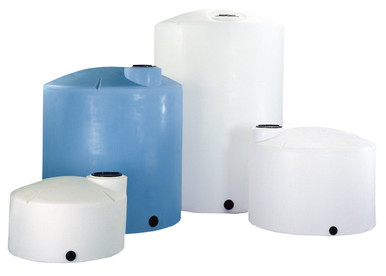
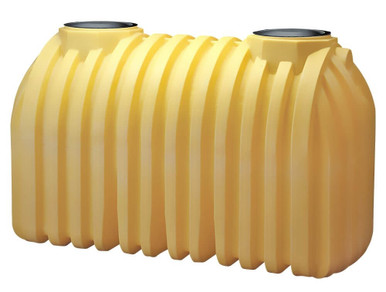
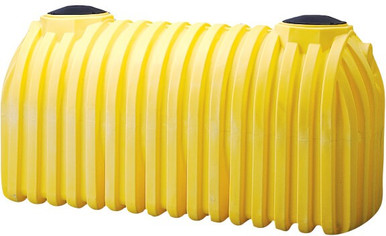
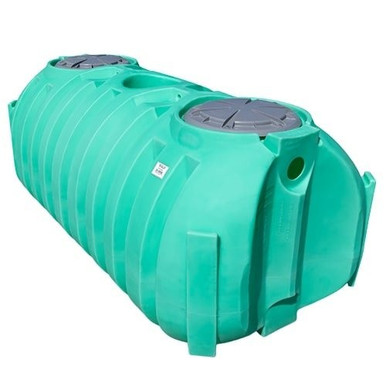
Shop all IAPMO PS 1–listed septic tanks →
Meeting the construction standard is not the same as a permit — your county environmental health office issues the permit and makes the final determination. Call us with your permit number and we will confirm the exact tank spec before shipment, with freight quoted to your ZIP.
Chemical Storage & Secondary Containment in Michigan
Storing fuel, fertilizer, or process chemicals alongside your tank changes the rules. The federal Spill Prevention, Control, and Countermeasure rule (40 CFR Part 112) applies at 1,320 gallons of aggregate aboveground oil storage and requires secondary containment sized to at least 110% of your largest tank. Releases of hazardous substances above their federal reportable quantity (40 CFR 302.4) must be reported to the National Response Center at 1-800-424-8802.
Michigan layers its own spill reportable quantities and restricted-substance rules on top of that federal floor — confirm the current thresholds with your state environmental agency before specifying a chemical tank. Just as important, the polyethylene resin must be matched to the exact chemical, concentration, and specific gravity you intend to store; a tank rated for water is not automatically rated for acid, bleach, or fertilizer.
Last reviewed: May 2026 · sourced from Michigan administrative code
Regulations change on a rolling basis — confirm the current rule with your county or state agency before purchasing. Spot something out of date? Email us and we'll fix it.
Nearby states (East North Central) & full index: