
North Carolina Septic Tank Regulations — 15A NCAC 18E, OSWP
North Carolina Septic Tank Regulations
15A NCAC Subchapter 18E (effective October 2021) includes rules for tank capacity in Tables XIV and XV, requires an effluent filter, and follows the NCDHHS On-Site Wastewater Protection Branch guidelines.
The Governing Framework (Post-October 2021 Rewrite)
North Carolina rewrote its entire onsite wastewater rulebook effective October 1, 2021. The current authority is:
- NC General Statute §130A-335 — the governing state law.
- 15A NCAC Subchapter 18E — the administrative code (currently in effect; supersedes the older Subchapter 18A .1900 rules).
- NCDHHS On-Site Wastewater Protection Branch (OSWP) — writes and interprets the rules at the state level.
- Local Health Departments (LHDs) — administer Improvement Permits (IPs), Construction Authorizations (CAs), and Authorizations to Operate (ATOs) at the county level.
Septic Tank Capacity — Rule 18E .0801
Rule 18E .0801(a)(1) establishes the absolute minimum capacity for any septic tank:
For single-family dwellings with 5 or fewer bedrooms, the rule uses Table XIV:
| Number of bedrooms | Minimum liquid capacity |
|---|---|
| 4 or less | 1,000 gallons |
| 5 | 1,250 gallons |
For larger homes, multi-family, or commercial buildings not listed in Table XIV, use Table XV. This table adjusts based on the design daily flow (Q) in gallons per day.
| Design Daily Flow (Q, gpd) | Minimum Septic Tank Capacity (V) |
|---|---|
| Q ≤ 600 | V = 2Q |
| 600 < Q < 1,500 | V = 1.17Q + 500 |
| 1,500 ≤ Q ≤ 4,500 | V = 0.75Q + 1,125 |
| Q > 4,500 | V = Q |
Two-Compartment or Two-Tanks-in-Series Requirement
Rule 18E .0801(b):
North Carolina is different from many states: it requires either two compartments in one tank or two tanks in series for every approved installation. A single-compartment 1,000-gallon tank alone does not meet the current rule. It must have an internal wall or be paired with another 1,000-gallon tank in series.
Effluent Filter — Rule 18E .1404
Rule 18E .0801(e) mandates an approved effluent filter in the outlet of the final septic tank compartment:
Filter details are in Rule 18E .1404, usually needing NSF 46 certification or similar. The owner must clean the filter every 12 to 36 months.
Grinder Pump & Lift Pump Upsize Rule
If a grinder pump or sewage lift pump is installed upstream of the septic tank, Rule 18E .0801(c) requires the capacity to be doubled:
For a typical 4-bedroom home with a grinder pump, the septic tank size increases from 1,000 gallons to 2,000 gallons. This is usually done with two 1,000-gallon two-compartment tanks in series. Plan for this when getting a permit because making changes later is costly.
Permit Process — IP, CA, and ATO
NC uses a three-step permit sequence:
- Improvement Permit (IP). Pre-approval that the site meets basic soil and setback conditions. Good for 5 years (with conditions).
- Construction Authorization (CA). Permit to build — issued after system design is approved. Required before any installation work begins.
- Authorization to Operate (ATO). Post-installation permit issued after final inspection. This is the document that enables occupancy.
The Local Health Department (LHD) is involved at each step. Authorized On-Site Wastewater Evaluators (AOWEs), who are private licensed professionals, can do some site evaluations and system designs, making the process faster. In areas with the AOWE program, you might get quicker results than with LHD-only reviews.
Material Approvals
North Carolina allows polyethylene septic tanks listed on the NCDHHS approved-tank list. Approved models from Norwesco, Snyder, Enduraplas, and Chem-Tainer are on this list. Check before ordering.
- Model appears on the current NCDHHS approved list (approvals are published on the OSWP website with dated updates).
- Tank has two compartments OR you're ordering two tanks in series.
- Effluent filter is NSF 46 certified or approved by the Department.
- Tank meets ASTM D1998 or equivalent for polyethylene storage tank construction.
North Carolina-Specific Considerations
- Rapid-growth counties. Wake, Mecklenburg, Guilford, Durham, and Orange counties have high-volume OSSF permitting with 4–8 week timelines. Plan ahead.
- Coastal counties. Brunswick, New Hanover, Carteret, Dare, and other coastal counties have high groundwater and may require mounded dispersal, additional setbacks from coastal waters, and anti-buoyancy anchoring for the tank.
- Mountain counties. Sloped parcels (Asheville area, Boone, etc.) commonly require Low-Pressure Pipe (LPP) dispersal or Engineered Option Permit (EOP) approaches that push projects beyond the 1,000-gallon base tank.
- Post-hurricane operations. Eastern NC counties issue post-storm inspection guidance after named events. Tanks that were submerged must be inspected and potentially pumped.
Frequently Asked Questions
- Does North Carolina still use the old 15A NCAC 18A .1900 rules?
- No. The current rules are 15A NCAC 18E, effective October 1, 2021. Older guides online may still reference 18A — treat those as historical only.
- Can I use a 1,000-gallon single-compartment tank?
- No. Rule 18E .0801(b) requires a two-compartment tank OR two tanks in series for every new installation. A single-compartment 1,000-gallon tank alone does not meet the current code.
- What's the difference between an IP, CA, and ATO?
- IP (Improvement Permit) confirms the site can support a system. CA (Construction Authorization) approves the specific system design and allows construction. ATO (Authorization to Operate) is the post-installation approval that enables occupancy. All three are required for a new home.
- Do I need to install a lift pump if my land slopes toward the tank?
- Not if gravity flow works. You only need a pump if the tank sits higher than the outlet of the dwelling or if the dispersal field requires pressurized distribution. If you DO install an upstream pump, remember that doubles the required tank capacity.
- Can I use an Authorized On-Site Wastewater Evaluator (AOWE) instead of going through the LHD?
- Partially. AOWEs can perform site evaluations and some design tasks, which speeds up the process. The LHD still issues the final permits but typically accepts AOWE documentation with minimal additional review.
Source Citations
Shop Septic Tanks for North Carolina
OneSource stocks polyethylene septic tanks meeting North Carolina construction requirements. Match capacity to your design flow per the rules summarized above. Tank + accessories + holding tank options below cover standard and alternative configurations. OneSource drop-ships from the OEM warehouse closest to your install address.
Plastic Septic Tanks
Full polyethylene septic tank catalog. Sizes from 300 to 1,500+ gallons for North Carolina installations.
Browse Plastic Septic TanksIAPMO Approved Models
NSF/IAPMO listed tanks. Some counties and some installation types require this listing.
Browse IAPMO Approved ModelsSeptic Accessories
Risers, lids, baffles, filters, alarms, pumps, and install hardware.
Browse Septic AccessoriesHolding Tanks
Holding tanks for construction sites, recreational properties, and pump-and-haul installations.
Browse Holding TanksStoring chemicals in your North Carolina tank?
North Carolina's OSSF rules don't cover chemical-storage tanks. These are specified by the manufacturer. If you need a tank for sulfuric acid, bleach, fertilizer solution, or any of 300+ industrial chemicals, our Chemical Compatibility Database has all the construction details.
Agricultural Tank Regulations — NCDA&CS
The North Carolina Department of Agriculture and Consumer Services (NCDA&CS) oversees pesticide, fertilizer, and feed bulk storage under N.C. Gen. Stat. Ch. 106 with rules in 02 NCAC.
- 02 NCAC 09 L — Pesticides: applicator licensing, bulk storage, recordkeeping, RUP handling.
- 02 NCAC 09 K — Structural Pest Control.
- 02 NCAC 44 — Fertilizers and Liming Materials.
- N.C. Gen. Stat. § 143-434 et seq. — North Carolina Pesticide Law of 1971 (statutory authority).
- N.C. Gen. Stat. § 106-657 — Commercial Fertilizer Law.
North Carolina's agriculture includes tobacco, sweet potatoes, cotton, peanuts, soy, corn, vegetables, and poultry and hog industries. Commercial facilities with bulk liquid fertilizer and pesticide storage must have secondary containment sized to 110% of the largest tank, with impermeable liners, inspections, and rinsate-recovery on loading pads. Anhydrous ammonia is less common than aqua ammonia (UAN). NCDA&CS works with NC DEQ on bulk ag-chemical incidents that threaten water.
Animal Waste Management (Hog & Poultry CAFO) — 15A NCAC 02T
North Carolina's hog and poultry industries make animal waste storage regulation a major issue. The NC Department of Environmental Quality (DEQ) Division of Water Resources manages animal waste systems under 15A NCAC 02T with authority from N.C. Gen. Stat. § 143-215.10C.
- 15A NCAC 02T .1300 — Animal Waste Management Systems: general requirements for swine, poultry, cattle, and mixed-species operations.
- 15A NCAC 02T .1301–.1307 — Swine waste management system rules (covering the industry's signature lagoon-and-sprayfield framework and the 1999 hog-farm moratorium on new or expanded lagoon operations).
- N.C. Gen. Stat. § 143-215.10A — Swine farm siting restrictions.
- N.C. Gen. Stat. § 143-215.10C — Animal waste management general authority.
Eastern North Carolina has the highest concentration of swine operations in the U.S. The 1999 hog moratorium, extended multiple times, bans new or expanded lagoon-and-sprayfield operations, requiring new systems to use environmentally superior technology (EST). Existing lagoons operate under Certified Animal Waste Management Plans (CAWMPs) with specific controls and inspections. Aboveground storage tanks for animal waste must meet 15A NCAC 02T requirements. Poultry litter storage, dead animal disposal, and digestate have specific tank rules. After storms like Hurricane Floyd and Florence, lagoon breaches and runoff remain compliance issues; DEQ actively enforces in the Cape Fear and Neuse basins.
Oil & Gas — Limited (15A NCAC 05H)
North Carolina has limited oil and gas activity; the DEQ Division of Energy, Mineral and Land Resources manages this under 15A NCAC 05H. Most tank regulations in NC focus on petroleum UST, SPCC, agricultural bulk, and animal waste management, not produced-water infrastructure.
Petroleum USTs — NC DEQ
NC DEQ Division of Waste Management oversees underground storage tanks under 15A NCAC 02N with authority from N.C. Gen. Stat. § 143-215.94A.
- 15A NCAC 02N — Criteria and Standards Applicable to Underground Storage Tanks (design, installation, release detection, spill/overfill, corrective action, closure).
- N.C. Gen. Stat. §§ 143-215.94A–94Z — Oil Pollution and Hazardous Substances Control Act (statutory authority).
- Commercial Leaking Petroleum UST Cleanup Fund and Noncommercial Leaking UST Cleanup Fund — state reimbursement mechanisms.
NC UST owners must register with DEQ, pay annual fees, follow 2018 federal rule updates, and report suspected leaks within 24 hours. ASTs with over 1,320 gallons of oil or a single container over 660 gallons must meet federal SPCC rules with DEQ spill coordination. NC has a well-funded state cleanup fund, though eligibility and coverage have become stricter over time.
Septic System Sizing Deep Dive
North Carolina manages onsite wastewater treatment through 15A NCAC 18A .1900 (NC Department of Health and Human Services Division of Public Health On-Site Water Protection) under the Sanitation of Wastewater Treatment and Disposal Systems statute at N.C. Gen. Stat. § 130A-335 et seq., with local health departments handling permits. Design flow is 120 gpd per bedroom.
| Bedrooms | Design Daily Flow | Minimum Septic Tank Capacity |
|---|---|---|
| 1–3 BR | 360 gpd | 900 gallons |
| 4 BR | 480 gpd | 1,000 gallons |
| 5 BR | 600 gpd | 1,250 gallons |
| 6+ BR | +120 gpd/BR | +250 gal/BR |
North Carolina soils include sandy coastal plains, red clay Piedmont, river-valley alluvium, and rocky mountain soils. 15A NCAC 18A .1900 classifies soils into suitability classes with corresponding system types. Alternative systems for failed perc include aerobic treatment units, sand filters, low-pressure pipe (LPP), drip dispersal, and mound systems. Coastal areas need elevated tanks, anti-flotation design, and enhanced setbacks due to shallow groundwater and flood risks.
Chemical Storage Secondary Containment & Spill Reporting
Federal SPCC (40 CFR 112) applies at 1,320 gallons aggregate aboveground oil. North Carolina layers on:
- N.C. Gen. Stat. § 143-215.85 — Oil and hazardous substance spill notification to DEQ (immediate).
- 15A NCAC 02L — Groundwater classifications, standards, and corrective action rules.
- 15A NCAC 13A — Hazardous Waste Management (RCRA Subtitle C).
- N.C. Dept. of Public Safety, Emergency Management — EPCRA Tier II and State Emergency Response Commission.
Report spills to the NC DEQ 24-hour emergency line and federal RQ releases to the National Response Center at 1-800-424-8802. Animal waste releases go to DEQ Division of Water Resources regional offices. Secondary containment at 110% is standard for SPCC and industry. For state-specific RQ thresholds different from 40 CFR 302.4, contact DEQ directly.
Permit Pathways at a Glance
- Residential OWTS: Local health department under 15A NCAC 18A .1900.
- Fertilizer & pesticide registration: NCDA&CS under 02 NCAC 09 and 02 NCAC 44.
- Pesticide applicator license: NCDA&CS under NC Pesticide Law.
- Animal waste management (CAFO): NC DEQ DWR under 15A NCAC 02T.
- Petroleum UST: NC DEQ under 15A NCAC 02N.
- Oil & gas: NC DEQ DEMLR under 15A NCAC 05H.
- SPCC > 1,320 gal oil aggregate: Federal SPCC plan; state spill reporting to DEQ.
- NPDES industrial stormwater: NC DEQ (NC is delegated NPDES state).
Current fees change; verify with NCDA&CS, DEQ, or local health department before budgeting.
More North Carolina FAQs
- Can I build a new hog farm with a lagoon in North Carolina?
- No — the 1999 hog farm moratorium, repeatedly extended, prohibits new or expanded swine operations using anaerobic lagoon and sprayfield technology. New or expanded swine operations must use environmentally superior technology (EST) as defined under 15A NCAC 02T. Existing permitted lagoon operations continue under their CAWMPs but cannot expand.
- What is an EST (Environmentally Superior Technology)?
- EST is a waste management technology that meets five performance standards: eliminates the discharge of animal waste to surface and ground water through direct discharge, seepage, or runoff; substantially eliminates atmospheric emissions of ammonia; substantially eliminates the emission of odor detectable beyond the boundaries of the parcel; substantially eliminates the release of disease-transmitting vectors and airborne pathogens; and substantially eliminates nutrient and heavy metal contamination of soil and groundwater. Qualifying technologies include aerobic digestion with nitrification, solid-liquid separation, covered lagoons with biogas capture, and hybrid systems.
- Who permits my tobacco farm pesticide storage shed?
- NCDA&CS regulates pesticide bulk storage under 02 NCAC 09 L; local fire marshal plan review applies for fire-code aspects. If the facility triggers federal SPCC or state spill rules on co-located petroleum, DEQ adds layered requirements. For larger operations, NPDES industrial stormwater may apply.
- Do poultry litter storage barns need DEQ permits?
- Large dry-litter poultry operations fall under 15A NCAC 02T animal waste management rules with CAWMP requirements and DEQ oversight. Poultry litter storage structures, litter amendment tanks (e.g., alum addition), and mortality composting each have specific design and siting requirements under the state CAFO framework.
- Are coastal septic setbacks different from Piedmont setbacks?
- Yes — 15A NCAC 18A .1900 classifies soil suitability and sets setbacks based on groundwater table depth, slope, and proximity to surface water. Coastal counties with shallow water tables and flood exposure routinely require elevated tanks, alternative treatment (e.g., LPP, ATU), and enhanced setbacks to wells and surface water. CAMA (Coastal Area Management Act) layers on additional siting constraints in the 20 coastal counties.
Septic Tanks That Meet North Carolina Code
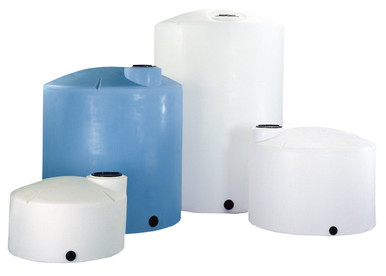
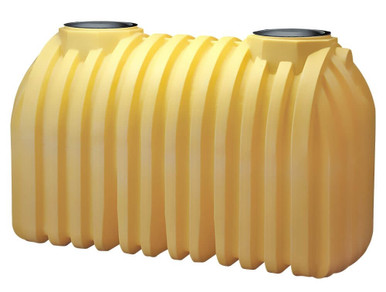
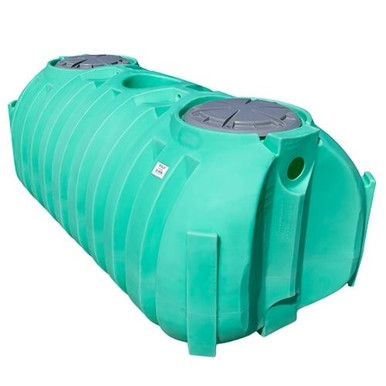
North Carolina's onsite rules (15A NCAC Subchapter 18E) require a two-compartment or in-series septic tank, sized from Tables XIV and XV. The IAPMO PS 1–listed polyethylene tanks below are built to that two-compartment standard.
Shop all IAPMO PS 1–listed septic tanks →
Meeting the construction standard is not the same as a permit — your county environmental health office issues the permit and makes the final determination. Call us with your permit number and we will confirm the exact tank spec before shipment, with freight quoted to your ZIP.
Chemical Storage & Secondary Containment in North Carolina
Storing fuel, fertilizer, or process chemicals alongside your tank changes the rules. The federal Spill Prevention, Control, and Countermeasure rule (40 CFR Part 112) applies at 1,320 gallons of aggregate aboveground oil storage and requires secondary containment sized to at least 110% of your largest tank. Releases of hazardous substances above their federal reportable quantity (40 CFR 302.4) must be reported to the National Response Center at 1-800-424-8802.
North Carolina layers its own spill reportable quantities and restricted-substance rules on top of that federal floor — confirm the current thresholds with your state environmental agency before specifying a chemical tank. Just as important, the polyethylene resin must be matched to the exact chemical, concentration, and specific gravity you intend to store; a tank rated for water is not automatically rated for acid, bleach, or fertilizer.
Last reviewed: May 2026 · sourced from North Carolina administrative code
Regulations change on a rolling basis — confirm the current rule with your county or state agency before purchasing. Spot something out of date? Email us and we'll fix it.
Nearby states (South Atlantic) & full index: