
Ohio Septic Tank Regulations — OAC 3701-29-12, ODH Rules
Ohio Septic Tank Regulations
Ohio Administrative Code 3701-29 covers the rules for septic tank capacity, the need for two compartments, effluent filter standards, and permits issued by Ohio's Boards of Health at the county level.
The Governing Framework
Ohio regulates sewage treatment systems under a two-tier framework rooted in the Ohio Administrative Code:
- Ohio Administrative Code Chapter 3701-29 (Sewage Treatment Systems) — the complete technical rulebook.
- Ohio Department of Health (ODH) writes and enforces the rules statewide; local Boards of Health administer permits and inspections at the county level.
- Ohio Revised Code (ORC) sections 3709 and 3718 provide the underlying statutory authority.
Septic Tank Capacity — Rule 3701-29-12(C)(1)
Ohio publishes a precise bedroom-to-capacity table directly in the administrative code. The following is quoted from Rule 3701-29-12(C)(1):
| Dwelling Size | Minimum Tank Capacity | Configuration |
|---|---|---|
| 1–2 bedrooms | 1,000 gallons | One or two compartments |
| 3 bedrooms | 1,500 gallons | Two tanks or compartments (required) |
| 4–5 bedrooms | 2,000 gallons | Two tanks or compartments (required) |
| 6+ bedrooms | 2,500 gallons + 250 per additional bedroom | Two tanks or compartments (required) |
Effluent Filter — ANSI/NSF 46 Required
Ohio, like Florida, requires an effluent filter on every permitted septic tank. The rule specifies:
When buying a septic tank for use in Ohio, make sure the effluent filter on the outlet side is certified to ANSI/NSF 46. Most original equipment manufacturer (OEM) filters come with this certification marked on the filter itself.
ODH-Approved Tank List
Ohio has a list of approved tanks managed by the Ohio Department of Health (ODH). Tanks from major manufacturers like Norwesco, Snyder, Enduraplas, and Chem-Tainer are on this list if their specific models meet the construction standards in Chapter 3701-29. Before you order, check this list.
- Verify your intended tank model is on the current ODH approval list.
- Confirm the model includes two compartments (mandatory for 3+ bedroom) OR plan for two tanks in series.
- Verify the outlet filter is ANSI/NSF 46 certified.
- Check that your local Board of Health has no additional model-specific restrictions.
Soil Evaluation & Dispersal
In Ohio, soil classification is used instead of a perc test to design septic systems. A registered soil scientist or site-plan preparer will evaluate the soil to determine the percolation rate and groundwater depth. This information is used to design the dispersal field.
- Soil percolation class (1–4, fastest to slowest).
- Seasonal groundwater level — critical in Ohio's glaciated northern counties where water tables rise seasonally.
- Setbacks — Chapter 3701-29 establishes minimum setbacks from wells, surface water, and property lines; specific distances are in Rule 3701-29-07 and 3701-29-14.
Permit & Inspection Process
- Contact your local Board of Health. Ohio has 88 counties, each with its own Board of Health or joint city/county health district. They administer the permit.
- Site evaluation. Conducted by a registered sewage contractor or site-plan preparer. Results determine tank size, dispersal method, and setbacks.
- Permit application. Typical fees $300–$1,000 depending on county. Timeline 2–6 weeks.
- Installation. Must be performed by a registered contractor. Ohio requires registration through ODH.
- Inspection before backfill. The local Board of Health verifies tank model, effluent filter, capacity, and setbacks on site before backfill.
- Operation permit. Some counties require an operation permit and periodic inspection (5-10 year cycle). Cost is typically modest ($50–$200) and tied to pump-out records.
Ohio-Specific Considerations
- Winter installation. Ohio's glaciated northern counties have 30-60 inch frost depth. Tanks must be installed with adequate cover to protect the inlet/outlet risers from freeze, or risers must be heated if exposed.
- Lake Erie watershed. Counties bordering Lake Erie (Lucas, Ottawa, Erie, Lorain, Cuyahoga, Lake, Ashtabula) face additional oversight from Ohio EPA under the Lake Erie Watershed Phosphorus Task Force recommendations.
- Replacement on existing permits. Like-for-like tank replacement on an existing permitted system is generally simpler than a new installation — verify with your local BoH that the existing permit allows for replacement without re-siting.
- Aerobic treatment units (ATUs). Common in counties with poor soils; regulated separately under Rule 3701-29-17 and 18 with ongoing maintenance contract requirements.
Frequently Asked Questions
- Can I use a 1,500-gallon single-compartment tank for a 3-bedroom home in Ohio?
- No. Rule 3701-29-12(C)(1) requires two tanks or compartments for 3+ bedroom homes. A single-compartment tank, even at 1,500 gallons, doesn't meet code. Order a two-compartment tank (most 1,500-gallon HDPE tanks are configured this way) or two 1,000-gallon tanks in series.
- Does my effluent filter need to be replaced periodically?
- Not replaced — CLEANED. Filters accumulate solids over time; when flow slows, the filter needs to be pulled and rinsed (typically every 12-36 months depending on household size and use). This is owner-responsibility under Ohio rules.
- What if I have an existing single-compartment 1,000-gallon tank for a 4-bedroom home?
- The existing tank is grandfathered under the permit that was valid when it was installed. When the tank fails or needs replacement, you must upgrade to the current 2,000-gallon two-compartment standard for 4-5 bedroom homes.
- Can I install the tank myself in Ohio?
- Sewage treatment system installation in Ohio requires a registered contractor under the Rule 3701-29 framework. Owner installation is not a standard pathway; contact your local BoH for exceptions.
- Does Ohio accept polyethylene tanks?
- Yes, provided the specific tank model appears on the current ODH approval list. All major rotomolded HDPE manufacturers (Norwesco, Snyder, Enduraplas, Chem-Tainer) have approved models on the list. Verify before ordering.
Source Citations
Shop Septic Tanks for Ohio
OneSource stocks polyethylene septic tanks meeting Ohio construction requirements. Match capacity to your design flow per the rules summarized above. Tank + accessories + holding tank options below cover standard and alternative configurations. OneSource drop-ships from the OEM warehouse closest to your install address.
Plastic Septic Tanks
Full polyethylene septic tank catalog. Sizes from 300 to 1,500+ gallons for Ohio installations.
Browse Plastic Septic TanksIAPMO Approved Models
NSF/IAPMO listed tanks. Some counties and some installation types require this listing.
Browse IAPMO Approved ModelsSeptic Accessories
Risers, lids, baffles, filters, alarms, pumps, and install hardware.
Browse Septic AccessoriesHolding Tanks
Holding tanks for construction sites, recreational properties, and pump-and-haul installations.
Browse Holding TanksStoring chemicals in your Ohio tank?
Ohio's rules for onsite sewage systems (OSSF) do not include chemical-storage tanks. These are specified by the manufacturer. If you need a tank for chemicals like sulfuric acid, bleach, or fertilizer solution, our Chemical Compatibility Database provides full construction specifications.
Agricultural Tank Regulations — Ohio Department of Agriculture (ODA)
The Ohio Department of Agriculture (ODA) oversees the storage of pesticides, fertilizers, and feed through the Pesticide and Fertilizer Regulation Section under Ohio Administrative Code Chapter 901:5.
- OAC 901:5-11 — Pesticide Applicator Rules including commercial and private applicator certification.
- OAC 901:5-9 — Pesticide Product Registration.
- OAC 901:5-7 — Fertilizer rules including registration, labeling, and tonnage reporting.
- ORC 921 (Ohio Pesticide Law) — Statutory authority for pesticide program.
- ORC 905.31-.70 (Fertilizer Law) — Statutory authority for fertilizer program, including Senate Bill 1 Lake Erie fertilizer certification for commercial applicators in the western Lake Erie basin.
A unique Ohio regulation is Senate Bill 1 (SB 1) of 2015, which requires certification for anyone applying fertilizer (not manure) to more than 50 acres in the Western Lake Erie Basin to prevent harmful algal blooms. This includes best practices for timing, rate, and placement, taught by ODA. Bulk liquid fertilizer storage follows federal SPCC rules for oil and EPA rules for pesticide repackaging (40 CFR 165 Subpart E). Ohio doesn't have a specific agrichemical containment rule like Illinois, but commercial dealers typically build 110% containment to meet general-duty clauses under ORC 3767 and Ohio EPA water quality standards.
Petroleum USTs — Ohio Bureau of Underground Storage Tank Regulations (BUSTR)
Ohio's Underground Storage Tank (UST) program is managed by the State Fire Marshal's office, specifically the Bureau of Underground Storage Tank Regulations (BUSTR), under ORC 3737.88 and OAC 1301:7-9.
- ORC 3737.87 through 3737.89 — Statutory UST program including the Petroleum Underground Storage Tank Financial Assurance Fund.
- OAC 1301:7-9 — BUSTR technical rules for UST installation, operation, release detection, corrective action, and closure.
- OAC 3745-279 — Ohio EPA used oil management standards that interact with tank storage.
- OAC 3745-300 — Voluntary Action Program for contaminated-site cleanup including LUST closures.
BUSTR requires all regulated USTs to be registered, annual fees paid to the Financial Assurance Fund, and compliance with 2018 federal rule updates, including release detection, spill/overfill prevention, inspections, and operator training. Suspected releases must be reported within 24 hours. Aboveground petroleum storage is regulated by Ohio EPA and State Fire Marshal rules, and large AST systems over 1,320 gallons also follow federal SPCC rules.
Septic System Sizing Deep Dive
The Ohio Department of Health (ODH) regulates household sewage treatment systems under OAC 3701-29. Typical residential systems have specific capacity requirements.
| Bedrooms | Minimum Septic Tank Capacity |
|---|---|
| 1–3 BR | 1,000 gallons |
| 4 BR | 1,250 gallons |
| 5 BR | 1,500 gallons |
| 6+ BR | +250 gallons per additional bedroom |
Ohio's soils vary greatly, with heavy clay subsoils in the glaciated till plains of the west and north, and thin, rocky soils in the unglaciated Appalachian plateau of the southeast. Soil and site evaluations under OAC 3701-29 are required. Where conventional trenches don't work, alternatives like aerobic treatment units (ATU), mounds, drip dispersal, and sand filters are allowed. Certified installers and county health department permits are necessary. In western Ohio's tight-clay counties like Mercer, Van Wert, and Paulding, ATU-plus-drip systems are common, while mound or sand-lined systems are typical in hillside Appalachian counties.
Chemical Storage Secondary Containment & Spill Reporting
Federal SPCC (40 CFR 112) applies at 1,320 gallons aggregate aboveground oil. Ohio layers on:
- OAC 3745-52 — Ohio hazardous waste generator rules incorporating RCRA Subtitle C.
- OAC 3745-1 — Water quality standards for waters of the state.
- ORC 3750 — Emergency Planning and Community Right-to-Know (EPCRA) state implementation, Tier II reporting to the Ohio State Emergency Response Commission (SERC).
- OAC 3745-311 and related — Spill reporting to Ohio EPA of any release that may threaten waters of the state.
Report oil and chemical spills to the Ohio EPA's 24-hour emergency line and, for federal reportable quantity (RQ) releases, to the National Response Center at 1-800-424-8802. Ohio's chemical-specific RQs may match or be stricter than federal 40 CFR 302.4 limits. Check with Ohio EPA for specific substances. Secondary containment at 110% of the largest tank is standard, and Ohio EPA might require extra design review for facilities in source water protection areas.
Permit Pathways at a Glance
- Residential septic: County health department under OAC 3701-29.
- Fertilizer registration and SB 1 applicator certification: ODA under OAC 901:5-7 and ORC 905.
- Pesticide registration and applicator license: ODA under OAC 901:5-9 and 901:5-11.
- Petroleum UST: BUSTR under OAC 1301:7-9.
- SPCC > 1,320 gal oil aggregate: Federal SPCC plan; state spill reporting to Ohio EPA.
- NPDES industrial stormwater: Ohio EPA Division of Surface Water.
- EPCRA Tier II: Ohio SERC under ORC 3750.
Current fee schedules change; verify with ODA, Ohio EPA, or BUSTR before budgeting.
More Ohio FAQs
- Does the SB 1 fertilizer certification apply to me?
- SB 1 applies if you apply fertilizer (not manure) to more than 50 acres of agricultural land anywhere in Ohio — not just the Western Lake Erie Basin — though the statute was motivated by WLEB phosphorus runoff. Private applicators get certified through ODA and OSU Extension.
- Why is Ohio's UST program in the Fire Marshal's office instead of Ohio EPA?
- Historical fire-safety jurisdiction. BUSTR under ORC 3737 handles UST construction, registration, and corrective action with Ohio EPA coordinating on water quality where releases reach waters of the state. Both programs run in parallel for site closures.
- Do I need an Ohio EPA permit for a 5,000-gallon liquid fertilizer tank at my farm?
- On-farm fertilizer storage for the operator's own use generally doesn't require an Ohio EPA permit. Federal SPCC may apply if your aggregate aboveground oil (diesel, gasoline, lubricants) exceeds 1,320 gallons. EPCRA Tier II is triggered separately by hazardous substance thresholds.
- How does Ohio handle manure storage at a CAFO?
- Livestock Environmental Permitting in Ohio is split: ODA Division of Livestock Environmental Permitting regulates agricultural stormwater and manure for major CAFFs (concentrated animal feeding facilities) under ORC 903, while Ohio EPA handles NPDES for CAFOs that discharge. Storage pond and tank design follows NRCS Standard 313 with state engineering review.
- What is the PUSTFAF and who qualifies?
- The Petroleum Underground Storage Tank Financial Assurance Fund reimburses eligible UST owners for corrective-action costs. Participation requires registration, current annual fees, and compliance with BUSTR technical rules.
Septic Tanks That Meet Ohio Code
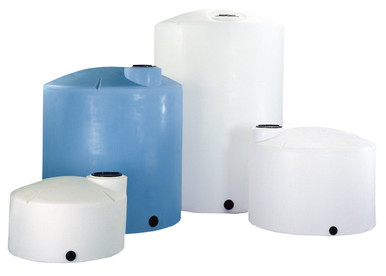
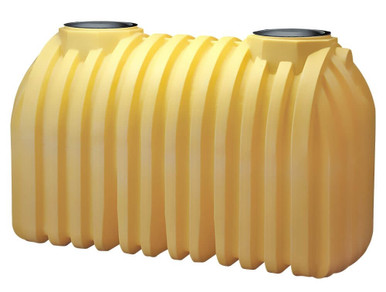
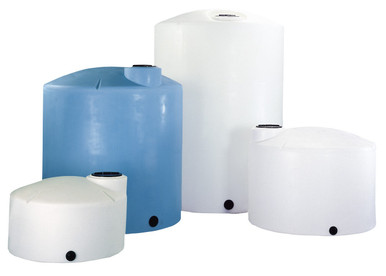
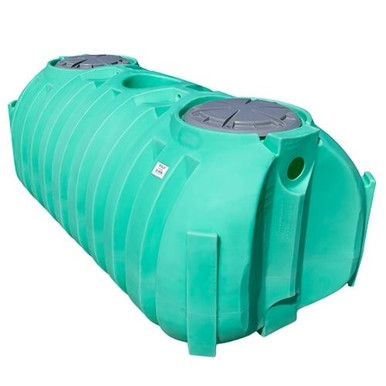
Ohio (OAC Chapter 3701-29) sets a 1,000–2,000-gallon capacity table by household size, requires a two-compartment tank for three or more bedrooms, and an NSF/ANSI 46 effluent filter. These IAPMO PS 1–listed two-compartment tanks meet that requirement.
Shop all IAPMO PS 1–listed septic tanks →
Meeting the construction standard is not the same as a permit — your county environmental health office issues the permit and makes the final determination. Call us with your permit number and we will confirm the exact tank spec before shipment, with freight quoted to your ZIP.
Chemical Storage & Secondary Containment in Ohio
Storing fuel, fertilizer, or process chemicals alongside your tank changes the rules. The federal Spill Prevention, Control, and Countermeasure rule (40 CFR Part 112) applies at 1,320 gallons of aggregate aboveground oil storage and requires secondary containment sized to at least 110% of your largest tank. Releases of hazardous substances above their federal reportable quantity (40 CFR 302.4) must be reported to the National Response Center at 1-800-424-8802.
Ohio layers its own spill reportable quantities and restricted-substance rules on top of that federal floor — confirm the current thresholds with your state environmental agency before specifying a chemical tank. Just as important, the polyethylene resin must be matched to the exact chemical, concentration, and specific gravity you intend to store; a tank rated for water is not automatically rated for acid, bleach, or fertilizer.
Last reviewed: May 2026 · sourced from Ohio administrative code
Regulations change on a rolling basis — confirm the current rule with your county or state agency before purchasing. Spot something out of date? Email us and we'll fix it.
Nearby states (East North Central) & full index: