
Pennsylvania Septic Tank Regulations — 25 Pa. Code Chapter 73, Act 537
Pennsylvania Septic Tank Regulations
25 Pa. Code Chapter 73 sets the standards for Onlot Sewage Treatment Facilities. The DEP and municipal Sewage Enforcement Officers (SEOs) manage these standards, along with Act 537 Official Plans and the 400 gallons per day (gpd) design-flow baseline.
The Governing Framework
Pennsylvania regulates "onlot" (on-site) sewage treatment under a multi-layer framework:
- Pennsylvania Sewage Facilities Act (Act 537) — the state statute authorizing municipal sewage facility planning and regulating onlot treatment.
- 25 Pa. Code Chapter 73 — Standards For Onlot Sewage Treatment Facilities (the DEP regulation implementing Act 537).
- Pennsylvania Department of Environmental Protection (DEP) — promulgates rules, provides oversight and training.
- Municipal Sewage Enforcement Officers (SEOs) — certified by DEP, employed by individual municipalities, they administer permits and inspections at the local level.
Design Sewage Flow — Section 73.17
25 Pa. Code § 73.17 establishes the design daily flow for residential use:
| Dwelling Size | Design Daily Flow (gpd) |
|---|---|
| 1–3 bedroom | 400 gpd |
| 4 bedroom | 500 gpd |
| 5 bedroom | 600 gpd |
| 6 bedroom | 700 gpd |
| 7+ bedroom | 800+ gpd (per formula) |
The 400 gpd baseline already includes water use from garbage grinders, automatic washing machines, dishwashers, and water softeners. Therefore, Pennsylvania does not require the 50% garbage-disposal upsize that Georgia and some other states do.
Multi-Compartment or Tanks-in-Series — Required
Section 73.31 requires all permitted septic tank installations to be multi-compartment or multi-tank:
- At least 2 compartments OR 2 tanks in series.
- First compartment/tank has same or greater capacity than second (but not more than 2x).
- Maximum 4 compartments or 4 tanks in series.
For a 3-bedroom home with a 400 gpd design flow, the required tank capacity is usually at least 1,000 gallons. A 1,000-gallon two-compartment tank meets PA Section 73.31 standards, as do two 500-gallon tanks placed in series.
Act 537 Official Plans
Under Pennsylvania's Sewage Facilities Act (Act 537), every municipality must create and maintain an "Official Plan" that shows how sewage is managed, whether through sewer connections, community onlot systems, or individual onlot systems. If you're planning a new onlot installation, your project must either fit within the existing plan or require a plan revision.
- Fit within the municipality's existing Official Plan, or
- Trigger an Official Plan revision (for larger-volume or non-conventional installations).
Most single-family residential installations fit within the existing plan. However, commercial, multi-unit, or non-conventional systems often need a plan revision, which can add weeks or months to the permit process.
Tank Types — Chapter 73 Distinctions
- Septic Tank (§ 73.31) — standard anaerobic primary treatment for conventional onlot systems.
- Aerobic Treatment Tank (§ 73.32) — advanced treatment unit for sites with poor soils; requires maintenance contract.
- Holding Tank (§ 73.62) — used for temporary storage without treatment; requires service-contracted pumping. Most commonly used for cabins and very low-occupancy or seasonal installations where a conventional system isn't feasible.
Permit Process — Municipal SEO
- Identify your municipality's SEO. Every Pennsylvania municipality contracts with (or employs) a DEP-certified SEO. Your local borough, township, or city has contact info for the current SEO.
- Perc test and site evaluation. The SEO conducts or oversees a percolation test and soil profile assessment. PA uses percolation rate as the primary design criterion.
- Design submittal. Licensed installer or designer prepares plans. Advanced systems may require PE review.
- Permit issuance. Typical SEO fees $400–$1,200 (municipality sets fee). Timelines 2–6 weeks plus any Act 537 plan revision.
- Installation. By a PA-registered installer.
- Pre-backfill inspection. SEO verifies tank placement, multi-compartment configuration, and dispersal field.
- Permit to occupy / certificate of completion.
Pennsylvania-Specific Considerations
- Rural vs. suburban zoning. Some urbanized Pennsylvania townships restrict new onlot installations in favor of sewer connection. Confirm with SEO before parcel purchase.
- Frost depth. 36–48 inches in most of the state, deeper in northern tier and higher elevations. Tank burial must account for frost plus maintenance access.
- Limestone (karst) geology. Central Pennsylvania has limestone bedrock with rapid groundwater transmission. Karst areas may require advanced treatment or engineered alternatives.
- Marcellus Shale region. Northeastern PA rural parcels often have shallow bedrock limiting dispersal-field depth. Mound systems and shallow-pressurized dispersal common.
- Chesapeake Bay watershed. Counties in the Susquehanna and Potomac drainage face Chesapeake Bay TMDL nitrogen-loading considerations. No additional OWTS rules yet but advanced treatment is sometimes specified in sensitive areas.
Material Approvals
Pennsylvania accepts polyethylene tanks that meet the construction standards of 25 Pa. Code § 73.31. Companies like Norwesco, Snyder, Enduraplas, and Chem-Tainer make tanks that comply with Pennsylvania standards. Verify compliance when ordering.
- IAPMO or NSF 46 listing
- ASTM D1998 compliance for polyethylene
- Two-compartment configuration (or plan for two tanks in series)
- Anti-buoyancy anchoring for high-water-table parcels (common in northern tier, Chesapeake drainage)
Frequently Asked Questions
- Who is the SEO for my property?
- Your municipality (borough, township, or city) appoints or contracts with the SEO. Call your local municipal office; they have current SEO contact info. PA's SEO model is distinctive — SEOs work for municipalities, not DEP or county health.
- Can I install a 1,000-gallon single-compartment tank in Pennsylvania?
- No. Section 73.31 requires multi-compartment or tanks-in-series. A 1,000-gal single-compartment tank doesn't meet the current code. Order a 1,000-gal two-compartment tank (most manufacturers make this standard) or two 500-gal tanks in series.
- Why is the baseline flow 400 gpd instead of a per-bedroom rate like other states?
- PA's 400 gpd baseline applies to 1-3 bedroom dwellings, with a +100 gpd step per additional bedroom. The 400 gpd base includes use from garbage grinders, washers, dishwashers, and water softeners — so no separate upsize for those appliances.
- What's an Act 537 Official Plan?
- Every Pennsylvania municipality maintains a plan under the Sewage Facilities Act documenting how sewage is handled in its territory. Your new onlot installation must fit the existing plan or trigger a revision. Single-family residential usually fits; commercial or multi-unit often requires revision.
- Can I have an aerobic treatment system instead of conventional?
- Yes, under Section 73.32. Common for sites with poor soils. Requires a maintenance contract with a DEP-certified maintenance provider and periodic inspection.
Source Citations
Shop Septic Tanks for Pennsylvania
OneSource stocks polyethylene septic tanks meeting Pennsylvania construction requirements. Match capacity to your design flow per the rules summarized above. Tank + accessories + holding tank options below cover standard and alternative configurations. OneSource drop-ships from the OEM warehouse closest to your install address.
Plastic Septic Tanks
Full polyethylene septic tank catalog. Sizes from 300 to 1,500+ gallons for Pennsylvania installations.
Browse Plastic Septic TanksIAPMO Approved Models
NSF/IAPMO listed tanks. Some counties and some installation types require this listing.
Browse IAPMO Approved ModelsSeptic Accessories
Risers, lids, baffles, filters, alarms, pumps, and install hardware.
Browse Septic AccessoriesHolding Tanks
Holding tanks for construction sites, recreational properties, and pump-and-haul installations.
Browse Holding TanksStoring chemicals in your Pennsylvania tank?
Pennsylvania's Onsite Sewage System Facilities (OSSF) rules do not cover chemical-storage tanks. These are specified by the manufacturer. If you need a tank for sulfuric acid, bleach, fertilizer solution, or any of 300+ industrial chemicals, our Chemical Compatibility Database provides full construction specifications.
Agricultural Tank Regulations — Pennsylvania Department of Agriculture (PDA)
The Pennsylvania Department of Agriculture oversees pesticide and fertilizer bulk storage under 3 P.S. § 111 (Pennsylvania Pesticide Control Act of 1973) with rules in 7 Pa. Code.
- 7 Pa. Code Chapter 128 — Pesticides: applicator certification, bulk storage, recordkeeping, RUP handling.
- 3 P.S. § 111.21 et seq. — Pennsylvania Pesticide Control Act (statutory authority).
- 3 Pa. C.S. Ch. 67 — Commercial Fertilizer Act.
- 3 Pa. C.S. Ch. 51 — Commercial Feed Act.
Pennsylvania agriculture is focused on dairy (in Lancaster, Lebanon, Berks, Franklin, Bradford counties), mushroom production (Chester County), orchards (Adams County, Erie County), vegetables, and row crops like corn, soy, and wheat. Commercial ag-retail facilities with bulk liquid fertilizer and pesticide storage must have secondary containment sized to 110% of the largest tank, with impermeable liners, documented inspections, and rinsate recovery on loading pads. The Chesapeake Bay Watershed Implementation Plan (WIP) adds nutrient-management requirements for farms in the Susquehanna, Juniata, and Potomac areas. Anhydrous ammonia storage follows ANSI K61.1 standards.
Oil & Gas — Marcellus Shale Capital
Pennsylvania is a major player in the Marcellus Shale and is the second-largest natural gas producer in the U.S., after Texas. The Department of Environmental Protection (DEP) Office of Oil and Gas Management regulates oil and gas activities under 25 Pa. Code Chapter 78 (conventional) and Chapter 78a (unconventional/shale) with authority from 58 Pa. C.S. (Oil and Gas Act; Act 13 of 2012).
- 25 Pa. Code Ch. 78 Subchapter C — Environmental protection performance standards (conventional wells): pit construction, tank containment, spill response, waste handling.
- 25 Pa. Code Ch. 78a — Unconventional wells (Marcellus and Utica shale): enhanced design standards, water management, pit prohibitions, tank containment.
- 25 Pa. Code § 78a.60 — Brine/produced-water storage: secondary containment, monitoring, recordkeeping.
- 25 Pa. Code § 78a.64 / 78a.65 — Secondary containment and spill reporting for tanks.
- 58 Pa. C.S. §§ 3201–3274 — Oil and Gas Act / Act 13 (statutory authority; impact fee).
Pennsylvania's Marcellus Shale extends across the northern tier (Bradford, Susquehanna, Tioga, Lycoming, Sullivan, Wyoming counties) and the southwest (Washington, Greene, Fayette, Allegheny, Westmoreland counties). Unconventional shale wells use centralized impoundments, modular tanks, closed-loop systems, and produced-water storage batteries, all regulated under Ch. 78a. Secondary containment under 25 Pa. Code § 78a.64 must hold 110% of the largest tank plus precipitation freeboard, with synthetic liners meeting specific permeability and thickness standards. DEP inspects produced-water tanks and transfer operations frequently, with low reporting thresholds under Act 13 and § 78a.66, requiring immediate notification for any release reaching surface water. The post-2012 Act 13 rules are among the strictest shale regulations in the U.S., and the cost difference compared to Ohio and West Virginia has been a topic of debate.
Petroleum Storage Tank Program — PA DEP
The Pennsylvania DEP regulates underground and aboveground petroleum storage under 25 Pa. Code Chapter 245, with authority from 35 P.S. § 6021 (Storage Tank and Spill Prevention Act).
- 25 Pa. Code Ch. 245 Subchapter B — UST general requirements.
- 25 Pa. Code Ch. 245 Subchapter C — UST technical standards (design, installation, release detection, spill/overfill).
- 25 Pa. Code Ch. 245 Subchapter E — Aboveground storage tanks (Pennsylvania has a comprehensive AST program).
- 25 Pa. Code Ch. 245 Subchapter G — Corrective action process for owners and operators.
- 35 P.S. § 6021.101 et seq. — Storage Tank and Spill Prevention Act (SSTPA).
- Underground Storage Tank Indemnification Fund (USTIF) and Storage Tank Fund — state reimbursement mechanisms.
Pennsylvania UST owners must register with DEP, pay annual fees, maintain 2018 federal rule upgrades, and report suspected releases within 24 hours. The AST program under Subchapter E is unique, as Pennsylvania regulates aboveground petroleum storage tanks over 1,100 gallons at commercial facilities, below the federal SPCC threshold. Certified installers, inspectors, and removers need DEP certification. USTIF provides funds for cleanup costs and third-party damages at regulated USTs, making it one of the better-funded state programs historically.
Septic System Sizing Deep Dive
Pennsylvania regulates onsite wastewater treatment through 25 Pa. Code Chapters 71, 72, 73 under the Sewage Facilities Act (35 P.S. § 750.1 et seq.), with daily permitting handled by Sewage Enforcement Officers (SEOs) employed or contracted by municipalities. The typical design flow is 400 gpd for a 3-bedroom home, increasing by about 100 gpd per bedroom.
| Bedrooms | Design Daily Flow | Minimum Septic Tank Capacity |
|---|---|---|
| 1–3 BR | 400 gpd | 900 gallons |
| 4 BR | 500 gpd | 1,000 gallons |
| 5 BR | 600 gpd | 1,250 gallons |
| 6+ BR | +100 gpd/BR | +250 gal/BR |
Pennsylvania soils include productive limestone-derived loams in the Great Valley, shale-derived silt loams in the ridge-and-valley, glacial till in the northwest, organic and alluvial soils in river valleys, and thin rocky soils on the Allegheny Plateau. Chapters 71–73 require an SEO to conduct a site investigation, including a perc test and deep-hole soil probe, along with a municipality permit and Act 537 planning module. Alternative systems for failed perc tests include aerobic treatment units, sand mounds (very common in PA), spray irrigation, drip dispersal, and intermittent sand filters. Pennsylvania's sand-mound system was developed in-state and is the standard solution for shallow or slow-perc sites.
Chemical Storage Secondary Containment & Spill Reporting
Federal SPCC (40 CFR 112) applies at 1,320 gallons aggregate aboveground oil. Pennsylvania layers on:
- 35 P.S. § 6018.301 (Solid Waste Management Act) and 35 P.S. § 6020 (HSCA / CHRIA) — Hazardous Sites Cleanup Act; release reporting.
- 25 Pa. Code Ch. 245 Subchapter G — Corrective action for storage-tank releases.
- 25 Pa. Code Ch. 91 — Water quality release reporting (immediate for threats to waters of the Commonwealth).
- 25 Pa. Code Ch. 264a / 265a — Hazardous waste management incorporating RCRA Subtitle C.
- PA Emergency Management Agency (PEMA) — EPCRA Tier II, State Emergency Response Commission.
Report spills to the DEP 24-hour Emergency Response at 1-800-541-2050 and federal RQ releases to the National Response Center at 1-800-424-8802. Upstream oil and gas releases should be reported to DEP Oil & Gas Management regional offices under Ch. 78a.66. Secondary containment at 110% is the SPCC and industry standard; § 78a.64 requires similar measures for oilfield tanks. For state-specific RQ thresholds that differ from 40 CFR 302.4, contact DEP directly.
Permit Pathways at a Glance
- Residential OWTS: Municipal SEO under 25 Pa. Code Ch. 73 (Sewage Facilities Act).
- Fertilizer & pesticide registration: PDA under 3 Pa. C.S. Ch. 67 and 7 Pa. Code Ch. 128.
- Pesticide applicator certification: PDA under 3 P.S. § 111.21.
- Oil & gas (conventional & unconventional): DEP OOGM under 25 Pa. Code Ch. 78 / 78a and Act 13.
- Petroleum UST / AST: DEP Storage Tanks Program under 25 Pa. Code Ch. 245.
- SPCC > 1,320 gal oil aggregate: Federal SPCC plan; state spill reporting to DEP.
- NPDES industrial stormwater: DEP (PA is delegated NPDES state).
- Chesapeake Bay nutrient management: State Conservation Commission and DEP (Act 38 nutrient management; Chapter 83 rules).
Current fees change; verify with PDA, DEP, or the local municipality before budgeting.
More Pennsylvania FAQs
- Do I need an SEO for a single-lot septic install?
- Yes — Pennsylvania's Sewage Facilities Act delegates permitting to municipal-appointed Sewage Enforcement Officers. The SEO conducts the site investigation (perc test and soil probe), writes the permit, and inspects the install. The homeowner cannot self-permit or self-install. SEO availability and fee structure vary by municipality.
- What is Act 13 and how does it affect my tank project?
- Act 13 of 2012 is the modern Pennsylvania oil and gas statute that established the impact fee on unconventional wells, strengthened environmental requirements, and clarified preemption of local ordinances over drilling operations. For tank-storage purposes, Act 13 sits above 25 Pa. Code Ch. 78a and drives the operational rules that apply to Marcellus produced-water and tank-battery storage.
- Why are sand mounds so common in PA?
- Pennsylvania soils often have shallow limiting zones (bedrock, perched water tables, fragipans) that fail conventional in-ground drainfield perc. The sand-mound system — developed and codified in Chapter 73 — elevates the treatment layer above the limiting zone using a sand-filter base and pressure distribution. On slow-perc or shallow sites, it is the default solution statewide. Design, siting, and long-term maintenance are SEO-driven.
- Does the AST program cover my farm diesel tank?
- Agricultural farm tanks used for on-site consumption are generally exempt from 25 Pa. Code Ch. 245 AST registration, but federal SPCC still applies at 1,320 gallons aggregate aboveground oil. Commercial and industrial AST above 1,100 gallons falls within state AST program.
- How does Chesapeake Bay compliance interact with tank storage?
- The Chesapeake Bay Watershed Implementation Plan (WIP) imposes nutrient-management requirements on farms in the Susquehanna, Juniata, and Potomac drainages (most of eastern and central PA). Concentrated Animal Operations (CAOs) and Concentrated Animal Feeding Operations (CAFOs) must develop nutrient-management plans under Act 38 and manure-storage plans that factor into fertilizer tank siting and capacity. DEP CAFO permits can drive additional stormwater and containment requirements beyond standalone ag-retail rules.
Septic Tanks That Meet Pennsylvania Code
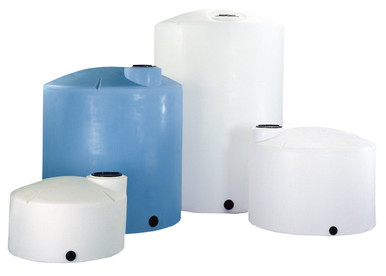
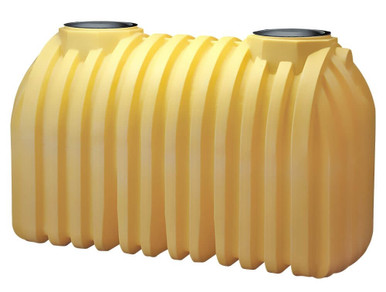
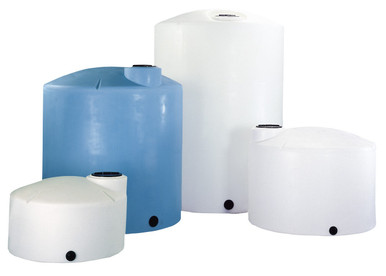
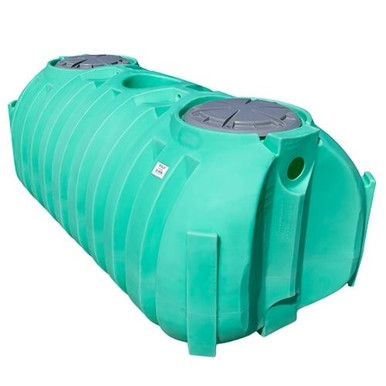
Pennsylvania (25 Pa. Code Chapter 73) requires a multi-compartment septic tank. These IAPMO PS 1–listed two-compartment tanks meet the multi-compartment standard at or above 1,000 gallons.
Shop all IAPMO PS 1–listed septic tanks →
Meeting the construction standard is not the same as a permit — your county environmental health office issues the permit and makes the final determination. Call us with your permit number and we will confirm the exact tank spec before shipment, with freight quoted to your ZIP.
Chemical Storage & Secondary Containment in Pennsylvania
Storing fuel, fertilizer, or process chemicals alongside your tank changes the rules. The federal Spill Prevention, Control, and Countermeasure rule (40 CFR Part 112) applies at 1,320 gallons of aggregate aboveground oil storage and requires secondary containment sized to at least 110% of your largest tank. Releases of hazardous substances above their federal reportable quantity (40 CFR 302.4) must be reported to the National Response Center at 1-800-424-8802.
Pennsylvania layers its own spill reportable quantities and restricted-substance rules on top of that federal floor — confirm the current thresholds with your state environmental agency before specifying a chemical tank. Just as important, the polyethylene resin must be matched to the exact chemical, concentration, and specific gravity you intend to store; a tank rated for water is not automatically rated for acid, bleach, or fertilizer.
Last reviewed: May 2026 · sourced from Pennsylvania administrative code
Regulations change on a rolling basis — confirm the current rule with your county or state agency before purchasing. Spot something out of date? Email us and we'll fix it.
Nearby states (Mid-Atlantic) & full index: