
Washington State Septic Tank Regulations — WAC 246-272A
Washington Septic Tank Regulations
WAC 246-272A covers on-site sewage systems, including the design-flow formula and permits from the Local Health Jurisdiction. It also addresses nitrogen-sensitive zones in Puget Sound. A rule rewrite will be phased in through April 2025.
The Governing Framework
Washington regulates onsite sewage systems (OSS) under the Department of Health with administration by local health jurisdictions:
- Washington Administrative Code Chapter 246-272A — On-Site Sewage Systems (OSS serving up to 3,500 gpd). Current version effective February 26, 2025.
- WAC 246-272C — Large On-Site Sewage Systems (3,500–100,000 gpd). Commercial, subdivision, and small-community scale.
- Washington State Department of Health (DOH) — writes and interprets state-level rules.
- Local Health Jurisdictions (LHJs) — 35 LHJs statewide administer permits, inspections, and operational permits at the county or multi-county level.
Design Flow & Tank Capacity — WAC 246-272A-0230
Washington uses a design-flow calculation rather than a fixed bedroom-to-capacity table. The base assumption:
- 90 gallons per day per bedroom is the baseline residential design flow.
- A 1.33 surge factor multiplies this to account for short-term peak use.
- Effective design flow: 120 gallons per bedroom per day.
- Minimum OSS design flow: 240 gpd (enforces a floor equivalent to a 2-bedroom home).
From the design flow, the septic tank sizing follows:
| Bedrooms | Design Flow (gpd) | Typical Tank Capacity |
|---|---|---|
| 2 | 240 | 1,000 gallons (minimum floor) |
| 3 | 360 | 1,000 gallons |
| 4 | 480 | 1,200–1,250 gallons |
| 5 | 600 | 1,500 gallons |
| 6+ | 720+ | 1,750–2,000 gallons |
For residential facilities other than single-family homes, the minimum is 250 gallons per bedroom with a 1,000-gallon floor.
Nitrogen-Sensitive Areas (Puget Sound Basin)
Washington has a system for nitrogen-sensitive areas that requires advanced treatment in watersheds with nitrogen problems. Key areas are affected by these rules.
- Puget Sound Basin — extensive NSA designations, especially along shorelines. Advanced treatment (nitrogen-reducing ATUs) is often required within 500 feet of marine waters.
- Hood Canal — one of the most aggressive NSA designations in the state.
- Specific Puget Sound counties (Thurston, Kitsap, Mason, Jefferson, Clallam, San Juan, Island, Whatcom) have NSA-specific LHJ rules layered on top of WAC 246-272A.
Permit Process — Local Health Jurisdiction
- Contact your LHJ. Washington's 35 local health jurisdictions each administer OSS permits. Some serve single counties (King County, Snohomish County); some are multi-county districts.
- Site evaluation. A licensed designer (OSS designer) or the LHJ conducts soil and site analysis. Washington uses soil textural classification and infiltration rate rather than percolation tests alone.
- Design submittal. An OSS designer certified under WAC 246-272B prepares the design. For non-conventional systems, a professional engineer may be required.
- Permit issuance. Typical LHJ fees $500–$1,500 depending on complexity. Timeline 2–8 weeks.
- Installation. By a Washington-licensed OSS installer.
- Final inspection. LHJ inspector verifies installation before backfill.
- Operational permit. Required for most systems — renewal typically every 1–3 years with periodic maintenance verification.
Additional WAC 246-272A-0232 Tank Requirements
- Two-compartment or tanks in series generally required for systems above the minimum size.
- Effluent filter or screened vault required on the outlet of the final tank.
- Riser access must extend to finished grade on larger tanks — no more below-grade-only manways for new installations.
- Tank construction standards reference IAPMO listing and ASTM D1998 for polyethylene tanks.
- Seismic zones (most of western Washington + north Puget Sound) may require additional anchoring and flexible-joint connections.
Material Approvals
Washington allows polyethylene tanks that meet WAC 246-272A-0232 standards. Major manufacturers like Norwesco, Snyder, Enduraplas, and Chem-Tainer have approved tank designs for use in Washington. Check these before ordering.
- Tank meets the state-approved tank listing administered by DOH.
- Two compartments or plan for two tanks in series.
- Effluent filter integrated at the final-compartment outlet.
- Riser access extends to grade.
- For Puget Sound / marine-proximate installations, confirm NSA-advanced treatment compatibility.
Washington-Specific Considerations
- Puget Sound protection. NSA designations drive most of the cost difference between WA and comparable states. Budget 2–4x baseline OSS cost in NSA zones.
- Seismic design. Western Washington is in a high-seismic zone (Cascadia Subduction Zone). Tanks need anchoring and flexible inlet/outlet couplings to tolerate ground motion without cracking.
- Rainfall & winter installation. Pacific Northwest winters are wet and mild. Frost depth is usually not a concern in the Puget Sound lowlands; groundwater is the dominant challenge.
- Operational permit renewals. Washington is one of the few states requiring regular operational-permit renewal, often with inspection and pumping verification. Factor this into long-term cost of ownership.
Frequently Asked Questions
- What counts as a Nitrogen-Sensitive Area?
- NSA designations are made by the Washington DOH based on documented nitrogen-loading concerns in receiving waters. Most of the Puget Sound coastal zone, Hood Canal, and certain groundwater zones are NSA. Your LHJ will tell you whether your parcel is in an NSA during site evaluation.
- How much more does an advanced treatment system cost?
- A conventional gravity-flow OSS might be $10,000-$20,000. An NSA-required advanced treatment (proprietary ATU with nitrogen reduction) is typically $25,000-$50,000 installed, plus ongoing maintenance contract ($300-$800 annually). The math supports buying a larger inland parcel instead of a waterfront lot in many cases.
- Can I install an OSS myself in Washington?
- No. WAC 246-272A requires a licensed OSS installer, and design by a certified OSS designer or PE. Owner installation is not a standard pathway.
- Does the rule rewrite affect my existing system?
- Existing systems are grandfathered under their original permit. The 2024/2025 rule rewrite primarily affects new installations and significant repairs. Check with your LHJ when planning any significant modification.
- What about Washington's Large OSS rules (246-272C)?
- Any system above 3,500 gpd falls under WAC 246-272C — a separate chapter with engineering review and state-level oversight. This affects subdivisions, small communities, commercial facilities, and large agricultural operations. Rules are similar in spirit to 246-272A but with additional engineering documentation.
Source Citations
Shop Septic Tanks for Washington
Washington effectively requires IAPMO/NSF listing for polyethylene septic tanks. Specify the IAPMO-approved models below. Match capacity to your design flow per Washington's rules summarized above. OneSource drop-ships from the OEM warehouse closest to your install address.
IAPMO Approved Septic Tanks
Required specification for most Washington installations. NSF/IAPMO listed polyethylene tanks.
Browse IAPMO Approved Septic TanksAll Plastic Septic Tanks
Full catalog of polyethylene septic tanks. Confirm IAPMO listing with your chosen model.
Browse All Plastic Septic TanksSeptic Accessories
Risers, lids, inlet/outlet baffles, effluent filters, alarms, pumps.
Browse Septic AccessoriesMulti-Use Tanks
Dual-use tanks for combined septic/cistern installations where local code permits.
Browse Multi-Use TanksStoring chemicals in your Washington tank?
Washington's rules for on-site sewage systems don't cover chemical-storage tanks. These are specified by the manufacturer. If you need a tank for chemicals like sulfuric acid, bleach, or fertilizer solution, our Chemical Compatibility Database provides full construction specifications.
Agricultural Tank Regulations — Washington State Department of Agriculture (WSDA)
The Washington State Department of Agriculture oversees bulk storage of pesticides, fertilizers, and chemigation under RCW 15.58 and RCW 15.54, with rules in the Washington Administrative Code (WAC) Title 16.
- WAC 16-201 — Bulk Pesticide Storage Rules: construction, secondary containment, loading-pad rinsate, inspection.
- WAC 16-228 — General Pesticide Rules including applicator licensing, RUP handling, recordkeeping.
- WAC 16-200 — Fertilizer rules.
- RCW 15.58 — Washington Pesticide Control Act.
- RCW 15.54 — Commercial Fertilizer Act.
Washington's agriculture includes apples, cherries, pears, wine grapes, hops, wheat, potatoes, dairy, and specialty crops. The WSDA's WAC 16-201 rule for bulk pesticide storage is strict. Facilities must have secondary containment for 110% of the largest tank or 10% of the total, with impermeable liners and monthly inspections. WSDA works with the Washington Department of Ecology on incident response. Anhydrous ammonia storage follows ANSI K61.1 standards.
Oil & Gas — Washington Department of Natural Resources
Washington doesn't have significant oil and gas production. The Washington Department of Natural Resources manages the state's inactive oil and gas program under RCW 78.52 and WAC 344-12. Regulations focus on petroleum retail USTs, SPCC-regulated industrial facilities, and agricultural bulk storage.
Petroleum USTs — Washington Department of Ecology
Washington Department of Ecology regulates underground storage tanks under WAC 173-360A with statutory authority at RCW 90.76:
- WAC 173-360A — Underground Storage Tank Regulations (design, installation, release detection, spill/overfill prevention, corrective action, closure).
- RCW 90.76 — Underground Storage Tank statute.
- Pollution Liability Insurance Agency (PLIA) — Washington's mechanism for petroleum release financial assurance and cleanup reimbursement.
- WAC 173-180 — Uniform facility standards for oil transfer (applicable to marine petroleum facilities in Puget Sound and the Columbia River).
Washington UST owners must register with Ecology, pay annual fees, and follow 2018 federal rule upgrades like inspections and operator training. They must report suspected releases within 24 hours. Ecology's MTCA standards apply to cleaning up petroleum releases. PLIA handles financial assurance and reimbursement programs. Marine and rail petroleum transfer facilities follow WAC 173-180 with enhanced spill-prep requirements.
Septic System Sizing Deep Dive
Washington regulates on-site sewage systems under WAC 246-272A. The minimum residential design flow is 120 gpd per bedroom, which is generous compared to other western states.
| Bedrooms | Minimum Septic Tank Capacity |
|---|---|
| 1–3 BR | 1,000 gallons |
| 4 BR | 1,250 gallons |
| 5 BR | 1,500 gallons |
| 6+ BR | +250 gallons per additional bedroom |
Washington's soils and climate vary widely, from wet glacial tills to high-desert mineral soils. WAC 246-272A requires a site evaluation, licensed installer, and local health permit. Alternative systems like aerobic treatment units and sand filters are used for failed perc tests. Enhanced treatment is needed in Puget Sound shellfish-protection zones. Failing systems in these areas are a priority for enforcement due to their impact on shellfish harvesting.
Chemical Storage Secondary Containment & Spill Reporting
Federal SPCC (40 CFR 112) applies at 1,320 gallons aggregate aboveground oil. Washington layers on:
- RCW 90.48 — Water Pollution Control Act (Ecology spill-reporting authority).
- WAC 173-303 — Dangerous Waste Regulations incorporating RCRA Subtitle C with Washington-specific Extremely Hazardous Waste (EHW) additions.
- WAC 173-182 — Oil Spill Contingency Plan rules for marine, rail, and pipeline transfers.
- Washington Emergency Management Division — EPCRA Tier II and State Emergency Response Commission.
Report spills to the Washington Department of Ecology's 24-hour line at 1-800-258-5990 and federal releases to the National Response Center at 1-800-424-8802. Ecology's Spill Prep and Response program conducts drills and audits on Tier II and oil-handling facilities. Secondary containment at 110% of the largest tank is standard, but WSDA may require stricter measures for bulk pesticide facilities under WAC 16-201. Washington's Dangerous Waste program under WAC 173-303 includes extra state-designated hazardous waste, increasing reporting and handling requirements.
Permit Pathways at a Glance
- Residential OWTS: Local health jurisdiction under WAC 246-272A.
- Fertilizer & pesticide registration: WSDA under RCW 15.54 / 15.58 and WAC 16-200 / 16-201 / 16-228.
- Pesticide applicator license: WSDA under RCW 15.58.
- Bulk pesticide storage: WSDA under WAC 16-201 (prescriptive containment rule).
- Petroleum UST: Ecology under WAC 173-360A.
- SPCC > 1,320 gal oil aggregate: Federal SPCC plan; state spill reporting to Ecology.
- Oil transfer (marine/rail): Ecology under WAC 173-180 and 173-182.
- NPDES industrial stormwater: Ecology (Washington is a delegated NPDES state).
Current fees change; verify with WSDA, Ecology, or PLIA before budgeting.
More Washington FAQs
- Does WAC 16-201 apply to my on-farm chemical shed?
- WAC 16-201 primarily covers commercial bulk pesticide storage at dealers and applicators. On-farm minor-use storage has different thresholds — but once you exceed the bulk-storage trigger (generally 300 gallons for liquid pesticide mini-bulks aggregated) the full containment, construction, and inspection regime applies. Check with WSDA directly for your specific operation.
- What is a marine recovery area and how does it affect septic?
- Puget Sound marine recovery areas are zones where failing OWTS threaten shellfish and marine water quality. Mason, Kitsap, Jefferson, Snohomish, Island, and San Juan counties have designated recovery areas under WAC 246-272A with tighter inspection, upgrade timelines, and nitrogen-reduction treatment requirements.
- Does Washington have a state petroleum cleanup fund?
- Yes — the Pollution Liability Insurance Agency (PLIA) runs the Heating Oil Pollution Liability Insurance Program and Petroleum UST Revolving Loan programs. Eligible owners can access cost-share for release cleanup and upgrade funding. Registration and compliance are prerequisites.
- How does MTCA cleanup standard compare to federal?
- Washington's Model Toxics Control Act cleanup levels under WAC 173-340 are often more stringent than federal CERCLA action levels, especially for petroleum constituents and groundwater protection. MTCA applies to all contaminated sites in Washington and drives the scope and cost of UST release remediation.
- Are rail petroleum transfer facilities regulated?
- Yes — rail facilities transferring crude oil, ethanol, or petroleum products over threshold volumes must file oil-spill contingency plans under WAC 173-182, participate in Ecology drills, and meet financial responsibility requirements. Washington tightened rail rules substantially after the 2013 Lac-Megantic disaster and Mosier, OR derailment.
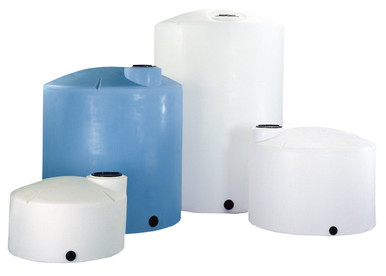
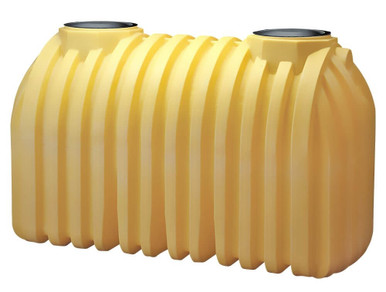
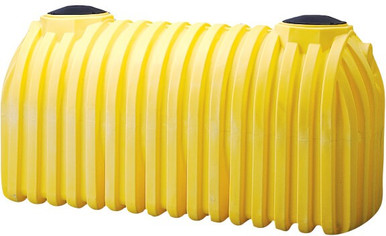
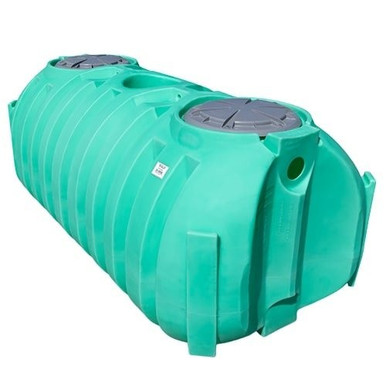
Septic Tanks That Meet Washington Code
Washington (WAC 246-272A) sizes septic tanks by bedroom count or design flow, with residential systems typically starting at 1,000 gallons. These IAPMO PS 1–listed polyethylene tanks meet that capacity standard; your county or state permitting office confirms the final size.
Shop all IAPMO PS 1–listed septic tanks →
Meeting the construction standard is not the same as a permit — your county environmental health office issues the permit and makes the final determination. Call us with your permit number and we will confirm the exact tank spec before shipment, with freight quoted to your ZIP.
Chemical Storage & Secondary Containment in Washington
Storing fuel, fertilizer, or process chemicals alongside your tank changes the rules. The federal Spill Prevention, Control, and Countermeasure rule (40 CFR Part 112) applies at 1,320 gallons of aggregate aboveground oil storage and requires secondary containment sized to at least 110% of your largest tank. Releases of hazardous substances above their federal reportable quantity (40 CFR 302.4) must be reported to the National Response Center at 1-800-424-8802.
Washington layers its own spill reportable quantities and restricted-substance rules on top of that federal floor — confirm the current thresholds with your state environmental agency before specifying a chemical tank. Just as important, the polyethylene resin must be matched to the exact chemical, concentration, and specific gravity you intend to store; a tank rated for water is not automatically rated for acid, bleach, or fertilizer.
Last reviewed: May 2026 · sourced from Washington administrative code
Regulations change on a rolling basis — confirm the current rule with your county or state agency before purchasing. Spot something out of date? Email us and we'll fix it.
Nearby states (Pacific) & full index: