
Colorado Septic Tank Regulations — Regulation 43 (5 CCR 1002-43)
Colorado Septic Tank Regulations
Regulation 43 (5 CCR 1002-43) covers On-Site Wastewater Treatment Systems. The March 2025 update will be overseen by CDPHE, with local county health agencies handling specific tasks. It also considers mountain-county issues like frost and snow.
The Governing Framework
Colorado regulates OWTS under a state-rule-plus-county-delegation structure:
- 5 CCR 1002-43 (Regulation 43) — On-Site Wastewater Treatment Systems rule. Covers systems with design flow 2,000 gallons per day or less.
- Colorado Water Quality Control Commission — promulgates Regulation 43 at the state level.
- Colorado Department of Public Health and Environment (CDPHE) — administers Reg 43 at the state level.
- County health agencies — issue permits and conduct inspections locally. All 64 Colorado counties have adopted OWTS regulations at least as strict as Reg 43, as state law requires.
Septic Tank Capacity — Reg 43 Section 9 (5 CCR 1002-43.9)
Regulation 43 Section 9 outlines the design rules for all parts of OWTS, including septic tanks. Table 9-1 shows the minimum tank size based on the number of bedrooms for new homes.
| Bedrooms | Minimum Tank Capacity |
|---|---|
| 1–3 | 1,000 gallons |
| 4 | 1,250 gallons |
| 5+ | Scales per Table 9-1 formula (typically +250 gal per bedroom) |
A special rule allows smaller tanks for systems that separate graywater from blackwater (toilet waste), as long as they hold waste for at least 48 hours. This is useful for cabins and seasonal homes where regular tank sizes might be too large.
Altitude, Frost, and Snow — Colorado-Distinct Factors
Colorado's OWTS installations face engineering challenges not seen in most lower-altitude states:
- Deep frost line. Front Range (Denver, Boulder, Colorado Springs, Fort Collins) has frost depth 36–42 inches. Mountain counties (Summit, Eagle, Pitkin, Grand, San Juan) have frost depth 48–60+ inches. Tanks must be installed below frost or with insulated risers.
- Snow cover complicates inspection. Winter-time inspections and pumping require snow clearing and can delay service. Plan tank maintenance for summer/fall whenever possible.
- Seasonal occupancy (cabins, ski homes). Many mountain OWTS serve seasonally-occupied homes where the 48-hour detention-time graywater provision may be invoked. Licensed designers handle these as "variable flow" installations.
- Elevation-related evaporation/percolation. Colorado's dry climate produces unusual soil evaluation results. Licensed Colorado soil scientists are accustomed to these patterns and their designs reflect them.
- Municipal watershed protection. Several Front Range counties have watershed-specific setback and treatment requirements above the Reg 43 baseline.
Permit Process — County Health Agency
- Contact your county public health agency. Colorado has 64 counties with varying sophistication of OWTS program — from large metro districts to small rural offices.
- Soil and site evaluation. A licensed soil scientist or engineer performs the site work. Colorado uses soil-percolation and profile evaluation in combination.
- Design submittal. Licensed designer prepares the design; PE review often required for non-conventional systems.
- Permit issuance. Typical fees $400–$1,200 depending on county. Mountain-county timelines can be longer due to seasonal access.
- Installation. By a licensed installer.
- Pre-backfill inspection. County inspector verifies tank placement, insulation, and setbacks before backfill.
- Transfer-of-Title inspection. Colorado requires an OWTS inspection before property sale in most counties; the inspection must be performed by a licensed Colorado professional.
Material Approvals
Colorado accepts polyethylene tanks meeting Reg 43 Section 9 construction standards. Key verification items:
- Tank listed as approved by manufacturer via IAPMO or NSF 46.
- ASTM D1998 compliance for polyethylene.
- Proper effluent filter at outlet.
- For deep-frost installations, confirm tank wall supports the cover depth (manufacturers rate tanks for specific maximum cover; exceeding rating voids warranty and can cause collapse).
- Mountain counties may require heat-traced access risers — confirm tank neck/riser configuration supports heat-trace at order.
Colorado-Specific Considerations
- Denver metro (Adams, Arapahoe, Boulder, Denver, Douglas, Jefferson). High permit volume, 2–6 week timelines. Most Front Range permits are straightforward residential systems.
- Mountain resort counties (Summit, Eagle, Pitkin, Routt, Grand). Seasonal installation windows (spring-fall), deeper frost, premium pricing. Expect higher installed costs and longer timelines.
- Western Slope (Mesa, Garfield, Rio Blanco). Oil and gas activity has pushed some OWTS designs toward higher-capacity industrial tanks serving temporary workforce housing.
- San Luis Valley. High altitude, alkaline soils, unique agricultural patterns. Rio Grande watershed has specific setback rules.
- Front Range growth corridor. Douglas, Elbert, and Weld county growth has produced OWTS installation volume that sometimes overwhelms small county health offices; plan permit timelines conservatively.
Frequently Asked Questions
- Can I use a smaller tank for a cabin that's only used seasonally?
- Potentially yes, under the 48-hour detention rule if you're using a graywater-separated system. Licensed designers handle these as variable-flow installations. Expect your designer to recommend a conventional tank for a primary residence regardless — the small savings aren't worth the operational fragility of a seasonally-sized tank if the use pattern changes.
- What's the frost depth I need to plan for?
- Front Range: plan for 36-42 inch frost depth with a cover of at least 24-36 inches over the tank. Mountain counties: 48-60+ inches frost; plan accordingly and confirm the tank is rated for the required cover depth. Your designer will specify.
- Do I need to re-permit if I convert from seasonal to full-time occupancy?
- Yes. Converting a cabin OWTS to full-time service may require re-sizing, advanced treatment, or additional dispersal area depending on the original system's design flow. Contact your county health agency before winterizing for full-time use.
- Does the March 2025 rewrite apply to my existing system?
- Existing systems are grandfathered under their original permit. The 2025 rewrite applies to new installations and significant modifications. Check with your county for any retroactive inspection or reporting requirements.
- Is there a Transfer-of-Title OWTS inspection required before property sale?
- Yes in most counties — an inspection by a licensed Colorado OWTS professional before property transfer is required by county rule. Budget $400-$800 for the inspection plus any required remediation.
Source Citations
Shop Septic Tanks for Colorado
OneSource stocks polyethylene septic tanks meeting Colorado construction requirements. Match capacity to your design flow per the rules summarized above. Tank + accessories + holding tank options below cover standard and alternative configurations. OneSource drop-ships from the OEM warehouse closest to your install address.
Plastic Septic Tanks
Full polyethylene septic tank catalog. Sizes from 300 to 1,500+ gallons for Colorado installations.
Browse Plastic Septic TanksIAPMO Approved Models
NSF/IAPMO listed tanks. Some counties and some installation types require this listing.
Browse IAPMO Approved ModelsSeptic Accessories
Risers, lids, baffles, filters, alarms, pumps, and install hardware.
Browse Septic AccessoriesHolding Tanks
Holding tanks for construction sites, recreational properties, and pump-and-haul installations.
Browse Holding TanksStoring chemicals in your Colorado tank?
Colorado's OSSF rules don't cover chemical-storage tanks. These are specified by the manufacturer. If you need a tank for sulfuric acid, bleach, fertilizer solution, or any of 300+ industrial chemicals, our Chemical Compatibility Database provides full construction details.
Agricultural Tank Regulations — Colorado Department of Agriculture (CDA)
The Colorado Department of Agriculture oversees pesticide, fertilizer, and agricultural chemical storage through the Pesticide Act and Chemigation Act. The rules are found in the Code of Colorado Regulations (CCR). Key authorities:
- 8 CCR 1203-24 — CDA Chemical Management Act rules covering bulk pesticide and fertilizer facility containment, construction, inspection, and operational-area requirements.
- C.R.S. 35-12-101 et seq. — Colorado Pesticide Applicators' Act (statutory authority for applicator licensing).
- C.R.S. 35-10-101 et seq. — Colorado Fertilizer Act.
- 8 CCR 1203-4 — Commercial and private pesticide applicator rules.
Colorado's agricultural area stretches from the South Platte region to the San Luis Valley and the Western Slope. Facilities storing bulk liquid fertilizer (UAN-32, 10-34-0, ATS) and pesticides must have secondary containment that can hold 110% of the largest tank, with impermeable liners, documented inspections, and rinsate recovery on loading pads. CDA inspectors work with the CDPHE Hazardous Materials and Waste Management Division on incident response. Anhydrous ammonia handling follows ANSI K61.1 and CDA rules. The High Plains corn belt in Yuma, Kit Carson, and Phillips counties uses a lot of nurse tanks in the spring.
Oil & Gas Produced Water — Energy and Carbon Management Commission (ECMC)
The Colorado Energy and Carbon Management Commission (ECMC, formerly COGCC) manages oil and gas operations under 2 CCR 404-1, with legal authority from C.R.S. 34-60-106. Rules for produced-water tanks and pits include:
- 2 CCR 404-1 Rule 906 — Produced water pits, tanks, and spills: construction, lining, freeboard, fencing, and closure of on-location storage.
- 2 CCR 404-1 Rule 904 — E&P waste management.
- 2 CCR 404-1 Rule 609 — Statewide setbacks and location restrictions that affect where tanks can be sited.
- C.R.S. 34-60-106 — ECMC rulemaking authority.
The DJ Basin (Weld, Adams, Broomfield) and Piceance Basin on the Western Slope use a lot of water. Steel and fiberglass tanks are common for high-volume use, while polyethylene tanks are used for chemical injection and flowback chemistry. Rule 906 requires secondary containment around tank batteries, integrity testing, and written spill-response plans. Colorado's 2019 SB 181 increased Rule 609 setbacks around buildings and water sources, encouraging closed-loop drilling and better tank containment.
Petroleum USTs — Colorado Division of Oil and Public Safety (OPS)
Colorado's UST program is managed by the Colorado Department of Labor and Employment (CDLE), Division of Oil and Public Safety, under 7 CCR 1101-14:
- 7 CCR 1101-14 — Petroleum Storage Tank Rules: UST design, installation, release detection, spill/overfill prevention, corrective action.
- C.R.S. 8-20.5 — Petroleum Storage Tank Committee; Petroleum Storage Tank Fund for reimbursement.
OPS registers regulated USTs, collects annual fees for the Petroleum Storage Tank Fund, requires 2018 federal rule updates (like inspections, training, and secondary containment for new tanks), and mandates 24-hour release reporting. For ASTs over 660 gallons at single-tank sites or 1,320 gallons total, federal SPCC rules apply along with state spill reporting.
Septic System Sizing Deep Dive
Colorado regulates onsite wastewater treatment systems (OWTS) through 5 CCR 1002-43, known as Regulation 43 of the Water Quality Control Commission. The minimum capacity is based on a design flow of 75 gallons per day per bedroom.
| Bedrooms | Minimum Septic Tank Capacity |
|---|---|
| 1–3 BR | 1,000 gallons |
| 4 BR | 1,250 gallons |
| 5 BR | 1,500 gallons |
| 6+ BR | +250 gallons per additional bedroom |
Colorado's soils vary widely, from deep loess on the plains to decomposed granite in the foothills, clay over shale in the Grand Valley, and rocky profiles in the mountains. Regulation 43 requires a site and soil evaluation, with county or local public health agencies (LPHAs) in charge. Alternative systems for poor soil include sand filters, aerobic units, drip dispersal, and engineered mounds. Many mountain counties use engineered systems with shallow trenches, evapotranspiration beds, or pressure dosing. In the Denver metro area, new homes usually connect to the sewer, while rural areas in Elbert, Douglas, and Park counties rely on OWTS with LPHA oversight.
Chemical Storage Secondary Containment & Spill Reporting
Federal SPCC (40 CFR 112) applies at 1,320 gallons aggregate aboveground oil. Colorado layers on:
- 25 C.R.S. 7-102 and related — Colorado Water Quality Control Act, authorizing spill reporting to CDPHE Water Quality Control Division.
- 6 CCR 1007-3 — CDPHE HMWMD hazardous waste rules incorporating RCRA Subtitle C.
- 2 CCR 404-1 Rule 912 — ECMC spill reporting for upstream oil and gas releases.
- CRS 24-33.5-1200 — Colorado Emergency Planning Commission (EPCRA state implementation).
Report non-oil-and-gas spills to CDPHE (24-hour line) and federal RQ spills to the National Response Center at 1-800-424-8802. Oil and gas spills are reported to ECMC. Secondary containment at 110% of the largest tank is the SPCC and industry standard; CDA and ECMC rules might be stricter for certain facilities. For state-specific RQ thresholds that differ from 40 CFR 302.4, contact CDPHE directly.
Permit Pathways at a Glance
- Residential OWTS: Local public health agency under 5 CCR 1002-43 (Regulation 43).
- Fertilizer & pesticide registration: CDA under C.R.S. 35-10 / 35-12 and 8 CCR 1203 series.
- Pesticide applicator license: CDA under C.R.S. 35-10.
- Oil & gas produced water storage: ECMC under 2 CCR 404-1 Rule 906.
- Petroleum UST: CDLE OPS under 7 CCR 1101-14.
- SPCC > 1,320 gal oil aggregate: Federal SPCC plan; state spill reporting to CDPHE or ECMC.
- NPDES industrial stormwater: CDPHE Water Quality Control Division (CDPS permit).
Current fees change; verify with CDA, CDPHE, ECMC, or OPS before budgeting.
More Colorado FAQs
- Does SB 181 affect where I can put a new tank battery?
- Yes — 2019 Senate Bill 181 restructured ECMC authority and drove tighter setbacks under 2 CCR 404-1 Rule 609. New upstream oil and gas facilities, including produced-water tank batteries, face increased distances from buildings, schools, drinking-water sources, and high-occupancy locations. Work with a Colorado-licensed engineer and ECMC staff before siting.
- Who permits a 3,000-gallon fuel tank at a remote mining operation?
- CDLE OPS under 7 CCR 1101-14 for regulated petroleum storage. Federal SPCC applies at >1,320 gallons aggregate aboveground oil; CDPHE coordinates on water-quality aspects if the site is near a stream.
- Do I need a Regulation 43 permit for an OWTS replacement-in-kind?
- Usually yes — replacement and repair require permits from the local public health agency under Reg 43. Replacement-in-kind may follow expedited procedures but still needs inspection sign-off.
- How does high altitude affect septic performance in the mountains?
- Cold soils, short treatment seasons, and shallow bedrock push Colorado mountain counties toward pressure-dosed systems, insulated tanks, aerobic treatment units, and engineered mounds. Shallow trench depths with soil cover for frost protection are common. Local PHA rules often exceed Reg 43 minimums.
- Is chemigation (injecting fertilizer through irrigation) regulated differently?
- Yes — the Colorado Chemigation Act (C.R.S. 35-11) requires anti-pollution devices (check valves, vacuum breakers, interlocks) on any irrigation system injecting chemicals, plus annual permitting through CDA. Non-compliant systems can contaminate well water with fertilizer or pesticide.
Septic Tanks That Meet Colorado Code
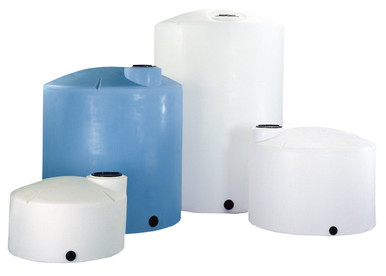
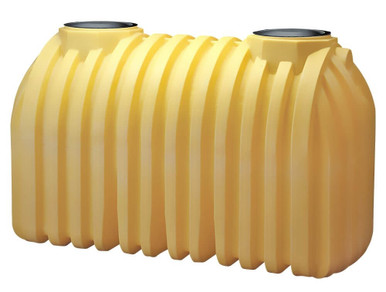
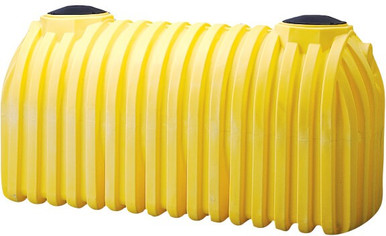
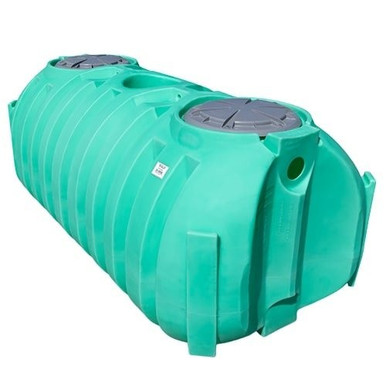
Colorado (Regulation 43, 5 CCR 1002-43) sizes septic tanks by bedroom count or design flow, with residential systems typically starting at 1,000 gallons. These IAPMO PS 1–listed polyethylene tanks meet that capacity standard; your county or state permitting office confirms the final size.
Shop all IAPMO PS 1–listed septic tanks →
Meeting the construction standard is not the same as a permit — your county environmental health office issues the permit and makes the final determination. Call us with your permit number and we will confirm the exact tank spec before shipment, with freight quoted to your ZIP.
Chemical Storage & Secondary Containment in Colorado
Storing fuel, fertilizer, or process chemicals alongside your tank changes the rules. The federal Spill Prevention, Control, and Countermeasure rule (40 CFR Part 112) applies at 1,320 gallons of aggregate aboveground oil storage and requires secondary containment sized to at least 110% of your largest tank. Releases of hazardous substances above their federal reportable quantity (40 CFR 302.4) must be reported to the National Response Center at 1-800-424-8802.
Colorado layers its own spill reportable quantities and restricted-substance rules on top of that federal floor — confirm the current thresholds with your state environmental agency before specifying a chemical tank. Just as important, the polyethylene resin must be matched to the exact chemical, concentration, and specific gravity you intend to store; a tank rated for water is not automatically rated for acid, bleach, or fertilizer.
Last reviewed: May 2026 · sourced from Colorado administrative code
Regulations change on a rolling basis — confirm the current rule with your county or state agency before purchasing. Spot something out of date? Email us and we'll fix it.
Nearby states (Mountain) & full index: