
Georgia Septic Tank Regulations — Chapter 511-3-1, Rule .05
Georgia Septic Tank Regulations
Chapter 511-3-1 covers rules for septic tank size, garbage disposal adjustments, and county-level permits through Georgia DPH.
The Governing Framework
Georgia regulates onsite sewage under a state-rule-plus-county-permit structure:
- Georgia Rules Chapter 511-3-1 — On-Site Sewage Management Systems (effective January 1, 2016).
- Georgia Department of Public Health (DPH), Environmental Health Section — writes and interprets the rules statewide.
- County Environmental Health Offices — 159 counties each administer permits and conduct inspections, under DPH oversight.
- DPH On-Site Sewage Management Systems Manual — the technical design manual that accompanies the rules.
Septic Tank Capacity — Rule 511-3-1-.05
Georgia uses a straightforward bedroom-based capacity rule with a distinctive 1,000-gallon floor:
| Dwelling Size | Minimum Tank Capacity |
|---|---|
| 1 bedroom | 1,000 gallons |
| 2 bedrooms | 1,000 gallons |
| 3 bedrooms | 1,000 gallons |
| 4 bedrooms | 1,000 gallons |
| 5 bedrooms | 1,250 gallons (1,000 + 250) |
| 6 bedrooms | 1,500 gallons (1,000 + 500) |
| 7 bedrooms | 1,750 gallons (1,000 + 750) |
| 8 bedrooms | 2,000 gallons (1,000 + 1,000) |
Garbage Disposal Upsize Rule
Georgia requires a 50% increase in septic tank capacity if the home has a garbage disposal installed. For a 4-bedroom home with a disposal:
- Base capacity without disposal: 1,000 gallons
- With disposal: 1,500 gallons (1,000 × 1.50)
Georgia's rules are stricter than many states because garbage disposals add a lot of solids to the tank. This reduces how long waste can stay in the tank and can overwhelm the system unless the tank is much larger.
Gray Water Bonus Capacity
If a development uses gray water for things like watering plants, Georgia adds extra capacity to the septic tank for each bedroom over four:
For a 6-bedroom home with gray water reuse: start with 1,000 gallons + 2×250 gallons for bedrooms 5 and 6 + 2×130 gallons for gray water bonus = 1,760 gallons minimum.
Permit Process — County Environmental Health
- Contact your county environmental health office. All 159 Georgia counties administer OSSF permits at the local level.
- Site evaluation. A county EH specialist or approved private provider conducts the soil evaluation. Depending on county, this may be a percolation test or soil profile assessment.
- Design submittal. Plot plan showing tank, dispersal field, setbacks, and any gray water components. Many rural counties will approve a standard installer-submitted plan without additional engineering.
- Permit issuance. Typical county fee $250–$500. Timeline 1–4 weeks in most counties.
- Installation. By a Georgia-certified installer.
- Final inspection. County EH inspects tank, dispersal, and outlet before backfill.
Non-Conventional System Rules — 511-3-1-.18
If gravity-based systems won't work, Georgia has Rule 511-3-1-.18 for other systems like low-pressure pipe, mound systems, drip dispersal, and advanced treatment units. These usually need:
- A professional engineer's design.
- A maintenance contract with a state-approved maintenance provider.
- Higher permit fees ($500–$1,500).
- Periodic operational inspection by the maintenance provider.
Material Approvals
Georgia allows polyethylene septic tanks that meet Chapter 511-3-1 standards. Approved models from Norwesco, Snyder, Enduraplas, and Chem-Tainer are on Georgia DPH's list. Check these details when ordering:
- Tank model appears on the current DPH approval list.
- IAPMO or NSF listing visible on the tank.
- ASTM D1998 compliance for polyethylene wall construction.
- Effluent filter certified to NSF 46 where required by county.
Georgia-Specific Considerations
- Atlanta metro counties. Fulton, DeKalb, Cobb, Gwinnett, Clayton — high permit volume with established turnaround. Generally 2–4 weeks.
- Coastal counties. Chatham, McIntosh, Glynn, Camden — high groundwater and hurricane-zone flood rules layered on top of the state-level requirements. Anti-buoyancy anchoring and elevated risers are common requirements.
- Piedmont granitic soils. The central Piedmont belt has soils that are fast-percolating in the surface layer but slow-percolating in the saprolite (weathered bedrock) below. Site evaluation may require deeper soil borings than elsewhere.
- Agricultural zones. South Georgia farm regions have sandy soils that generally perc well and support standard-design septic systems.
Frequently Asked Questions
- Do I need to install a 1,500-gallon tank if I have a garbage disposal?
- Yes for a 4-bedroom or larger home. Georgia's 50% upsize rule means a 4-BR home with disposal needs 1,500 gallons (vs 1,000 without). For 1-3 BR homes with disposal, the 50% upsize takes you to 1,500 gallons as well. Plan for this at permit time.
- Why is the capacity flat at 1,000 gallons for 1-4 bedrooms?
- Georgia's design daily flow assumptions for residential use produce similar total flows in the 1-4 bedroom range under average occupancy. The 250-gallon step per bedroom kicks in above 4 because high-occupancy homes show measurably higher water use.
- Is the gray water bonus an addition to the septic tank or a separate tank?
- It's additional capacity in the septic tank system to handle the slightly higher flow that gray water reuse systems can generate. Most installers meet the bonus via a larger single tank; some use a two-tank series configuration.
- Do I need an Authorized On-Site Wastewater Evaluator like North Carolina uses?
- No — Georgia uses a county-EH model rather than a private-AOWE model. All permits go through county environmental health offices, though private soil classifiers may perform the soil evaluation portion in some counties.
- What about coastal sewage rules?
- Coastal Georgia counties (Chatham, Glynn, etc.) add flood-zone and groundwater requirements on top of Chapter 511-3-1 rules. Anti-buoyancy anchoring, elevated access risers, and sometimes advanced treatment. Check with your coastal county EH office.
Source Citations
- Georgia R&R Subject 511-3-1 — On-Site Sewage Management Systems (full rules)
- Rule 511-3-1-.05 — Septic Tanks (direct link)
- Rule 511-3-1-.18 — Non-Conventional On-Site Sewage Management Systems
- Georgia DPH Environmental Health — Onsite Sewage
- Manual for On-Site Sewage Management Systems (PDF)
- A Homeowner's Guide to On-Site Sewage (PDF)
Shop Septic Tanks for Georgia
OneSource stocks polyethylene septic tanks meeting Georgia construction requirements. Match capacity to your design flow per the rules summarized above. Tank + accessories + holding tank options below cover standard and alternative configurations. OneSource drop-ships from the OEM warehouse closest to your install address.
Plastic Septic Tanks
Full polyethylene septic tank catalog. Sizes from 300 to 1,500+ gallons for Georgia installations.
Browse Plastic Septic TanksIAPMO Approved Models
NSF/IAPMO listed tanks. Some counties and some installation types require this listing.
Browse IAPMO Approved ModelsSeptic Accessories
Risers, lids, baffles, filters, alarms, pumps, and install hardware.
Browse Septic AccessoriesHolding Tanks
Holding tanks for construction sites, recreational properties, and pump-and-haul installations.
Browse Holding TanksStoring chemicals in your Georgia tank?
Georgia's rules don't cover chemical-storage tanks; those depend on the manufacturer. If you need a tank for chemicals like sulfuric acid or bleach, our Chemical Compatibility Database has all the construction details.
Agricultural Tank Regulations — Georgia Department of Agriculture
The Georgia Department of Agriculture handles pesticide and fertilizer rules under Department 40 of the Georgia Administrative Code.
- Chapter 40-6 — Fertilizer. Implements the Georgia Fertilizer Act of 1997 (O.C.G.A. section 2-12-1 et seq.), requiring product registration, tonnage reporting, label guarantees, and distributor licensing.
- Chapter 40-20-1 — Substantive Regulations; Petroleum Products (Weights and Measures Division).
- Chapter 40-31 — Soil amendments and related agricultural products.
- GDA Pesticide Division — Administers the Georgia Pesticide Control Act (O.C.G.A. section 2-7-50 et seq.) and Georgia Pesticide Use and Application Act, covering registration, applicator licensing, dealer licensing, and enforcement.
Georgia does not maintain a containment-geometry rule as prescriptive as Kansas K.A.R. 4-4-931 or Iowa's IAC 21 Chapter 44. Operators default to federal SPCC (40 CFR 112) above 1,320 gallons aggregate oil and to the EPA Pesticide Container Containment Rule (40 CFR 165 Subpart E) for commercial repackaging. Bulk retail ag sites across the Coastal Plain (South Georgia peanuts, cotton, vegetables) and Piedmont (poultry, dairy, row crops) typically design to the 110% industry standard with an impervious concrete pad.
Georgia's Ag Water Pollution Control Act (O.C.G.A. section 12-5-20 et seq.) is managed by the Environmental Protection Division (EPD) and applies to storage sites near state waters. Operations in the Ogeechee, Flint, and Savannah River areas should work with their regional EPD office before setting up new tanks.
Oil & Gas Produced Water — Limited Activity
Georgia has little oil and gas production compared to other states. The Georgia Environmental Protection Division's Land Protection Branch handles waste through standard waste rules and EPA's UIC program. Specific rules:
- Georgia Safe Drinking Water Act (O.C.G.A. section 12-5-170 et seq.) — UIC framework.
- Rules for Safe Drinking Water, Chapter 391-3-5 — Underground injection control, with Class II authorization by delegation where applicable.
- Solid Waste Management Act (O.C.G.A. section 12-8-20 et seq.) — governs disposal of any produced-water or drilling waste not injected.
Operators considering exploratory drilling in the Coastal Plain Cretaceous or Suwannee Basin should engage EPD early; absent active production, there is no equivalent to the Louisiana Statewide Order 29-B or Alabama Title 400 rulebook tailored specifically to produced-water infrastructure. Contact EPD directly for case-by-case guidance.
Septic System Sizing Deep Dive
The Georgia Department of Public Health oversees onsite sewage under Chapter 511-3-1. Here's the typical capacity table:
| Bedrooms | Minimum Septic Tank Capacity |
|---|---|
| 1–3 BR | 1,000 gallons |
| 4 BR | 1,200 gallons |
| 5 BR | 1,500 gallons |
| Non-dwelling | Engineered design based on peak daily flow |
County health offices evaluate sites and issue permits. Setbacks from wells, water, property lines, and buildings are in Chapter 511. Coastal counties face high water tables and saltwater issues, often needing mound systems. Mountain counties need designs for shallow soil over rock.
Chemical Storage Secondary Containment & Spill Reporting
Federal SPCC (40 CFR 112) applies at 1,320 gallons aggregate aboveground oil. Georgia layers on:
- O.C.G.A. section 12-14-1 et seq. — Georgia Underground Storage Tank Act.
- Rules for Underground Storage Tank Management, Chapter 391-3-15 — EPD registration, technical standards, and release reporting.
- O.C.G.A. section 12-8-92 — Reporting of hazardous waste releases.
- EPD 24-hour Emergency Operations at 1-800-241-4113 for release notifications.
Owners of polyethylene chemical tanks should design containment for 110% of the largest tank, check inventory against federal RQs in 40 CFR 302.4, and have a written SPCC plan for over 1,320 gallons of oil. For Georgia fee schedules and reporting updates, contact EPD.
Permit Pathways at a Glance
- Residential septic: County environmental health under DPH Chapter 511-3-1.
- Commercial fertilizer distributor: GDA registration under Chapter 40-6 / Georgia Fertilizer Act of 1997.
- Commercial pesticide dealer and applicator: GDA Pesticide Division licensing under the Georgia Pesticide Control Act.
- Petroleum UST: EPD registration under Chapter 391-3-15.
- SPCC > 1,320 gal oil aggregate: Federal SPCC plan; state spill reporting to EPD.
- UIC Class II (if applicable): EPD authorization under Chapter 391-3-5.
More Georgia FAQs
- Does a 2,000-gallon liquid calcium nitrate tank at my Vidalia onion farm trigger SPCC?
- Calcium nitrate and most inorganic plant-nutrient solutions aren't classified as oil under 40 CFR 112, so SPCC wouldn't apply. You still need GDA fertilizer registration if you're distributing commercially, and any release reaching waters of the state triggers EPD reporting under O.C.G.A. 12-8-92.
- I run a poultry operation with a 5,000-gallon diesel tank for generators. What applies?
- Above 1,320 gallons aggregate aboveground oil you're a federal SPCC facility. Build 110% containment, document integrity inspections, and maintain a written plan. Report any release to waters of the state to EPD and any federal-RQ release to the National Response Center.
- Are there specific setbacks for septic near tidal marshes in coastal Georgia?
- Yes. Local health departments in Chatham, Bryan, McIntosh, Glynn, and Camden counties apply additional setbacks from the Coastal Marshlands Protection Act jurisdiction line and typically require engineered alternative systems where standard trench systems cannot meet seasonal high water separation.
- Does Georgia have a bulk pesticide containment rule like Kentucky 302 KAR 31:040?
- No prescriptive state rule at that level. Georgia operators default to federal 40 CFR 165 Subpart E for commercial repackaging and industry best practice of 110% secondary containment. Larger commercial ag-retail sites often build to the Kentucky or Iowa standard voluntarily.
- How do I handle a release of glyphosate from a 1,000-gallon poly tank?
- Contain within secondary containment first. Glyphosate is not a federal RQ hazardous substance under 40 CFR 302.4, but any release reaching a waterway is a Clean Water Act violation and reports to EPD 24-hour emergency. Document cleanup thoroughly; GDA or EPD may request records.
- Is there a state-funded cleanup program for chemical spills?
- The Georgia Underground Storage Tank Trust Fund covers eligible petroleum UST releases only. Non-petroleum chemical tanks are owner liability.
Septic Tanks That Meet Georgia Code
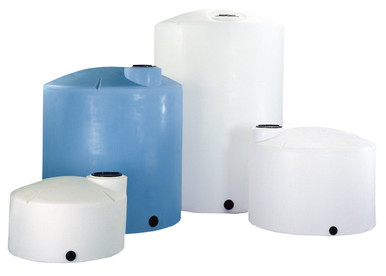
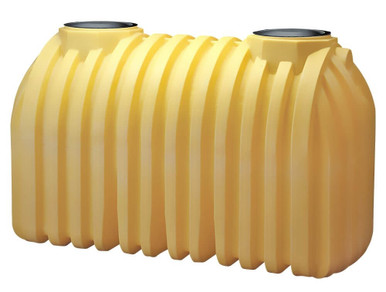
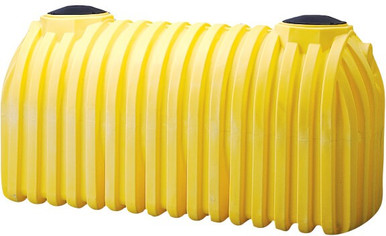
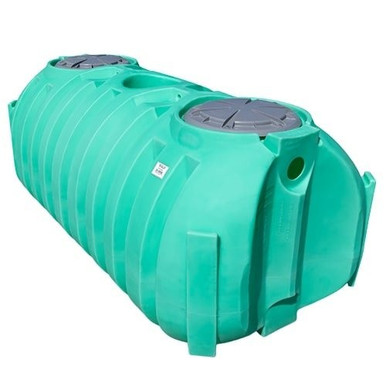
Georgia (Chapter 511-3-1) sizes septic tanks by bedroom count or design flow, with residential systems typically starting at 1,000 gallons. These IAPMO PS 1–listed polyethylene tanks meet that capacity standard; your county or state permitting office confirms the final size.
Shop all IAPMO PS 1–listed septic tanks →
Meeting the construction standard is not the same as a permit — your county environmental health office issues the permit and makes the final determination. Call us with your permit number and we will confirm the exact tank spec before shipment, with freight quoted to your ZIP.
Chemical Storage & Secondary Containment in Georgia
Storing fuel, fertilizer, or process chemicals alongside your tank changes the rules. The federal Spill Prevention, Control, and Countermeasure rule (40 CFR Part 112) applies at 1,320 gallons of aggregate aboveground oil storage and requires secondary containment sized to at least 110% of your largest tank. Releases of hazardous substances above their federal reportable quantity (40 CFR 302.4) must be reported to the National Response Center at 1-800-424-8802.
Georgia layers its own spill reportable quantities and restricted-substance rules on top of that federal floor — confirm the current thresholds with your state environmental agency before specifying a chemical tank. Just as important, the polyethylene resin must be matched to the exact chemical, concentration, and specific gravity you intend to store; a tank rated for water is not automatically rated for acid, bleach, or fertilizer.
Last reviewed: May 2026 · sourced from Georgia administrative code
Regulations change on a rolling basis — confirm the current rule with your county or state agency before purchasing. Spot something out of date? Email us and we'll fix it.
Nearby states (South Atlantic) & full index: