
Oregon Septic Tank Regulations — OAR 340, Divisions 71 & 73
Oregon Septic Tank Regulations
OAR Chapter 340 Divisions 71 & 73 are overseen by DEQ with county agents handling permits. There are two simple tank sizes: 1,000 or 1,500 gallons. Oregon has a specific list of approved tanks.
The Governing Framework
Oregon regulates onsite wastewater under the Department of Environmental Quality (DEQ) with county-agent delegation for permitting:
- OAR Chapter 340 Division 71 — On-site Wastewater Treatment Systems — the main program rule.
- OAR Chapter 340 Division 73 — Construction Standards — component design details.
- Oregon DEQ — state-level oversight, approved-tanks list, and field-rule interpretation.
- County-contract agents — most Oregon counties have service contracts with DEQ-authorized agents who administer permits and inspections locally.
Septic Tank Capacity — OAR 340-071-0220
Oregon's capacity rule is refreshingly simple — a two-tier threshold rather than a bedroom-by-bedroom table:
— OAR 340-071-0220(3)(a)(C)
| Bedrooms | Minimum Tank Capacity |
|---|---|
| 1–4 | 1,000 gallons |
| 5+ | 1,500 gallons |
The rule also authorizes county agents to require larger capacity as needed for special or unique waste characteristics.
DEQ Approved-Tanks List
The Oregon DEQ has an approved-tanks list on its website. You must use a tank from this list for installations in Oregon. Common brands like Norwesco, Snyder, Enduraplas, and Chem-Tainer are usually included. Check if your model is listed before buying.
Permit Process — County-Agent Administered
- Identify your county's DEQ-contract agent. Most Oregon counties contract with DEQ-authorized Environmental Health specialists; a handful (Multnomah, Washington, Clackamas) have their own programs.
- Site evaluation. A licensed site evaluator or DEQ-authorized agent conducts the soil profile and percolation assessment. Oregon uses a combination of soil textural classification and percolation rate.
- Design submittal. Licensed installer or engineer prepares the design. Advanced systems (ATU, sand filter, pressure distribution) require engineering review.
- Permit issuance. Typical fee $400–$1,200 depending on county. Timelines 2–8 weeks.
- Installation. By an Oregon-licensed installer.
- Final inspection. County agent or DEQ inspector verifies installation before backfill.
- Certificate of satisfactory completion. Required for occupancy and property-transfer disclosure.
Oregon-Specific Considerations
- Willamette Valley wet soils. Clay-heavy soils in Marion, Linn, Benton, Lane counties may require pressure distribution or advanced treatment. Site evaluation often drives design more than tank sizing.
- Coastal counties. Clatsop, Tillamook, Lincoln, Coos, Curry — high groundwater, coastal-zone setbacks, septic-to-sewer conversion pressure in some towns (Cannon Beach, Seaside).
- Eastern Oregon. Drier soils (Malheur, Baker, Union, Wallowa) often support conventional gravity trench dispersal. Frost depth 30–48 inches depending on elevation.
- Cascade ranges and Hood River area. Volcanic soils have unusual drainage characteristics. Site evaluators familiar with volcanic profiles are essential.
- Portland metro sewer. Portland, Gresham, Beaverton, Hillsboro — most urbanized areas require sewer connection. OSSF installations are limited to outlying parcels.
Frequently Asked Questions
- Why does Oregon use a two-tier capacity rule rather than a bedroom-by-bedroom table?
- The two-tier approach simplifies permitting while still covering the range of real-world occupancy. The design-flow assumptions Oregon uses produce similar per-capita flow between 1-4 bedrooms; the 5+ step accounts for larger families and high-occupancy homes.
- Does Oregon require PE-stamped designs?
- For conventional systems, typically not — a licensed installer can submit the design. Advanced treatment (ATUs, sand filters), pressure distribution, or non-standard sites (steep slope, high groundwater) trigger PE requirements.
- Can I install the tank myself in Oregon?
- Oregon requires a licensed installer for residential OSSFs. Owner installation is not a standard pathway; contact your county agent about any exceptions for rural parcels.
- What's the Approved Tanks list for?
- DEQ maintains a list of pre-approved tank manufacturers and models. Installation in Oregon requires a tank from this list; field-approval of non-listed tanks is rare. Verify your chosen tank model appears on the current list before ordering.
- Are there different rules for coastal-zone installations?
- Coastal counties apply additional setbacks from surface waters and may require elevated or specially-engineered dispersal. No statewide coastal-zone overlay exists, but county-level rules frequently add requirements in coastal jurisdictions. Confirm with your county agent.
Source Citations
- OAR Chapter 340 Division 71 — Onsite Wastewater Treatment Systems
- OAR Chapter 340 Division 73 — Construction Standards
- OAR 340-071-0220 — Septic Tank Design and Construction
- Oregon DEQ Rules and Regulations for Onsite Wastewater Treatment Systems
- Oregon DEQ Approved Tanks and Distribution Units
- OAR 340-071 & 073 combined PDF (Oregon DEQ)
Shop Septic Tanks for Oregon
Oregon effectively requires IAPMO/NSF listing for polyethylene septic tanks. Specify the IAPMO-approved models below. Match capacity to your design flow per Oregon's rules summarized above. OneSource drop-ships from the OEM warehouse closest to your install address.
IAPMO Approved Septic Tanks
Required specification for most Oregon installations. NSF/IAPMO listed polyethylene tanks.
Browse IAPMO Approved Septic TanksAll Plastic Septic Tanks
Full catalog of polyethylene septic tanks. Confirm IAPMO listing with your chosen model.
Browse All Plastic Septic TanksSeptic Accessories
Risers, lids, inlet/outlet baffles, effluent filters, alarms, pumps.
Browse Septic AccessoriesMulti-Use Tanks
Dual-use tanks for combined septic/cistern installations where local code permits.
Browse Multi-Use TanksStoring chemicals in your Oregon tank?
Oregon's OSSF rules don't apply to chemical-storage tanks; these are set by manufacturers. If you need a tank for sulfuric acid, bleach, fertilizer solution, or any of 300+ industrial chemicals, our Chemical Compatibility Database has all the construction details.
Agricultural Tank Regulations — Oregon Department of Agriculture
The Oregon Department of Agriculture (ODA) administers pesticide and fertilizer regulation under OAR Chapter 603:
- OAR 603 Division 57 — Pesticide Control.
- OAR 603 Division 59 — Licensing, Regulation, and Labeling of Fertilizing Materials. Governs fertilizer product registration, labeling, and distributor licensing.
- OAR 603-057-0140 — Pesticide Dealer Records.
- OAR 603-057-0502 — Civil penalties for pesticide control violations.
- OAR 603-059-0055 — Fertilizer labeling requirements.
- OAR 603-059-0080 — Enforcement guidelines for fertilizer violations.
- Oregon Revised Statutes Chapter 634 — Pesticide Control statutory framework.
The ODA doesn't have a specific containment-geometry rule like Kansas K.A.R. 4-4-931. In Oregon, operators usually follow federal SPCC (40 CFR 112) for oil over 1,320 gallons and the EPA Pesticide Container Containment Rule (40 CFR 165 Subpart E) for pesticide repackaging. Best practice is to have 110% containment volume of the largest tank with a leak-proof pad.
In the Willamette Valley, Hood River, and Columbia Plateau, farms often store liquid UAN, micronutrients, and pesticides in polyethylene tanks. Site plans should meet ODA pesticide dealer rules, federal SPCC if needed, and any local stormwater rules, especially in TMDL-impaired watersheds.
Heating Oil UST & Petroleum Storage — OAR 340 Division 177
Oregon doesn't produce much oil and gas compared to Appalachian and Gulf states, but heating oil underground storage tanks (HOT USTs) are common in older homes and small businesses. DEQ manages these.
- OAR 340 Division 177 — Residential Heating Oil Underground Storage Tanks. Covers decommissioning, cleanup, and service-provider licensing.
- OAR 340-177-0005 — Definitions. A "heating oil tank" is any underground tank plus its connected piping used to contain heating oil for space heating of a human-habitation building or water heating not used for commercial processing.
- OAR 340-177-0025 — Decommissioning standards. Work must follow API 1604 ("Removal and Disposal of Used Underground Petroleum Storage Tanks") or Uniform Fire Code Article 79.
- OAR 340-177-0065 — Cleanup options: Soil Matrix, Risk-Based, or Generic Remedy approaches.
- OAR 340-177-0095 — Certified reports and filing fees. For current fee amounts, consult DEQ directly.
- OAR 340 Division 150 — Non-residential UST rules.
When buying property in Oregon, HOT presence is usually disclosed. Buyers should plan for decommissioning costs, which are typically $1,500–$5,000 for clean tank removal, but more if there's contamination. DEQ licenses UST and HOT service providers; owners don't usually do decommissioning themselves.
Onsite System Sizing Deep Dive
Oregon's two-tier capacity rule in OAR 340-071-0220(3)(a)(C) gives simple numbers for homes: 1,000 gallons for 1–4 bedrooms, 1,500 gallons for 5 or more bedrooms. Division 71 and Division 73 rules add more details.
- Design flow for non-dwellings — peak daily flow drives tank and dispersal sizing. Restaurants, schools, wineries, and lodging facilities are engineered case-by-case.
- Advanced systems — ATUs, recirculating sand filters, and drip dispersal typically require engineering review plus an O&M service contract.
- Setbacks — to private and public wells, surface water, property lines, and building foundations. Coastal counties add setbacks from tidelines and estuarine resources.
- Approved-tanks list — DEQ maintains the official approved-tanks list; only listed models may be installed without a case-by-case field approval.
- Certificate of Satisfactory Completion — required for occupancy and property-transfer disclosure.
Chemical Storage Secondary Containment & Spill Reporting
Federal SPCC (40 CFR 112) applies when you have 1,320 gallons or more of aboveground oil. Oregon's spill reporting rules are in OAR 340 Division 142 (Oil and Hazardous Materials Emergency Response).
- OAR 340-142-0040 — Required Reporting. Reporting is triggered if any spill or release (actual or threatened) exceeds the reportable quantity in ORS 466.605 or OAR 340-142-0050, or will do so within 24 hours.
- OAR 340-142-0050 — Reportable Quantities. Includes:
- Any quantity of radioactive material or radioactive waste.
- Any quantity of oil spilled into waters of the state that would produce a visible film, sheen, or oily slick, or coat aquatic life, habitat, or property.
- Any quantity of oil spilled on land (not likely to reach water) over one barrel (42 gallons).
- Any amount equal to or greater than the quantity listed in 40 CFR Part 302 Table 302.4.
- 10 pounds or more of a hazardous material not otherwise listed.
- Reporting line: Oregon Emergency Response System (OERS) at 1-800-452-0311, operated by Oregon Emergency Management Division.
- OAR 340-012-0081 — Oil and Hazardous Material Spill and Release Classification of Violations.
Owners of polyethylene chemical tanks with more than 1,320 gallons of oil must have a federal SPCC plan, 110% containment, and include OERS reporting in their facility response plan. Industrial and commercial operators should document both ORS 466.605 and federal 40 CFR 302.4 thresholds in their written plans.
Permit Pathways at a Glance
- Residential onsite wastewater: County-contract agent under OAR 340 Division 71 / 73.
- Commercial pesticide/fertilizer: ODA registration under OAR Chapter 603.
- Heating oil UST decommissioning: DEQ-licensed service provider under OAR 340 Division 177.
- Non-residential UST: DEQ under OAR 340 Division 150.
- SPCC > 1,320 gal oil: Federal SPCC plan + OAR 340-142 reporting.
For current fee schedules, consult ODA or DEQ directly.
More Oregon FAQs
- I'm buying a 1958 Portland house with a heating oil tank. What do I need to do?
- Commission a licensed HOT service provider to inspect the tank and recommend decommissioning or replacement. OAR 340-177-0025 governs the process — typical clean tank pulls run $1,500–$5,000; contaminated tanks can cost $10,000–$100,000+ to remediate. DEQ maintains a Heating Oil Tank database and may require a Certified Report depending on findings.
- Does Oregon follow federal SPCC or does it have its own rule?
- Oregon follows the federal SPCC rule (40 CFR 112) for oil above 1,320 gallons aggregate aboveground. The state layers on OAR 340-142 spill reporting thresholds. No separate state SPCC-equivalent rule.
- My Willamette Valley winery stores 2,000 gallons of diesel for tractors. What applies?
- Above 1,320 gallons you're an SPCC facility. Build a written plan, containment at 110% of the largest tank, and document integrity inspections. For any release to land over 42 gallons, notify OERS at 1-800-452-0311. Any release that could produce a sheen on water triggers notification regardless of volume.
- Can I install a polyethylene chemical tank without ODA approval?
- ODA doesn't pre-approve tanks by model. You're responsible for chemical compatibility, structural integrity, and containment design. DEQ and ODA inspect compliance outcomes. Verify polyethylene resin and specific-gravity rating against your stored chemical before ordering.
- Are there Oregon-specific rules for coastal and estuarine zones?
- Yes. Coastal counties (Clatsop, Tillamook, Lincoln, Coos, Curry) add setbacks from tidelines and estuarine resources on top of DEQ onsite rules. Columbia River and Willamette River tidal zones trigger additional stormwater and shoreline rules administered jointly by DEQ and DSL (Department of State Lands).
Septic Tanks That Meet Oregon Code
Oregon (DEQ, OAR 340 Divisions 71 & 73) uses a simple two-tier capacity — 1,000 or 1,500 gallons — and maintains an official DEQ approved-tanks list. Confirm your exact model appears on the current DEQ list; the IAPMO PS 1–listed tanks below meet Oregon's capacity standard.
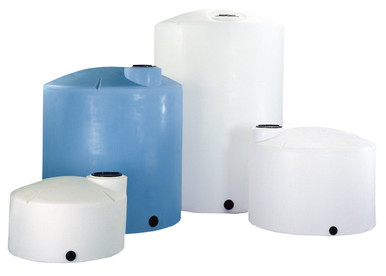
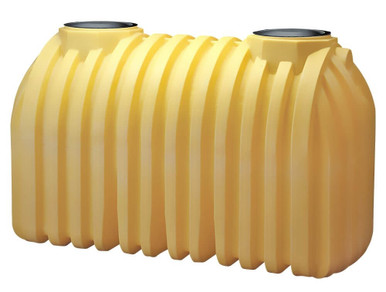
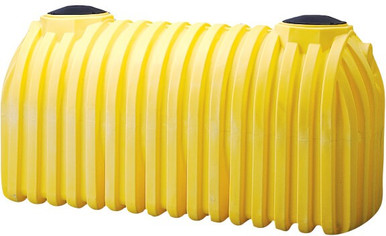
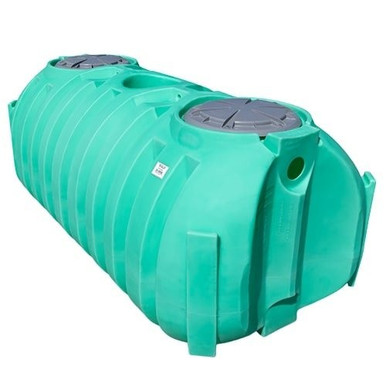
Shop all IAPMO PS 1–listed septic tanks →
Meeting the construction standard is not the same as a permit — your county environmental health office issues the permit and makes the final determination. Call us with your permit number and we will confirm the exact tank spec before shipment, with freight quoted to your ZIP.
Chemical Storage & Secondary Containment in Oregon
Storing fuel, fertilizer, or process chemicals alongside your tank changes the rules. The federal Spill Prevention, Control, and Countermeasure rule (40 CFR Part 112) applies at 1,320 gallons of aggregate aboveground oil storage and requires secondary containment sized to at least 110% of your largest tank. Releases of hazardous substances above their federal reportable quantity (40 CFR 302.4) must be reported to the National Response Center at 1-800-424-8802.
Oregon layers its own spill reportable quantities and restricted-substance rules on top of that federal floor — confirm the current thresholds with your state environmental agency before specifying a chemical tank. Just as important, the polyethylene resin must be matched to the exact chemical, concentration, and specific gravity you intend to store; a tank rated for water is not automatically rated for acid, bleach, or fertilizer.
Last reviewed: May 2026 · sourced from Oregon administrative code
Regulations change on a rolling basis — confirm the current rule with your county or state agency before purchasing. Spot something out of date? Email us and we'll fix it.
Nearby states (Pacific) & full index: