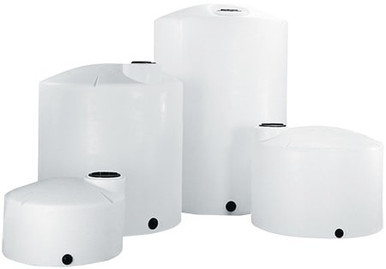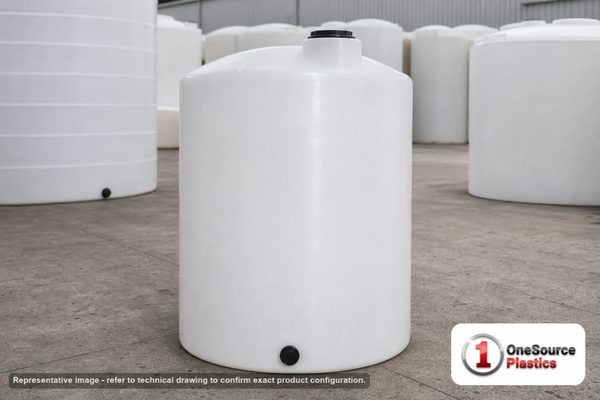
160 Gallon Vertical Liquid Storage Tank - Natural White (28" x 69"): Complete Buyer's Guide
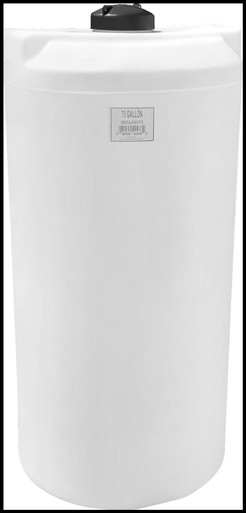
The 160-gallon vertical is a tall, narrow column — 69 inches high on just a 28-inch base — engineered to pack real capacity into a small floor footprint. With its 1.5 specific-gravity rating and a 2-inch outlet, it's built for agricultural chemical and fertilizer service where headroom is plentiful but floor space is at a premium.
Specifications at a Glance
Every figure below is pulled straight from the live product record for this exact tank — the same data on the product page, so what you read here and what you buy never disagree.
Standards & Materials
- ASTM D1998 — Standard Specification for Polyethylene Upright Storage Tanks. Governs wall-thickness and hydrostatic design for vertical rotomolded poly tanks of this class.
- FDA 21 CFR 177.1520 — Olefin polymers. The food-contact regulation the FDA-grade resin in this tank is compounded to meet.
- Specific gravity rating 1.5 — the tank is engineered for liquids up to 1.5× the density of water (water is about 8.34 lb/gal). Confirm your fluid’s SG before storage.
Product Overview
What sets the 160-gallon apart from other tanks near its capacity is its proportions. At 69 inches tall over a 28-inch diameter, it's deliberately slender — it stores 160 gallons in roughly the floor area a 130-gallon tank would use, by going up instead of out. For a crowded chemical room, a corner of a barn, or a spot against a wall, that vertical-first geometry is the whole point.
The tank is rotomolded by Norwesco as one continuous piece of virgin linear polyethylene — no seams or welds anywhere in the wall — and rated to a 1.5 specific gravity. That rating lets it hold liquids up to 12.5 pounds per gallon, which covers the dense ag chemicals, liquid fertilizer blends, and treatment solutions a tank this size is bought for. The taller column does mean a taller liquid head, so the wall near the base carries more hydrostatic pressure than it would on a squat tank of the same volume — the 1.5-SG construction is engineered for exactly that, but it's the reason a level base matters even more here.
Empty weight is 55 pounds, manageable for one or two people to stand up and position. Filled with a 1.5-SG product, it puts about 2,057 pounds on the pad — the load your foundation has to carry, concentrated on a relatively small 28-inch circle. The translucent natural-white wall gives a tall, easy-to-read level gauge, which on a slender tank is genuinely useful since small volume changes move the level visibly. Maximum service temperature is 120°F, with UV inhibitors molded into the resin for outdoor placement.
It comes with a 2-inch NPT outlet, factory-installed and pressure-checked — a larger bore than the small portables, sized for quicker transfer. The 8-inch lid handles fill, vent, and inspection. Norwesco's 3-year warranty covers the tank, and it ships LTL freight on a pallet with liftgate available for sites without a dock.
Technical Drawing
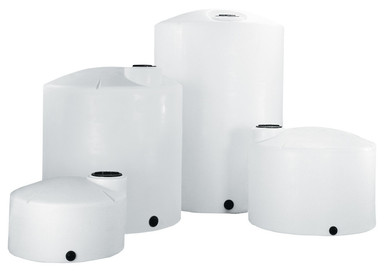
Official Norwesco technical drawing — 160 Gallon Vertical Liquid Storage Tank - Natural White (28" x 69")
Key Features and Specifications
- 160-gallon capacity — sized for agricultural chemical and fertilizer storage
- Constructed from virgin linear polyethylene (HDPE) with 1.5 specific gravity rating — handles liquids up to 12.5 lbs/gal
- 69" tall x 28" diameter — compact vertical footprint
- 55 lbs empty, approximately 2,057 lbs when full at rated specific gravity
- 2 NPT outlet fitting — factory installed and leak-tested
- 8" lid opening for fill, venting, and interior access
- FDA approved for potable water and food-grade liquid contact
- 3 Year Warranty from Norwesco against manufacturing defects
- Translucent white walls allow visual level monitoring without opening the tank and reflect sunlight to keep contents cooler
- Rated for continuous service up to 120 F / 48 C
- Seamless one-piece rotational molding — no seams, no welds, no leak points
- Manufactured by Norwesco — a leading name in rotomolded polyethylene tanks
- Place on a firm, level surface free of rocks or sharp objects that could damage the tank bottom. Ensure adequate ventilation if stored chemicals produce vapors
- Ships via LTL freight on a pallet — residential delivery with lift gate available
Installation and Setup Guide
The 160-gallon's tall-narrow build makes a level foundation the single most important install detail. A wide tank tolerates a slight tilt; a 69-inch column over a 28-inch base amplifies any lean and concentrates the load, so the pad does more work here than on most tanks its size.
Site Preparation
Build or pick a base that's dead level under the full 28-inch footprint — a 4-inch compacted-gravel pad or a concrete slab, flat within a quarter inch across the diameter. Because the base is small and the load is over 2,000 pounds, the pressure per square inch under this tank is higher than under a wider vessel of similar volume, so a soft or uneven spot will show up faster. Clear all rock, debris, and hardware, and grade for drainage away from the base.
Placement and Connections
Position the 2-inch outlet for the shortest run to your pump or applicator. The larger bore moves product faster, which is an advantage, but it also means a faster level drop — so size your vent accordingly (see below). Put a flexible coupling in the first foot off the bulkhead; the tall column flexes measurably as it fills and drains, and a rigid line will work the 2-inch fitting loose over time. Match valve and fitting materials to the chemical you're storing.
Venting
A 2-inch outlet can pull product fast, and a tall slender tank is especially prone to vacuum collapse if it can't breathe at the same rate. Fit a vent in the 8-inch lid that matches your fastest draw — an undersized vent on a quick-draining tall tank is a classic cause of inward wall buckling. For off-gassing fertilizers and treatment chemicals, use a pressure/vacuum relief vent rated to the vapor instead of an open screen.
Maintenance and Long-Term Care
Maintaining a tall chemical tank is mostly about watching the two things its geometry makes more likely: base settlement showing up as a lean, and high-head stress at the lower wall. Both are easy to catch on a routine look.
Quarterly Inspection Checklist
- Plumb and base: Sight the tank against a vertical reference — a doorframe or post — to confirm it's still standing straight. On a 69-inch column even a small base settlement reads as a visible lean and means the pad needs attention before it worsens.
- Lower wall: The base of a tall tank carries the most hydrostatic load, so inspect the bottom third for any bulge or distortion, especially if you've run a denser product.
- Outlet: Check the 2-inch fitting for weeping or crystallized residue; hand-tighten only.
- Vent: Confirm the vent is clear and sized to the tank's quick draw — a plugged vent collapses a slender tank fast.
Cleaning and Changeover
Drain and flush per the outgoing chemical's procedure before switching products. The tall narrow shape actually drains well through the 2-inch bottom outlet, but it also concentrates any settled solids in a small floor area around the outlet — clear that zone through the 8-inch lid. Confirm the polyethylene is rated for the incoming chemistry before refilling, and capture rinsate as the chemical label requires.
UV and Heat
Inspect the sun-facing wall yearly for chalking. A tall tank presents a large vertical face to afternoon sun, so it can weather a bit faster on the exposed side than a low tank — a shade panel or a wall to its west extends service life in a hard-UV climate.
Alternatives and Comparisons
One-sixty gallons can be reached by very different shapes, and the choice is really about your room:
Tall-narrow versus short-wide: this vertical's whole advantage is floor economy — it stores the volume in a small circle by going up. If you've got low ceilings or a height limit, a shorter, wider tank of similar capacity trades floor space for headroom. If your constraint is the floor, this is the better geometry.
Stepping to 225 gallons: the next size up in the slender-vertical family keeps the same space-saving philosophy with more run time, on a comparable footprint — worth a look if 160 gallons cycles faster than you'd like.
Other 160-Gallon Options
Frequently Asked Questions
How long will the 160 Gallon Vertical Liquid Storage Tank - Natural White (28" x 69") last?
Fifteen to twenty years is the realistic window with a level base and use inside the 1.5-SG and 120°F ratings. On a tall tank like this, the most common life-shortener is a base that settles unevenly and puts the column under a chronic lean — address that early and the seamless rotomolded wall easily reaches the upper end of the range.
What chemicals can I store in this tank?
The 1.5-SG rating covers ag chemicals, liquid fertilizers, herbicides, pesticides, and industrial and treatment solutions up to 12.5 pounds per gallon. It excludes fuels, solvents, and flammables. Polyethylene resists most acids and bases but is vulnerable to certain hydrocarbons and strong oxidizers — check the specific product against a compatibility chart before filling.
What kind of foundation does a 160-gallon tank need?
Size it for roughly 2,057 pounds full, concentrated on a 28-inch circle — so a flat, level 4-inch gravel pad or concrete slab. Because the footprint is small relative to the weight, the pressure under this tank is higher than under a wider tank of the same volume, which makes a truly level, continuous base non-negotiable.
Does this tank come with a warranty?
Yes — Norwesco's 3-year warranty covers factory defects in materials and workmanship. It excludes over-spec products, improper or unlevel installation (a real risk on a tall tank), chemical attack from incompatible liquids, and impact damage. Keep your receipt and a photo of the level install.
Can I install this tank underground?
No — this is an above-ground vertical and is not engineered to resist soil pressure. Burying a tall slender tank would collapse it and void the warranty. For below-grade needs, use a purpose-built underground cistern with a reinforced, ribbed wall.
Buying Considerations
Three checks: confirm you have the 69 inches of height the tank needs plus clearance to reach the lid — this is the spec people miss on a slender tank. Verify your product sits at or under 1.5 SG. And budget the foundation a touch more carefully than usual, because the small base puts more pressure per square inch on the pad than a wider tank would. It ships LTL on a pallet, so request a liftgate if you're unloading without a dock or forklift.
Related Products You May Need
Questions? Call (866) 418-1777 — our team knows these products inside and out and can help you select the right tank for your application.
Recommended Tanks for This Guide
Live pricing, updated automatically · estimate freight to your ZIP.