200 Gallon Vertical Liquid Storage Tank - Natural White (35" x 59"): Complete Buyer's Guide
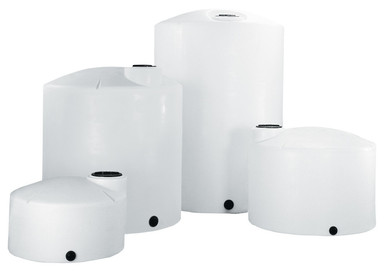
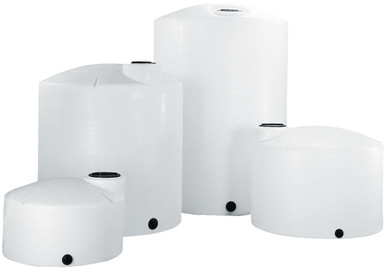
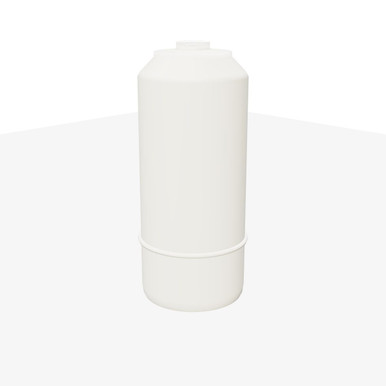
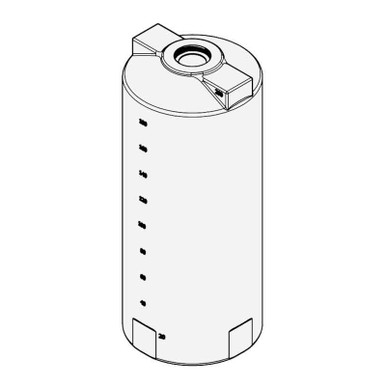
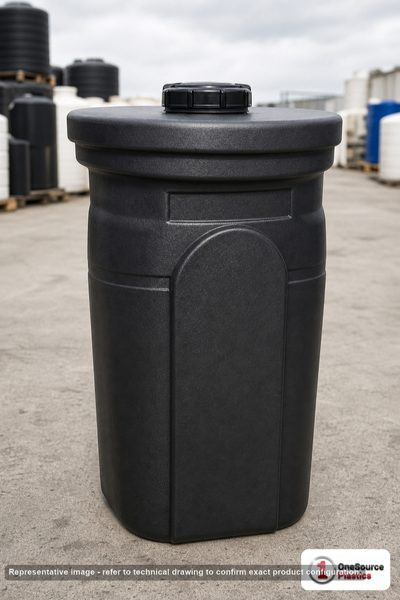
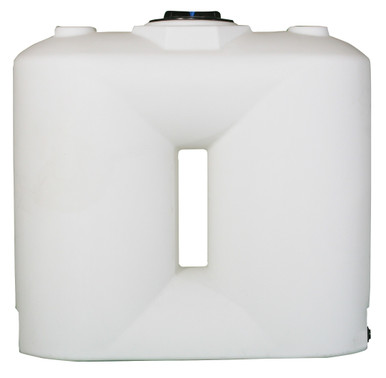
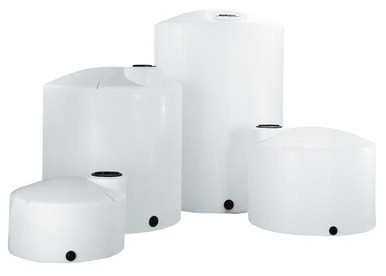
200 Gallon Vertical Liquid Storage Tank - Natural White (35" x 59") from Norwesco.
Specifications at a Glance
Every figure below is pulled straight from the live product record for this exact tank — the same data on the product page, so what you read here and what you buy never disagree.
Standards & Materials
- ASTM D1998 — Standard Specification for Polyethylene Upright Storage Tanks. Governs wall-thickness and hydrostatic design for vertical rotomolded poly tanks of this class.
- FDA 21 CFR 177.1520 — Olefin polymers. The food-contact regulation the FDA-grade resin in this tank is compounded to meet.
- Specific gravity rating 1.5 — the tank is engineered for liquids up to 1.5× the density of water (water is about 8.34 lb/gal). Confirm your fluid’s SG before storage.
Installation and Setup Guide
This 200-gallon chemical tank takes the stockier route — a 35-inch base under a 59-inch body — which makes it markedly more stable than the slim 30-inch column version of the same capacity. More base and a lower center of gravity mean less concern about leaning or tipping, so while a flat, firm pad is still essential, the install is more forgiving than a tall-and-narrow tank's.
Site Preparation
A level four-inch concrete pad, or a compacted crushed-stone bed run a few inches beyond the 35-inch base, is all it takes. Bring it flat across the full diameter so the chemical load sits evenly on the floor; a wide tank on a slope still drives extra stress to the downhill edge. Skip loose gravel and bare soil, which migrate under repeated fill-and-draw cycles.
Placement and Connections
Take the discharge from the lowest fitting and break the run with a chemically compatible flexible coupling so the tank's thermal movement does not load the bulkhead. Drill and add a compatible inlet bulkhead at your fill height if your plumbing needs one. Use chemical-rated piping throughout, keep the line short, and hand-tighten the poly threads a quarter turn past snug rather than reaching for a wrench.
Venting
Match air to chemical: keep the lid vent open so the tank pulls air in on draw-down and pushes it out on fill, and for volatile chemistries fit a pressure/vacuum relief vent rated to the chemical rather than a plain screen. A wide tank tolerates a vent hiccup slightly better than a slim one, but a fully blocked vent will still deform the top under a hard pump-out.
Maintenance and Long-Term Care
A stocky 200-gallon chemical tank is serviced for chemical duty, not potable use, and its translucent wall makes inspection a quick visual. The routine below covers what a stable, mid-height chemical tank needs: a sound base, compatible tight fittings, and a correctly rated vent.
Quarterly Inspection Checklist
- Wall sweep: Circle the 59-inch body and use the translucent wall to catch any low bulge or stress whitening that flags a settled base or overweight chemical.
- Fittings check: Look over the outlet and any inlet you fitted for chemical seepage, confirming both still suit the stored liquid.
- Base review: Check that the pad beneath the 35-inch base remains level and that rainfall has not washed out an edge.
- Vent verification: Confirm the lid vent or pressure/vacuum relief is clear and suited to the chemical in use.
Cleaning
Follow the chemical manufacturer's decontamination procedures on every product switch, since a rinse alone leaves residue between chemistries. The bottom outlet drains the tank, and the body's moderate height keeps the lid within reach for inspection under chemical-handling precautions. It is a chemical-storage tank, never a source of potable water.
UV and Weather Protection
Reflecting sunlight to cool the contents and stabilized against UV in the resin, the translucent white wall should be checked annually on its sun-facing face for chalking. The stocky body picks up less concentrated heat than a slim column, but the reflective pigment still earns its keep on an outdoor tank.
Alternatives and Comparisons
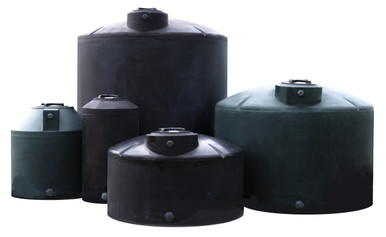
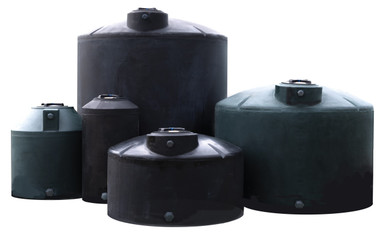
This 35-by-59 tank is the more stable way to store 200 gallons of chemical, against the slim 30-inch column versions that win on floor space. For less, look to the 150- or 100-gallon verticals; for more, the 250- and 300-gallon tanks. Balance stability against footprint for the pad you have.
Vertical vs. Horizontal: Vertical tanks use less floor space for the same capacity but require more overhead clearance. If you have height restrictions, consider a horizontal or low-profile tank. Vertical tanks also drain more completely due to gravity — the liquid column above the outlet creates positive pressure all the way to the last few gallons.
Other -Gallon Options
Frequently Asked Questions
How long will the 200 Gallon Vertical Liquid Storage Tank - Natural White (35" x 59") last?
With a level base, operation within its rated density, and decontamination between chemistries, this stocky 200-gallon tank serves well past fifteen years. The seamless wall has no weld to fail and the wide stance makes tipping a non-issue; an incompatible chemical or a settled base ends tanks early, not the polyethylene.
What chemicals can I store in this tank?
Built for agricultural chemicals, liquid fertilizers, and most industrial solutions within its rated specific gravity, it still requires you to verify each chemical on a polyethylene compatibility chart first. Exclude fuels, solvents, and flammables, and run it as a dedicated chemical vessel, not a drinking-water tank.
Does this tank come with a warranty?
Yes — under normal use the manufacturer warrants it against material and workmanship defects, covering factory faults but not overloading, a poor install, chemical attack, or impact. Hold on to your receipt and a photo of the install to back any claim.
Can I install this tank underground?
No. Designed for above-ground use, its flat wall cannot take soil pressure, and burying it would crush the tank and void the warranty. A ribbed underground tank is the correct vessel for any below-grade installation.
Buying Considerations
Confirm the footprint and overhead clearance where it will sit, that the pad can be brought level even though this tank is forgiving, and that your chemical is compatible with polyethylene before dedicating the tank to it. Plan a firm spot for the offload.
Related Products You May Need
Questions? Call (866) 418-1777 — our team knows these products inside and out and can help you select the right tank for your application.
Recommended Tanks for This Guide
Live pricing, updated automatically · estimate freight to your ZIP.