200 gallons of chemical in a 33 inch circle
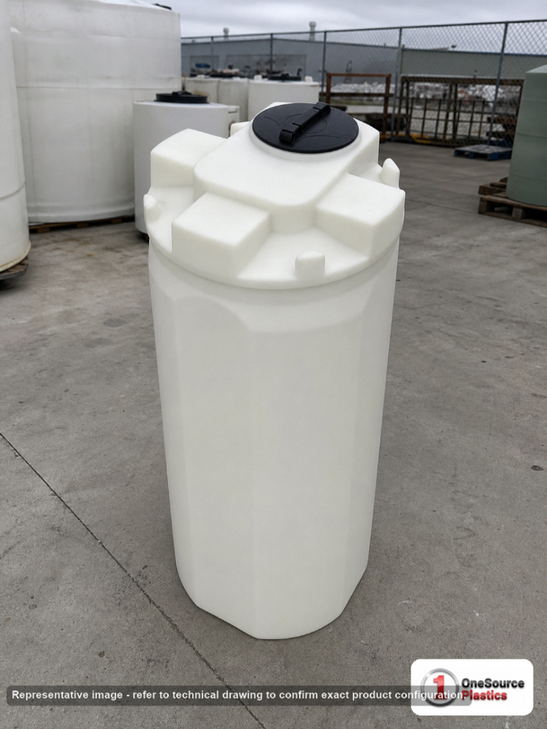
The Snyder 8020000N45 is a slim vertical chemical tank: 200 gallons in white polyethylene, 33 inches across and 69 inches tall, 80 pounds empty. It carries Snyder's 1.9 specific gravity wall, rated for 3,169 pounds of contents against 1,668 for the same volume of water, and it stands on a footprint smaller than a pallet. That combination, dense-liquid rating in a tank that fits between two pumps, is why it turns up as the day tank in so many chemical feed rooms. It ships as LTL freight and carries a 3 year warranty.
Want it on your site? Get LTL freight to your ZIP, add it to your cart above, or call 866-418-1777 and a tank specialist will confirm the fit.
A day tank, sized to the pump
A day tank holds one shift or one day of chemical drawn from a bulk tank or a tote, close to the dosing pump, so a leak is a small one and a wrong-chemical fill is caught before it reaches the process. Two hundred gallons covers a surprising range of feed rates; the tank sizing calculator works from the pump's rate and the refill schedule, and the tank sizing guide explains the reserve a day tank should carry. The 200 gallon vertical tank buyers guide compares this shape against the shorter 36 inch tanks in the same class. Weight rating and chemical resistance are separate questions; the chemical compatibility database answers the second for your liquid at its concentration, and the list below is the resin's rated chemistry.
Snyder's 190 to 210 gallon tanks
| Part | Gallons | Diameter x height | Empty weight |
|---|---|---|---|
| 8020000N45 (this tank) | 200 | 33 x 69 in | 80 lb |
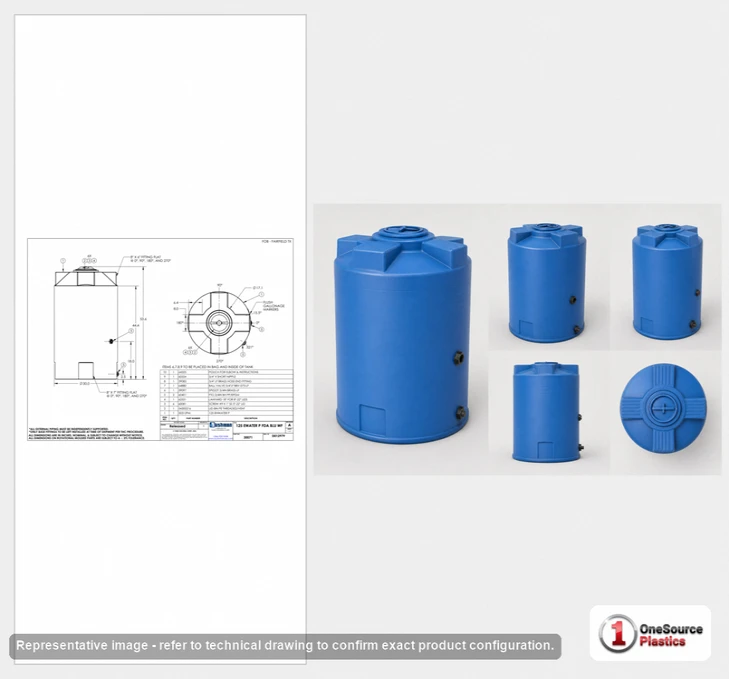
| 1008000N42 (XLPE) | 200 | 36 x 53 in | 65 lb |
| 1008000C26 | 200 | 36 x 53 in | 65 lb |
| 1012900C26 | 210 | 36 x 55 in | 65 lb |
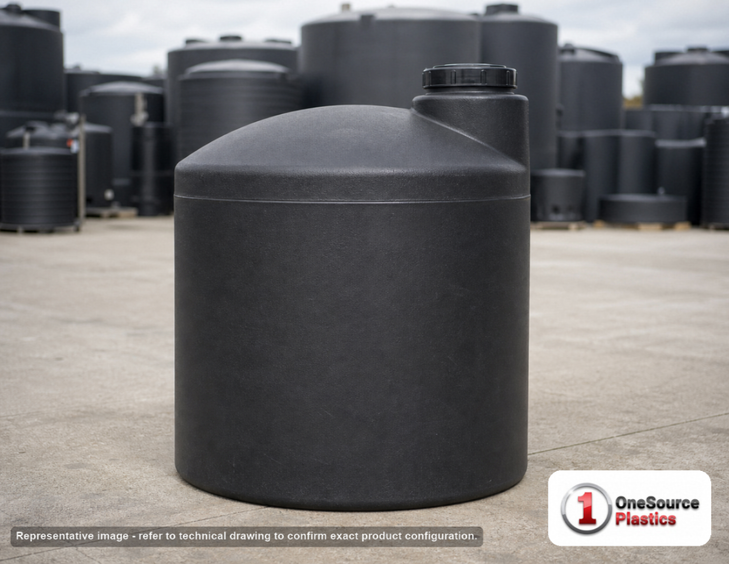
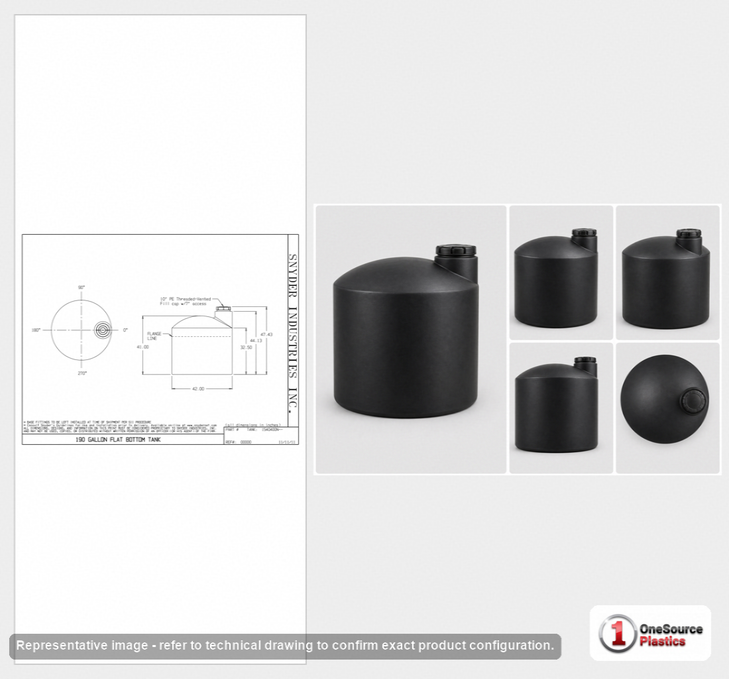
| 1540400N42 | 190 | 42 x 47 in | 60 lb |
The 8020000N45 is the tall, narrow member of the family: 3 inches narrower and 16 inches taller than the 1008000 tanks, and 15 pounds heavier because its wall is the 1.9 rating in a taller column. The 1008000 tanks are the general answer where 53 inches of height is enough; the 1540400N42 goes wider and shorter still, 47 inches tall on a 42 inch base, for a tank that has to sit under a bench.
Picked the 200 gallon tank? Add it to your cart above; freight is quoted to your ZIP before you pay anything.
Fittings and access
- Outlet: 2 inch, at the bottom of the sidewall.
- Access: 10 inch lid; it admits a fill hose, a float switch and a small level sender.
- Service limit: 120 F / 48 C.
A 10 inch lid means the tank is filled by hose or pump, not by pouring from a drum, which is the right way to fill a chemical day tank anyway. Choose the level sender for the chemical with the level gauge selection guide; on a 69 inch white tank a simple float switch for low level and a sight line for the operator are often enough. For containment, a 33 inch tank fits a standard spill pallet or a small basin, and the Snyder Captor 110 percent containment comparison covers when a double wall tank is the cleaner answer.
Jobs it is bought for
Hypochlorite and caustic day tanks at small water systems, polymer make-down on a wastewater skid, acid and inhibitor feed at a cooling tower, brine for a softener, and the lab or pilot plant that needs 200 gallons of reagent within reach of a bench. Keep one chemical per tank, labeled, and keep it out of direct sun if the chemical is light-sensitive.
Freight for a 200 gallon tank
The tank ships palletized as LTL freight (NMFC 156600-02) at a class rate; the freight cost estimator shows it for your ZIP, and the listed price is before freight. Eighty pounds comes off a liftgate and walks in on two hands. Water-fill it once to the lid, hold it, and check the outlet fitting before the chemical connection is made.
Chemicals this resin is rated for, with the fitting and gasket to order
These are the chemicals listed for this tank at the concentrations shown. Each links to the full compatibility page; confirm your exact concentration and temperature there or in the chemical compatibility database before ordering.
- Acetic Acid (60%, PP/PVC fittings, EPDM gaskets)
- Aluminum Sulfate (50%, PVC, EPDM)
- Calcium Chloride (40%, PVC, EPDM)
- DEF (32.5%, 316SS, EPDM)
- Ethylene Glycol (100%, PVC, EPDM)
- Ferric Chloride (50%, PVC, EPDM)
- Ferric Sulfate (60%, PVC, EPDM)
- Ferrous Sulfate (20%, PVC, EPDM)
- Hydrochloric Acid (37%, PVC, Viton)
- Hydrofluoric Acid (48%, PP/PVC, Viton)
- Hydrofluosilicic Acid (26%, PP/PVC, Viton)
- Hydrogen Peroxide (50%, PVC, Viton)
- Magnesium Chloride (30%, PVC, EPDM)
- Peracetic Acid (30%, 316SS, Aflas)
- Phosphoric Acid (85%, PVC, Viton)
- Polyaluminum Chloride (PVC, EPDM)
- Potassium Carbonate (50%, PVC, EPDM)
- Potassium Hydroxide (saturated, PVC, EPDM)
- Propylene Glycol (PP/316SS, EPDM)
- Sodium Bisulfate (PVC/PP, EPDM)
- Sodium Bisulfite (PVC/PP, EPDM)
- Sodium Carbonate (30%, PVC, EPDM)
- Sodium Hypochlorite (under 16.5%, PVC, Viton)
- Sodium Thiosulfate (40%, PVC, EPDM)
- Sulfuric Acid (98%, CPVC, Viton)
- Urea Solution (50%, PP/PVC, EPDM)
- Zinc Orthophosphate (PP/316SS, EPDM), and Ozonated Water (up to 10 PPM, PVC, EPDM; call to confirm). The gasket and fitting material matter as much as the tank
Freight and documents
Ships from: Marked Tree, AR. LTL freight is quoted to your ZIP with the freight cost estimator or by phone at 866-418-1777. The listed price is before freight.
Technical drawing (PDF) for Snyder Industries 8020000N45.
See this tank
Interactive 3D model with live fill. This tank has an interactive 3D model built to its manufacturer dimensions. Rotate it, and set a fill level to see how much liquid it holds at any height. Open the 3D view on the product photo above. Download the 3D model (GLB).
Product video. Watch the Snyder Industries 200 Gallon HDPE Vertical Chemical Storage Tank in White video (64 seconds) with dimensions, fittings and shipping notes.
Ready to order?
Add it to your cart at the top of this page, get LTL freight to your ZIP, request a written quote, or call 866-418-1777. The listed price is before freight.