65 Gallon Vertical Liquid Storage Tank: Complete Buyer's Guide
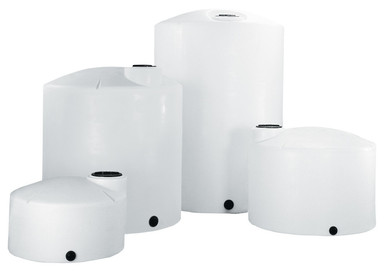
A 65-gallon vertical tank on a tight 23-inch footprint — the compact chemical reserve for a spray rig, a fertilizer cart, or a corner of the chemical shed. Norwesco's seamless poly shell and translucent wall let an operator track the level at a glance and trust the vessel with agricultural and industrial solutions a thinner tank could not hold.
Specifications at a Glance
Every figure below is pulled straight from the live product record for this exact tank — the same data on the product page, so what you read here and what you buy never disagree.
Standards & Materials
- ASTM D1998 — Standard Specification for Polyethylene Upright Storage Tanks. Governs wall-thickness and hydrostatic design for vertical rotomolded poly tanks of this class.
- FDA 21 CFR 177.1520 — Olefin polymers. The food-contact regulation the FDA-grade resin in this tank is compounded to meet.
- Specific gravity rating 1.5 — the tank is engineered for liquids up to 1.5× the density of water (water is about 8.34 lb/gal). Confirm your fluid’s SG before storage.
Product Overview
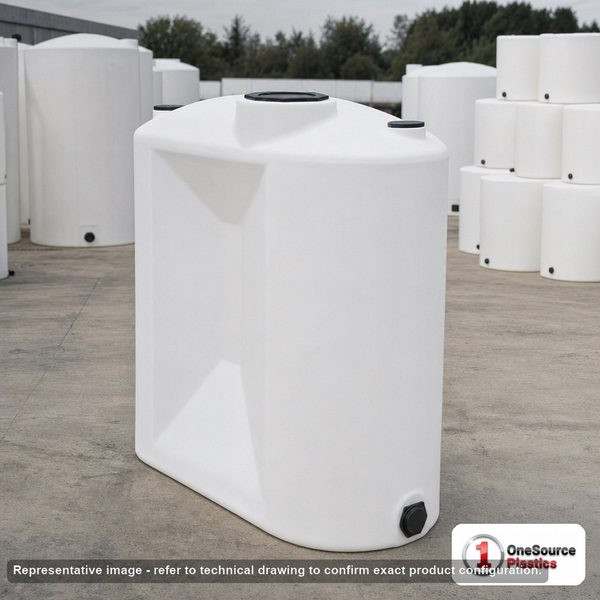
The 65 Gallon Vertical Liquid Storage Tank is built for the job that needs real chemical capacity in barely two feet of floor. At 23 inches in diameter and 43 inches tall, it stores 65 gallons of agricultural chemical, liquid fertilizer, or industrial solution where a wider tank simply will not fit — bolted to a sprayer frame, parked beside a mix station, or lined up along a shed wall.
This is a chemical-service tank, and its specifications say so. The shell is rated to 1.5 specific gravity, meaning it carries solutions up to 12.5 pounds per gallon — the density band that covers most fertilizers, herbicides, and water-based industrial chemistries. Empty it weighs just 26 pounds, easy for one person to position, but a full charge at the rated specific gravity reaches about 839 pounds, so wherever it sits must be level and able to take that load. Norwesco molds it as one seamless piece of polyethylene with no weld seam for aggressive chemistry to attack.
The translucent white wall is the operator's friend: it lets you read the liquid level and watch the color of the contents without opening the tank, and it reflects sunlight to keep the contents a touch cooler in the field. A 1.25-inch NPT outlet is molded and leak-tested at the factory for clean draw to a pump or sprayer, and an 8-inch lid gives access for filling, venting, and inspection appropriate to a tank this size.
This vessel is for chemical and liquid storage within its density rating — not for drinking water — and it carries Norwesco's 3-year warranty against manufacturing defects, the molding pedigree of North America's largest poly-tank producer.
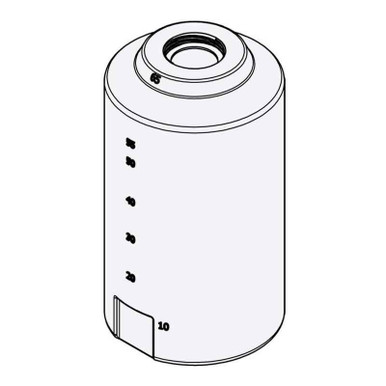
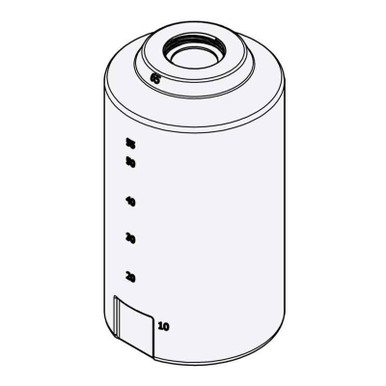
Technical Drawing

Official Norwesco technical drawing — 65 Gallon Vertical Liquid Storage Tank
Key Features and Specifications
- 65-gallon capacity — sized for agricultural chemical and fertilizer storage
- Constructed from virgin linear polyethylene (HDPE) with 1.5 specific gravity rating — handles liquids up to 12.5 lbs/gal
- 43" tall x 23" diameter — compact vertical footprint
- 26 lbs empty, approximately 839 lbs when full at rated specific gravity
- 1.25 NPT outlet fitting — factory installed and leak-tested
- 8" lid opening for fill, venting, and interior access
- FDA approved for potable water and food-grade liquid contact
- 3 Year Warranty from Norwesco against manufacturing defects
- Translucent white walls allow visual level monitoring without opening the tank and reflect sunlight to keep contents cooler
- Rated for continuous service up to 120 F / 48 C
- Seamless one-piece rotational molding — no seams, no welds, no leak points
- Manufactured by Norwesco — a leading name in rotomolded polyethylene tanks
- Place on a firm, level surface free of rocks or sharp objects that could damage the tank bottom. Ensure adequate ventilation if stored chemicals produce vapors
- Ships via UPS or FedEx ground — typically arrives within 5-7 business days
Installation and Setup Guide
A compact vertical chemical tank is quick to site, but "compact" does not mean "casual" — 839 pounds of chemical on a small base demands a level, capable surface.
Site Preparation
Choose a spot with good drainage so spills and rain do not pool around the base. The surface must be firm and level — sealed concrete is ideal in a chemical shed — and flat within about 1/4 inch across the 23-inch diameter. Remove rocks, grit, and debris that could press a point load into the tank bottom under a full 839-pound charge. On a sprayer or cart, the mounting platform must support the filled weight and keep the tank from rocking in transit.
Placement and Connections
Leave about 12 inches of clearance around the tank for the level read, the lid, and the outlet plumbing. Plumb the factory 1.25-inch NPT outlet with a chemical-rated ball valve at the tank so you can isolate it for service or hose changes. Run the first connection in flexible, chemical-compatible hose — polyethylene flexes with temperature, and rigid pipe bolted to the outlet will crack the boss over time. Choose every valve, gasket, and fitting for compatibility with the specific chemical you store.
Venting
The tank must breathe: air in as you draw chemical, air out as you fill, or the wall will deform under vacuum or pressure. A screened vent handles plain liquids, but for many agricultural and industrial chemistries you want a pressure/vacuum relief vent rated for the specific product and its vapors. Keep eyewash accessible wherever open chemical is handled.
Maintenance and Long-Term Care
A chemical-service tank's care centers on watching the wall for chemical effects, keeping fittings tight, and decontaminating before any product change.
Quarterly Inspection Checklist
- Wall and level read: The translucent wall makes inspection easy — look for clouding, crazing, or a swollen patch on the inside face, the early signature of a chemistry too aggressive for poly. Catch it before it becomes a leak.
- Outlet and valve: Check the 1.25-inch NPT fitting and its valve for weeping or chemical staining. Hand-snug threaded connections; poly creeps and fittings loosen over time, but never use a pipe wrench on poly threads.
- Base and stability: On a small footprint, a single settled spot tips the tank — confirm it still sits level and bears evenly, especially if it travels on a cart or rig.
- Vent: Confirm the vent is clear; a blocked vent is the most common cause of a deformed wall.
Decontamination and Cleaning
Before switching chemistries, flush and decontaminate the tank, outlet, and hose to the chemical manufacturer's procedure — not just a water rinse. Residual product from an incompatible chemical can react with the next charge or quietly degrade the resin. This is chemical equipment and is not sanitized for potable use.
UV and Long-Term Care
The resin carries UV stabilizers, but no additive lasts forever. A tank in steady field sun — on a sprayer or beside a shed — should be checked yearly on the sun-facing side for chalking, and shading or covering it between seasons extends service life in high-UV regions. The translucent wall will gradually opacify with long sun exposure; that is cosmetic until crazing appears.
Alternatives and Comparisons
The 65 Gallon Vertical Liquid Storage Tank is one of several 65-gallon options, and the choice turns on footprint and how the tank will be used.
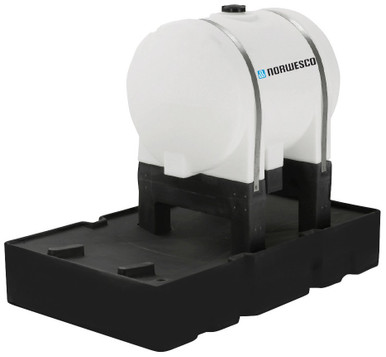
Vertical vs. horizontal: This vertical tank uses minimal floor space and drains well under its own liquid head, but it needs overhead room and is taller than a horizontal leg tank of the same volume. If the tank rides on a sprayer or trailer where a low center of gravity matters, a horizontal tank is more stable in transit; for a fixed corner of a shed, the vertical wins on floor space.
Vertical vs. cone-bottom: If you only need to store and draw chemical, this flat-bottom vertical is simpler and cheaper. If your job is batch mixing that demands a complete drain every cycle, a cone-bottom tank on a stand is the better tool. Buy the vertical for storage, the cone for processing.
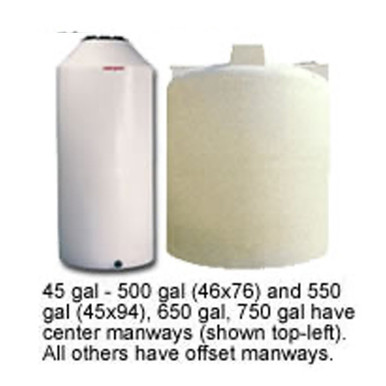
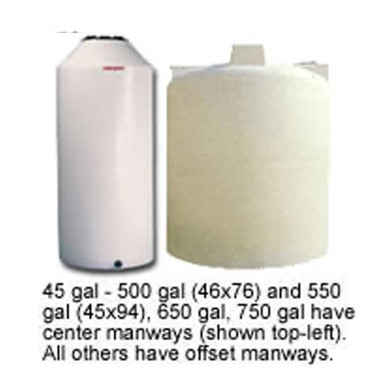
Other 65-Gallon Options
Frequently Asked Questions
How long will the 65 Gallon Vertical Liquid Storage Tank last?
With compatible chemistries on a level base and reasonable sun protection, this seamless poly shell readily reaches 15-plus years. On a chemical-service tank the life-limiting factor is usually the chemistry and UV exposure rather than age — an aggressive product can craze the wall, and constant field sun eventually chalks the surface. Keep the contents within the 1.5 specific-gravity rating, decontaminate between products, and shade the tank where UV is intense to reach the long end of its service life.
What chemicals can I store in this tank?
This is a chemical and liquid storage tank rated to 1.5 specific gravity, built to hold agricultural and industrial solutions within that density — liquid fertilizers, herbicides, pesticides, and water-based cleaning chemistries. It is not intended for drinking water, and never for gasoline, diesel, solvents, or any flammable liquid. Polyethylene resists most acids and bases but is attacked by certain hydrocarbons and oxidizers, so always confirm a new product against a compatibility chart before charging it.
Does this tank come with a warranty?
Yes — Norwesco provides a 3-year warranty against defects in materials and workmanship for tanks used within their rated limits. It covers factory faults: molding voids, pinholes, and a defective outlet boss. It does not cover chemical attack from an incompatible product, damage from exceeding the 1.5 specific-gravity rating, improper installation, or impact damage. Keep your invoice and a photo of the installed tank for any claim.
Can I install this tank underground?
No. This is an above-ground vertical tank; its wall is not engineered to resist the hydrostatic pressure of surrounding soil, and burial would risk collapse and void the warranty. For below-grade chemical or water storage, use a purpose-built underground tank designed with ribbed, reinforced walls to handle backfill and groundwater loads.
Buying Considerations
Before ordering the 65 Gallon Vertical Liquid Storage Tank, confirm three things. First, the space and base — the 23-inch footprint fits almost anywhere, but the surface (or sprayer platform) must be level and able to carry the roughly 839-pound full charge. Second, compatibility — verify your chemical is poly-safe and within the 1.5 specific-gravity rating, and choose compatible valves, gaskets, and hose; this is a chemical tank, not a potable-water vessel. Third, freight — at 26 pounds empty it ships UPS or FedEx ground, typically arriving in 5 to 7 business days, so no dock or liftgate is needed to receive it.
Related Products You May Need
Questions? Call (866) 418-1777 — our team knows these products inside and out and can help you select the right tank for your application.
Recommended Tanks for This Guide
Live pricing, updated automatically · estimate freight to your ZIP.